Garment dyeing and washing, your specification
Made to your tech pack, fabric and colours by a factory matched to the order.
Private label
Your main label, care label, hangtag and polybag. Nominated trims accepted.
Garment dyeing and washing happen after sewing, in a wash and dye house that is usually a separate plant from the sewing line, sometimes in the same group and often not. Sewn garments go out in bundles, are dyed or washed in machine loads, and come back to be finished and packed. Garment dyeing and washing services in Bangladesh set the colour, hand and final size of the garment, so they decide whether the order passes.
Factories on the bench name the wash or dye house in their quote, with its process and its days, so the stage shows on the timeline rather than as a gap. Shade bands and washed measurements are approved on garments from that house, and the stage is photographed like any other.
Kinds of garment dyeing and washing
Reactive garment dye
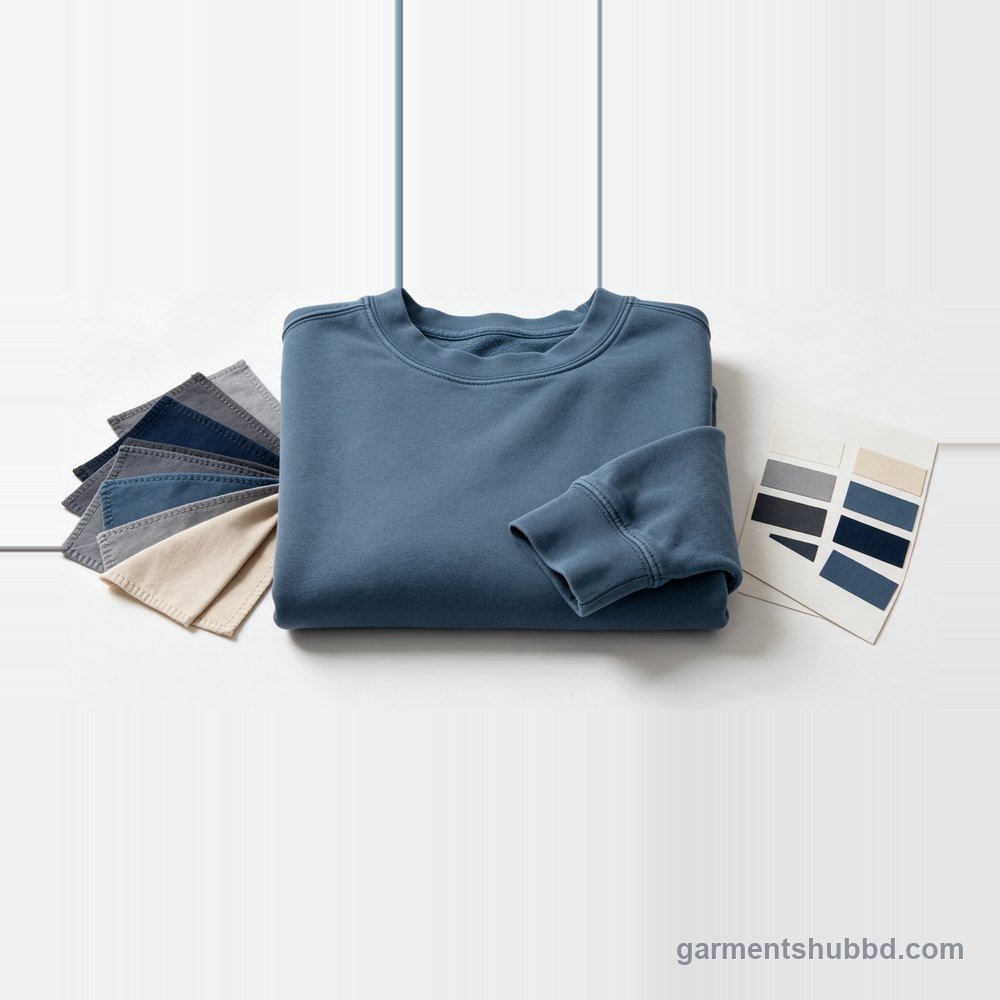
Runs hot with salt and alkali, then a long rinse to clear loose dye, so it uses the most water and machine time of the three. Cotton tees, fleece and twill take it; the shade band is the tightest, so it suits core colours repeated each season.
Pigment garment dye
A short, cool cycle in which a binder fixes pigment to the surface, cured in the dryer. Any cotton rich garment takes it, loads turn round fast, and the band is wide because seams, edges and folds come out lighter by design.
Sulphur garment dye
An economical route to black, navy, olive and grey on fleece and twill: the dye goes on in a reducing bath and is fixed by oxidation, so the house needs a second step and thorough rinsing. The shade keeps fading with wear, which is sold as the look.
Enzyme wash
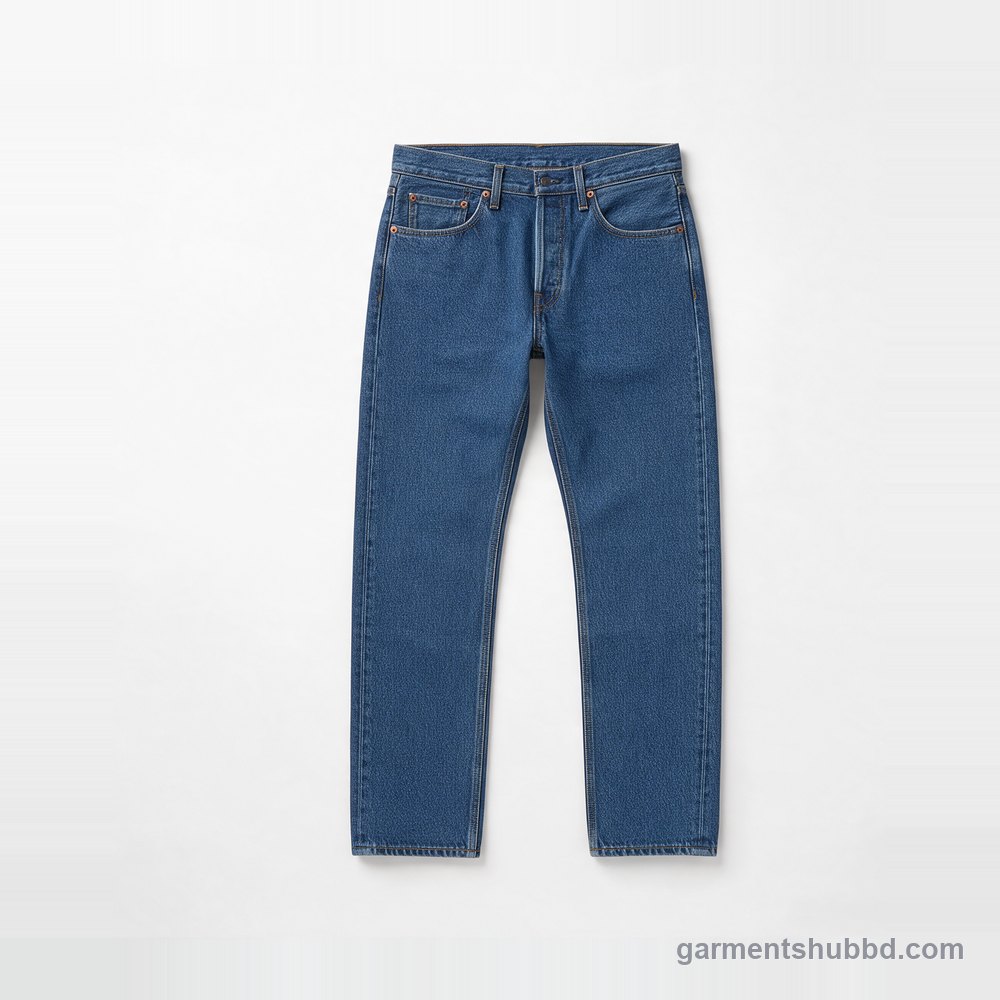
Cellulase enzymes soften cotton, clear surface fuzz and fade colour slightly. Used on denim, chinos, jersey and fleece, often followed by a softener that sets the final hand.
Stone, bleach and acid washes
Pumice or enzymes abrade denim and twill for wear; bleach or acid washes strip colour unevenly for a mottled or marble effect. Both weaken the cloth.
Laser finishing
A laser burns fades, whiskers and wear marks onto denim with no stones and little water. Patterns are digital files, so every piece repeats the approved design.
What to send for garment dyeing and washing
- Process and physical standard
- Dye type or wash recipe, with a physical standard: a washed garment or a shade band. A photograph cannot serve as the standard.
- Shade band
- A light and a dark limit for every dyed colour or wash, approved on garments from the bulk process. Bulk is passed or failed against it.
- Cloth prepared for dyeing
- For garment dye, cloth sold as prepared for dyeing, free of finishes that block dye. Ordinary finished cloth dyes patchy.
- Shrinkage allowance
- The shrinkage the house expects, measured on test pieces, so the pattern is cut larger and lands on the finished chart.
- Trims and thread
- Buttons, zips, labels and thread that survive the bath, or are added after it. Some metal trims rust or discolour in bleach and acid washes.
- Batch size per shade
- Pieces per colour or wash. A garment dye machine is meant to run full, so the practical minimum per shade follows one machine load.
Tests for garment dyeing and washing services in Bangladesh
- AATCC 150
- Dimensional change of garments in home laundering, run on the finished dyed or washed piece, because the house's shrinkage and the customer's first wash add together.
- ISO 13937
- Tear strength. Stone, bleach and acid washes weaken twill and denim, so test cloth from the washed garment, above all near pocket corners and the seat.
- ISO 105-X12
- Rubbing fastness, dry and wet. Pigment and sulphur dyed garments mark other fabrics first, so agree a grade for each shade.
- ZDHC MRSL
- Chemicals banned from intentional use in the wash and dye house. A list for the facility and its chemical suppliers, not a garment test; ask whether the house works to it.
- EU REACH Annex XVII, entry 72
- CMR substances in clothing, formaldehyde at 75 mg/kg among them, which some fixing and finishing agents can release. Test the finished garment for EU sales.
What moves the price of garment dyeing and washing
- The process, priced per piece or per kilo: a softener wash costs little, a multi step stone and bleach wash far more.
- Number of shades or washes, each run as a separate batch.
- Machine fill: a shade run in a half empty machine costs the house the same as a full one, so small batches pay more per piece.
- Water, steam and effluent treatment, which a multi rinse reactive dye uses far more of than a pigment dye.
- Laser programming and hand work such as whiskering, grinding and repairs.
Lead time for garment dyeing and washing
The wash or dye stage sits between sewing and finishing and usually adds several days to bulk, more for multi step washes. Before bulk, each shade or wash needs a development round on real garments, often a week or more for a new denim wash. Re-dyeing or re-washing a batch outside the band adds days again. The quote shows the house and its dates.
What we check in garment dyeing and washing
- Batches against the bandPieces from each batch are laid against the light and dark limits under one controlled light before cartons are closed.
- Batch recordsRecipe sheet, machine and date for each batch are tied to the cartons it fills, so a claim traces back to one load.
- Wash damageSeams, pocket corners and hems are checked for holes, weak spots and broken stitches after stone, bleach or acid washes.
- Trims after the bathButtons, zips and labels are checked for rust, dulling and legibility after the bath, and the cloth around metal trims for marks.
Questions buyers ask about garment dyeing and washing
Who pays when a garment wash goes wrong?
Agree it in writing before bulk. When the house misses an approved recipe and band, the factory usually carries the re-wash or the lost pieces; when the buyer changes the standard after approval, the cost usually moves to the buyer. Without that line, a failed wash becomes a dispute at shipment.
Can jersey and fleece be garment dyed as well as twill?
Yes, and many tees and hoodies are. Knits shrink more than twill in the bath and can twist, so the shrinkage test and a spirality check come before the pattern is graded. Brushed fleece comes out of the machine flattened and is tumbled back, and the softener wash afterwards sets the hand. Ask for a dyed sample of each knit, not only the twill.
What happens to the water from a wash and dye house?
It should pass through an effluent treatment plant before discharge. Ask whether the house runs one, whether it operates every day, and which chemical list it works to, such as ZDHC MRSL. A third party inspector of your choice can visit the house as well as the sewing floor.
Why is the pattern cut larger for garments dyed after sewing?
Because the dye bath and tumble drying shrink the sewn garment, usually more in length than in width. The house tests pieces, the factory enlarges the pattern by that amount, and the dyed fit sample proves it. Skip the step and the whole order lands a size small.
Get a quote for garment dyeing and washing
Tech pack or sketch with quantities per colour. A compared quote in 48 hours.