Custom shirts, your colours
Lab dips matched to your standard before bulk dyeing. Tap a shade.
Private label
Your main label, care label, hangtag and polybag. Nominated trims accepted.
A shirt is the garment where a buyer sees workmanship first. The collar, the placket and the yoke are all visible from a metre away, and a factory that cuts corners on interlining cannot hide it. This page covers the shirts we source, the fabrics the bench runs, and what to send us to get a price in 48 hours.
We are a sourcing desk in Dhaka. We do not own a factory. Your enquiry goes to two woven shirt plants from our bench, you get both quotes with our read on which suits the order, and our own person is on the floor for the inline and the final inspection.
Custom shirt types we source
Formal Shirt
Poplin or fine twill, 100 to 130 GSM, fused collar and cuff, single needle side seams if you want the finish to read as tailored. Convertible or barrel cuff, standard or spread collar, back darts or a box pleat.
Oxford Shirt
Oxford or pinpoint oxford, 130 to 160 GSM, button down collar, box pleat, often a chest pocket. Heavier, more forgiving to make and more forgiving to wear.
Twill Shirt
Compact twill with a soft hand, 130 to 170 GSM. A good middle ground between a formal poplin and a casual oxford, and it takes a garment wash well if you want a softer finish.
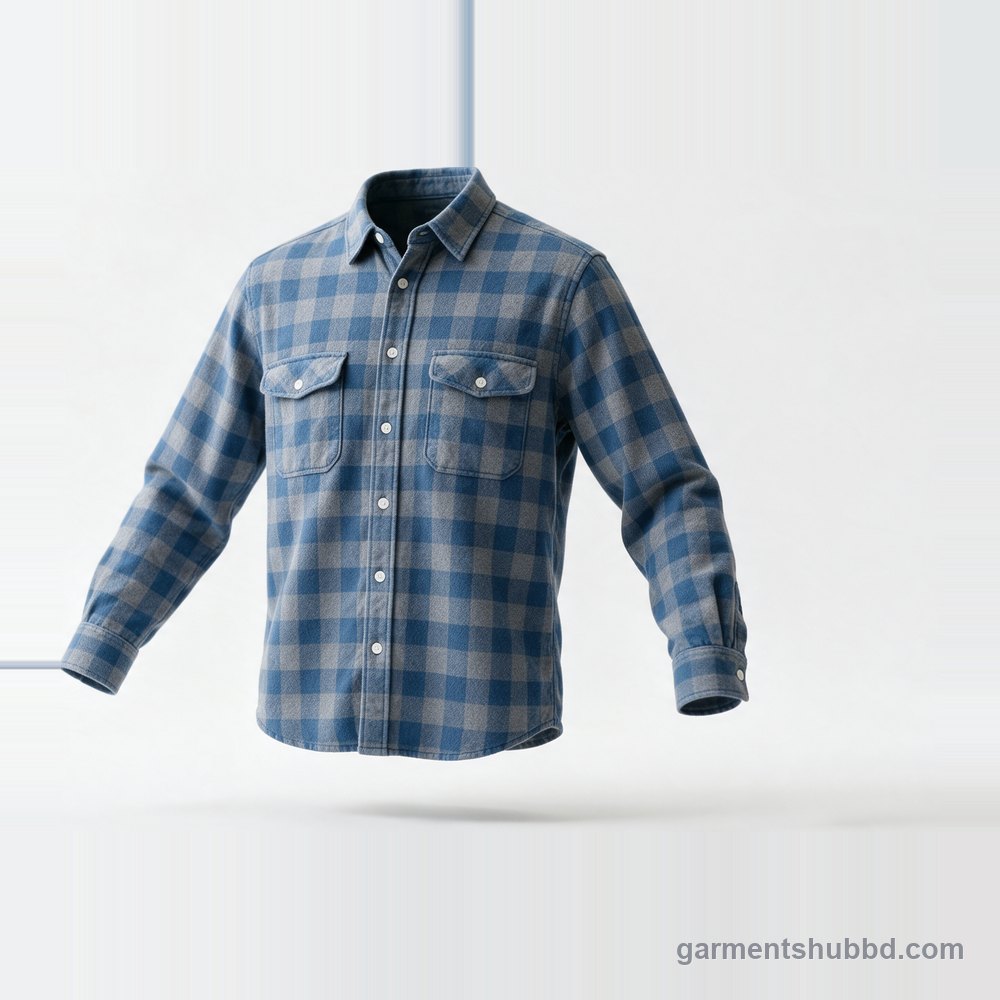
Flannel Shirt
Brushed cotton, usually yarn dyed check, 160 to 200 GSM. Pattern matching at the pocket, the placket and the yoke is the whole job, so state whether you require it and expect the price to carry the extra cutting waste.
Denim Shirt
Light denim at 4.5 to 6.5 ounces, chambray at the lighter end. A garment wash or enzyme wash changes the shade, so approve the wash on a full garment and not on a swatch.
Linen Shirt
Linen or linen cotton, 120 to 170 GSM. It creases, that is the point, and your quality standard needs to say so or the inspection will fail garments that are correct.
Short Sleeve Shirt
Any of the fabrics above with a hemmed or turn back sleeve. The sleeve opening width is the measurement buyers forget to give and then complain about.
Overshirt
Heavier woven at 200 to 280 GSM, worn open over a tee, cut with a straight hem and a boxier body. Priced closer to a light jacket than a shirt, because it usually carries heavier trim.
Fabric, trim and interlining
Ask for shirting by construction and weight, and by yarn count if you know it. A 40s poplin and a 20s poplin are both poplin and they are not the same shirt. Yarn dyed cloth holds a check or a stripe through the wash. Piece dyed is cheaper and only makes solids.
Interlining is where a cheap shirt gives itself away. A fused collar with the right weight of interlining stays flat through a wash cycle. The wrong weight bubbles at the point, and once it bubbles it never recovers. Ask what interlining the factory proposes, and ask for a washed collar on the pre production sample. That one request removes the most common shirt complaint.
Buttons, thread and labels are small numbers that add up. Mother of pearl, corozo, polyester and melamine all photograph differently. Nominate the button or let us quote two grades.
Pattern matching and cutting
On a check or a stripe, decide up front whether you require matching at the pocket, the centre placket, the yoke and the sleeve head. Full matching costs more cloth and more cutting time, and it is the difference between a shirt that looks made and one that looks assembled. Put it in the spec with the tolerance you will accept.
Sizing and grading
Send your size chart with the collar, chest, waist, shoulder, sleeve length, cuff opening and body length, plus your tolerance. Alpha sizes and collar sizes are different systems, so tell us which one you sell in. We measure the pre production sample in the smallest size, the sample size and the largest size and send you the numbers before bulk cutting starts.
Quality control
Inline inspection while the line is running. Final inspection to AQL 2.5 unless your standard differs, with the photo report before the goods move. On a shirt we check collar and cuff symmetry, placket width along its length, stitch density per inch, pattern match against your stated tolerance, shrinkage on a washed sample, and button pull strength.
Compliance differs by plant. The factories on our bench hold different combinations of BSCI, Sedex, WRAP and OEKO-TEX. Tell us what your buyer requires and we will only quote plants that already hold it, with the certificate attached to the quote.
What to send with your enquiry
- Fabric by construction, weight and yarn count, or a swatch to match
- Collar, cuff, placket, pocket and hem detail, or a sample garment to copy
- Pattern matching requirement and tolerance, if the cloth is checked or striped
- Size chart with quantity per size, and your tolerance
- Button, label and packing spec
- Quantity per colour, your target price and your ship date
Minimum order starts from 300 pieces per colour. Two factory quotes in 48 hours, sample in 7 to 14 days, bulk in 30 to 60 days after the pre production sample is signed, FOB Chattogram.
Private label and branding
Your main label, care label, size label, hangtag and polybag, and nominated trims accepted if you already buy them. Send the label artwork and the packing list format with the enquiry and it is quoted in, rather than added later as a surprise line.
Get a quote for custom shirts
Tech pack or sketch with quantities per colour. A compared quote in 48 hours.