Leather jackets, your colours
Lab dips matched to your standard before bulk dyeing. Tap a shade.
Private label
Your main label, care label, hangtag and polybag. Nominated trims accepted.
A leather jacket is a tailored garment made from a material that arrives in irregular pieces. Every panel is cut around the natural marks of a hide, which means the yield, not the sewing, is where the price is decided. It is also the garment where a buyer can tell quality from two metres away. This page covers the leather jackets we would source, what to specify, and where our bench honestly stands.
We are a sourcing desk in Dhaka. We do not own a factory, and we will be direct: we do not have a tannery or a leather garment unit on the bench. Bangladesh has a large leather sector, we have not vetted a unit in it yet. Read the note below, and read the rest anyway, because the specification does not change with the factory.
Leather jacket types we source
Biker Jacket
Asymmetric zip, wide lapels, belted hem, zipped cuffs, usually in a firmer hide at 1.0 to 1.2 millimetres. The most hardware heavy jacket on the page and the one where zip quality shows.
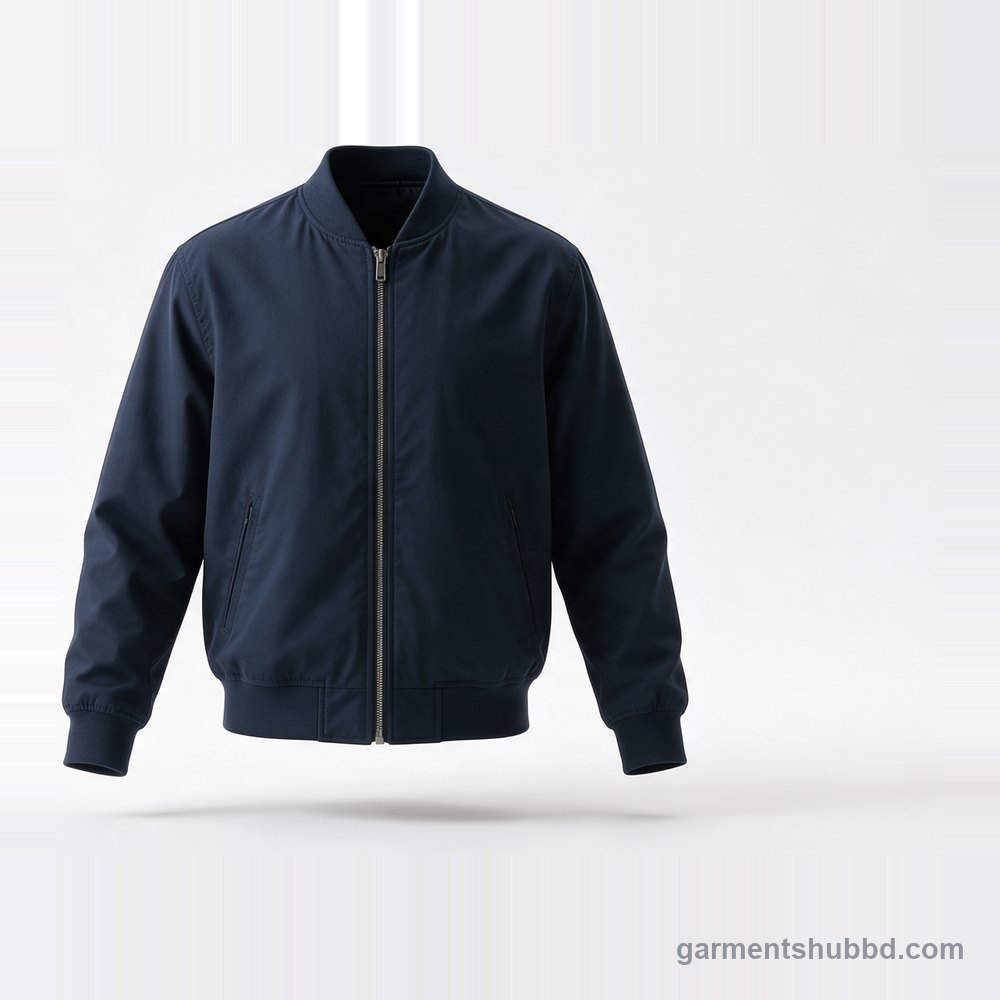
Bomber Jacket
Rib collar, cuffs and hem, front zip, welt or patch pockets. The softest make and the easiest first order in leather.
Racer Jacket
Stand collar, straight front zip, minimal hardware, close cut. Clean lines mean every seam is visible, so it needs a better unit than a bomber does.
Shearling Jacket
Leather outer with the wool still on the inside, or a leather shell with a shearling lining. Heavy, expensive and a specialist make. Say whether it is real shearling or a lined imitation, because the two are not comparable.
Suede Jacket
Suede or nubuck outer, softer and more delicate. Rub fastness and water spotting are the two tests that matter, and both belong in the specification.
Leather Blazer
Tailored front, notch lapel, lined, with a canvas or fusible chest. A tailoring make in a leather material, and a different unit skill from a biker jacket.
Long Leather Overcoat
Knee length or longer, which needs larger clean panels and therefore a better hide grade and a worse yield. Priced well above a short jacket for that reason alone.
Leather Waistcoat
Sleeveless, lined, buttoned or zipped. Cheap in material and a useful way to add a piece to a range without adding cost.
Leather, specified properly
A specification that says "genuine leather" will get you anything. Ask for:
Type and layer. Full grain keeps the outer surface intact and is the best of it. Top grain is sanded and corrected. Split and bonded are lower layers and offcuts. Say which.
Animal and tannage. Sheep and goat are light and soft and are what most fashion jackets use here. Cow and buffalo are heavier and firmer. Chrome tanned is soft and consistent; vegetable tanned is firmer and ages visibly.
Thickness in millimetres. 0.7 to 0.9 for a soft drapey jacket, 1.0 to 1.2 for a structured biker, 1.2 and up for something meant to last a decade. This single number changes the whole garment.
Finish. Aniline, semi aniline, pigmented, suede, nubuck, waxed. Pigmented is the most consistent and the least characterful. Ask for rub fastness and for a water spot test on suede.
Ask for a hide sample rather than a swatch, and agree in writing which natural marks are acceptable. On a jacket this is the single most important commercial conversation you will have, because it sets the yield and the yield sets the price. A strict standard costs more per garment and looks better on a rail. Decide which you are selling.
Panels, lining and hardware
Panelling. A jacket cut from a small hide needs more panels, and more panels on a clean racer jacket looks wrong. Ask how many panels the unit proposes for each part and whether the sleeve is one piece or two. That answer tells you what hide size they are buying.
Lining. Viscose, bemberg or polyester, quilted for warmth. Say whether the sleeve lining differs, and ask for a hanging loop and an inside pocket if you want them.
Hardware. Zips by brand and gauge, snaps, D rings, buckles, and the plating. A leather jacket lives or dies on its main zip: nominate it. Plating spots in humid transit, so ask for a salt spray result or accept some marking.
Stitching. Thread thickness and stitches per inch. Leather is punched, not pierced, so a stitch line cannot be unpicked and resewn without leaving holes. That is why the pre production sample matters more here than on a woven garment.
Where our bench stands
Said plainly, because a page implying otherwise would earn an enquiry we would then have to duck: we hold knit, woven, sweater, denim and outerwear plants. We hold no tannery and no leather garment unit. Leather garments need clicking presses, skiving, leather needles and cutters who read a hide, and none of our plants has any of it.
What we will do with an enquiry: go into the leather cluster, find the units that make your product at your quality, visit them, take your specification in, and come back inside five working days with a quote from a unit we have stood inside, or a straight no. We would rather lose the enquiry than take an order we cannot inspect.
If your buyer requires LWG certification on the tannery, say so at the enquiry: it narrows the list to a handful and it is better to know that before you build a range around a price.
What to send with your enquiry
- A sample garment to copy, or a technical drawing with all measurements
- Leather type, layer, animal, tannage, thickness and finish
- The natural mark standard you will accept, in writing
- Whether you require LWG certification on the tannery
- Panel count expectations, and one or two piece sleeve
- Lining spec, hardware nomination with plating, and zip brand and gauge
- Size chart with quantity per size, and your tolerance
- Quantity per colour, your target price and your ship date
Quality control, which we do regardless of whose unit it is
Inline inspection while the line runs. Final inspection to AQL 2.5 unless your standard differs, with the photo report before the goods move. On a leather jacket we check hide grade and natural marks against the written standard, thickness with a gauge across panels, panel count and symmetry, stitch density and needle damage along every seam, zip and snap function on every sampled garment, lining ease so it does not pull the shell, rub fastness on a cut sample, and shade continuity between hides, which is the hardest thing to control in leather and the thing a buyer notices first on a rail.
Get a quote for leather jackets
Tech pack or sketch with quantities per colour. A compared quote in 48 hours.