Private label manufacturing, your specification
Made to your tech pack, fabric and colours by a factory matched to the order.
Private label
Your main label, care label, hangtag and polybag. Nominated trims accepted.
Private label clothing manufacturing in Bangladesh serves brands that own a name, a customer and often a design, but not a factory. The garment leaves the factory looking like yours: your woven main label, your size and care labels, your hangtag, your polybag and carton marks. Retailers, online brands, uniform suppliers and start ups use it to sell under their own name without running a production floor.
On this desk it runs two ways. A stock body finished with your labels and packaging carries the lowest minimum, from 300 pieces per colour, and the shortest lead time. Your own design under your label is OEM and needs more, and each factory's minimum comes back on the quote sheet. Labels, hangtags and packaging are approved by you before bulk and checked again on the PP sample.
Kinds of private label clothing manufacturing in Bangladesh
Stock body with your labels
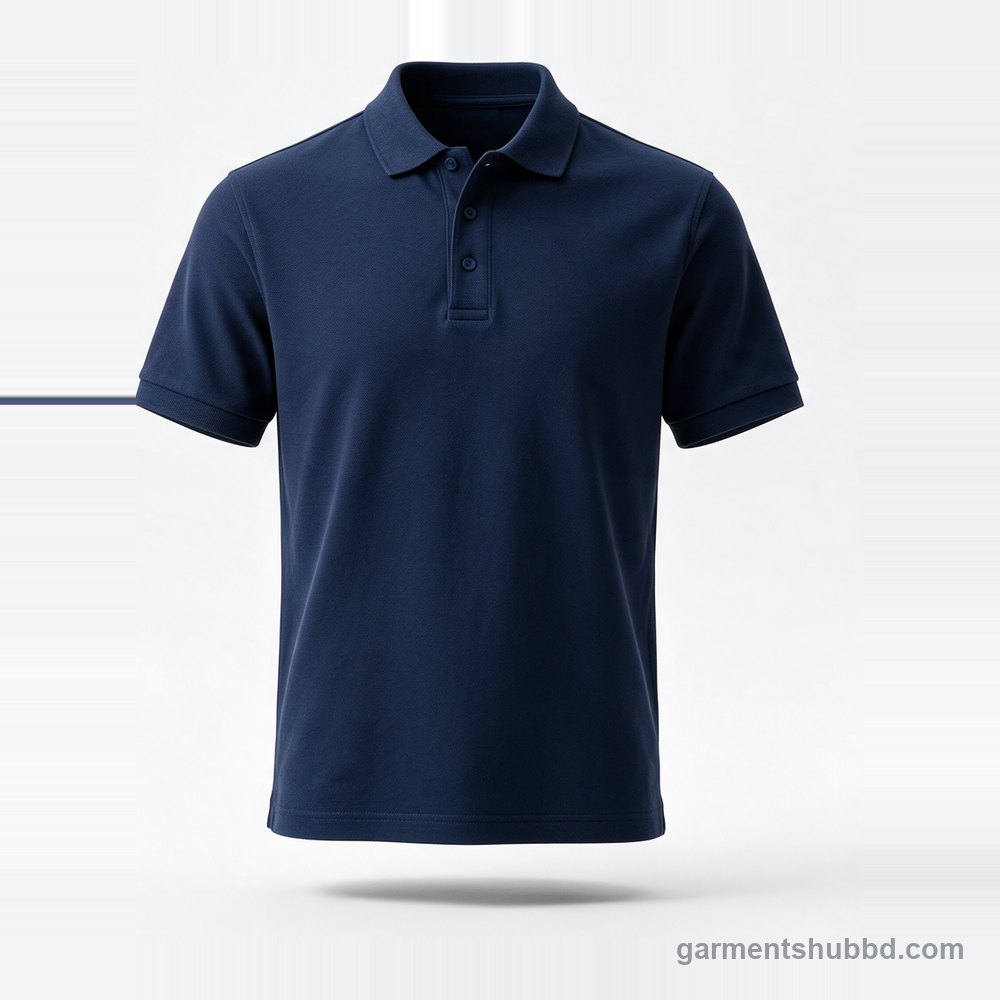
A garment the factory already makes, finished with your labels, tags and packaging during production. The fit is fixed and the fabric colour comes from the factory's range. The fastest, lowest minimum route.
Your own design under your label
Your tech pack, your pattern, your label, and a garment no one else sells. Fabric and sampling are made for you, so the minimum per colour runs higher than a stock body.
Modified factory block
The factory's existing pattern with your changes to fabric, colour, trims and details, the ODM route. A middle ground on minimum, cost and lead time.
White label
Finished stock goods sold by one maker to many sellers, with generic labels or none, then relabelled. Quick and cheap, but a competitor can sell the identical garment.
Buying blanks
Blank garments bought from a wholesaler and decorated or relabelled by you. No real minimum, but no say over fabric, fit or the labels sewn in at the factory.
What a private label order needs from you
- Main label
- Woven, printed or heat transfer; size, fold type, colours and position. Woven labels carry their own minimums and making time.
- Care and content label
- Fibre content, care instructions, country of origin and your name or identifier, in the language and format of each market you sell in.
- Size labels
- Letter or numeric sizing and, for brands selling in several markets, the size conversion printed on the label.
- Hangtags and stickers
- Hangtag artwork, card weight, fastener type and the barcode or price sticker format your retailer specifies.
- Packaging
- Polybag with the warnings your market expects, tissue, folding board or box, carton marks and any retailer packing manual.
- Approvals
- Sign off on label artwork and the trim card before labels are made; they are then checked again on the PP sample.
Label rules for private label clothing
- FTC Care Labeling Rule (16 CFR 423)
- US: care instructions for regular care, permanently attached to textile wearing apparel, in words or the accepted symbols.
- Textile Fiber Products Identification Act
- US: fibre content by generic name and percentage, country of origin, and the maker's or dealer's name or registered identification number.
- Wool Products Labeling Act
- US: wool content disclosure on any garment containing wool, applied alongside the general textile labelling rules.
- Regulation (EU) No 1007/2011
- EU: fibre names and composition labelling. Only the listed fibre names may be used, in the language of the country of sale.
- US CPSIA
- Children's products need a permanent tracking label and a Children's Product Certificate based on testing at a CPSC accepted laboratory.
What moves the price of private label clothing
- Route: a stock body costs less than your own design, which carries pattern and sampling costs.
- Label type: woven damask labels cost more than printed satin or heat transfer labels.
- Number of label and tag variants across sizes, colours and markets.
- Packaging extras such as individual boxes, tissue and custom printed polybags.
- Nominated label suppliers, whose minimums and freight can outweigh their unit price on small runs.
Lead time for private label manufacturing
Private label on a stock body runs shortest, because the pattern and fit already exist. Woven labels and hangtags usually take one to two weeks to make once artwork is approved, so they are ordered alongside the fabric, not after it. Your own design follows the full sample sequence of 7 to 14 days a round, with bulk in 30 to 60 days after PP approval. Late label artwork is a common cause of a missed date.
What we check in private label manufacturing
- Label position and textMain, size and care labels are checked for position and for text against the approved artwork, on every size.
- Care label durabilityCare and content labels are checked for print that stays legible after washing, since a faded label stops meeting its rule.
- Hangtag and barcodeHangtags are checked for the right style, colour and size, and barcodes scanned against the retailer's list.
- Packing to your manualFold, polybag, stickers and carton marks are checked against your packing instructions, so goods arrive ready for your warehouse.
Questions buyers ask about private label manufacturing
What is the minimum order for private label clothing?
On a stock body, from 300 pieces per colour on most bench categories. On your own design it is higher, because fabric and sampling are made for you, and the quote sheet shows each factory's figure. Labels carry their own minimums, often above a garment run, so order them for more than one season.
Who owns the patterns and markers?
On a stock body the block is the factory's, and other brands may buy the same body. On your own design, your tech pack and pattern serve your order alone and are not shown to another buyer. Factories usually keep pattern and marker files for repeats; if you want them handed over, agree it in writing first.
What must a care label say for the US and the EU?
For the US, fibre content, country of origin, the maker's or dealer's identity and care instructions, under the Textile Fiber Products Identification Act and the FTC Care Labeling Rule. For the EU, fibre composition under Regulation (EU) No 1007/2011; care symbols are voluntary at EU level but widely expected.
How is private label different from buying blanks?
Blanks are finished garments from stock: cheap and quick, but the fabric, fit and labels belong to someone else, and relabelling costs labour. Private label builds your labels and packaging into production, so the garment leaves the factory as your product, with a minimum per colour to match.
Get a quote for private label manufacturing
Tech pack or sketch with quantities per colour. A compared quote in 48 hours.