Cotton cargo pants, your specification
Made to your tech pack, fabric and colours by a factory matched to the order.
Private label
Your main label, care label, hangtag and polybag. Nominated trims accepted.
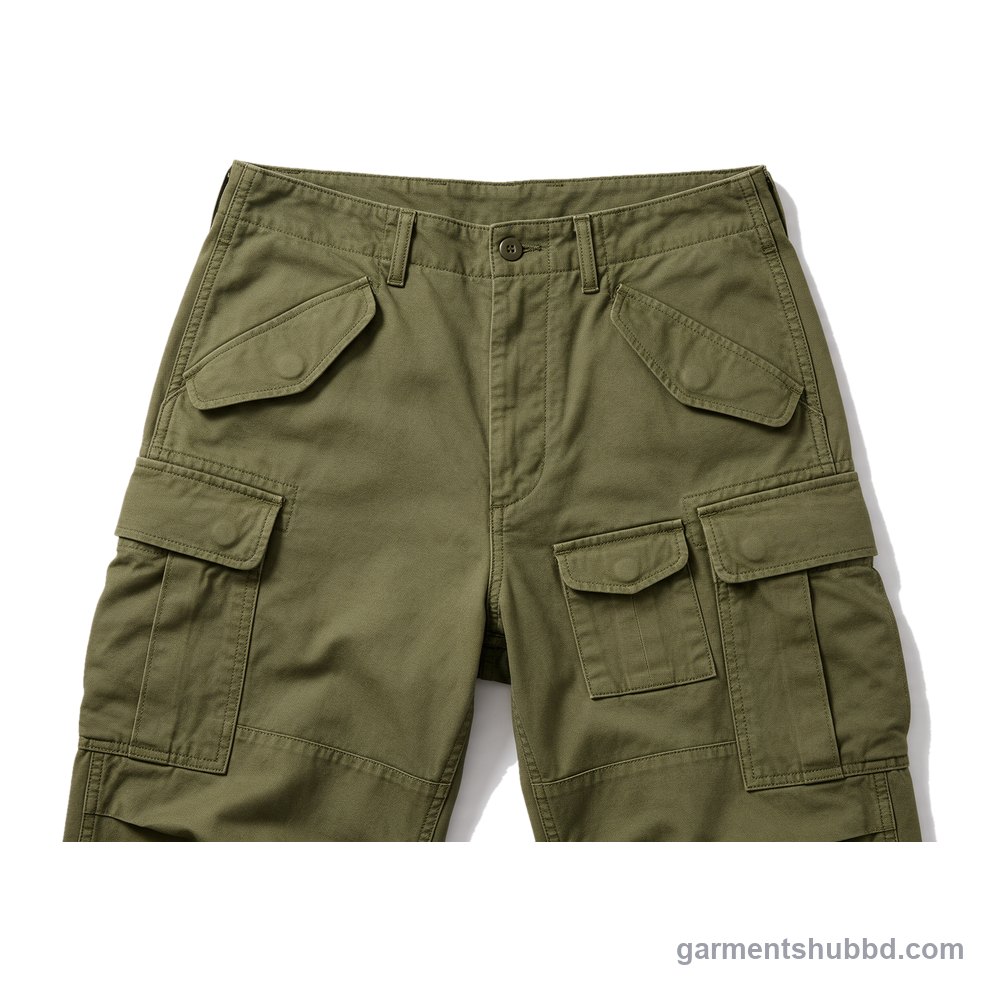
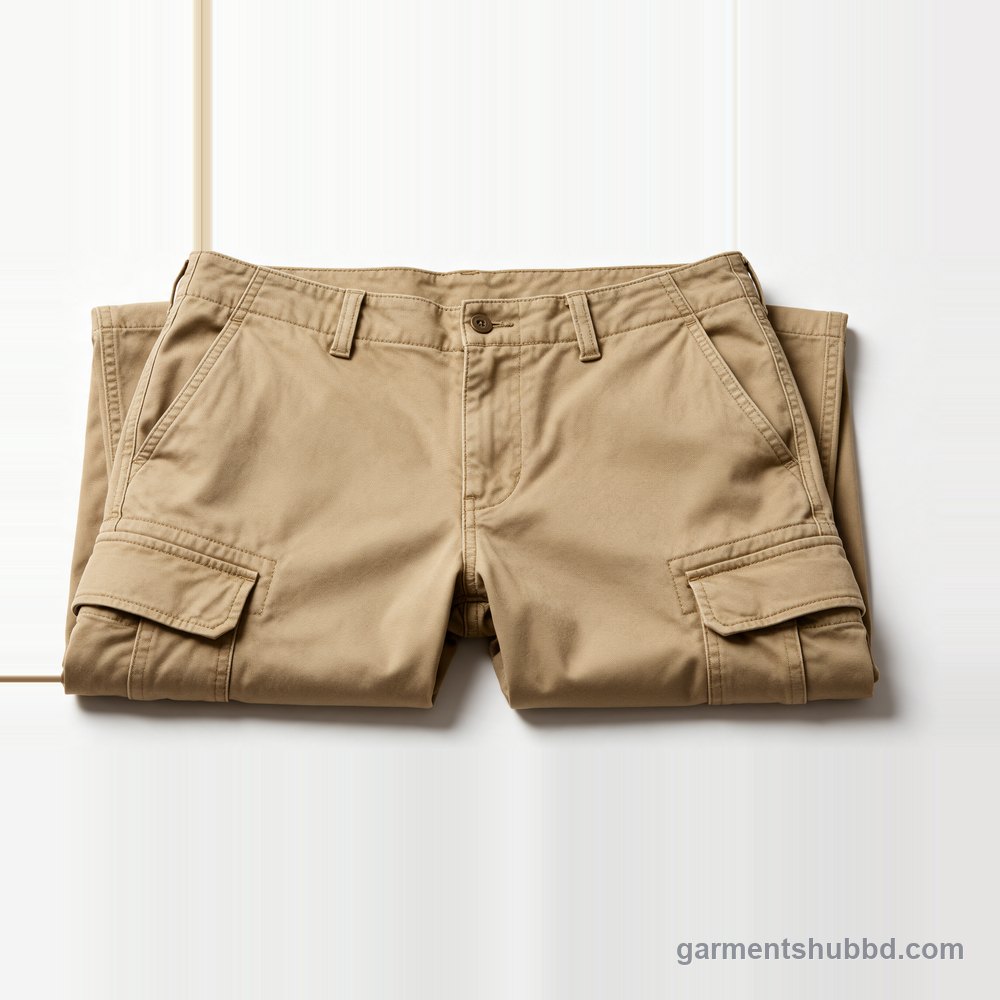
Cotton cargo pants are the casual retail cargo: a trouser with bellows thigh pockets in cotton twill, canvas or ripstop of usually 200 to 300 GSM, sold by fashion and lifestyle brands for everyday wear. Most are washed after sewing to soften the cloth and fade the colour. That wash is the hard part for a cotton cargo pants manufacturer in Bangladesh: pure cotton shrinks, so the pattern is cut larger to land on the size chart.
The desk sends the same tech pack, wash standard and shrinkage target to two factories, so both quotes price the same cloth and the same wash recipe. On a washed cotton cargo, the fit sample and the lab dip are judged after washing, because that is the state the customer buys.
Kinds of cotton cargo pants
Piece dyed, garment washed twill
The cloth is dyed in the roll, cut with a shrinkage allowance and softened in an enzyme or silicone wash after sewing. Twill of 220 to 260 GSM is the usual choice for a year round retail cargo.
Garment dyed cargos
Sewn in undyed cloth prepared for dyeing, then dyed as finished pants. Colour gathers at seams and pocket edges for a lived in look; cotton thread takes the dye, polyester thread stays as a contrast.
Washed cotton canvas cargos
A firmer plain weave, usually 280 to 300 GSM for retail, stone or enzyme washed so it feels broken in from the first wear. A workwear look without the stiffness of trade weight cloth.
Cotton ripstop cargos
A grid of thicker yarns stops small tears spreading. Cotton ripstop of 200 to 240 GSM washes up crisp and slightly crinkled, which suits outdoor styled ranges.
How to brief a cotton cargo pants manufacturer in Bangladesh
- Cloth and weight
- State the weave, the fibre and the finished weight in GSM. A 2/1 twill and a 3/1 twill of the same weight feel and wash differently, so name the weave as well.
- Shrinkage allowance
- Ask for a shrinkage test on each fabric lot before cutting. Unwashed cotton twill usually shrinks 3 to 5 percent in length, and the pattern is enlarged by the measured amount.
- Wash recipe
- Name the wash (enzyme, stone, silicone softener or rinse only) and send a physical wash standard. Words like soft or vintage mean different things in different laundries.
- Dye route
- Choose piece dyed or garment dyed. Garment dyeing needs cloth prepared for dyeing and cotton sewing thread, and its shade moves more from batch to batch.
- Washed measurements
- Write the size chart in washed measurements and say so on the tech pack. A chart meant for unwashed pants gives a bulk order that comes back short in the leg.
- Buttons and zips
- Specify brass or zinc alloy buttons and a zip that survives the wash. Steel parts can rust in an enzyme or stone wash and stain the cloth around them.
Tests and certificates for cotton cargo pants
- ISO 5077 with ISO 6330
- Dimensional change in washing. Run it on the fabric before cutting and on finished pants, so the pattern allowance matches what the cloth does.
- AATCC 150
- The garment shrinkage method for US buyers. It tests the sewn pants, which catches waistband and pocket shrinkage that a fabric test on its own misses.
- ISO 105-C06
- Colour fastness to washing: garment dyed and sulphur dyed cotton lose colour faster, so ask for the 1 to 5 grey scale grade on the bulk shade, not only on the lab dip.
- GOTS
- For organic cargos. The organic grade needs at least 95 percent certified organic fibre and made with organic at least 70 percent; ask for the transaction certificate covering the shipment.
What moves the price of cotton cargo pants
- Cloth weight and weave: a 300 GSM canvas uses more cotton per metre than a 220 GSM twill.
- The wash: an enzyme or stone wash adds a process, water and handling to every pair.
- Garment dyeing, which adds a dye step and more shade sorting than piece dyed cloth.
- Extra cloth for shrinkage, since a pattern cut longer and wider consumes more fabric per pair.
- Pocket count and build: flaps, bellows and pleats each add cutting and sewing minutes.
- Certified organic cotton, which carries its own cloth cost and paperwork.
Lead time for cotton cargo pants
Samples for washed cotton cargos usually take 7 to 14 days, since each sample round goes through the wash before it can be measured. Bulk usually runs 30 to 60 days after the PP sample is approved, with laundry capacity booked alongside the sewing lines. A garment dye or a custom wash recipe adds days to both stages, and a fabric lot that fails its shrinkage test sends the pattern back for adjustment. The quote confirms the dates.
What we check on cotton cargo pants before shipment
- Measurements after washWaist, inseam and thigh measured on washed pants of each size against the washed size chart, before packing starts.
- Shade between wash loadsPants from different wash loads compared side by side, so one carton does not hold two visibly different khakis.
- Wash damageSeams, pocket corners and bar tacks checked for holes, abrasion and broken stitches caused by stones or tumbling.
- Metal trimsButtons and rivets checked for rust marks and discolouration on the cloth around them after washing.
Questions buyers ask about cotton cargo pants
How much does 100 percent cotton cargo cloth shrink?
Unwashed cotton twill usually shrinks 3 to 5 percent in length and less in width. The factory tests each fabric lot, enlarges the pattern by the result and measures the washed sample. Pre-shrunk cloth narrows the gap, but a garment wash still moves it, so the allowance is set per lot.
Should the pants be garment dyed or made from dyed cloth?
Dyed cloth gives an even shade and tighter control across sizes. Garment dyeing gives the faded seams many casual brands want, but the shade varies more between batches and the minimum per colour follows the dye machine load. Dyed cloth with a garment wash is the common middle way.
Will the colour match between reorders?
Close, not identical. The shade is approved against a physical standard and each new lot is checked against it under the same light, but washed cotton always moves a little. Keep the approved standard and send it with each reorder rather than a photo.
Can the cargos be made in organic cotton?
Yes, where the cloth comes from a GOTS certified mill and the sewing factory holds its own GOTS certificate. The desk matches the order to factories with the certificates you need, and the transaction certificate travels with the shipment. Organic twill usually has a longer fabric lead time than conventional twill.
Get a quote for cotton cargo pants
Tech pack or sketch with quantities per colour. A compared quote in 48 hours.