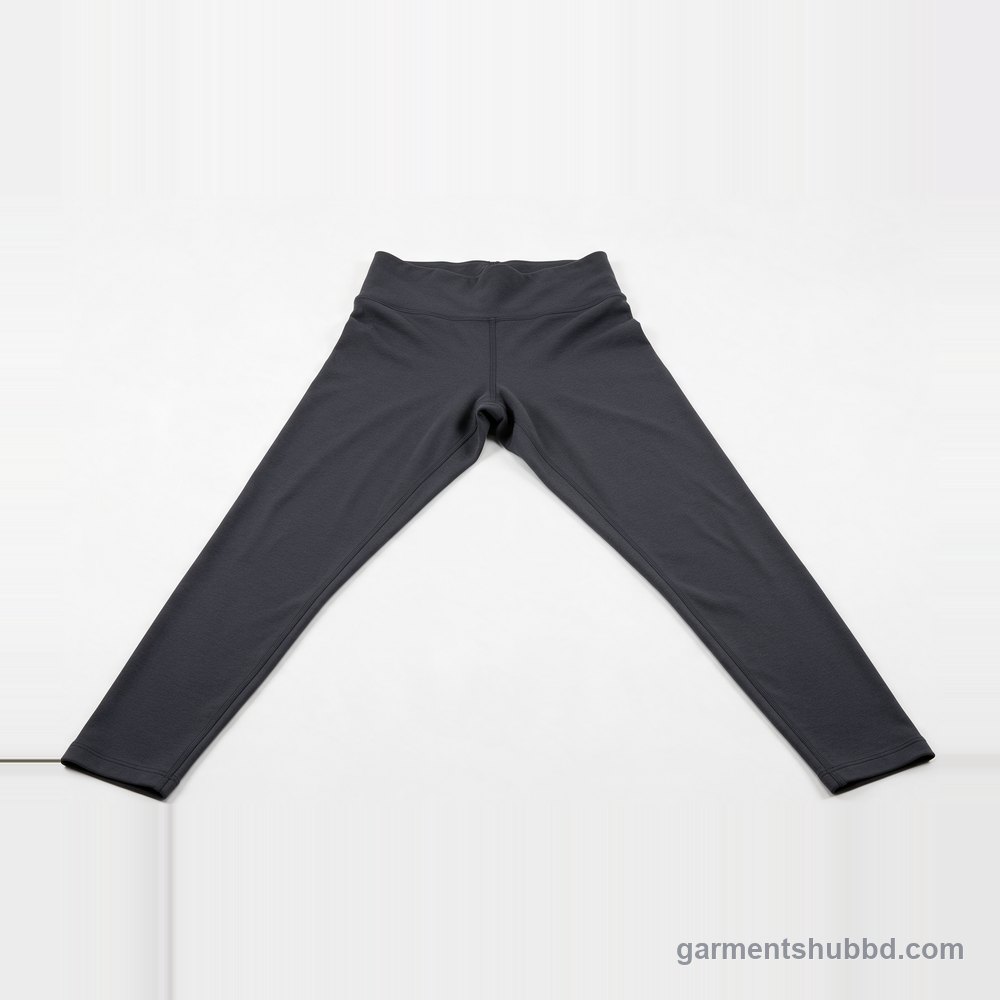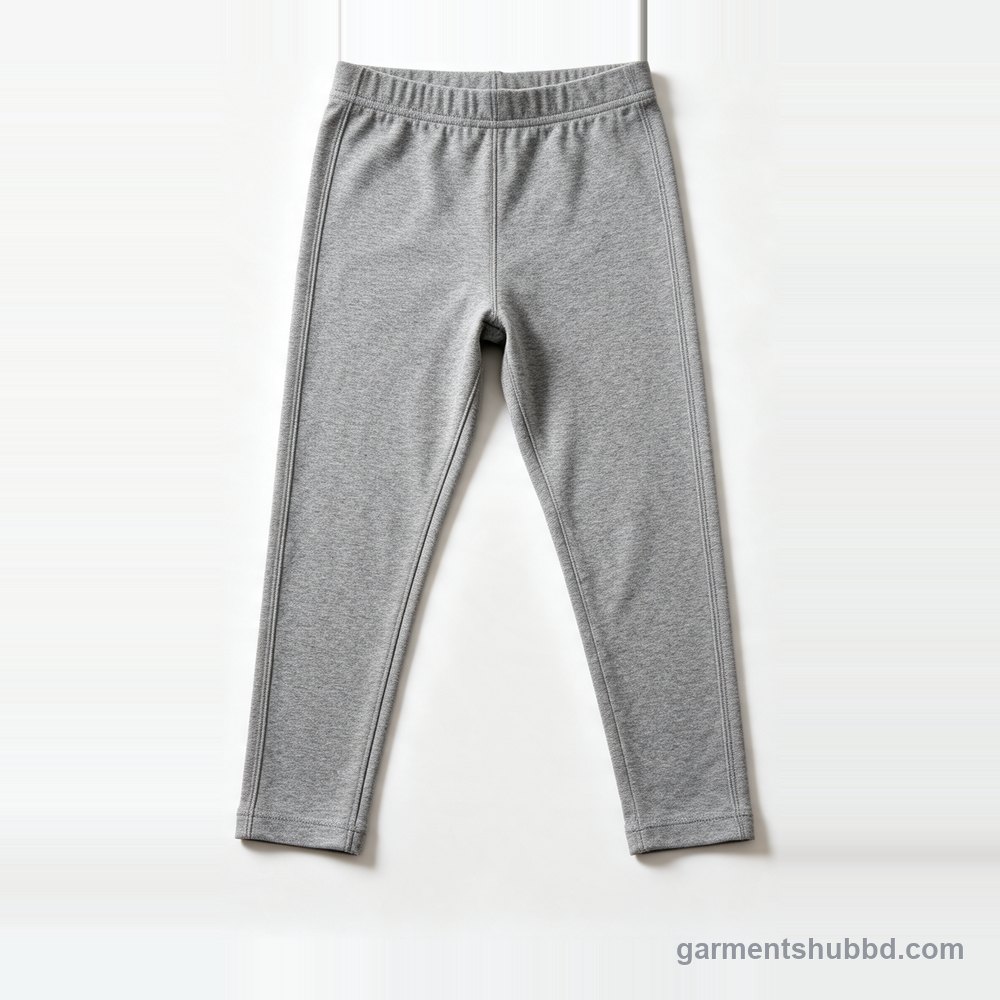
Cotton leggings, your specification
Made to your tech pack, fabric and colours by a factory matched to the order.
Private label
Your main label, care label, hangtag and polybag. Nominated trims accepted.
Cotton leggings are the everyday pair: single jersey knitted from combed cotton with elastane plated in, usually 200 to 260 GSM, sold in core colours and reordered season after season by basics brands, loungewear labels and dancewear shops. Picking a cotton leggings manufacturer in Bangladesh for this product comes down to what the wearer notices after a month: knees that bag, an inseam that twists, and a pale shade that shows skin when stretched.
Your specification goes to two factories on the bench with the yarn, elastane share and waistband fixed, so the two prices on the comparison sheet describe one legging. Lab dips for each shade come before the PP sample. Inline inspection runs while the legs are sewn, and the final random inspection at 80 percent packed is to AQL 2.5 unless you set another level.
Kinds of cotton leggings
Everyday cotton elastane
Combed cotton single jersey with around 5 percent elastane, usually 200 to 230 GSM. The volume basic in black, navy and charcoal, where the dark shade hides the knit.
Heavier jersey for pale shades
The same knit at usually 240 to 260 GSM, with a tighter stitch and elastane in every course. For white, stone and grey marl, which turn see through over the thigh in a lighter cloth.
Organic cotton leggings
Organic cotton with elastane, certified to GOTS. The elastane share sets the label grade, so fix the blend at the swatch stage, before any hangtag is printed.
Brushed back winter leggings
A heavier cotton rich knit with a brushed inner face, usually 260 to 320 GSM, for autumn and winter ranges. The brushed loop adds bulk, so the pattern needs more ease than the summer weight.
What a cotton leggings manufacturer in Bangladesh needs from you
- Yarn and count
- Combed or carded cotton and the count, usually 30s to 40s Ne at the lighter weights and coarser as the weight rises. Combed yarn pills less and costs more; name it, or the two quotes will not compare.
- Elastane share and feeder
- The percentage, and whether elastane is plated on every course (full feeder) or every other course (half feeder). Full feeder holds the knee and seat shape longer.
- Weight per colour
- GSM before and after washing, per colour. A pale shade may need a heavier cloth than black in the same style.
- Waistband build
- Covered elastic inside a self fabric fold, or a flat self fabric band with no elastic. Give the elastic width, typically 2.5 to 4 cm, and the finished band depth.
- Ten wash recovery
- Knee and seat measurements on the PP sample after ten washes to an ISO 6330 procedure. Growth at the knee means the elastane share or feeder is too low.
- Lengths and gusset
- Full length or ankle, the inseam in centimetres per size, and whether you want a gusset, which studio pairs usually need and lounge basics often skip.
Tests and certificates for cotton leggings
- ISO 16322
- Spirality after laundering. On a single jersey legging it shows as the inseam swinging round to the front of the shin. Ask for the result on bulk fabric before cutting.
- ISO 5077 with ISO 6330
- Shrinkage in washing. Cotton jersey usually shrinks more in length than in width; buyers commonly accept 3 to 5 percent, and the pattern is cut to allow for it.
- ISO 105-C06
- Wash fastness of the dye. Test black and navy pairs, because those are the shades that stain pale tops in a shared wash; grades run 1 to 5 on the grey scales.
- GOTS
- Organic fibre with chain of custody. Ask for the factory's scope certificate and a transaction certificate for the shipment.
What moves the price of cotton leggings
- Yarn: combed costs more than carded, and a finer count costs more again.
- Elastane: full feeder at 8 percent costs more than half feeder at 5 percent.
- Weight: a 260 GSM pale pair uses noticeably more yarn than a 200 GSM black one.
- Colour: grey marl spun from dyed fibre, and pale shades held to a tight shade band, cost more than black.
- Packing: multipacks with a printed band or box cost more to pack than single folded pairs.
Lead time for cotton leggings
Sampling on cotton leggings usually takes 7 to 14 days, and bulk 30 to 60 days after the PP sample is approved in writing. Lab dips for pale shades and grey marl can add days, and an organic order adds time to source certified yarn with its paperwork. From order confirmation to shipment, 60 to 90 days is typical; each date is confirmed in the quote.
What we check on cotton leggings before shipment
- Inseam twist after washingA washed pair is laid flat and the inseam checked against the centre of the leg; a seam swinging forward shows spirality.
- Opacity on pale shadesWhite and stone pairs are stretched over the thigh and seat on a lit form; skin showing through means the weight or stitch is short.
- Grin through on blackBlack and navy are stretched at the knee to look for white elastane showing through the dyed cotton, a sign of a loose knit.
- Elastic inside the bandThe waistband elastic is checked for twisting inside the fold and for stitching that catches it evenly all round.
Questions buyers ask about cotton leggings
What elastane percentage should cotton leggings have?
Usually 5 to 10 percent. At 5 percent the pair pulls on easily but the knees can bag after repeated washing; around 8 percent, on a full feeder, recovers better. Ask for the share on the fabric test report so bulk matches the sample.
Will cotton leggings shrink after washing?
A little, mostly in length. The factory cuts the pattern to allow for the shrinkage its fabric test shows, and the PP sample is measured after washing. Agree the tolerance in writing, because a pair that loses a few centimetres at the ankle reads as a different product.
Can cotton leggings be GOTS certified if they contain elastane?
Yes, but the blend decides the grade. With certified organic cotton and 5 percent elastane the pair can meet the 95 percent the 'organic' grade needs. At 8 percent elastane it carries 'made with organic', which needs at least 70 percent organic fibre.
Is 200 GSM heavy enough for white or stone cotton leggings?
Usually not. Pale shades show the body through stretched jersey, so they need a heavier, tighter knit, typically 240 GSM and up. Many buyers keep black at the lighter weight and buy pale shades heavier; both weights can be quoted side by side.
Get a quote for cotton leggings
Tech pack or sketch with quantities per colour. A compared quote in 48 hours.