Cotton T-shirts, your specification
Made to your tech pack, fabric and colours by a factory matched to the order.
Private label
Your main label, care label, hangtag and polybag. Nominated trims accepted.
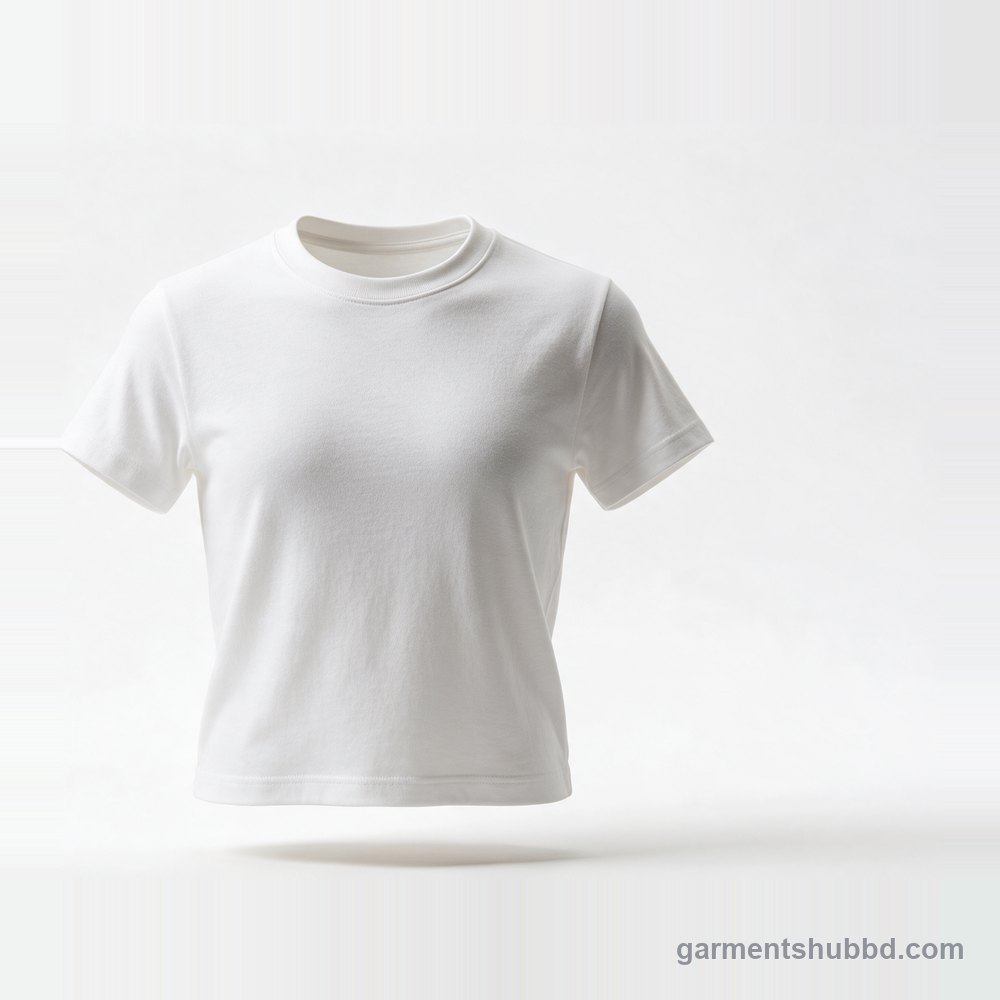
Cotton T-shirts are the volume basic in almost every range: blanks for decorators, multipacks for retailers, staff and event tees, and the core tee of a fashion label. When you brief a cotton T-shirt manufacturer in Bangladesh, the garment is simple and the cloth is where an order goes right or wrong. This page covers the yarn, the weight and the two faults cotton jersey is known for: shrinkage and twist.
Garments Hub BD asks the two factories quoting your tee to price the same yarn and the same finished weight, so the comparison sheet sets like against like. A cheaper line that hides a lighter cloth or carded yarn shows up there, before any sample is cut. Inline inspection measures the first washed pieces for shrinkage and twist.
Kinds of cotton T-shirt
Combed ring spun jersey
Combing strips short fibres and neps out before spinning, and ring spinning twists a fine, strong yarn. The face is smooth, prints cleanly and pills less. The usual retail choice, typically in 30s to 40s yarn.
Carded ring spun jersey
Carded yarn keeps more short fibre, so the cloth is a little hairier and duller than combed while still soft. It suits multipacks, staff tees and merchandise where price counts for more than surface.
Open end jersey
Rotor spun open end yarn is even and cheap but firmer and drier in the hand. It is usually spun in coarser counts for heavier promotional tees bought on price.
Slub jersey
Yarn spun with deliberate thick places that show as a broken, uneven texture. A fashion choice for washed and garment dyed tees; the slub varies between lots by design.
Organic cotton jersey
Certified organic cotton sold with GOTS paperwork from fibre to finished tee. Spinning, knitting, dyeing and making all need certified units, which narrows the factories able to quote.
How to specify a cotton T-shirt
- Yarn count and spinning
- Write it as the mill does, for example 30s combed ring spun. A higher count is finer; tee jersey is usually knitted from 20s to 40s yarn.
- Finished GSM and tolerance
- State the weight after dyeing and finishing, not grey cloth weight. Tee jersey usually runs 140 to 220 GSM, held within about 5 percent either way.
- Shrinkage limit
- Give a maximum for length and width after a stated home wash. Buyers usually allow 3 to 5 percent on cotton jersey; compacting is what holds it there.
- Spirality limit
- Cotton single jersey skews because the yarn twist is unbalanced. Set a side seam twist limit, usually 5 percent or less after washing.
- Tubular or open width
- Tubular jersey allows side seamless bodies, but its twist cannot be straightened in finishing and the whole body spirals. Open width cloth is straightened before cutting, so less twist reaches the garment.
- Finish and white
- Name the finish, such as an enzyme wash to clear surface fibre or a silicone softener, and say whether white is optical or natural. Approve both on a swatch.
Tests a cotton T-shirt manufacturer in Bangladesh should run
- ISO 5077 with ISO 6330
- Shrinkage of cotton jersey in washing. Ask for length and width on the bulk fabric and on a finished tee, since sewing and pressing add their own change.
- ISO 16322
- Spirality after washing. On cotton single jersey it shows whether the side seam will swing towards the front of the tee after a few washes.
- ISO 105-C06
- Wash fastness of dyed cotton jersey on the 1 to 5 grey scale. Ask for it on dark and bright shades, with staining onto the multifibre strip.
- GOTS
- For organic tees, chain of custody to the finished garment. The organic grade needs at least 95 percent certified organic fibre, made with organic at least 70 percent.
What moves the price of a cotton T-shirt
- Combed yarn costs more than carded, and ring spun more than open end, before any knitting starts.
- Weight: a 220 GSM tee carries roughly half as much cotton again as a 150 GSM tee.
- Finer counts such as 40s cost more per kilo than the 20s used for heavier jersey.
- Deep reactive shades cost more to dye than pastels, and optical white needs its own bleaching.
- Compacting, enzyme finishing and tight spirality limits each add a process or extra rejected cloth.
Lead time for cotton T-shirts
A cotton tee in a stock colour from a mill's regular yarn is the quicker route, because knitting and dyeing the cloth take most of the time and sewing a plain tee is quick. A custom shade adds lab dip rounds, organic yarn adds days for certified sourcing, and a garment dyed or slub programme adds a wash after sewing. Cloth that fails its shrinkage test goes back for refinishing, which pushes the cutting date.
What we check on cotton T-shirts before shipment
- GSM on bulk fabricA round cutter sample from each dyed batch is weighed against the stated GSM before cutting starts.
- Twist after washingWashed tees are laid flat and the side seam displacement is measured against the agreed spirality limit.
- Shade by dye lotPieces from different dye lots are compared in a light box, so one carton does not mix two shades of a colour.
- Barre and knitting faultsHorizontal bands from mixed yarn lots, holes and needle lines show clearly on plain cotton jersey and count as defects.
Questions buyers ask about cotton T-shirts
Should I choose combed or carded cotton for a retail T-shirt?
Combed, in most cases. It is smoother, prints more cleanly and pills less, which a retail customer notices after a few washes. Carded jersey is softer than its price suggests and suits multipacks, staff tees and event merchandise, where the tee itself is not what is being judged.
Is ring spun cotton worth the extra cost over open end?
For a tee sold on handle, yes. Ring spun yarn is finer and softer and gives a smoother face. Open end yarn is even and strong enough but feels drier and firmer, so it suits heavier promotional tees. Ask for both quotes on one yarn so the difference is visible.
Why do cotton T-shirts twist after washing?
Single spun cotton yarn carries twist in one direction, and when the knitted loops relax in the wash the cloth skews. Compacting, balanced or plied yarn and finishing the cloth open width so it can be straightened all reduce it. Set a spirality limit and have the bulk fabric tested to ISO 16322 before cutting.
How much will a cotton T-shirt shrink?
On a well finished jersey, usually 3 to 5 percent in length after the first home wash, and less in width. Lightly compacted cloth can shrink much more. Put your limit in the specification, ask for an ISO 5077 result on bulk fabric, and wash the PP sample yourself before signing it.
Get a quote for cotton T-shirts
Tech pack or sketch with quantities per colour. A compared quote in 48 hours.