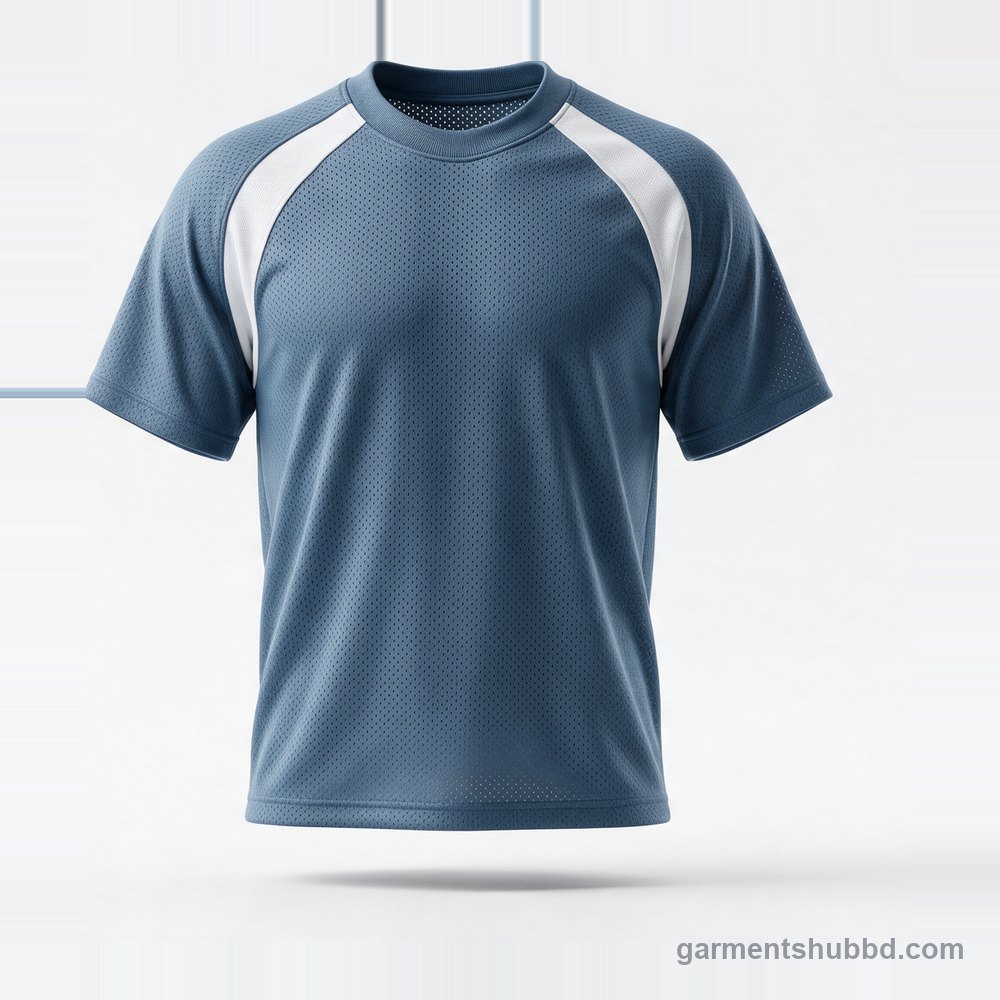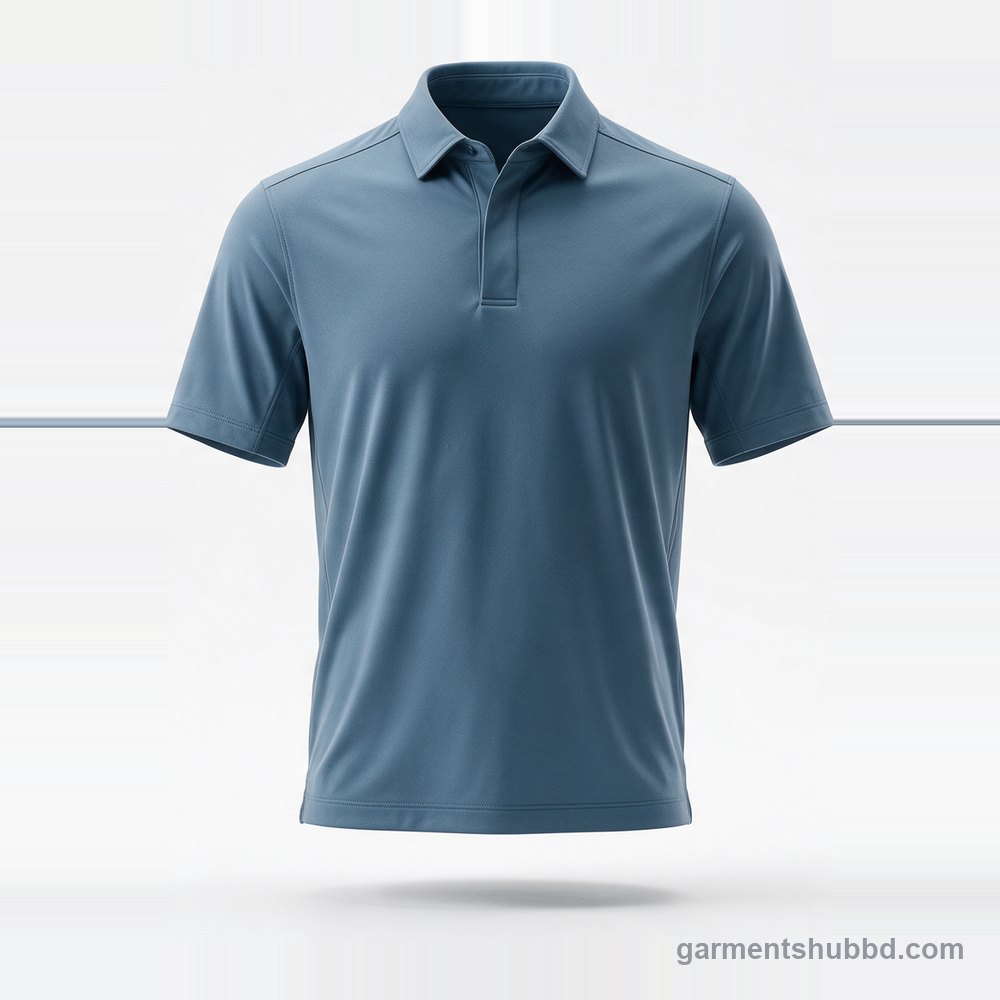
Performance polo shirts, your specification
Made to your tech pack, fabric and colours by a factory matched to the order.
Private label
Your main label, care label, hangtag and polybag. Nominated trims accepted.
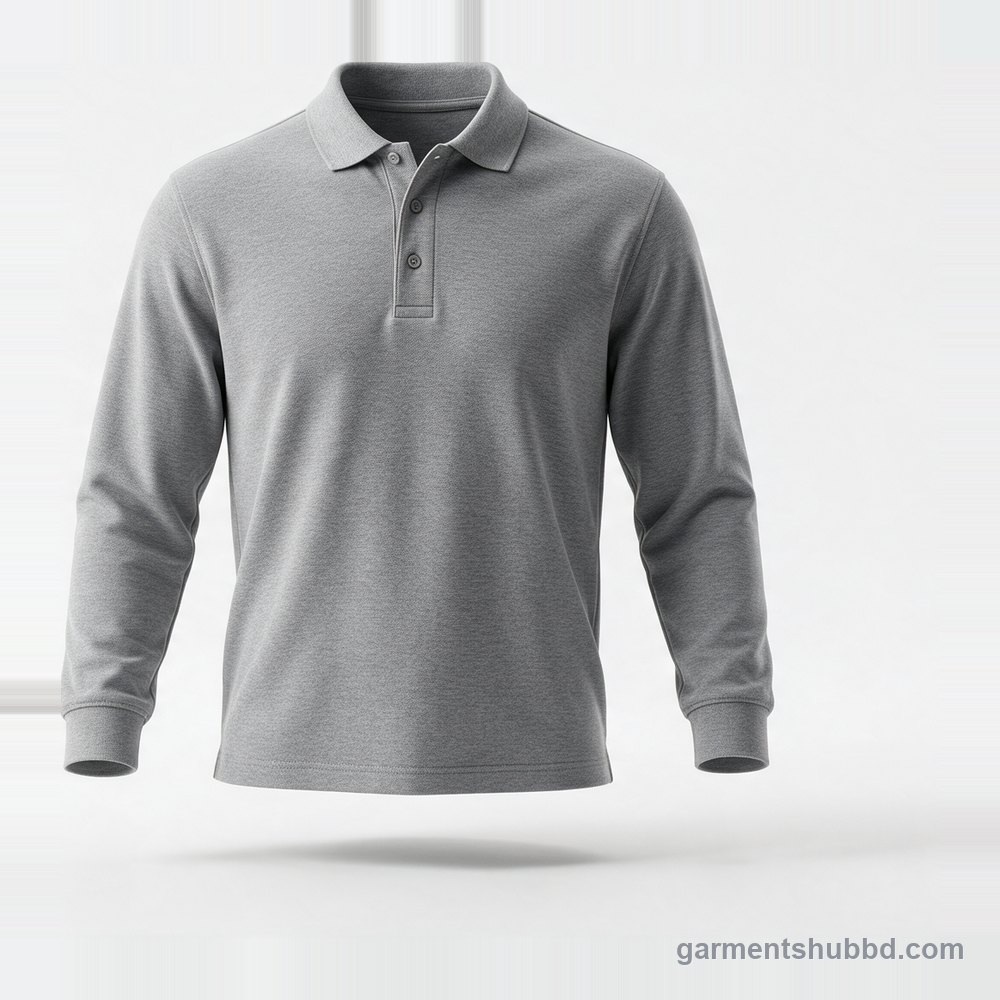
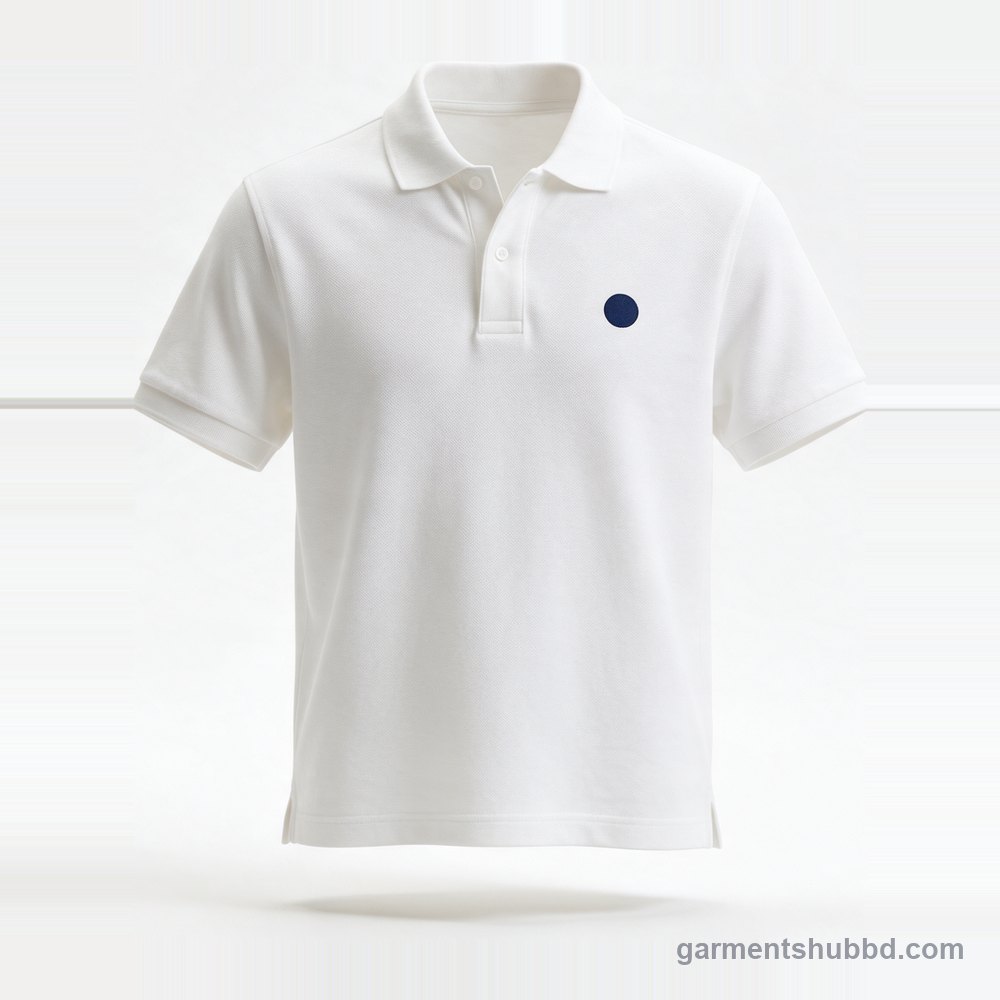
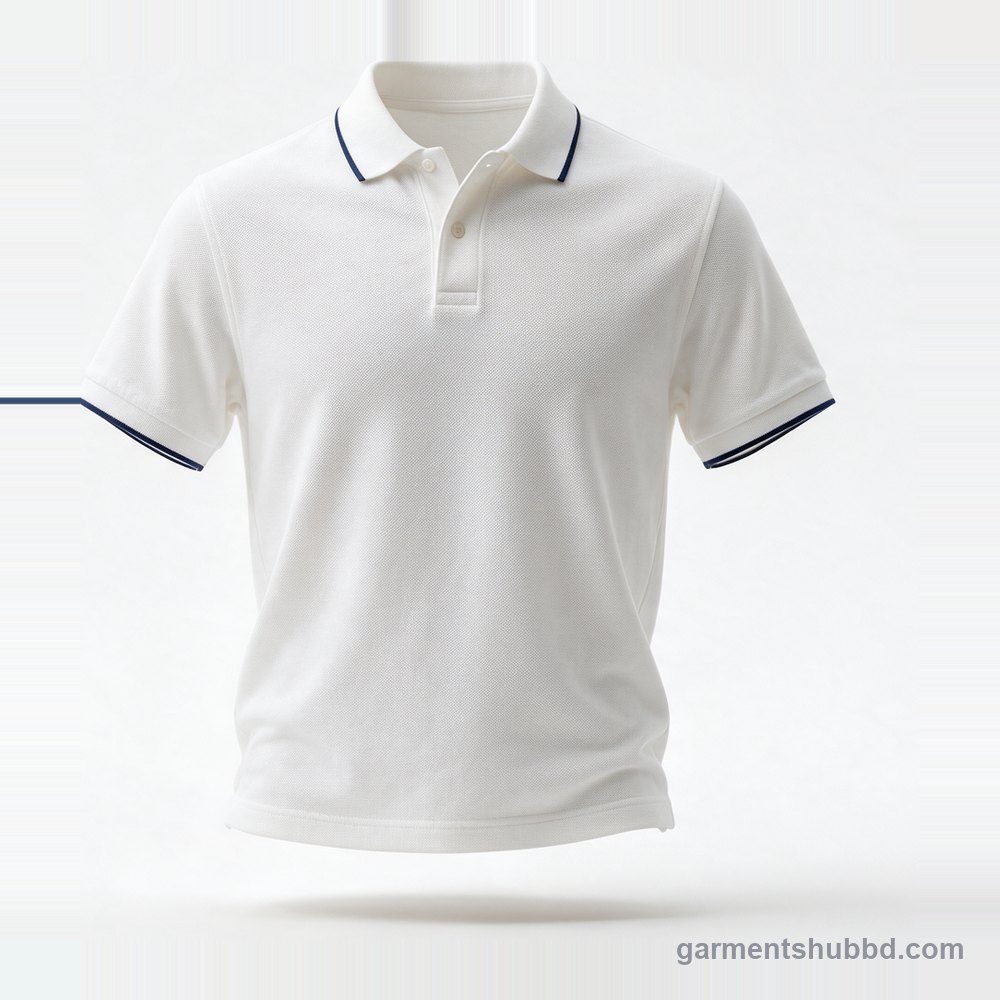
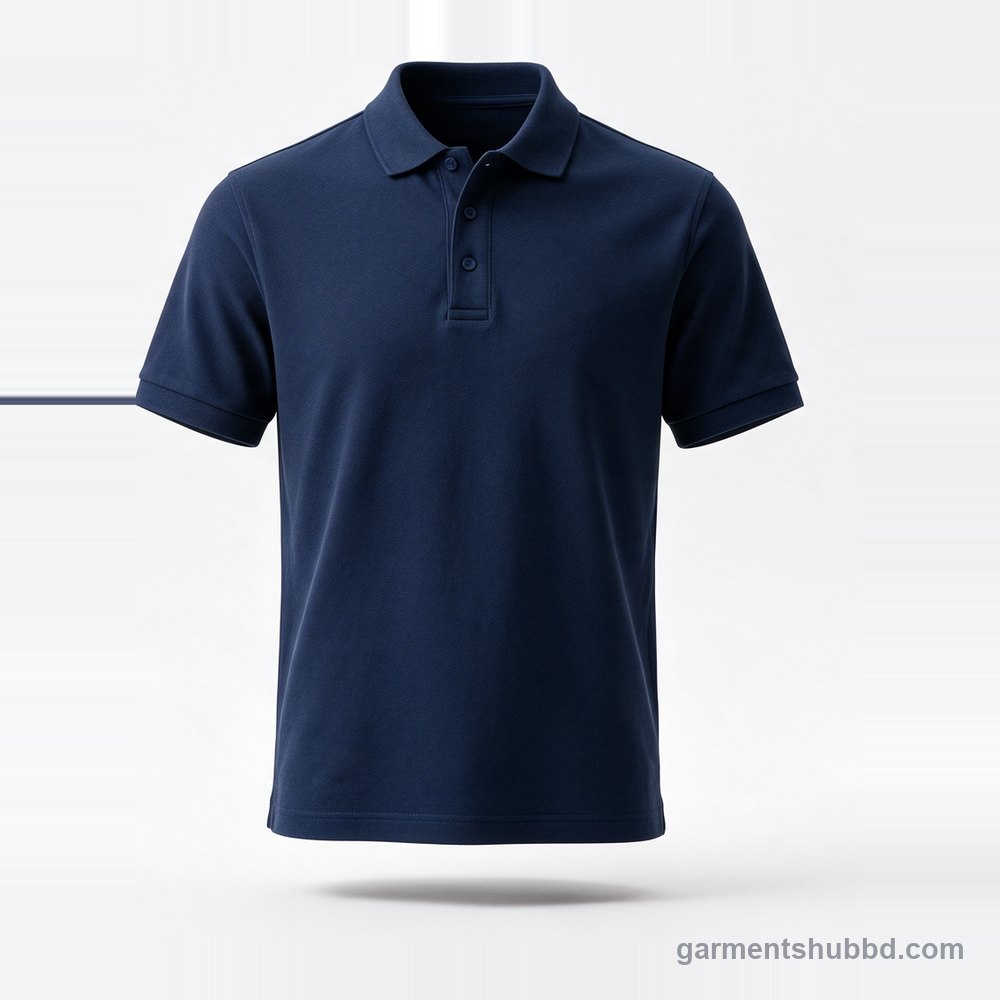
A performance polo keeps the collar and placket of a polo but swaps cotton pique for a light polyester knit that dries faster than cotton and holds its shape. Golf brands, sports clubs, corporate event organisers and outdoor staff programmes buy it. A performance polo shirt manufacturer in Bangladesh runs it in polyester knit plants that dye at high temperature, not on the cotton pique lines behind standard polos, and that changes the fabric, the collar and the tests.
Garments Hub BD asks both factories to state the knit, filament size, weight, elastane share and collar type on the quote, so two polos that look alike on paper compare like for like. Wicking and UV claims go into the specification with their tests, and the reports are dated into the timeline when named on the quote form.
Kinds of performance polo shirt
Micro pique golf polos
A fine polyester pique, often with 5 to 10 percent elastane, smooth enough to sublimate and with stretch through the swing. The core golf and club polo, usually with a self fabric collar.
Birdseye mesh polos
A knit with small open holes in a regular pattern for airflow in heat. Suits summer events and hot climate staff; pale shades can show through, so opacity is judged on the sample.
Interlock performance polos
A smooth double knit, denser and more opaque than mesh, with a soft hand. Suits corporate polos that must look neat under logos and printed panels.
Sublimated panel polos
White polyester printed with panels, stripes or full designs before sewing, for club and event colours. The print lives in the fibre and will not crack, but it works only on polyester.
How to specify a performance polo shirt
- Knit, filament and weight
- Micro pique, birdseye or interlock, the filament size, such as 75 or 100 denier, and the weight, usually 140 to 180 GSM. Finer filaments feel softer and snag more easily.
- Elastane share
- Plain polyester, or polyester with elastane, typically 5 to 10 percent, for stretch across the shoulders. Elastane adds cost and needs gentler heat in dyeing and setting.
- Collar
- A self fabric collar cut from the body knit, light and quick drying, or a flat knit polyester collar with a firmer edge. A self fabric collar needs a stiffened stand or it lies limp.
- Wicking claim and washes
- If the hangtag says wicking, name AATCC 197 or AATCC 195 and the number of home washes after which the fabric must still pass.
- UV claim
- If the polo will carry a UPF, name the market and the test, and test each colour that carries the claim.
- Logos on dark polyester
- Heat transfer, sublimation or embroidery. On dark polyester, dye can migrate into a white transfer and tint it, so ask for a low migration ink and a heat test.
Tests to ask a performance polo shirt manufacturer in Bangladesh for
- AATCC 197 and AATCC 195
- Vertical wicking and moisture management, the evidence behind a wicking hangtag. Ask for both after the number of washes the claim promises, as a finish can fade.
- AS/NZS 4399 or EN 13758-1
- UPF testing. AS/NZS 4399 tests and classifies for Australia and New Zealand; EN 13758-1 is the EU method, and under EN 13758-2 the UV mark needs UPF 40 or above.
- ISO 105-B02
- Golf and outdoor staff polos spend hours in sun, so ask for a light fastness grade on bright shades, read on the 1 to 8 blue wool scale.
- ISO 12945-2
- Pilling on the modified Martindale. Polyester pills cling, and a golf polo rubs at the forearm, the side and under a bag strap.
What moves the price of a performance polo shirt
- Elastane: polyester elastane knits cost more per kilo than plain polyester.
- Yarn: fine microfibre or wicking cross section filaments cost more than standard filament.
- Wicking and UV finishes, plus the tests and washes behind each claim.
- Collar choice: a flat knit collar is a separate knitted and dyed piece.
- Sublimated panels, which add paper, ink and pressing to each piece.
Lead time for performance polo shirts
Polyester knit in white or a mill's stock colours dyes quickly, so plain performance polos usually move fast. Elastane blends and custom shades add lab dip rounds, a flat knit collar is knitted and dyed on its own, and sublimated designs need a strike off on the bulk fabric. A UPF or wicking report adds laboratory days before fabric approval, and each appears as a dated step on the quote.
What we check on performance polo shirts before shipment
- Collar stand and pointsSelf fabric collars checked for a firm stand and flat points, and knit collars for shade against the body.
- Transfer migrationWhite and light transfers on dark polos checked after a heat test for pink or grey tinting from the dye.
- Sublimation alignmentSublimated panels checked for print alignment at the side seams and for white lines where the paper creased.
- Seam stretchSide seams and armholes on elastane knits stretched by hand to check no stitches crack.
Questions buyers ask about performance polo shirts
What is the difference between a performance polo and a cotton pique polo?
Fibre and plant. A performance polo is knitted from polyester, often with elastane, dyed at high temperature and usually given a wicking finish; it is light and dries faster than cotton, and the wicking and light fastness are tested rather than assumed. A cotton pique polo feels natural but holds more moisture and dries slower. Different knit plants usually make the two.
Self fabric or knitted collar on a golf polo?
Self fabric collars are light, match the body exactly and dry fast, which suits golf and sport. A flat knit collar keeps a sharper edge and looks more corporate, but it is knitted and dyed separately, so its shade is approved against the body. Both need a firm stand.
Can a performance polo carry a UPF rating?
Only with a test on the actual fabric and colour. AS/NZS 4399 serves Australia and New Zealand; in the EU, EN 13758-1 tests and EN 13758-2 classifies, with the UV mark from UPF 40. Tight, dark polyester knits usually test higher than pale mesh.
Why does a white logo turn pink on a red polo?
Polyester dyes can move into a print applied with heat, most often on red, navy and other dark shades. Ask for low migration inks or transfers, a heat test on the strike off, and dyeing suited to the shade. Sublimated logos on white polyester avoid the problem.
Get a quote for performance polo shirts
Tech pack or sketch with quantities per colour. A compared quote in 48 hours.