Softshell jackets, your specification
Made to your tech pack, fabric and colours by a factory matched to the order.
Private label
Your main label, care label, hangtag and polybag. Nominated trims accepted.
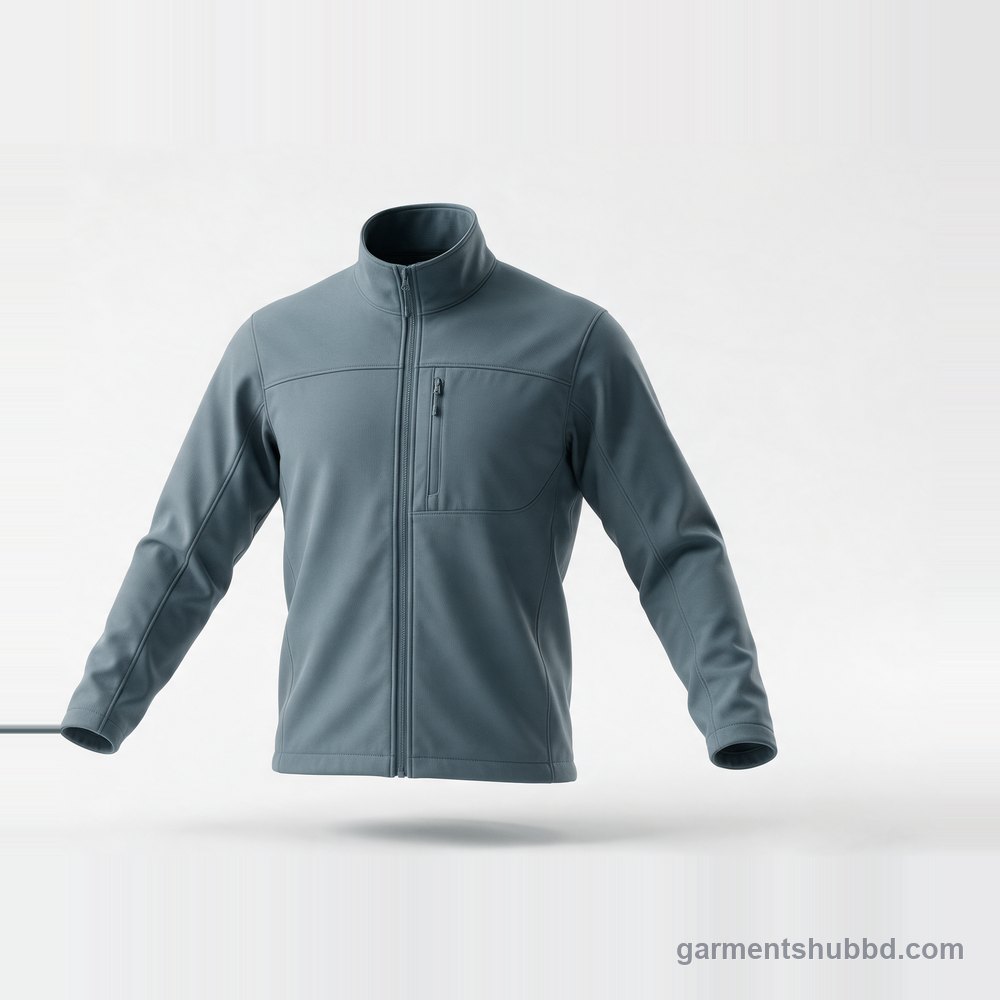
A softshell jacket is a bonded, stretchy outer layer: a woven face, sometimes a membrane, and a fleece back, joined into one cloth with no separate lining. It blocks wind, sheds light rain and breathes better than a rain shell. Work brands, outdoor ranges and corporate buyers order them for staff, teams and events. A softshell jacket manufacturer in Bangladesh is judged on the bond, the stretch and how the face handles rain.
The desk asks both factories to quote on the same bonded cloth, the same zips and the same logo method, because those three set most of the softshell price. On corporate orders the logo goes onto the fit sample, since embroidery and heat transfer behave differently on bonded cloth.
Kinds of softshell jacket
Three layer membrane softshell
Face, a breathable membrane and a fleece back bonded as one. Close to windproof and more water resistant, for outdoor and work use in cold wind.
Two layer softshell
Face bonded straight to fleece with no membrane. It breathes more and costs less but lets wind through, so it suits active wear and mild weather.
Corporate softshell
A plain cut with clean chest panels for logos, in navy, black and grey. Bought in mixed sizes for staff, so the size range matters more than features.
Work softshell
A longer back, reinforced shoulders and cuffs, tool and phone pockets, and darker shades that hide dirt. Worn over a fleece or on its own on site.
Technical outdoor softshell
Hood, laser cut vents, bonded hems and a close athletic cut. A lighter face with more stretch, made for climbing, ski touring and fast hiking.
How to brief a softshell jacket manufacturer in Bangladesh
- Layers and weight
- State the face, the membrane or none, the backing and the bonded weight, usually 250 to 350 GSM. Two layer and three layer cloth look alike in a photo.
- Stretch
- Choose two way or four way stretch and the elastane in the face. Four way stretch costs more but moves with the arms on a climbing or work cut.
- Water repellency
- Give a spray rating, not a waterproof claim. A softshell sheds rain through its face finish; with sewn seams it is not waterproof.
- Zips
- Name a water resistant coated front zip with a chin guard and inner storm flap, and the pocket zip type. Zips are a large share of the cost.
- Vents and hems
- Say where laser cut vents, bonded hems or bonded pocket openings replace stitching. Each removes needle holes but adds a bonding step.
- Logo method
- Choose embroidery, heat transfer or a rubber badge, with position and size. Heat transfers need a press temperature that leaves the bond intact.
Tests for softshell jackets
- ISO 4920 or AATCC 22
- The spray rating of the face finish. Ask for it new and after washing, since a softshell is sold on shedding rain.
- ISO 11092
- Water vapour resistance, Ret. It separates a breathable softshell from one that feels like a plastic bag on a climb.
- ISO 6330
- The domestic washing procedure. Wash a finished jacket for the agreed cycles, then check the face for bubbles, the fleece back for matting and the spray rating for loss.
- ISO 12945-2
- Pilling of the fleece back by modified Martindale. The inside rubs on every layer worn beneath it, and a pilled back makes a new jacket look old.
What moves the price of a softshell jacket
- Membrane or not: three layer bonded cloth costs more per metre than two layer.
- Four way stretch faces, which cost more than two way stretch.
- The number and type of zips, coated water resistant zips above all.
- Laser cut vents, bonded hems and bonded pocket openings, each its own process.
- Logo method and the number of logo positions on corporate orders.
Lead time for softshell jackets
A softshell sample usually takes 7 to 14 days when the bonded cloth is in stock; a custom face colour has to be dyed and bonded first. Bulk usually runs 30 to 60 days after PP approval, behind the bonding of the bulk cloth. A new colour, a wash test on the bond and corporate logo sign off each add days. The quote confirms the schedule.
What we check on softshell jackets before shipment
- Bond after washingA washed jacket from bulk checked for bubbles, blisters or peeling on the body panels and at seam allowances.
- Spray test on bulk clothA panel of bulk cloth spray tested against the approved rating, since finishes vary between batches.
- Front zip and chin guardThe front zip run end to end, the placket checked for waviness and the chin guard checked over the zip head.
- Logo applicationPosition, size and colour checked against the approved sample, with no puckering around embroidery and no shine marks around transfers.
Questions buyers ask about softshell jackets
Is a softshell jacket waterproof?
No. A softshell is water resistant: the face finish sheds light rain and a membrane slows water further, but the seams are sewn and untaped. For steady rain a taped shell is the right garment. Sell the softshell on wind, stretch and breathability, with a spray rating behind the rain claim.
Embroidery or heat transfer for our logo?
Embroidery lasts and suits corporate jackets, but every needle hole passes through the membrane and can let water in, so keep it small and on the chest. A heat transfer leaves the membrane whole but must be pressed cool enough to spare the bond. Try both on the fit sample.
Do we need the membrane?
For wind and cold, yes: a three layer softshell blocks wind far better than a two layer one. For hard exertion in mild weather, two layer breathes better and costs less. Choose by how and where the jacket is worn.
Should a corporate softshell come in men's and women's fits?
Usually yes. A unisex cut fits most men but sits wide on the shoulders and tight on the hips for many women, and staff notice. Two fits double the pattern work but not the logo set up. Give the women's fit its own size ratio.
Get a quote for softshell jackets
Tech pack or sketch with quantities per colour. A compared quote in 48 hours.