Windbreakers and rain jackets, your specification
Made to your tech pack, fabric and colours by a factory matched to the order.
Private label
Your main label, care label, hangtag and polybag. Nominated trims accepted.
Light shells sell to outdoor, running, school, festival and promotional buyers, and the usual complaint is a jacket sold as waterproof that leaks. A windbreaker and rain jacket manufacturer in Bangladesh makes two different things under one name. A windbreaker is a woven polyester or nylon shell with a water repellent finish that sheds a shower. A rain jacket uses coated or laminated cloth that holds water out under pressure, and its seams decide whether it really does.
Put the claim you want on the hangtag, water repellent or waterproof, on the quote form. The factories then quote a cloth and a seam method that can carry it, and the test reports go into the timeline. Seam sealed and bonded jackets each have a page of their own; this page covers the lighter shells.
Kinds of windbreaker and rain jacket
Unlined windbreakers
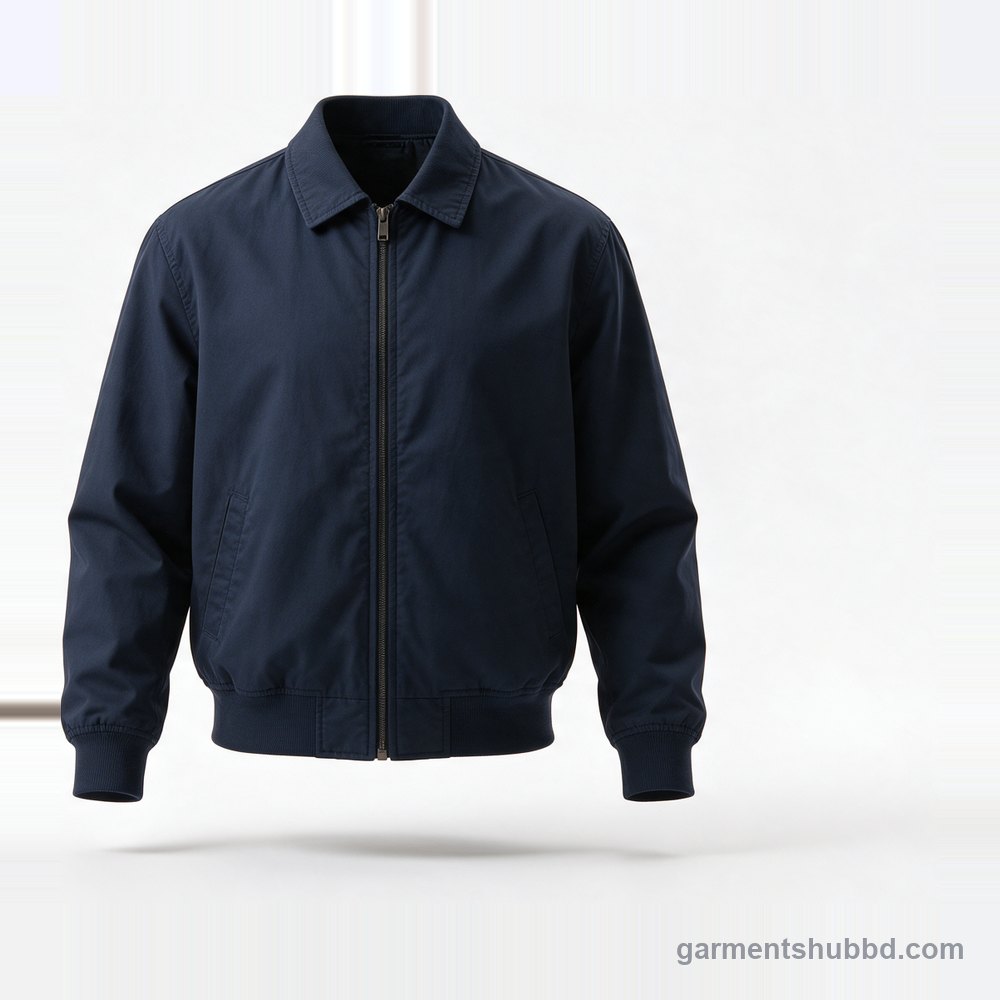
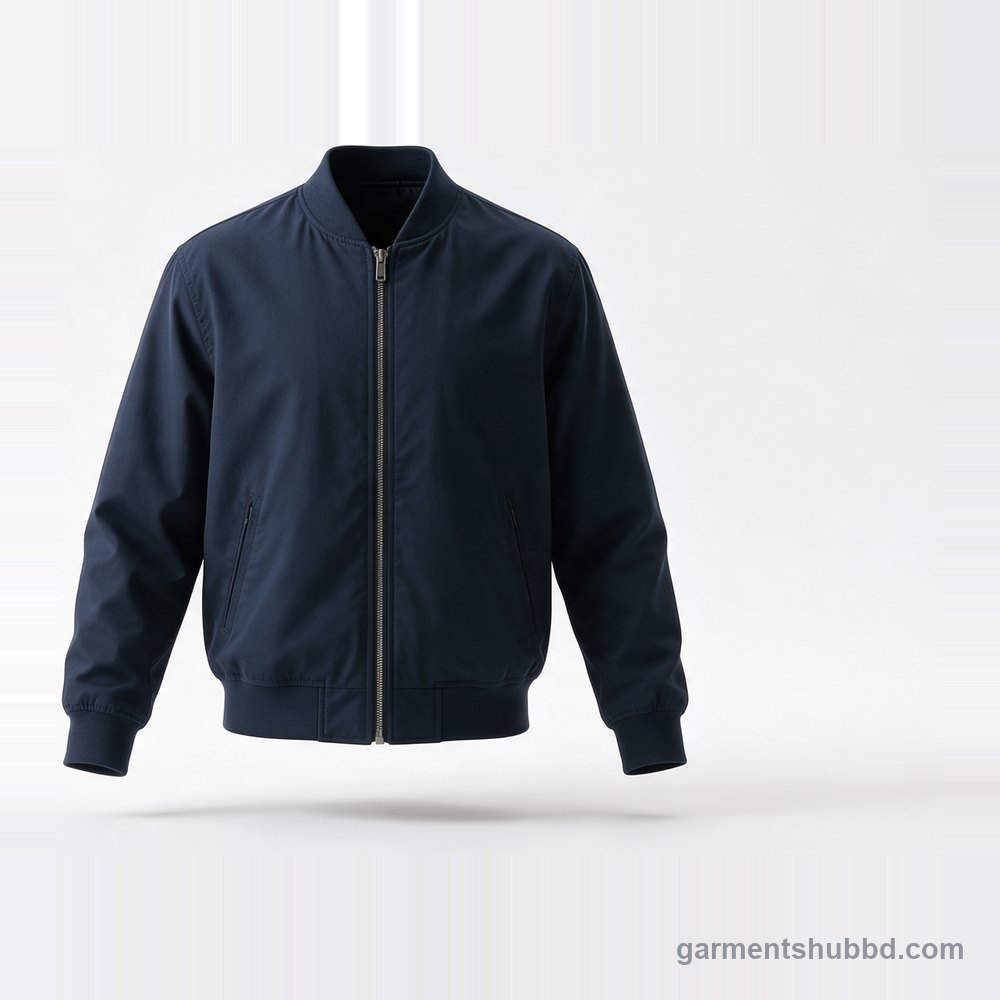
Woven polyester or nylon taffeta or ripstop with a durable water repellent finish, half or full zip, often with a hood rolled into the collar. Blocks wind and light showers, not rain.
Packable shells
Light ripstop, usually 15 to 40 denier, that folds into its own pocket or a stuff sack. Bought for running, travel and events, where weight and packed size are the selling points.
Coated rain jackets
Polyester or nylon with a PU or PVC coating on the back, usually with a mesh or taffeta lining to cover it. Waterproof cloth at lower cost, but less breathable.
Laminated rain jackets
A waterproof breathable membrane laminated to the face fabric as two, two and a half or three layer cloth. Breathes better than a coating, and needs taped seams to be waterproof.
Ponchos and rain capes
Coated polyester or PVC, often one size, with a hood and side poppers, frequently printed for events. The simplest shell to sew; PVC versions need a chemical compliance check for the EU.
How to brief a windbreaker and rain jacket manufacturer in Bangladesh
- Claim first
- Decide water repellent or waterproof before choosing cloth. Each claim needs a different fabric, seam and test, and the hangtag must match the result.
- Shell fabric
- Fibre, weave and denier: taffeta, ripstop or oxford. Nylon is softer and stronger at light weights; polyester holds colour and costs less.
- Coating or membrane
- PU, PVC or membrane, the layer build, and a hydrostatic head target, usually 5,000 to 10,000 mm for an everyday rain jacket.
- Seams
- Plain sewn for windbreakers; taped or welded for waterproof jackets. Taping needs its own machine and operator, so name it in the spec.
- Lining
- Unlined, mesh or taffeta. A mesh lining keeps a coated back off the skin and lets air move inside the jacket.
- Adjusters and trims
- Hood and hem shock cord with cord locks, cuff tabs, zip garage, storm flap, and reflective prints or tape, each with position and size.
Tests for windbreakers and rain jackets
- ISO 4920 or AATCC 22
- Spray test for surface water repellency. Supports a repellent claim; ask for the rating after washing too, because finishes wear off.
- ISO 811
- Hydrostatic head: the water column, in millimetres, the cloth holds before leaking. Supports a waterproof fabric claim; seams need separate checking.
- ISO 11092
- Water vapour resistance, Ret. Run it only when the hangtag claims breathability; a lower Ret means the cloth breathes more.
- EN ISO 24232
- The EU standard for protective clothing against rain. It replaced EN 343 in 2025 with the same classes and pictogram. Needed when a jacket is sold as protective equipment, not for fashion rainwear.
- EN 14682
- EU rules on cords and drawstrings in children's clothing. Hood cords on kids' rain jackets are restricted, so use elastic or a fixed adjuster.
What moves the price of a windbreaker or rain jacket
- Fabric build: plain taffeta, coated cloth and three layer laminate sit at very different costs per metre.
- Seam taping or welding, a machine pass on every seam that must keep water out.
- Hood construction: stowable, adjustable or detachable hoods add parts and operations.
- Trims such as water resistant zips, cord locks, toggles and reflective details.
- The repellent finish chosen, including fluorine free finishes, and how many washes it must survive.
Lead time for windbreakers and rain jackets
Light shells move quickly when the cloth is in stock and slowly when coated or laminated cloth is made to order, which can add several weeks. A sample usually takes 7 to 14 days. Bulk lands within 30 to 60 days of PP approval. Seam taping, a hydrostatic test on bulk cloth and repellency tests after washing each add days, and the quote sets them out.
What we check on windbreakers and rain jackets before shipment
- Repellency on bulk clothBulk cloth is spray checked before cutting, since repellent finishes can vary from roll to roll.
- Seam tape adhesionTaped seams are flexed and checked for lifting at junctions and curves, where waterproof jackets usually leak.
- Hood and hem adjustersCord locks are pulled to confirm they grip, cord ends are secured, and kids' sizes are checked for loose cords.
- Coating faultsCoated backs are checked for pinholes, peeling and tackiness, and garments folded so the coating does not stick to itself.
Questions buyers ask about windbreakers and rain jackets
What is the difference between water resistant and waterproof?
Water resistant or water repellent means the surface sheds water, shown by a spray test. Waterproof means the cloth holds a column of water, shown by hydrostatic head, and the seams are sealed. A windbreaker with a repellent finish is not waterproof, however well it beads.
Coated or laminated rain jacket?
Coated cloth is cheaper and fully waterproof but breathes less and can feel clammy. Laminated cloth with a membrane breathes better and packs smaller, at a higher fabric cost and with taped seams required. Promotional and festival rainwear is usually coated; outdoor ranges are usually laminated.
Can a windbreaker be made packable?
Yes. Choose a light ripstop or taffeta, keep trims small and add a pocket the jacket folds into, with its zip on the outside. Put the packed size you want in the spec; the sample is folded and measured against it before approval.
Does reflective trim make a jacket high visibility?
No. Reflective tape or prints help at night, but high visibility clothing for work must meet EN ISO 20471 in the EU or ANSI/ISEA 107 in the US, with set areas of fluorescent and retroreflective material. A fashion shell should not use those words.
Get a quote for windbreakers and rain jackets
Tech pack or sketch with quantities per colour. A compared quote in 48 hours.