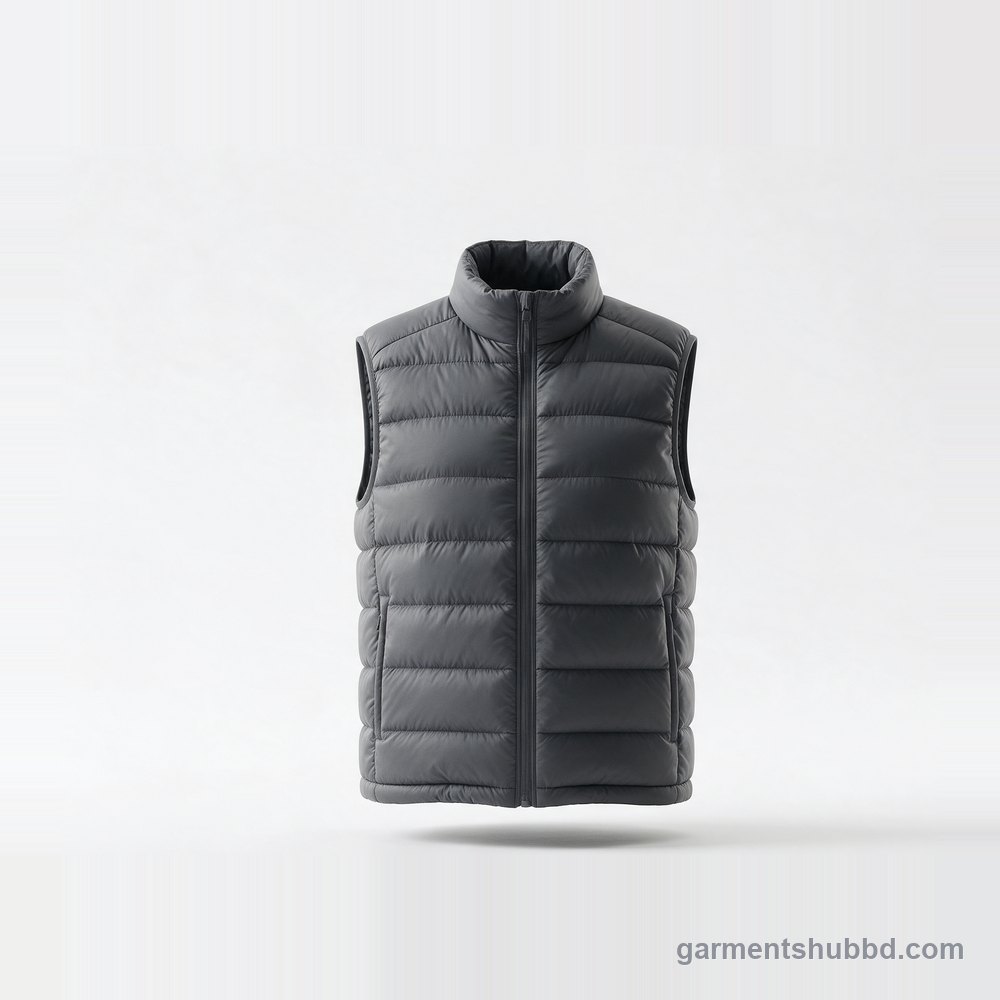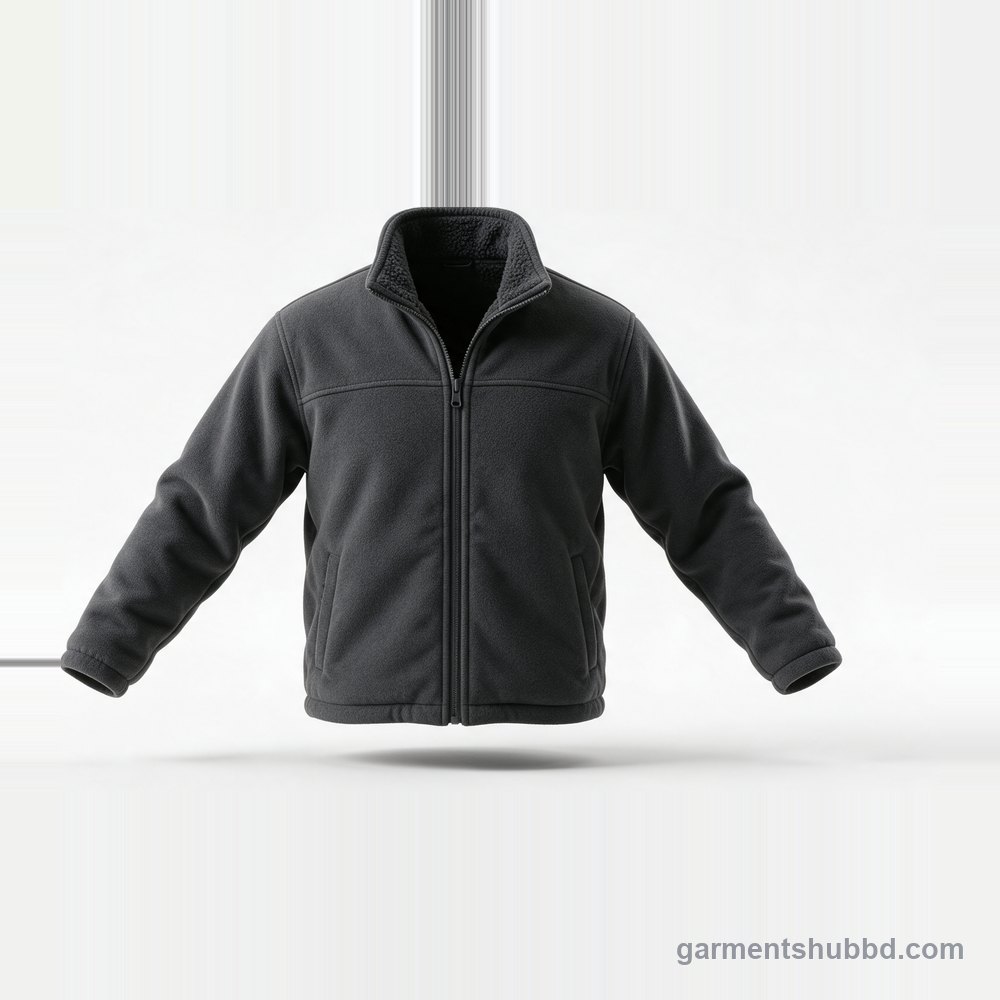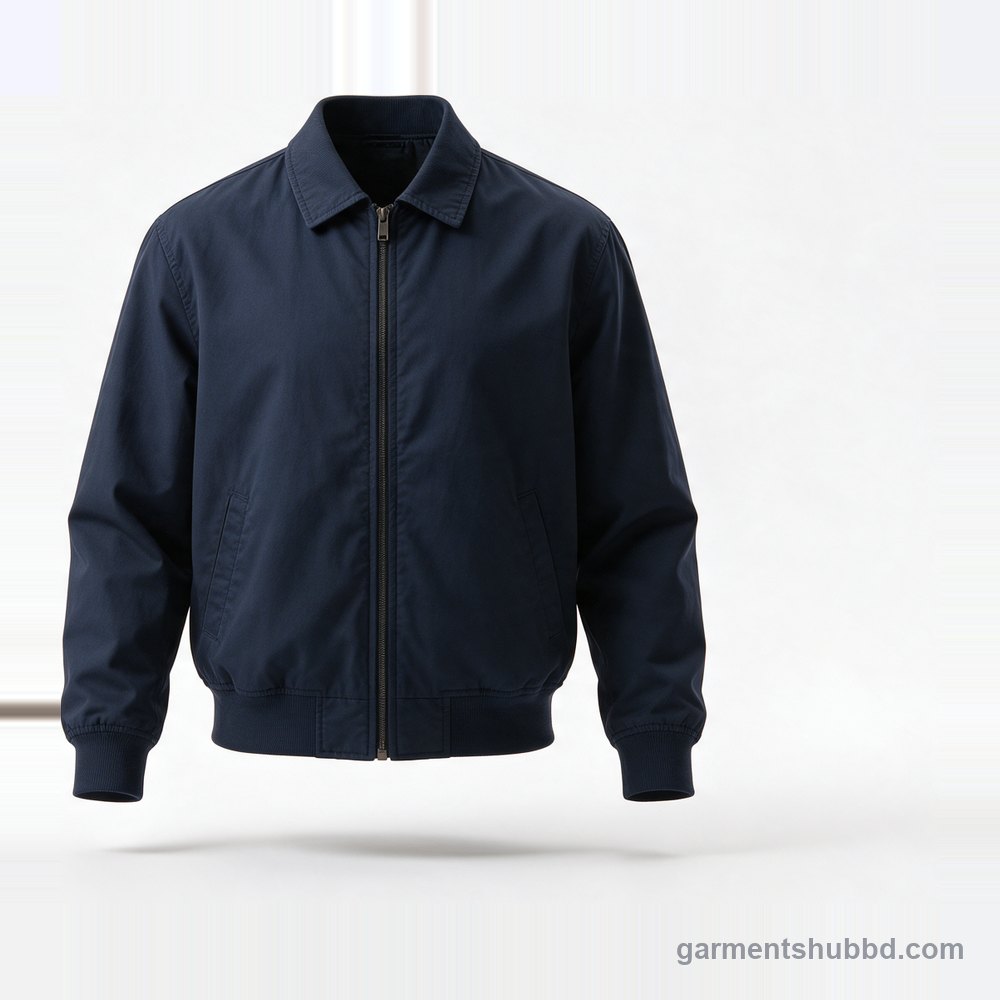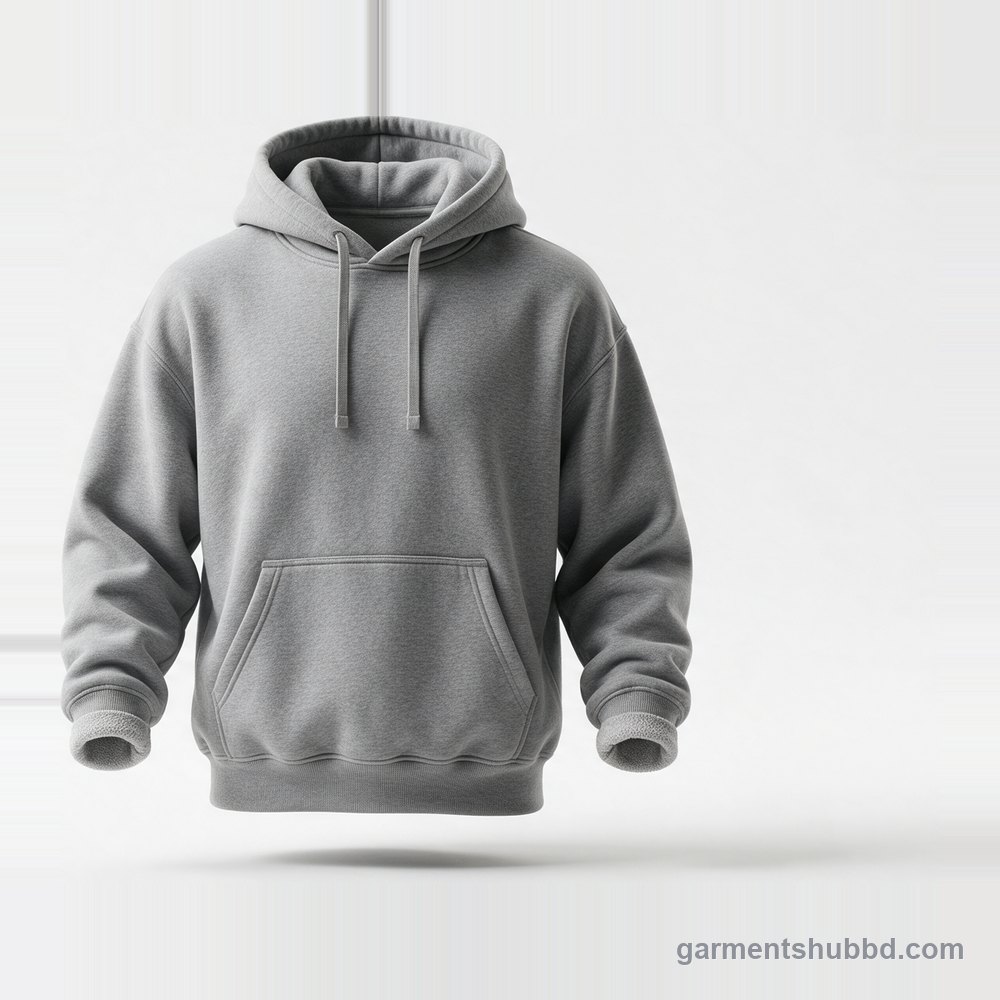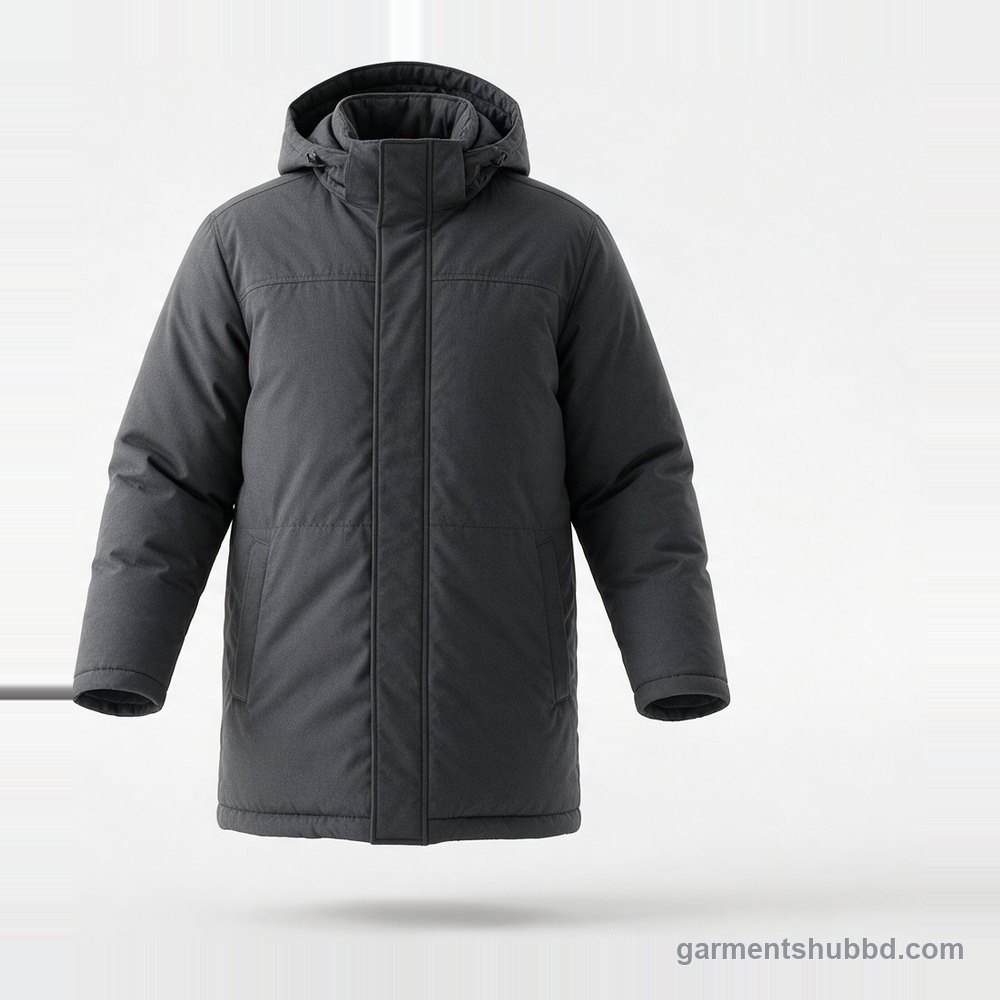
Winter coats, your specification
Made to your tech pack, fabric and colours by a factory matched to the order.
Private label
Your main label, care label, hangtag and polybag. Nominated trims accepted.
A winter coat is a long, insulated outer garment: a heavier shell, usually wool blend or a woven textile, over a quilted lining that carries the warmth. It sits between a tailored wool overcoat, built on canvas and shaped by pressing, and a parka, which is hooded and made for weather. A winter coat manufacturer in Bangladesh sews it on an outerwear line with fused fronts and quilted linings, which keeps it below a tailored coat on price.
Garments Hub BD sends the outer cloth, lining and wadding weight to two factories on its bench, so both quotes cover the same build. Body length is checked on fit samples at both ends of the size range before grading is signed off. Linings and fused fronts are photographed at inline inspection, and factories are matched to the social and safety certificates your buyer requires.
Kinds of winter coat
Wool blend coat with quilted lining
A wool and polyester outer, usually 400 to 650 GSM, over a lining quilted to thin wadding. Looks like a tailored coat from outside, at a lower price and with more warmth.
Long padded textile coat
Polyester or nylon outer wadded throughout, usually 120 to 200 GSM, quilted in wide panels. Warm, light and washable; the city coat for cold winters.
Belted women's coat
A shaped waist with a self belt and a fuller skirt below it. Needs its own block, with belt loop positions and waist height graded by size, not copied from the men's pattern.
Mid thigh insulated coat
Shorter, with a zip and stud front and a stand or funnel collar. Uses less cloth, sells into milder winters and meets jackets on price.
How to specify a winter coat
- Outer cloth
- Give fibre content, construction and GSM. On wool blends, state the wool percentage, since it drives hand, warmth and price.
- Lining and wadding
- Lining cloth, wadding weight, typically 60 to 100 GSM inside a wool blend coat, and the quilting pattern. Smooth taffeta sleeve linings let the coat slide on over knitwear.
- Interlining
- Fusible interlining on fronts, facings, collar and pocket welts, by weight. It takes the place of a tailored coat's canvas and keeps the front flat.
- Length and grading
- Give centre back length per size, usually graded 1 to 2 cm per size. Too small a grade crops the large sizes; too large swamps the small ones.
- Sweep and vents
- Give hem sweep and a back vent or side slits. A knee length coat without enough sweep shortens the stride.
- Closure
- Buttons, zip, studs or a combination, with a wind flap if zipped. Give button size, and the button count per size if it changes.
Tests to agree with a winter coat manufacturer in Bangladesh
- ISO 12945-2
- Pilling by modified Martindale on the outer. Wool blends pill where bag straps and seat belts rub, so ask for a grade on the bulk cloth.
- ISO 13936
- Seam slippage in woven fabric, run on the lining. Smooth polyester linings slide open at the armhole and centre back under strain when seam allowance or stitch density is too low.
- Wool Products Labeling Act and Regulation (EU) No 1007/2011
- Fibre labelling for wool in the US and for fibre names in the EU. Outer and lining are each declared by fibre, so collect every composition from the mills before labels are printed.
What moves the price of a winter coat
- Outer cloth and its wool content, usually the largest single cost in a wool blend coat.
- Length: a knee length coat uses clearly more outer, lining and wadding than a mid thigh one.
- A quilted lining against a plain lining, adding wadding and a quilting step.
- Size range: larger sizes use more cloth, and an extended range may carry a price step.
- Buttons, belts, buckles and zips, and how many of each the design carries.
Lead time for winter coats
Fit samples usually take 7 to 14 days, and a coat often needs a second fit round to settle length and sweep across sizes. Bulk coats usually run 30 to 60 days after written PP approval. Outer cloth woven or dyed for you adds days at the mill, and quilting the lining is a separate step before sewing. The quote sets out each date.
What we check on winter coats before shipment
- Length per sizeCentre back length is measured on every sampled size against the graded chart; grading errors on a long coat show as cropped or swamping sizes.
- Lining hangThe lining sits clear of the hem with a jump pleat at back and hem, so it neither drops below the outer nor pulls it.
- Fused frontsFronts, facings and collar are checked after pressing for bubbles or ripples, which show where the fusing did not bond.
- Quilting show throughLining quilting stitches stay inside and never show on the outer, and the wadding lies even without lumps at the hem.
Questions buyers ask about winter coats
How does a winter coat differ from a tailored wool overcoat?
A tailored overcoat is built on canvas and shaped by pressing, with little or no wadding. A winter coat uses fused fronts and a quilted lining for warmth, so it is warmer for its price and quicker to make, but holds a less sculpted shape.
When should I choose a winter coat over a parka?
Choose a coat for city and office wear, where a clean front and a collar matter more than a hood. A parka suits wet, windy weather and casual ranges, with a hood, storm flap and drawcords. Many ranges carry both in the same colours.
How is body length graded on a long coat?
By a set amount per size, usually 1 to 2 cm at centre back, chosen with the chest grade so proportions hold. Check it on fit samples at both ends of the range, since a coat that looks right in the middle size can look cropped at the top.
Can a winter coat be machine washable?
A padded textile coat can be, if the wadding and quilting are built for it and the care label is tested. Wool blend coats are usually labelled for dry cleaning, because wool can felt and fused fronts can bubble in a machine wash.
Get a quote for winter coats
Tech pack or sketch with quantities per colour. A compared quote in 48 hours.