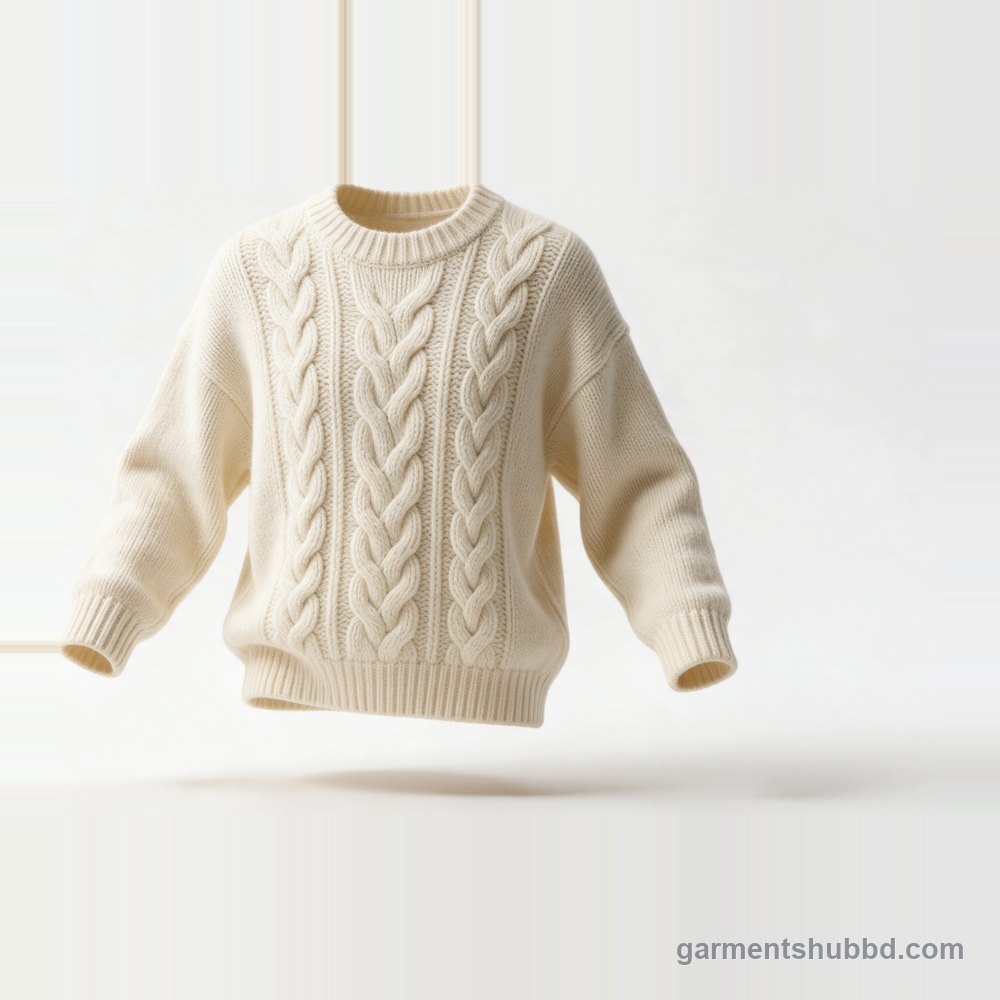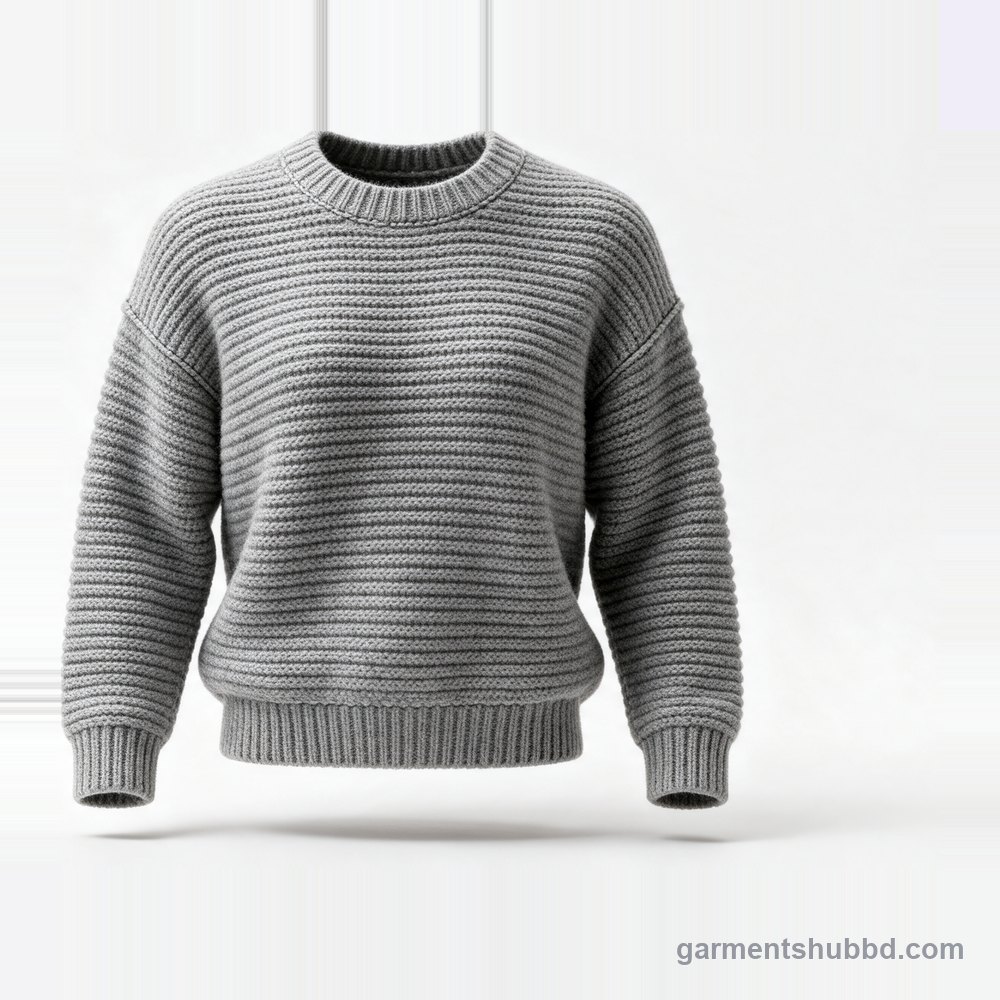
Wool sweaters, your specification
Made to your tech pack, fabric and colours by a factory matched to the order.
Private label
Your main label, care label, hangtag and polybag. Nominated trims accepted.
Wool sweaters are the winter core of knitwear ranges for colder markets: crew and V-neck jumpers, chunky knits and fine merino layers. They are bought for warmth and for a hand feel that acrylic only imitates. Brief a wool sweater manufacturer in Bangladesh on fibre, yarn count and gauge first, because those three fix the weight, the warmth and most of the price before a style is drawn.
Garments Hub BD asks both factories to quote the same fibre, micron where it matters, yarn count and target weight per piece, so the comparison sheet does not set a merino quote against a blend. Where you need RWS wool, the factories are matched to that certificate. The lab dip is approved on the actual yarn, not on a swatch of something else.
Kinds of wool sweater
Lambswool
Wool from a sheep's first shearing: soft, slightly hairy and lofty, with a classic dry hand. A long standing choice for crew and V-neck jumpers at 7 to 12 gauge. It felts if washed hot.
Merino
Fine wool, usually 18.5 to 21.5 micron for knitwear, smooth enough to wear against the skin. It knits well at 12 gauge and finer and is the usual fibre for machine washable ranges.
Wool and nylon blend
Commonly 70 or 80 percent wool with nylon for strength. The nylon helps elbows and cuffs resist wear while the jumper still looks and feels like wool.
Wool and acrylic blend
Acrylic lowers cost and weight and makes washing easier; wool keeps some warmth and handle. A 30 percent wool jumper is labelled and sold as a blend.
Chunky wool at 3 and 5 gauge
Thick, warm knits from heavy yarn or several ends knitted together. Fewer, larger stitches knit quickly per panel, but the yarn weight per piece is high.
How to specify a wool sweater
- Fibre and micron
- Name the wool type and, for merino, the micron. Finer micron feels softer and costs more; lambswool is usually bought on hand feel rather than micron.
- Yarn count and ends
- Give the metric count and ply, for example 2/28, and how many ends are knitted together. Count and gauge must suit each other or the knit is loose or boardy.
- Gauge
- 3 and 5 gauge for chunky knits, 7 for a mid weight jumper, 12 for a fine knit. A lower gauge means fewer, larger stitches.
- Weight per piece
- Knitwear is costed on yarn weight, so give a target finished weight in grams for one sample size, with a tolerance.
- Washability and softening
- State hand wash, machine wash or dry clean; machine wash needs shrink resist treated yarn. Fix the softening wash recipe at PP sample stage.
- Moth and storage
- Say whether any insect resist finish is allowed. Many buyers accept none and manage moth risk with clean, dry packing and storage.
Tests a wool sweater manufacturer in Bangladesh is asked for
- ISO 5077 with ISO 6330
- Washing shrinkage of the finished jumper. On wool, separate relaxation, which happens at the first wetting, from felting, which keeps growing with every agitated wash.
- RWS
- Responsible Wool Standard: animal welfare and land management, mulesing not allowed. It moves into the Materials Matter Standard, with audits to it from 31 December 2026, so ask for a current certificate.
- Wool Products Labeling Act
- The US rule for wool labels: fibres listed by percentage of weight, and wool that has been used before must be named recycled wool.
- Regulation (EU) No 1007/2011
- The EU fibre names rule. Terms such as virgin wool or fleece wool may only be used for wool that meets their conditions.
What moves the price of a wool sweater
- Micron: fine merino costs more per kilo than lambswool or standard wool.
- Wool share of a blend, since wool costs more per kilo than acrylic or nylon.
- Yarn weight per piece: a chunky 3 gauge jumper uses far more yarn than a 12 gauge one.
- Shrink resist treated yarn and RWS certified wool both cost more than standard wool.
- Softening and milling washes add a process, adjusted by hand to match the approved feel.
Lead time for wool sweaters
Wool yarn is usually bought from a spinner for each order, and a custom shade means dyeing yarn to a lab dip before knitting starts, which adds days or weeks. Shrink resist and RWS yarns have fewer sources. Fine gauges take longer on the knitting machine per panel. Steaming and relaxing before measuring add time at the end. The quote dates each of these stages for your yarn.
What we check on wool sweaters before shipment
- Weight per pieceFinished jumpers are weighed per size against the target, since a light piece means less yarn than was quoted.
- Measured after relaxingPieces rest after steaming before they are measured, so the figures hold after the customer's first wash.
- Dry before packingWool takes up a lot of moisture, so jumpers are checked dry before sealing in polybags, to avoid mildew and odour in transit.
- Label against the testThe fibre percentages on the sewn label are checked against the composition test report before packing.
Questions buyers ask about wool sweaters
Lambswool or merino for a winter jumper?
Merino if the jumper is worn next to the skin, sold as machine washable or knitted at 12 gauge and finer. Lambswool for a lofty, slightly hairy classic at 7 to 12 gauge with a drier hand, usually at a lower yarn cost. Approve the feel on a knitted swatch, not a yarn card.
Can a wool sweater be machine washable?
Yes, with shrink resist treated yarn, usually merino, and a care label that matches the test. Untreated wool felts in a machine. Ask for a dimensional change result after the washes your care label promises, and print machine wash only if the bulk yarn was tested.
Why does my wool sample measure differently after steaming?
Knitted wool is held under tension on the machine and relaxes when it is steamed or wetted. That relaxation is normal and happens once. Give your measurements on a relaxed basis and agree how pieces are relaxed, so the factory and the inspector measure the same way.
How is a wool blend labelled for the US and the EU?
By fibre percentages in order of weight. In the US the Wool Products Labeling Act sets the wool terms, including recycled wool; in the EU, Regulation (EU) No 1007/2011 sets fibre names and when terms such as virgin wool may be used. Back every label with a composition test.
Get a quote for wool sweaters
Tech pack or sketch with quantities per colour. A compared quote in 48 hours.