Work shirts, your specification
Made to your tech pack, fabric and colours by a factory matched to the order.
Private label
Your main label, care label, hangtag and polybag. Nominated trims accepted.
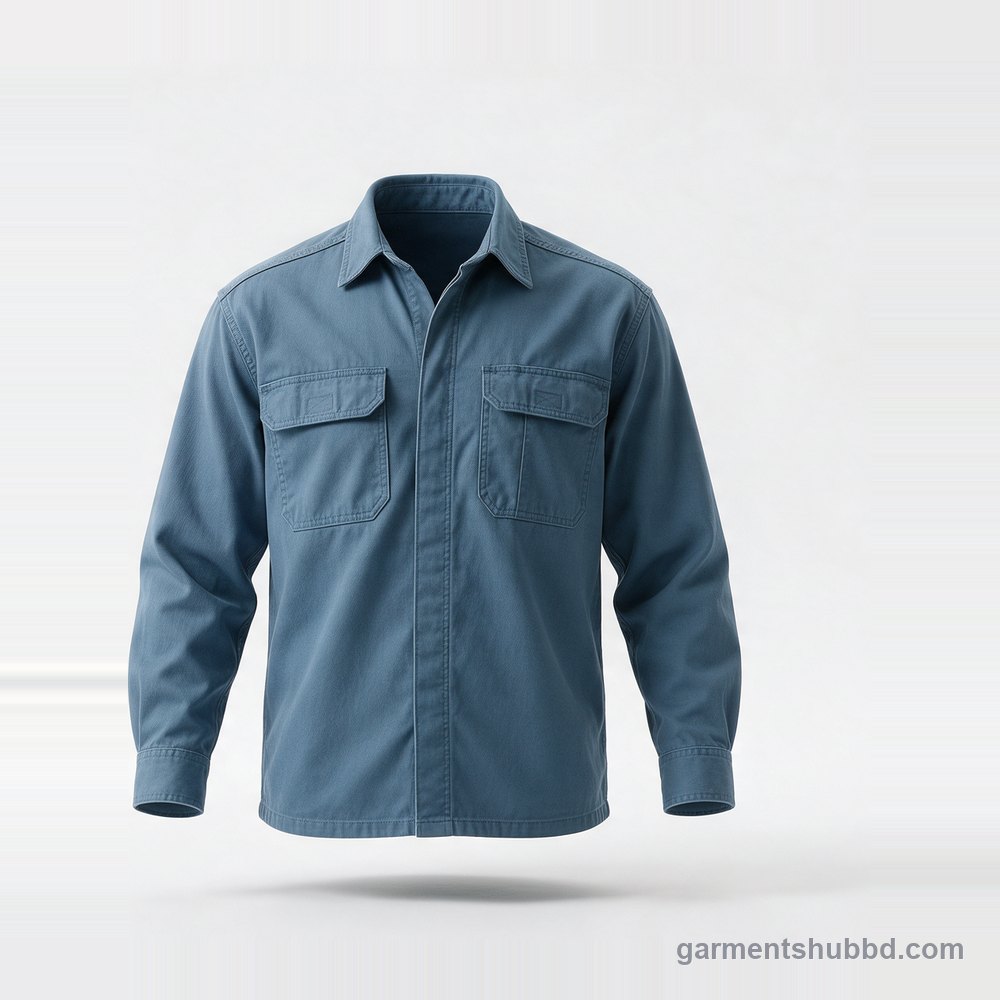
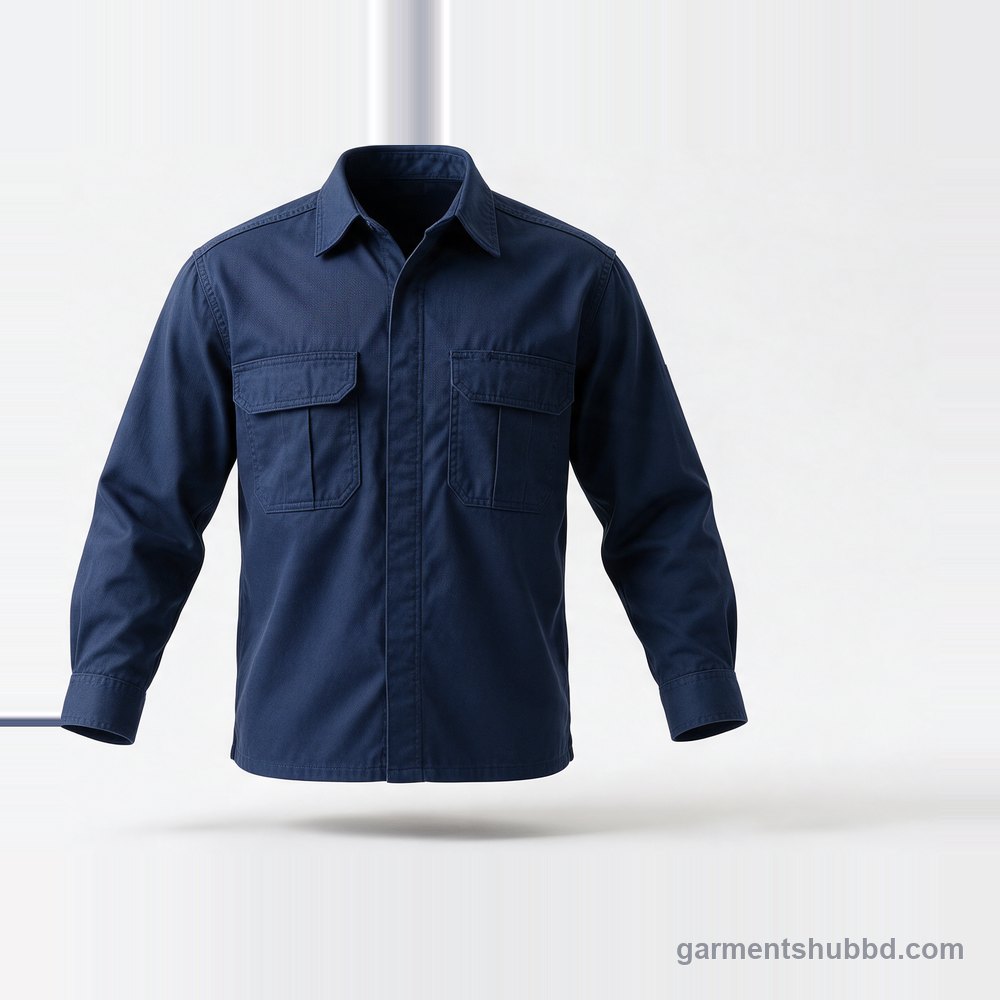
A work shirt is a woven shirt cut for labour rather than the office: heavier cloth, seams sewn twice, two flap pockets and a back cut longer so it stays tucked when the wearer bends. It dresses technicians, engineers and warehouse teams on programmes that reorder for years. A work shirt manufacturer in Bangladesh is usually asked for cloth that survives industrial laundering and keeps its colour.
The desk sends your work shirt specification to two bench factories that sew workwear, and asks both to price the same seam, thread and bar tack build, so the comparison sheet describes one shirt. A hi-vis or flame retardant version is priced as its own line. Inline inspection checks seam rows and pocket tacks while the line runs.
Kinds of work shirt
Poly cotton twill work shirts
Usually a 65/35 polyester and cotton twill around 170 to 210 GSM. It dries fast, creases less and holds a programme colour through hot laundry cycles. The usual choice for rental laundry and multi site uniforms.
Cotton twill work shirts
Heavier, usually 200 to 240 GSM, cooler against the skin and softer once washed, but it shrinks more and fades sooner at high temperatures. Suits trades and outdoor crews who wash at home.
Hi-vis work shirts
Fluorescent poly cotton with retro reflective bands on the body and sleeves. The visibility class belongs to a tested design, so this is quoted apart from the plain shirt, against the standard your customer names.
Flame retardant work shirts
Treated FR cotton or blends of inherently flame resistant fibres, sewn with FR thread, labels and interlining. The flame claim needs its own garment test report and is never inferred from the fabric alone.
How to brief a work shirt manufacturer in Bangladesh
- Cloth, blend and weight
- State blend, weave and GSM, or send a swatch. The poly cotton ratio and twill weight decide shrinkage and colour hold after a year of laundry.
- Seams and thread
- Double needle or felled side and sleeve seams, stitches per inch, and a thread heavy enough for the cloth. Light thread on heavy twill fails first.
- Pockets and flaps
- Two chest pockets with flaps is usual. Say whether flaps close with buttons, press studs or hook and loop, and where a pen slot sits.
- Back length
- Give back length separately from front length; the back is cut a few centimetres longer so the shirt stays tucked when the wearer kneels.
- Bar tack map
- Mark every bar tack on the tech pack: pocket corners, pen slot, placket base and sleeve placket.
- Programme colour
- Send a physical standard or approved lab dip and a shade tolerance, so a reorder in year two matches shirts already in service.
Tests and certificates for work shirts
- ISO 15797
- The laundry test for shirts sent to a rental or contract laundry. Ask for shrinkage and colour change after the number of industrial wash and finish cycles you name.
- ISO 13937
- Tear strength of the woven cloth. Set a minimum on FR cottons, where the finish can weaken the fabric, and ask for the bulk lot result.
- ISO 105-C06
- On navy, royal and grey programme shirts, the washing fastness grade on the 1 to 5 grey scale shows whether the shade will drift between issues.
- EN ISO 11612, NFPA 2112, EN ISO 20471
- EN ISO 11612 (EU) and NFPA 2112 (US) cover flame resistant clothing, EN ISO 20471 covers high visibility clothing in the EU, each for its own variant only. The finished shirt is tested by an accredited laboratory, with a notified body on the EU route; the sewing factory never certifies itself.
What moves the price of a work shirt
- Blend and weight: heavy cotton twill costs more than standard poly cotton, and certified FR or fluorescent cloth more again.
- Pocket flaps, pen slots and press studs, each adding sewing operations and trims.
- Programme colours dyed to a lab dip rather than taken from a mill's stock shades.
- Reflective tape, FR thread and FR labels on the variants that carry a safety claim.
- Garment test reports, paid per design on the certified variants.
Lead time for work shirts
Plain poly cotton work shirts in a mill stock colour usually sit inside the 30 to 60 days of bulk after PP approval, with 60 to 90 days typical from order to shipment. A programme colour dyed to a lab dip adds days. FR and hi-vis versions need the laboratory's garment test, booked from the quote form and shown in the timeline, and certified cloth may carry its own mill lead time.
What we check on work shirts before shipment
- Bar tacks at stress pointsEvery pocket corner, pen slot and placket base is checked for a bar tack, because a laundered pocket tears where one was skipped.
- Double needle rowsBoth rows run parallel with no skipped stitches or open ends on side seams, armholes and the yoke.
- Back hem dropBack length is measured against front length in each size, so the largest fitting still stays tucked.
- Shade against the programme standardBulk shade is compared with the approved standard under the agreed light, so reorders do not stand out beside shirts already in use.
Questions buyers ask about work shirts
Poly cotton or cotton for a work shirt?
Poly cotton for anything washed by an industrial laundry or worn by a large team, because it holds colour and shrinks less. Cotton twill for crews who wash at home and want a softer, cooler shirt. A cotton rich blend sits between the two and is worth sampling where wearers find poly cotton warm.
Can one work shirt be both hi-vis and flame retardant?
Yes, but each claim needs its own evidence. The fluorescent cloth must also be flame resistant, the reflective tape must be an FR tape, and the finished shirt is tested to both standards. That costs more and takes longer to test, so it is quoted as a separate design.
What makes a work shirt survive industrial laundering?
A blend that keeps shrinkage low, dyes chosen for hot alkaline washing, a core spun thread strong enough for the cloth, and buttons or studs that take tunnel finishing. Ask for results after ISO 15797 cycles on the PP sample rather than after a domestic wash.
Does the factory supply the safety certificate?
Not by itself. A factory can buy certified fabric and tape and sew a certified design, but the garment certificate rests on tests by an accredited laboratory, and for the EU on a notified body. If you already hold a certificate for a design, the factory must use the same tested materials.
Get a quote for work shirts
Tech pack or sketch with quantities per colour. A compared quote in 48 hours.