Woven garments, your specification
Made to your tech pack, fabric and colours by a factory matched to the order.
Private label
Your main label, care label, hangtag and polybag. Nominated trims accepted.
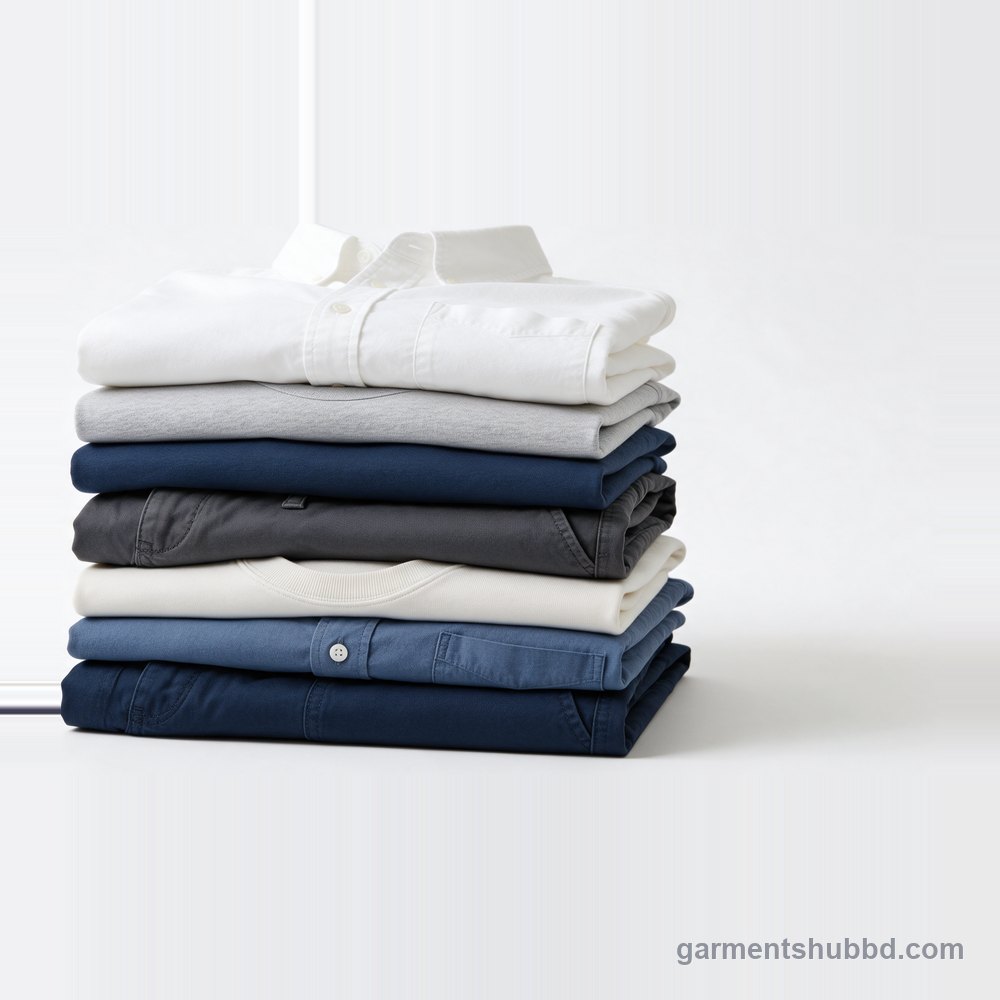
Woven cloth is warp and weft crossed at right angles, so it holds a crease, a crisp collar and a straight leg, and it forgives nothing in cutting. A woven garment manufacturer in Bangladesh runs a different floor from a knit plant: spreading tables, marker planning, fusing presses and pressing decide its quality. Buyers who sort factories by woven or knit are right to, because the machines and skills of one do not carry over.
Garments Hub BD matches a woven enquiry with factories that sew that garment in woven cloth: a shirt goes to shirt makers, a trouser to bottoms makers. The pre washing, fusing and check matching you specify go into the quote and are checked at the inline inspection, before panels are pressed and packed.
Kinds of woven garment
Shirts and blouses
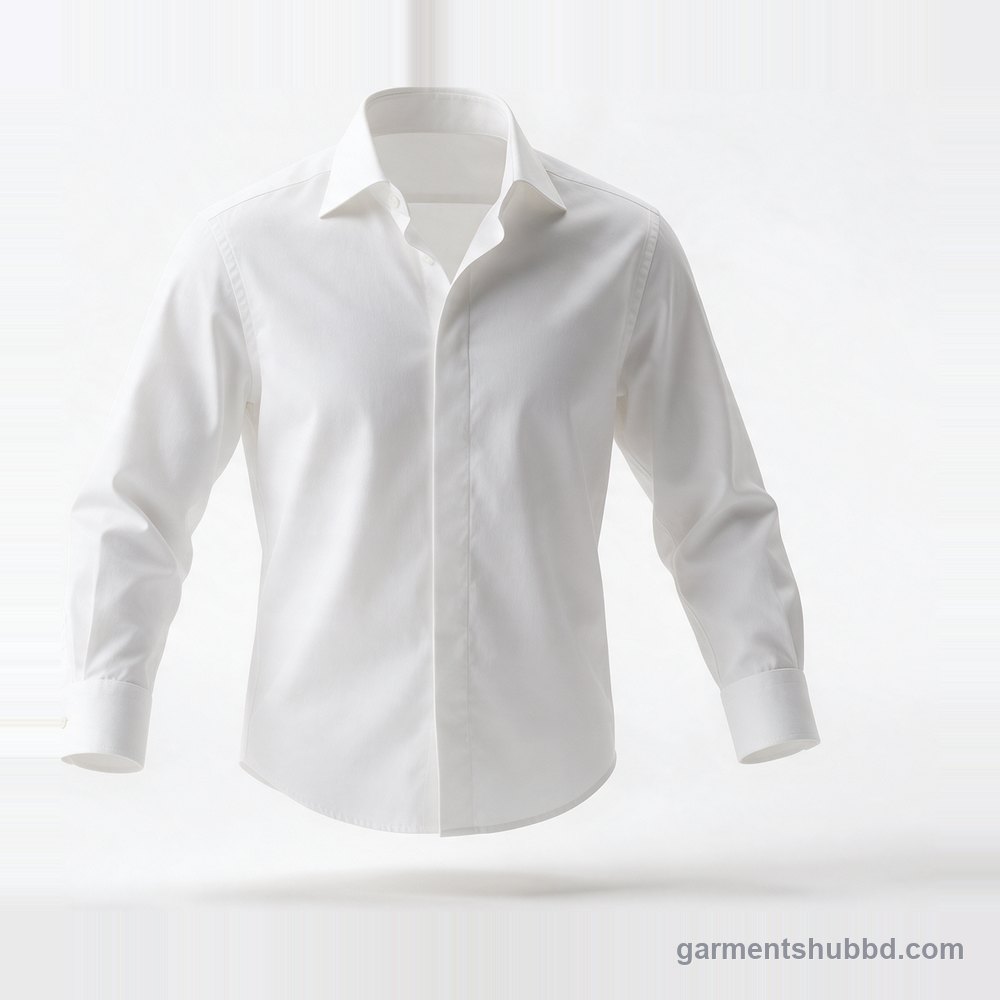
Poplin, oxford, twill, chambray, linen and flannel, with collars, cuffs and plackets fused for shape. The most operation heavy woven garment for the cloth it uses; the custom and formal shirt categories go deeper.
Trousers and shorts
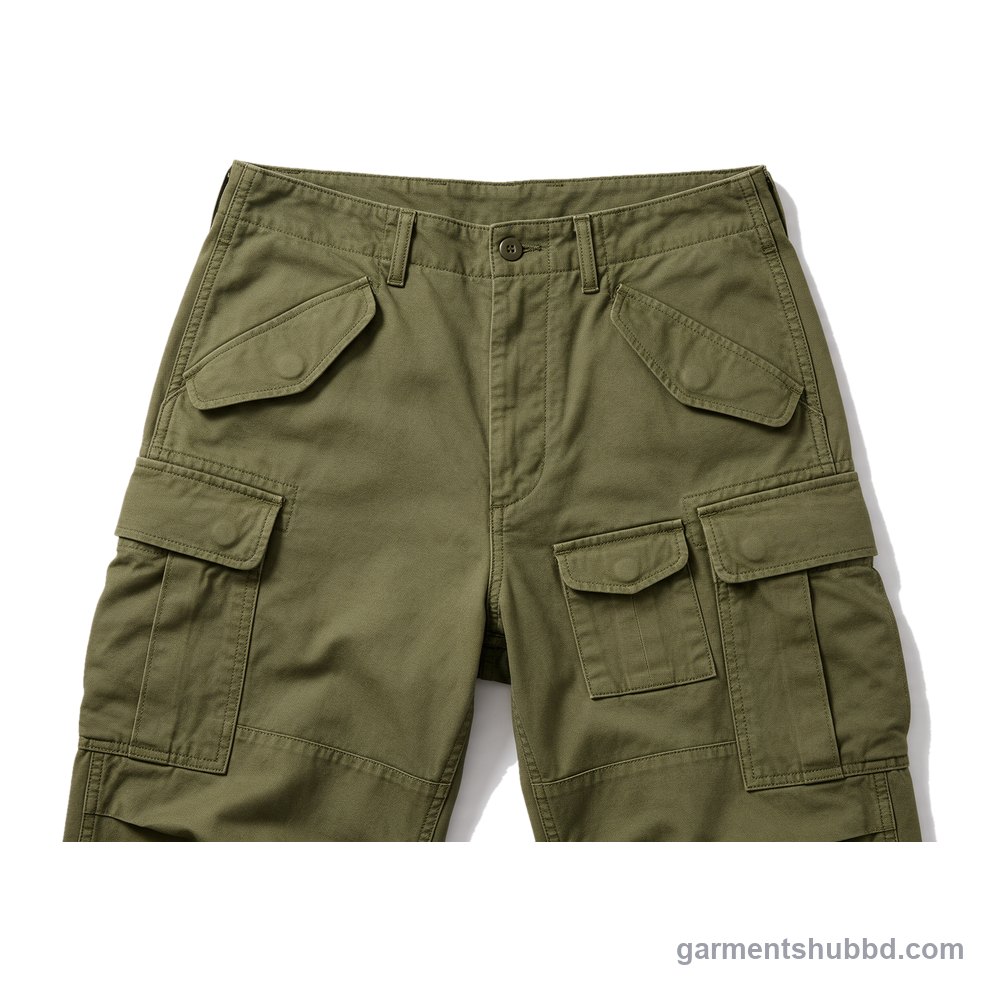
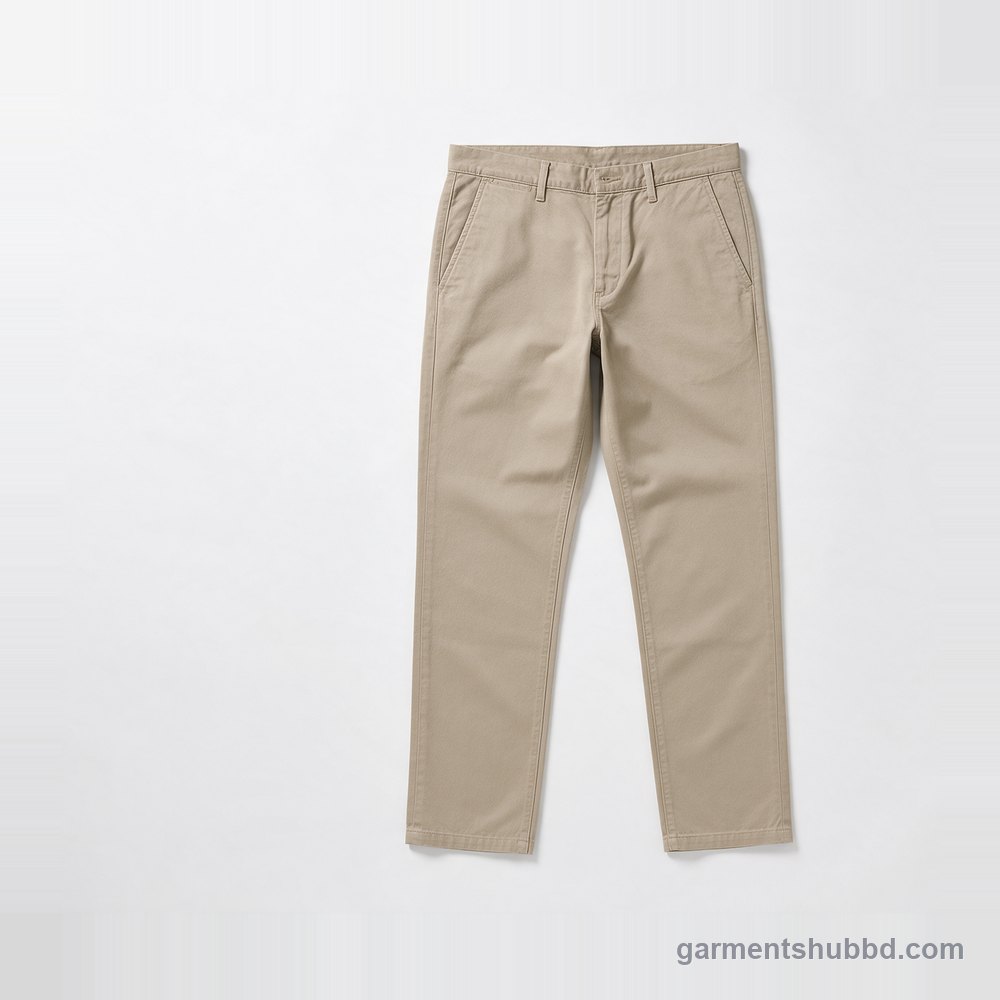
Twill, gabardine, canvas and ripstop cut into chinos, cargos and tailored trousers. Fly, waistband and pocket bags carry the construction, and shrinkage control matters most on the length.
Dresses and skirts
Poplin, viscose, linen and denim cut for drape or for structure. Bias cuts, darts and linings make them slower to sew and harder to grade than shirts.
Jackets and coats
Canvas, gabardine, wool blends and coated shells with interlinings, linings and many small parts. The trench coat and outerwear categories cover the detail; the woven skill here is fusing and pressing.
Uniforms and workwear
Poly cotton twill and poplin cut to a fixed block and reordered for years. Shade continuity between reorders and wash durability count for more than fashion detail.
How to specify a woven garment
- Cloth, weave and weight
- Name the weave, the fibre blend and the weight in GSM, plus the usable width, which sets the marker and the cloth cost per garment.
- Shrinkage control
- Say whether the cloth is pre shrunk at the mill, relaxed before cutting, or the garment washed after sewing. Each route needs its own pattern allowance.
- Interlining and fusing
- Fusible or sewn interlining for collars, cuffs, waistbands and fronts, with its weight. Fusing that is too heavy or pressed too hot bubbles after washing.
- Check and stripe matching
- List the seams that must match: centre front, pockets, yokes, collar points, side seams. Matching uses more cloth, so it changes consumption.
- Seams and stitch density
- Flat felled, French, safety stitch or overlock, and stitches per inch, usually 10 to 16 on shirts. Denser stitching looks finer and slows the line.
- Pressing and pack
- Folded with a board, flat packed or hung. Say how the garment should look out of the bag, because woven cloth shows every pressing fault.
Tests a woven garment manufacturer in Bangladesh should run
- ISO 13934-1
- Tensile strength of woven fabric. It matters on workwear and trousers that take strain at the seat and knee.
- ISO 13937
- Tear strength. Light poplin and viscose tear first at pockets and buttonholes, so ask for it on light cloth.
- ISO 13936
- Seam slippage, where yarns pull away from a seam. Smooth, loosely woven cloth such as satin or viscose fails it at side seams and armholes.
- ISO 13935
- Seam strength on load bearing seams: the seat seam on trousers and the armhole on jackets.
- ISO 5077 with ISO 6330
- Dimensional change after washing, measured on garment or cloth. Woven garments are usually held within 3 percent each way.
What moves the price of a woven garment
- Cloth cost per metre and marker efficiency, which narrow widths and large pattern pieces reduce.
- Check and stripe matching, which uses extra cloth and slows spreading and cutting.
- Sewing minutes per garment: a lined jacket takes several times the minutes of a shirt.
- How many parts are fused, and the grade of interlining used.
- Garment washing or special pressing, each a separate process with its own loss.
Lead time for woven garments
Woven orders usually take longer than knits for two reasons: the cloth comes from a separate mill, often four to eight weeks for a custom dye, and shrinkage testing and relaxing happen before cutting. A sample on stock cloth still takes the usual 7 to 14 days. A garment wash, a check woven to order or imported cloth each adds days, and the quote names them.
What we check on woven garments before shipment
- Matching pointsCentre front, pockets, yokes and collar are checked against the agreed matching points, because a mismatched check shows from across a room.
- Fusing bondCollars, cuffs and fronts are checked for bubbling and stiffness, and a washed piece confirms the fusing holds.
- Seam puckerLong seams are checked for puckering, which on woven cloth comes from tension or thread choice and does not press out.
- Measurements after pressingGarments are measured after the final press and packing fold, since pressing can stretch or set a woven panel.
Questions buyers ask about woven garments
Why is the minimum for a woven garment often higher than for a knit?
Because woven cloth is dyed or printed at a mill in runs that are often a thousand metres or more per colour. A sewing line could take a small order; the cloth run sets the floor. Choosing a mill stock shade usually brings the minimum down.
Does woven fabric need pre washing before cutting?
If it shrinks more than the pattern allows, yes, and a wash test on bulk cloth decides. Mill pre shrunk cloth or relaxing on the spreading table may do for a shirt; a garment washed chino needs a pattern cut to its after wash size instead.
Can one factory make my shirts and my trousers?
Sometimes, but shirts and bottoms usually run in different units with different machines and operators. Placing each garment with a plant that sews it every day usually gives a cleaner result than forcing both garments through one floor that only sews one of them well.
How much extra cloth does check matching use?
On a regular check or stripe, often 5 to 10 percent more, and more on a large repeat. The factory works it out from the repeat size and the marker. Send the repeat measurement with the enquiry so the quote includes it.
Get a quote for woven garments
Tech pack or sketch with quantities per colour. A compared quote in 48 hours.