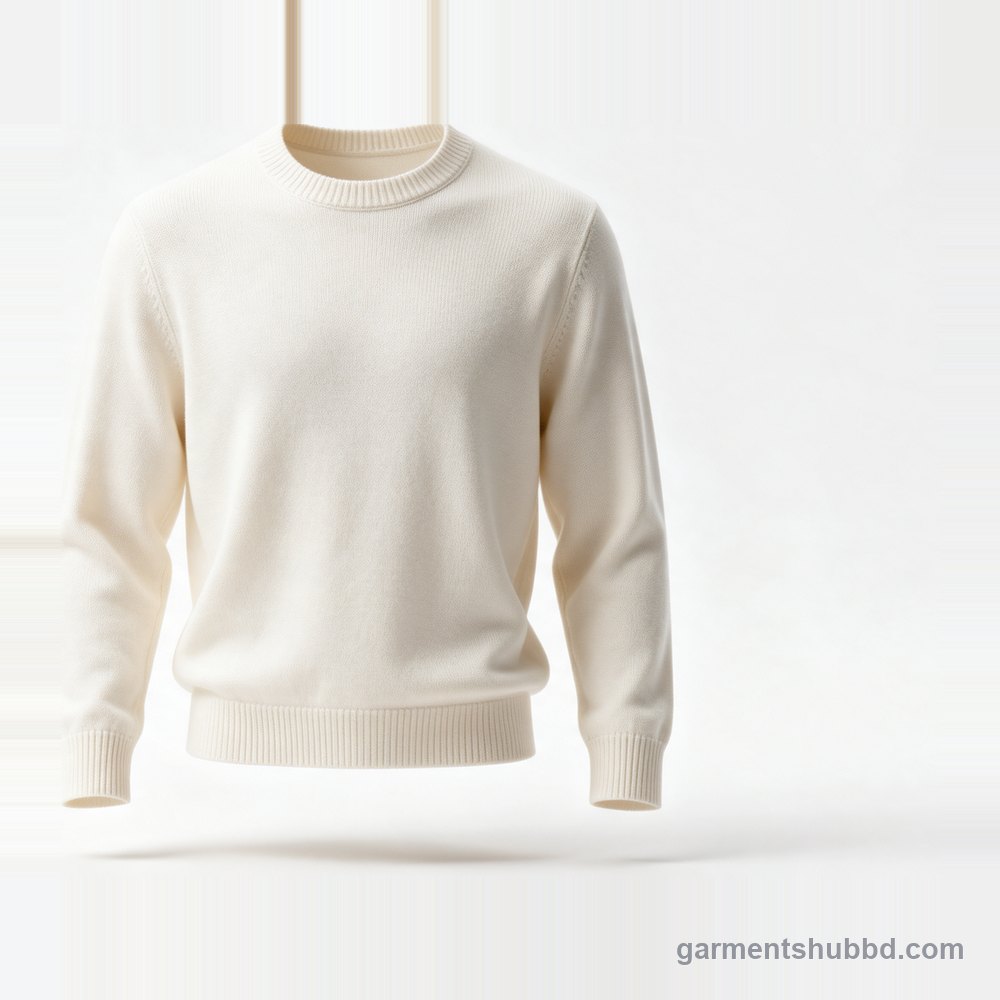
Cotton sweaters, your specification
Made to your tech pack, fabric and colours by a factory matched to the order.
Private label
Your main label, care label, hangtag and polybag. Nominated trims accepted.
Cotton sweaters sell where winters are short or mild, and in the spring and early autumn drops of colder markets. High street and online fashion brands buy them in volume for crew necks, polo knits and light layers that go in the washing machine. Brief a cotton sweater manufacturer in Bangladesh on yarn, gauge and wash, because cotton knitwear has almost no natural recovery and grows if the build is wrong.
Garments Hub BD asks both factories to quote on the same yarn, gauge and target weight, and to say whether the price includes a garment wash, since that one step decides whether the sweater keeps its measurements. The lab dip is approved on the dyed cotton yarn itself, and the photographs show your shade across yarn dye lots.
Kinds of cotton sweater
Combed cotton fine knit
Pure combed cotton at 12 or 14 gauge, smooth and even in stitch. The staple of spring crew necks and polo knits; it needs a garment wash to settle and a firm knit to limit growth.
Cotton acrylic blend
Often around 60 percent cotton and 40 percent acrylic. Lighter and loftier than pure cotton at the same thickness, cheaper, and less prone to bagging. A volume choice for mid priced ranges.
Mercerised cotton
Yarn treated so the fibre swells and the surface smooths, giving lustre, crisp stitch definition and brighter colour. Used for fine polo knits and summer tops.
Cotton linen blend
Cotton with linen for a dry, slubby, cool summer knit. Linen adds texture and some stiffness, and the knit changes after washing, so it is measured after the wash.
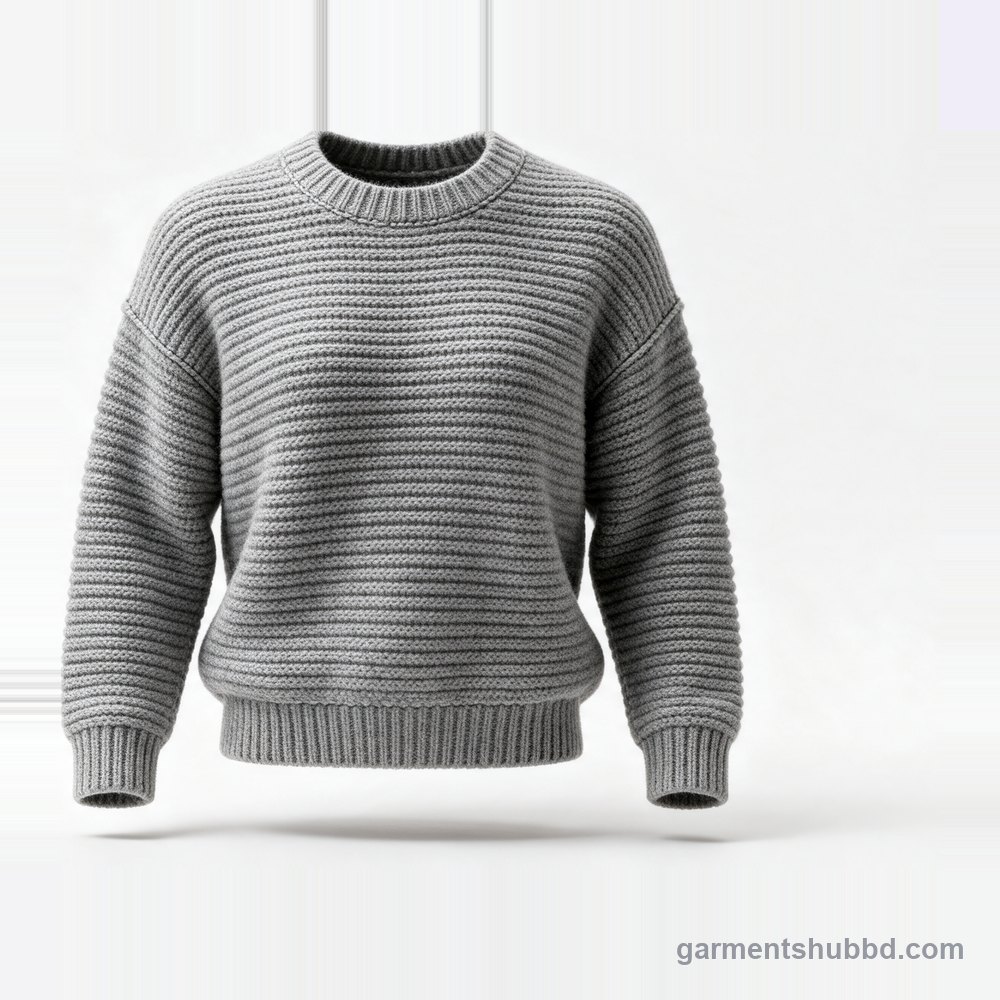
Chunky cotton at 5 and 7 gauge
Heavier cotton knits for a relaxed look. Heavy cotton stretches under its own weight, so these need a firm stitch density, shorter bodies or a blend to stay in shape.
How to specify a cotton sweater
- Yarn
- Combed, mercerised or blended, with count and ply. A two ply yarn is more even and skews the knit less than a single ply.
- Gauge and stitch density
- Give the gauge and record courses and wales per cm on the approved sample. A tighter knit grows less in wear.
- Weight per piece
- Give a target weight in grams per size. Cotton is heavy for the warmth it gives, so weight decides both price and drape.
- Elastane at cuffs and hem
- An elastane yarn plated into the rib at cuff and hem keeps them gripping after washing, where pure cotton rib slackens.
- Garment wash
- Ask for a tumble wash after linking to pre-shrink and settle the stitches, and fix the wash recipe at PP sample so bulk matches.
- Dye route
- Yarn dyed before knitting or garment dyed after. Yarn dyeing gives clean shades and stripes; garment dyeing gives a washed look and later colour decisions.
Tests to ask of a cotton sweater manufacturer in Bangladesh
- ISO 5077 with ISO 6330
- Dimensional change after washing, which on cotton knitwear can show as growth in length as well as shrinkage. Test the washed, finished sweater.
- ISO 105-C06
- Wash fastness of dyed cotton yarn. Deep reactive shades can bleed onto stripes and pale trims, so ask for staining results as well as shade change.
- ISO 105-X12
- Rubbing fastness, dry and wet. Dark cotton knits rub off at the underarm and on bag straps, more so when damp.
- ISO 105-B02
- Fading of cotton knitwear in light, graded 1 to 8 against the blue wool references. Summer knits hang in shop windows and sun, where pale reactive shades can fade.
What moves the price of a cotton sweater
- Mercerised or combed yarn costs more than carded cotton or cotton acrylic.
- Finer gauges such as 14 take longer to knit per panel than 12 or 7.
- Weight per piece: cotton is dense, so a chunky cotton knit uses a lot of yarn.
- Yarn dyeing carries a dye house minimum in kilos per shade, which weighs on small colour runs.
- A garment wash or garment dyeing adds a process and a shrinkage allowance.
Lead time for cotton sweaters
Cotton yarn in standard shades is easier to source than wool, so cotton knits often move faster at the yarn stage. Custom yarn dyeing to a lab dip adds days, and garment dyed programmes add the dye and wash after linking. Fine gauges spend longer on the knitting machines per panel than chunky ones. Your quote dates the yarn, knitting and wash stages.
What we check on cotton sweaters before shipment
- Length after hangingA finished sweater hangs for a set time and is measured again, because heavy cotton grows in length under its own weight.
- Stitch densityCourses and wales per cm are counted against the approved sample; a looser knit means growth and a lighter piece.
- Shade across panelsFront, back and sleeves are compared for shading from different yarn dye lots.
- Cuff and hem gripCuffs and hem are stretched and released to confirm the rib recovers after the garment wash.
Questions buyers ask about cotton sweaters
Will a cotton sweater stretch out of shape?
It can, because cotton has little natural recovery. A tight knit, a two ply yarn, a garment wash before measuring and elastane in the cuff and hem rib keep it in shape. Heavy, loose cotton knits grow more than fine ones, so keep chunky cotton styles shorter or blended.
Which gauge suits a summer cotton knit?
12 or 14 gauge for light tops and polo knits, worn alone or over a tee. 7 gauge gives a more casual, textured cotton sweater for spring. Finer than 14 gauge needs finer yarn and costs more knitting time per piece.
Pure cotton or cotton acrylic?
Pure cotton for a natural fibre story and summer weight. Cotton acrylic for lower cost, lighter weight at the same bulk and less bagging, at the price of a synthetic share on the label and some pilling. Many volume ranges run both.
Yarn dyed or garment dyed?
Yarn dyed for stripes, clean shades and colours that repeat across seasons. Garment dyed for a washed, lived in look and for holding colour decisions until late, since plain sweaters can be knitted undyed and dyed later. Garment dyeing adds shrinkage that the pattern must allow for.
Get a quote for cotton sweaters
Tech pack or sketch with quantities per colour. A compared quote in 48 hours.