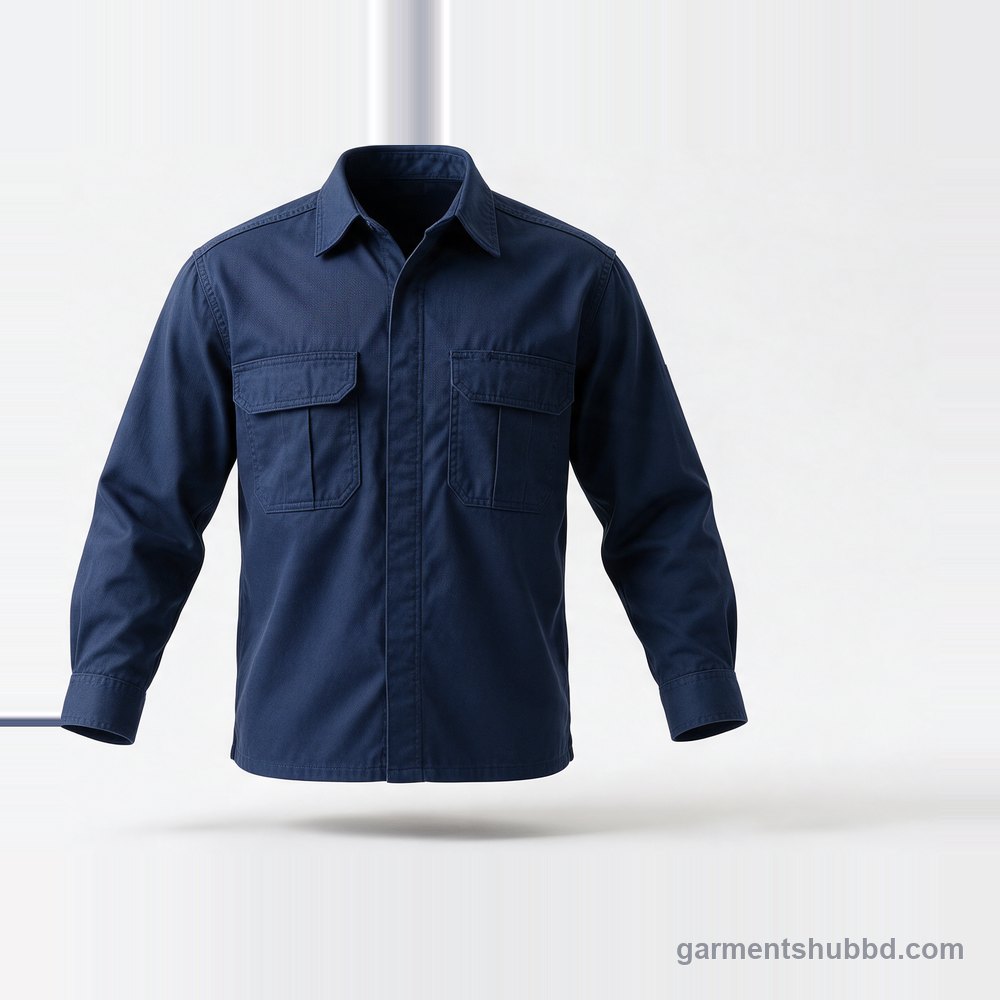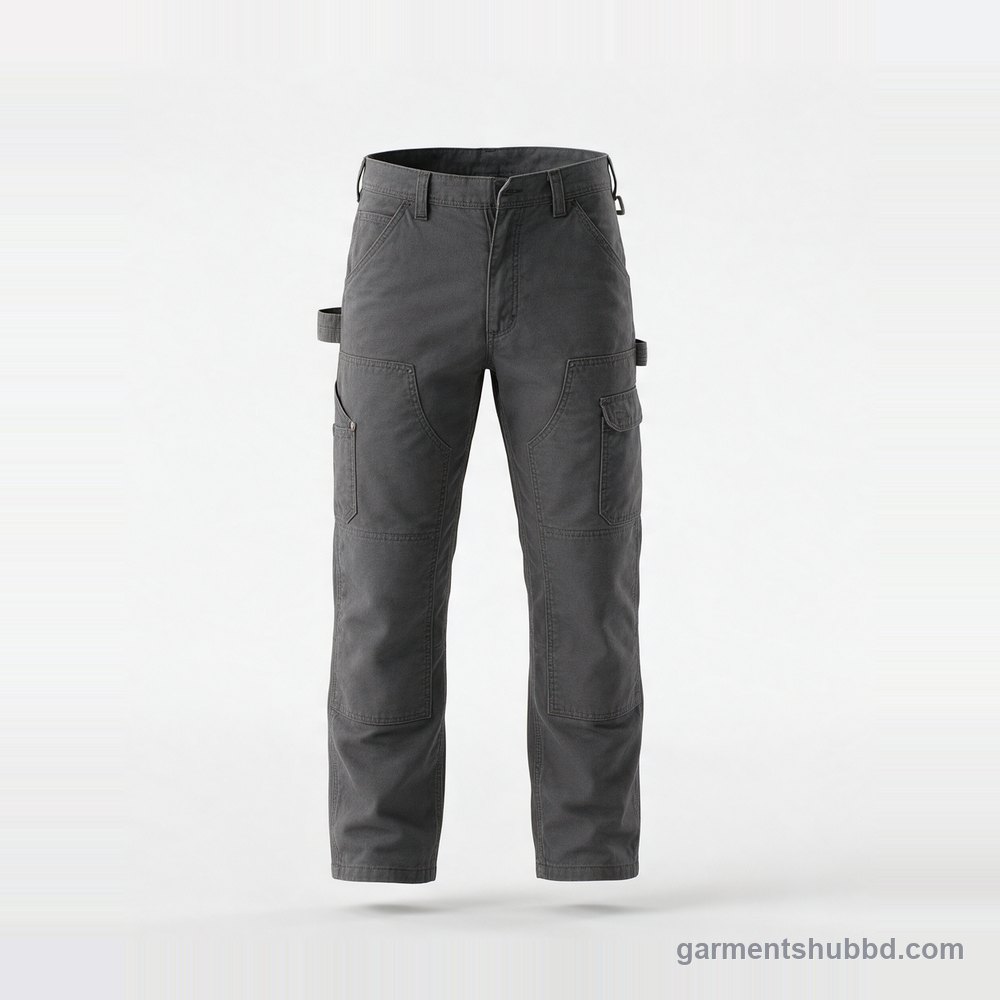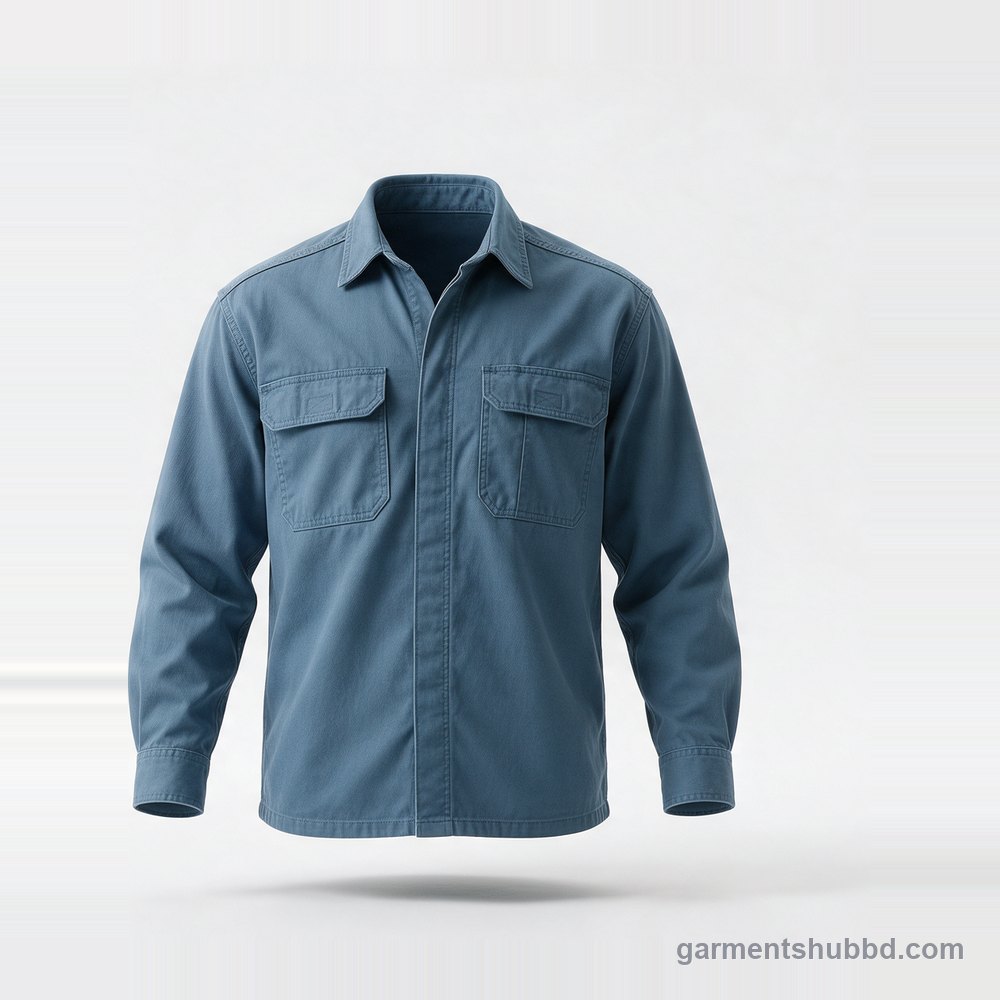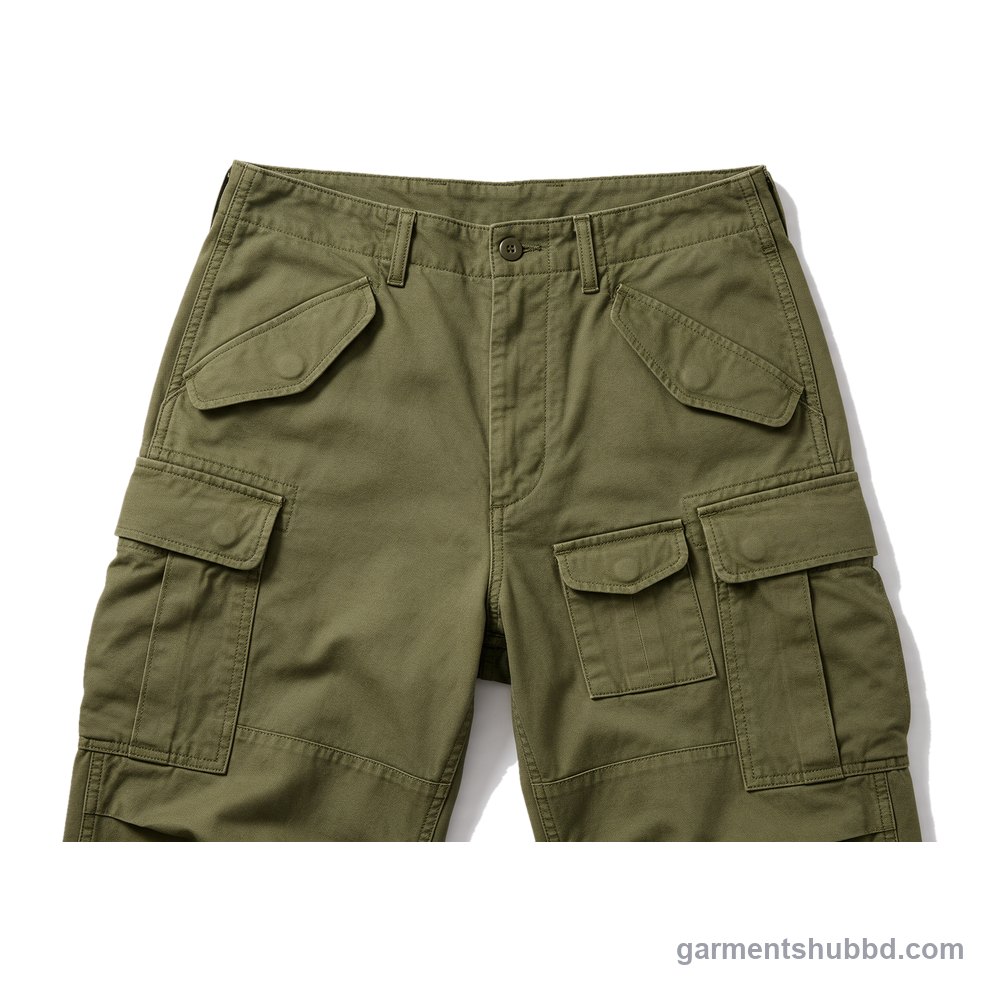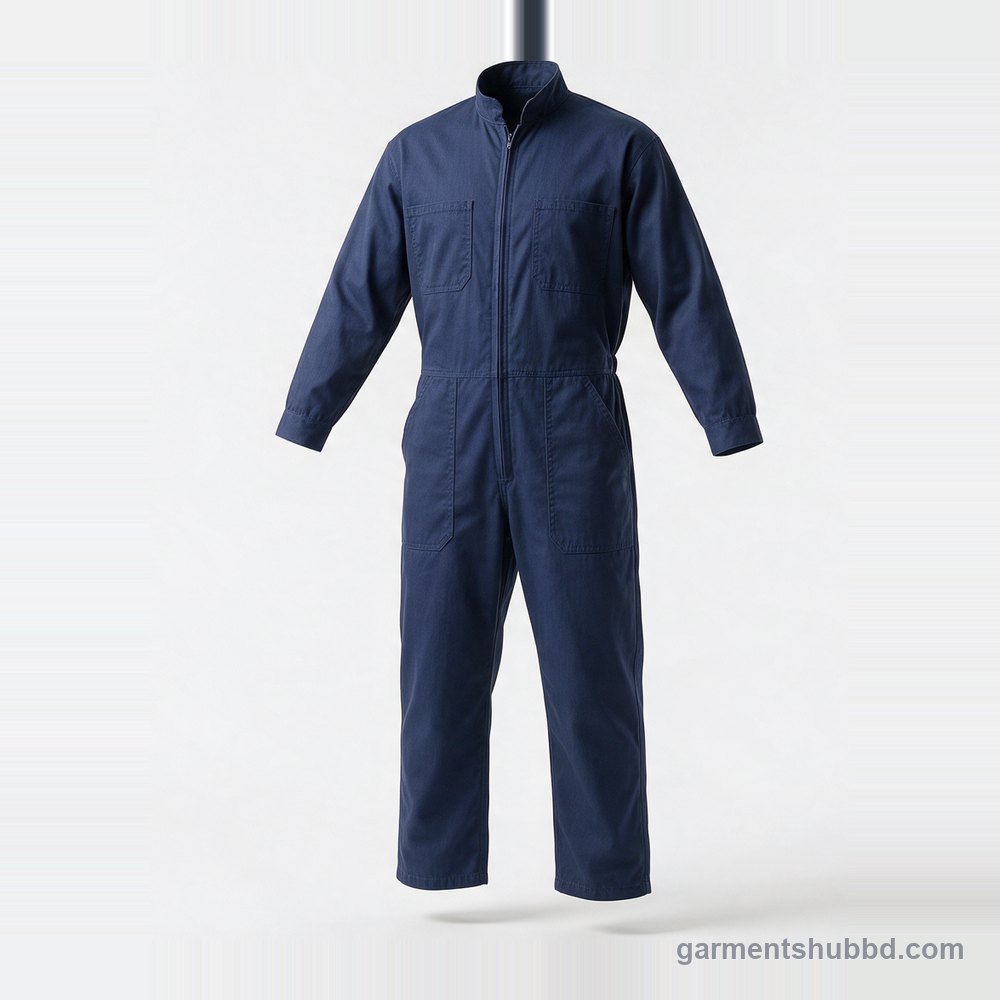
Coveralls, your specification
Made to your tech pack, fabric and colours by a factory matched to the order.
Private label
Your main label, care label, hangtag and polybag. Nominated trims accepted.
A coverall, or boiler suit, covers the body in one garment, so no gap opens at the waist when the wearer lies under a vehicle or climbs into a tank. Mechanics, utilities, shipyards, oil and gas crews and food plants all buy it. A coverall manufacturer in Bangladesh has to cut one garment that fits a short broad body and a tall thin one, because a one piece cannot be mixed and matched like a shirt and trousers.
The desk asks both bench factories to quote the same closure, back and sizing build, and lists each height fitting on the comparison sheet so the prices line up. Flame retardant, anti static and hi-vis versions are priced as separate designs, with their test reports booked from the quote form and shown in the timeline. Inline inspection follows zip setting and crotch seams while the line runs.
Kinds of coverall
Poly cotton zip front coveralls
The general purpose boiler suit in poly cotton twill, usually 210 to 270 GSM, with a two way zip under a press stud storm flap. For workshops, maintenance crews and factory floors.
Press stud front coveralls
Concealed press studs instead of a zip and no outside pockets above the waist. Food plants favour this build because nothing can drop into the product, and a stud is quicker to replace than a zip.
Flame retardant coveralls
Treated FR cotton or inherently flame resistant blends, usually 260 to 350 GSM, with FR thread, a brass zip and FR labels. The flame claim belongs to a tested design and is priced apart.
Hi-vis coveralls
Fluorescent body with reflective bands round torso, arms and legs. Because it covers all three, a coverall can be tested for a higher visibility class than a vest.
Multi norm coveralls
One garment carrying several claims, such as flame retardant, anti static and hi-vis. Each claim has its own standard and test, and every trim has to suit all of them.
How to brief a coverall manufacturer in Bangladesh
- Closure and storm flap
- Two way zip or press studs, zip length and type, and how the flap fastens. A two way zip lets the wearer open the lower front without stepping out.
- Action back and waist
- Pleated action back or bi-swing shoulders for reach, and an elastic back waist or half belt. Each changes the pattern and the cloth use.
- Height fittings
- Chest sizes plus two or three height fittings, with back length, rise and inside leg for each. Grading on chest alone fails the short and tall wearer.
- Pockets and knee pads
- Chest, rule, rear and knee pad pockets with position and closure; food and machinery work may need pockets closed or left off.
- Cuffs and ankles
- Adjustable stud cuffs, elastic or open ankles, and leg zips or gussets so boots pass through.
- Every claim, listed
- Name each safety claim with its standard, so fabric, tape, thread, labels and zip are chosen to support all of them together.
Standards and tests for coveralls
- EN ISO 13688
- General requirements for protective clothing, including size marking by body measurements such as height and chest. It sits under every EU protective claim made for a coverall.
- EN ISO 11612 and NFPA 2112
- Flame resistant clothing for the EU and US, for the FR coverall only. An accredited laboratory tests the garment, with a notified body on the EU route; the factory never self declares it.
- EN ISO 20471
- With fluorescent cloth and bands on arms and legs, a coverall can be tested for class 3, the highest, which is then printed on its label. A vest alone cannot reach it.
- ISO 13935
- Seam strength. Ask for it on crotch and seat seams of the PP sample, which carry the load when the wearer crouches or climbs.
What moves the price of a coverall
- Cloth: FR and fluorescent fabrics cost more per metre than poly cotton, and a coverall uses a lot of it.
- Closure: a two way metal zip with storm flap against press studs.
- Height fittings, each adding a pattern, a marker and size lines.
- Action back pleats or bi-swing gussets, which add cutting and sewing time.
- Testing for each claim, paid per design and sometimes per fabric lot.
Lead time for coveralls
A poly cotton coverall in stock colours usually ships within 30 to 60 days of bulk after PP approval, with 60 to 90 days typical from order to shipment. Each height fitting has its measurements approved on the PP sample. FR, anti static and hi-vis designs add days for certified fabric and for the laboratory test of the finished garment, and the quote shows that time up front.
What we check on coveralls before shipment
- Zip under the storm flapThe zip runs its full length without catching the flap, and the flap closes flat over it on every sampled garment.
- Action back opensBack pleats or gussets are set level and open fully when the arms reach forward on a worn sample.
- Measurements per height fittingBack length, rise and inside leg are measured in each height fitting, not only chest across the sizes.
- Crotch seam junctionThe crotch junction has its bar tack or gusset, and the crossing seam rows show no pucker or open stitches.
Questions buyers ask about coveralls
How many height fittings does a coverall range need?
Most ranges need a regular and a tall fitting at least, and some add a short. Base it on your sales or the workforce being dressed. Each fitting adds a pattern and a size line, so the quote prices each one separately.
Zip or press studs on a coverall?
A two way zip under a storm flap is quicker to open and seals better. Press studs suit food plants and hire fleets that want nothing to break and fast repairs. FR coveralls use zips and studs that will not melt against the skin.
Can a coverall be flame retardant and anti static?
Yes, as a multi norm design. The fabric must carry both properties, usually through a conductive fibre woven into an FR cloth, and every trim must support both. Anti static performance has its own electrostatic standard, and the finished garment is tested to each.
Does reflective tape on a navy coverall make it hi-vis?
Not in the certified sense. EN ISO 20471 needs fluorescent background area as well as retro reflective tape, and the design must be tested. Tape on a dark coverall adds visibility at night and suits buyers who make no class claim.
Get a quote for coveralls
Tech pack or sketch with quantities per colour. A compared quote in 48 hours.