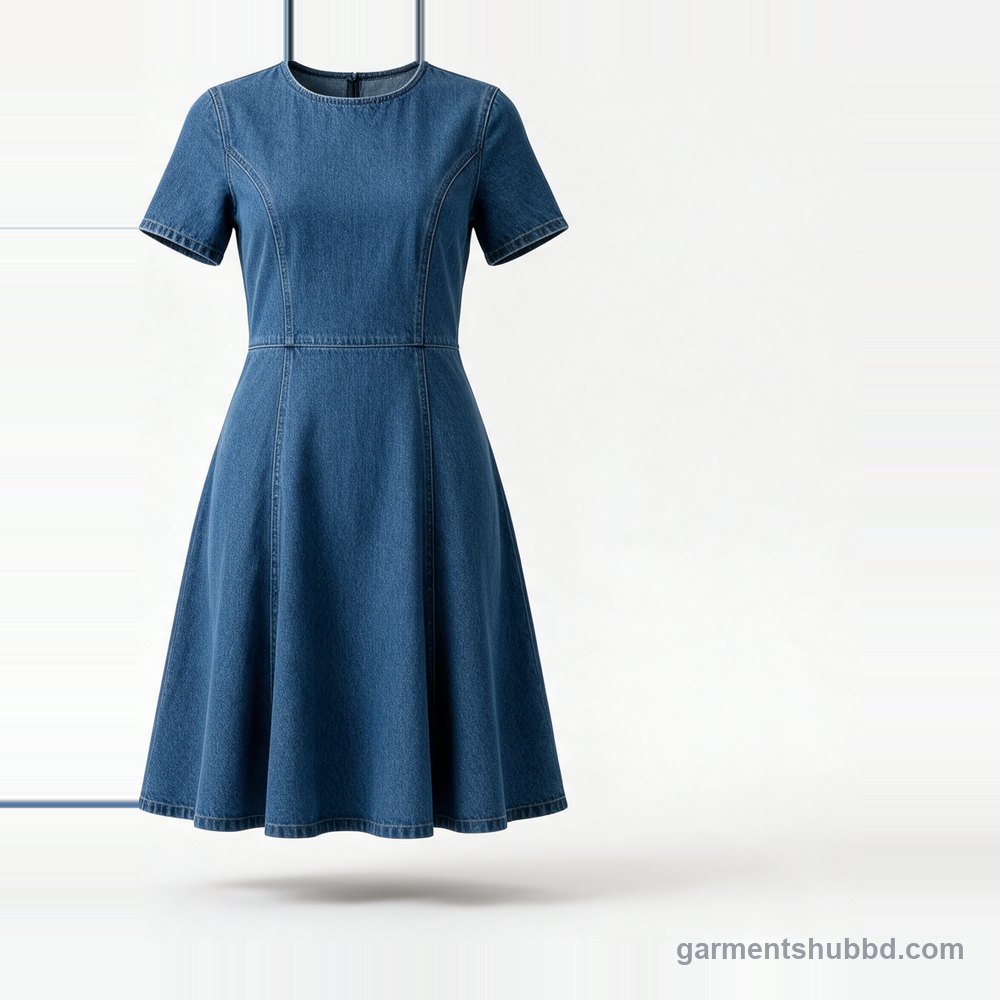
Denim midi dresses, your specification
Made to your tech pack, fabric and colours by a factory matched to the order.
Private label
Your main label, care label, hangtag and polybag. Nominated trims accepted.
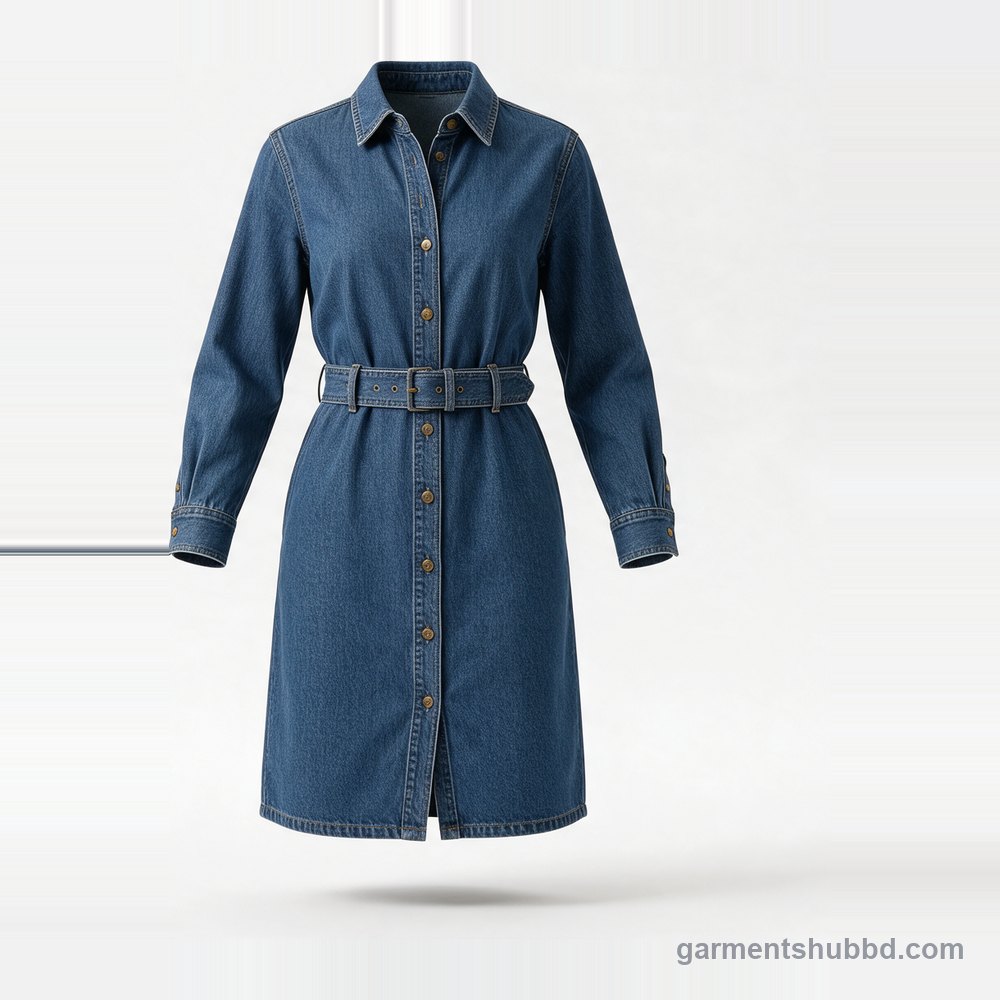
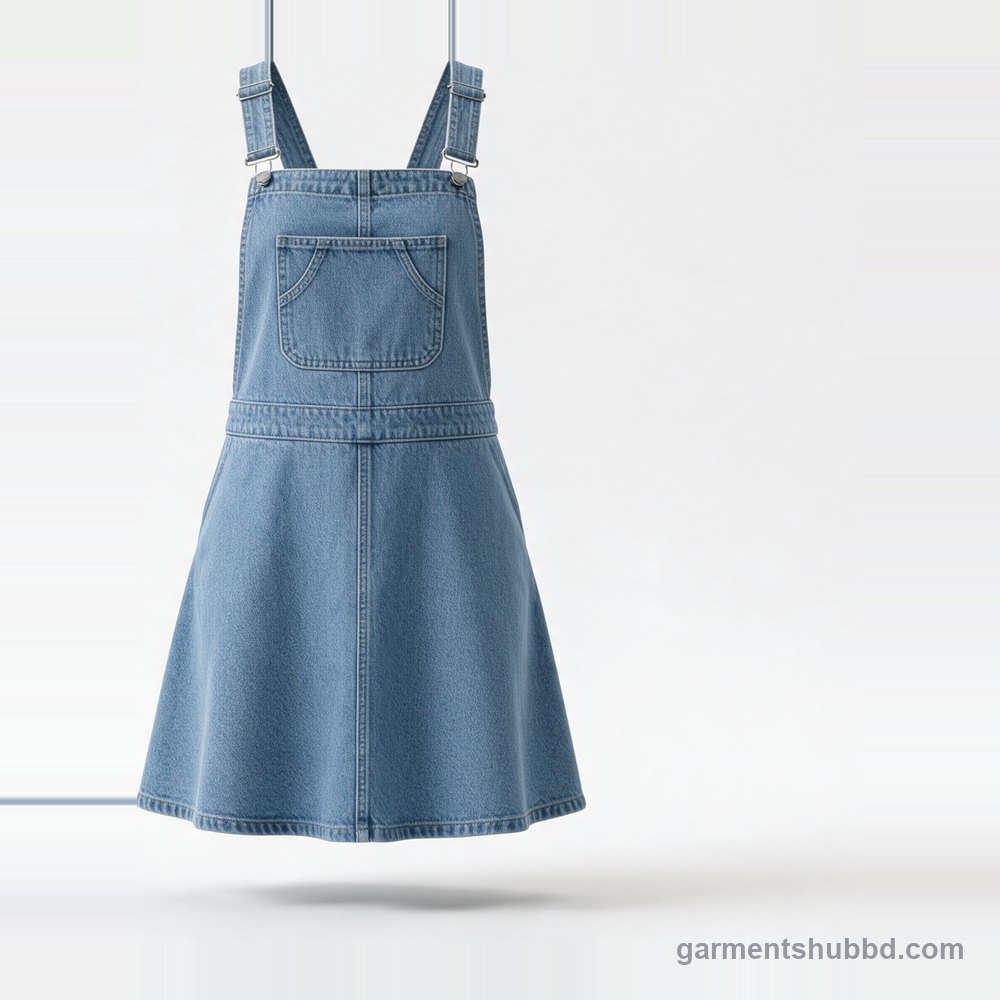
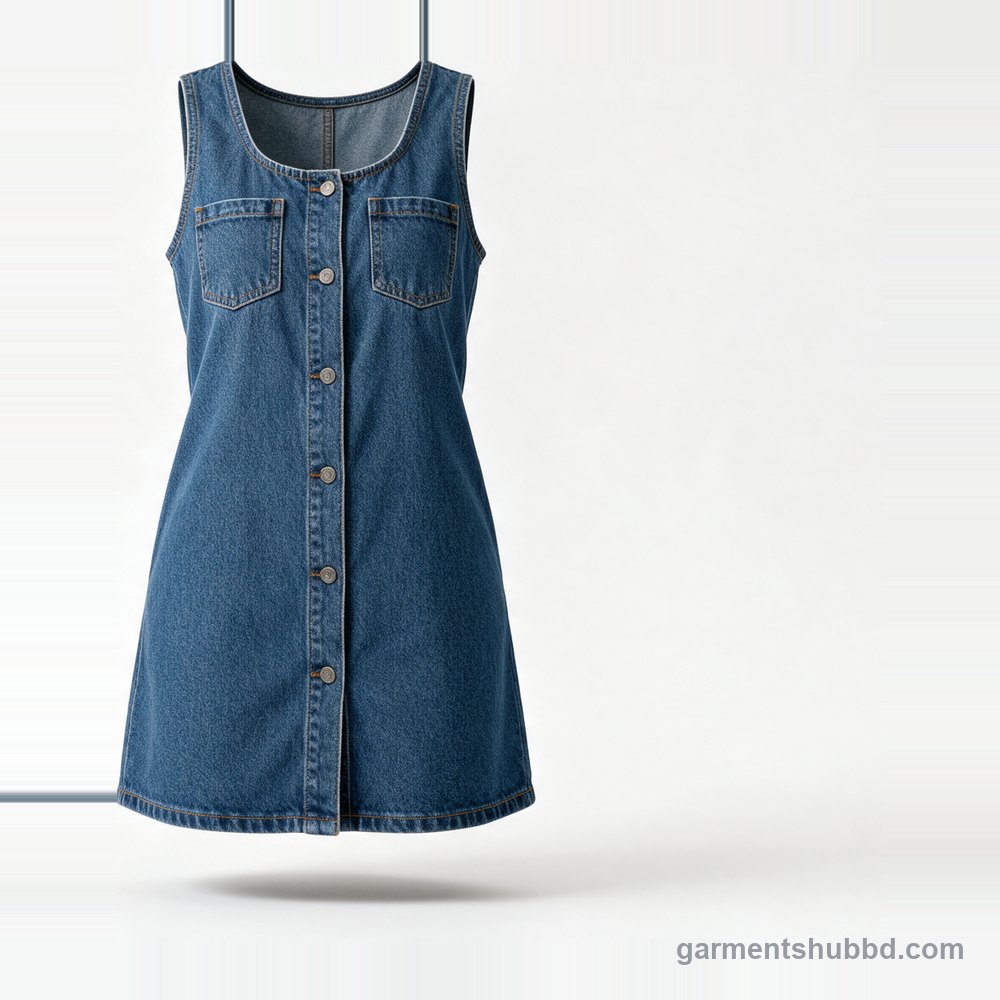
A midi dress ends between just below the knee and mid calf, which in denim means a long run of fabric that has to move when the wearer walks. That is why it is cut in lighter, softer denim than a mini or a pinafore. Brands buy it for summer and transitional ranges in straight and A line shapes. Briefing a denim midi dress manufacturer in Bangladesh starts with a length in centimetres, because the word midi fixes no measurement.
The desk sends the midi brief to two factories on the bench and checks that both quotes price the same length, sweep and hem finish, since a few centimetres of hem or a wider skirt changes the fabric used per dress. Where the chosen denim is too stiff for the shape, the desk says so before the first sample is cut.
Kinds of denim midi dress
Straight midi
A column from bust to hem with a side or back slit for walking. It needs a soft denim, or it stands off the body like a tube and creases across the hips.
A line midi
Fitted at the bust and flaring to a wide hem, with or without a waist seam. The flare forgives a firmer denim, but the bias areas of the hem drop and need levelling.
Tiered midi
Two or three gathered tiers widening towards the hem. Gathers in denim build bulk at every join, so the fabric is usually 5 to 6 oz and far more of it goes into each dress.
Fit and flare midi
A close bodice with darts or princess seams, a seamed waist and a flared skirt. Bodice fit and skirt hang are checked separately on the sample.
Wrap midi
A tie wrap front with an overlap deep enough not to open in a stride. Wrap edges are faced or bound, and the tie passes through an opening in the side seam.
How to brief a denim midi dress manufacturer in Bangladesh
- Length from the shoulder
- Full length from the high point of the shoulder, usually 105 to 120 cm on a mid size, and whether it grades with size or stays fixed.
- Shape and sweep
- Straight or A line, and the hem sweep in centimetres. A straight midi with a narrow sweep needs a slit, with its length and position in the spec.
- Drape and fibre
- Usually 5 to 8 oz, in cotton or a cotton and lyocell blend for more fall. Elastane is rarely needed unless the bodice is fitted.
- Twill direction
- Right hand, left hand or broken twill. Long panels in right hand twill can twist after washing; broken twill keeps side seams hanging straight.
- Hem finish
- Double turned and topstitched, blind hem, a wide facing for weight at the hem, or a raw edge held by a stay stitch. Each hangs differently on a long skirt.
Tests for a denim midi dress
- ISO 5077 with ISO 6330
- Dimensional change in washing. On a 115 cm dress, 3 percent length shrinkage is about 3.5 cm, enough for a customer to see the hem has moved.
- AATCC 150
- The garment method US buyers usually name for shrinkage in home laundering. On a midi, ask for length and sweep measured before and after on the washed dress.
- ISO 3801
- Mass per unit area of the woven denim. Confirms the bulk is as light as the approved swatch, since a heavier lot changes how a midi falls.
What moves the price of a denim midi dress
- Length and sweep: a long A line or tiered skirt uses far more denim than a straight cut.
- Gathered tiers, each adding gathering, joining and topstitching operations per dress.
- Lyocell blend denim, which usually costs more per metre than all cotton.
- A faced hem or faced slits, against a plain double turned hem.
- Waist seams and bodice shaping, which add operations over an unseamed shift.
Lead time for denim midi dresses
Plan for a sample in 7 to 14 days and bulk in 30 to 60 days once the PP sample is signed. A lyocell blend or a specific light denim may have to be woven to order, which adds time before cutting. On an A line or circle skirt the factory hangs the dress before levelling the hem, so a day or two more is normal. Your quote fixes the dates.
What we check on denim midi dresses before shipment
- Hem levelHem measured from the shoulder point at front, back and sides, with no dip at the back or drop on the bias.
- Seam hang after washSide seams hanging straight down the body after washing, not swinging towards the front, which would show twill twist on long panels.
- Slit topsThe top of each slit bar tacked and lying flat, with no fraying or pull into the seam when the skirt opens.
- Tier joinsGathers spread evenly along each tier, the joining seam flat and neatened, and tier depths matching the spec on every size.
Questions buyers ask about denim midi dresses
What length should go on the spec for a denim midi dress?
A number from the high point of the shoulder, not the word midi. Most midis fall between 105 and 120 cm on a mid size; take yours from a reference garment on a body of your customer's height, then decide whether it grows with size.
Straight or A line: which is easier to get right in denim?
A line forgives more. The flare hides small fit errors and lets a slightly firmer denim move with the body. A straight midi needs a soft, drapey denim and a well placed slit, or it restricts walking and creases at the hip.
Why do the side seams of my midi swing to the front after washing?
That is twill twist. Right hand twill tends to torque in washing, and the longer the panel, the more it shows. Ask the mill for its skew figure, have panels cut to compensate, or choose broken twill, which barely twists at all.
Can a denim midi dress have a raw hem?
Yes, when it is specified as a finish: a stay stitch a centimetre or two from the edge stops the fray travelling. A raw hem is lighter than a turned one, so it also changes the hang of a long skirt slightly.
Get a quote for denim midi dresses
Tech pack or sketch with quantities per colour. A compared quote in 48 hours.