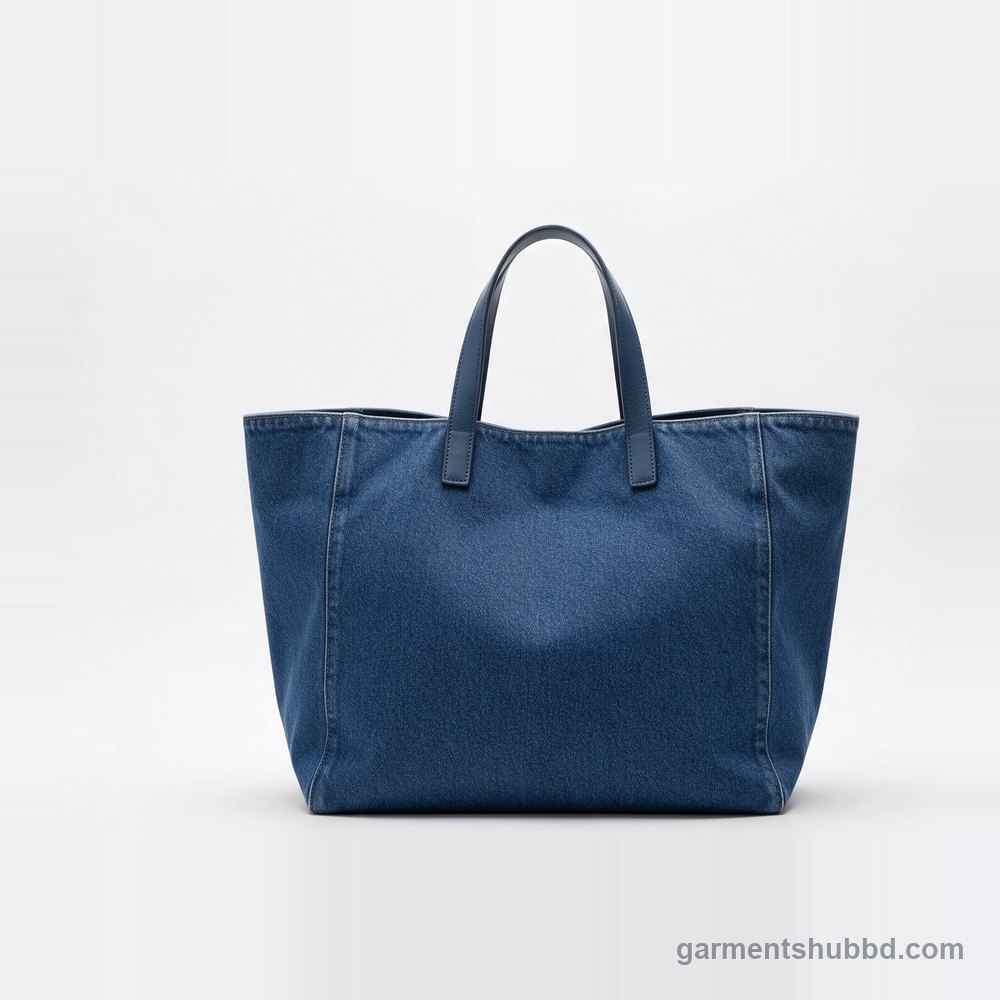
Denim shopper bags, your specification
Made to your tech pack, fabric and colours by a factory matched to the order.
Private label
Your main label, care label, hangtag and polybag. Nominated trims accepted.
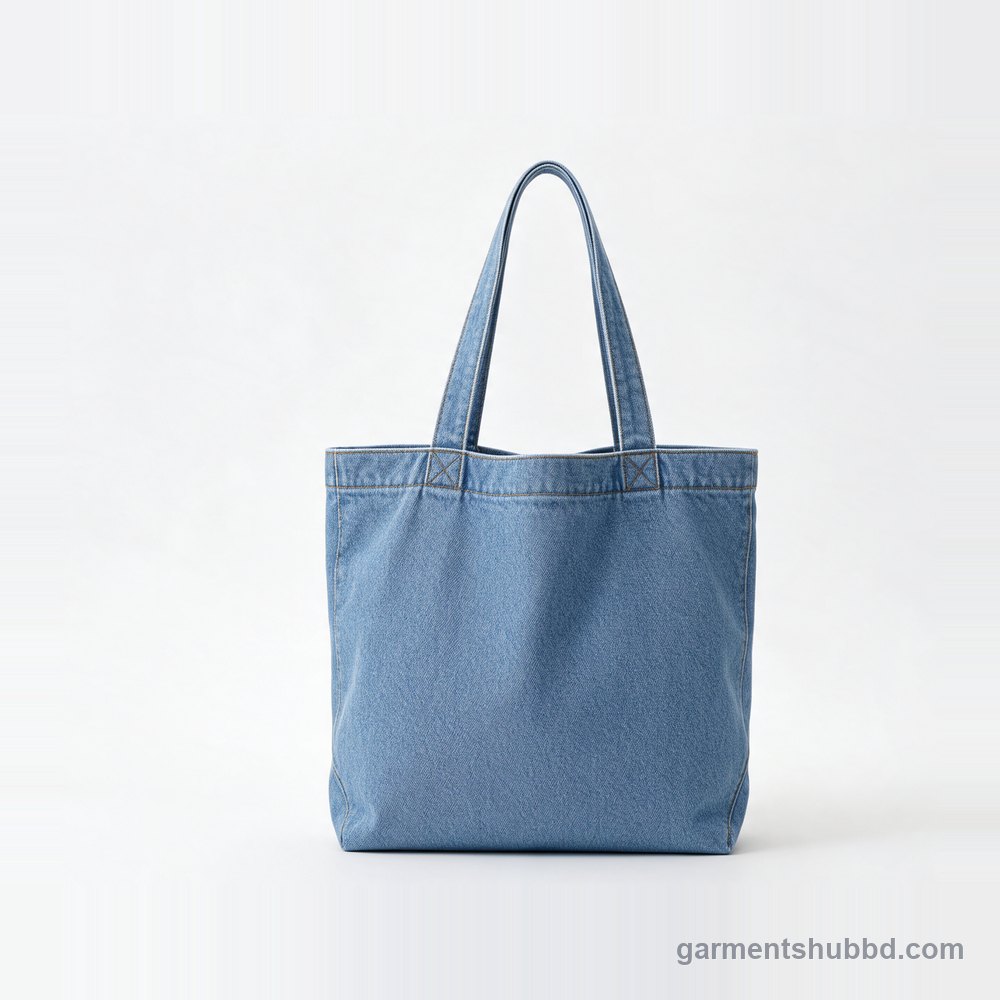
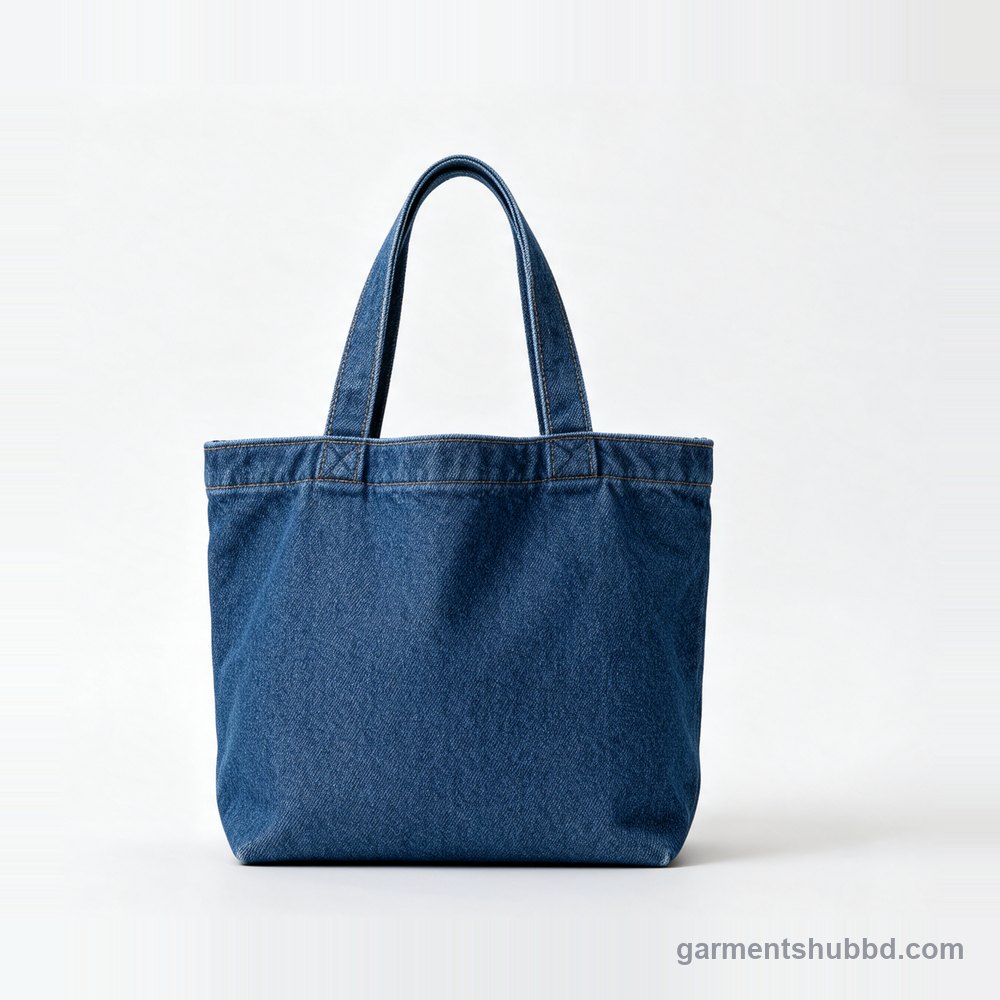
A denim shopper is the oversized, unstructured carrier: no lining, no stiffener, a deep body that folds flat and a top edge left raw or simply turned and stitched. Grocery and lifestyle retailers, concept stores and denim brands sell it as an everyday shopping bag with a deliberately plain look. A denim shopper bag manufacturer in Bangladesh makes it in fewer steps than a tote, which is where its price advantage comes from.
Each shopper enquiry sent to Garments Hub BD is priced by two denim plants from the bench, and the desk compares them on one sheet within 48 hours. With no lining to hide behind, inspection looks hardest at the inside seams and the edge finish, and the photographs from every stage are yours.
Kinds of denim shopper bag
Raw edge shopper
The top edge is cut and left to fray, with a stitch line a short way below to stop the fray travelling. Reads as intended; tell retailers the fringe will grow a little in washing.
Hemmed top shopper
The top edge is turned twice and topstitched. Cleaner than a raw edge and still unlined, so it is the safer choice for a mainstream grocery or department store buyer.
Selvedge top shopper
The top edge is cut along the woven selvedge of the denim, so the cloth's own edge finishes the bag. It needs narrow loom denim and suits a heritage denim brand.
Fold away shopper
Folds into its own inside pocket for carrying in a handbag or a car. The pocket has to be sized to the folded bag, and lighter denim folds smaller.
Shoulder strap shopper
Long handles with a drop of usually 250 to 300 mm, so the bag goes on the shoulder when it is full. A common pick for a daily grocery bag.
How to specify a denim shopper bag
- Size and fold
- Width, height and base in millimetres, plus the folded size if it packs into a pocket. Shoppers are often over 400 mm wide.
- Denim weight
- Usually 10 to 12 oz. Heavier cloth will not fold small and makes an unlined bag stiff; very light denim needs a double stitched base.
- Top edge
- Raw, raw with a stay stitch, folded hem or selvedge. Show it on the drawing with the stitch distance from the edge.
- Inside pocket
- One patch pocket with its size and position, open or closed with a snap. On a fold away style, the pocket is also the pouch.
- Inside seams
- With no lining, every seam shows. Flat felled seams, as on jeans, enclose the raw edges; overlocked seams are quicker and cheaper.
- Handle drop
- Hand carry or shoulder carry, with the drop from the top edge to the top of the handle in millimetres.
Tests and claims for denim shopper bags
- AATCC 8
- The crockmeter rubbing method a US retailer usually names. An unlined shopper shows indigo inside and out, so test both faces of the denim.
- ISO 13937
- Tear strength of woven fabric. Worth running on lighter shopper denim and on raw edge styles, where a nick at the top edge can run down the panel.
- GRS and RCS
- Textile Exchange chain of custody standards for recycled content. Both move to the Materials Matter Standard, with no GRS audits after 31 December 2027, so check the certificate is current.
What moves the price at a denim shopper bag manufacturer in Bangladesh
- No lining, stiffener or base board removes material and two or three assembly steps.
- A raw edge with a stay stitch costs a little less than a folded hem, which needs pressing.
- Size: an oversized shopper uses more denim than a tote, which eats into part of the saving.
- Seam finish: flat felled seams take longer to sew than overlocked ones.
- Recycled content denim with chain of custody papers usually costs more than standard denim.
Lead time for denim shopper bags
Shopper samples typically take 7 to 14 days, and bulk usually runs 30 to 60 days after the pre-production sample is signed. With few components there are few waiting points, so the time mostly depends on the denim. Recycled content cloth with its certificate, a garment wash or a printed logo adds days. Your quote gives the dates.
What we check on denim shopper bags before shipment
- Stay stitch below a raw edgeThe stitch line under a raw top edge is checked for even distance and no gaps, as it is the only thing stopping the fray.
- Exposed seam finishInside seams are checked for full coverage, since an unlined bag shows every loose thread and raw edge to the customer.
- Fold and pocket fitFold away styles are folded into their pocket by the inspector to confirm they fit without forcing the seams.
- Panel squarenessLarge panels are measured for skew, as an off grain cut makes a big shopper hang crooked when loaded.
Questions buyers ask about denim shopper bags
Is a raw top edge a quality problem?
Not when it is designed. A stay stitch a few millimetres below the edge stops the fray at that line. Explain the look on the hangtag or the product page, or some customers will return the bag as unfinished after the first wash.
How much cheaper is a shopper than a lined tote?
It depends on size and finish, but dropping the lining, stiffener and zip pocket saves both material and sewing time. Ask for both styles on the same enquiry and the two plants' prices will show the difference on one sheet.
Can a denim shopper fold into its own pocket?
Yes. The pocket is sized to the folded bag and sewn inside, often closing with a snap. Send the target folded size, because heavier denim folds thicker and may need a larger pocket than the drawing shows. The sample proves the fold before bulk.
Can I sell it as a recycled denim bag?
Only with evidence. The denim needs a chain of custody certificate for its recycled content, and each step up to the bag needs to be covered. Without that, describe what the bag is made of and leave the recycled claim off.
Get a quote for denim shopper bags
Tech pack or sketch with quantities per colour. A compared quote in 48 hours.