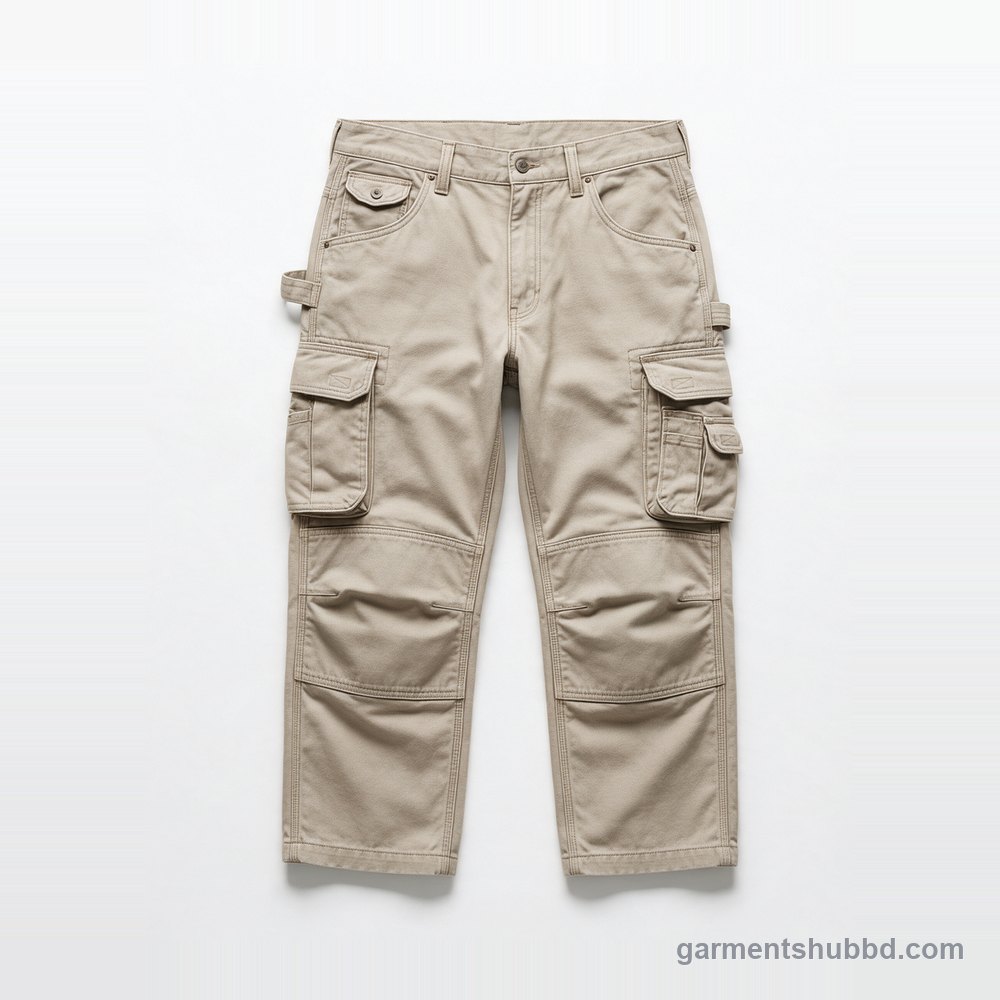
Heavy duty cargo pants, your specification
Made to your tech pack, fabric and colours by a factory matched to the order.
Private label
Your main label, care label, hangtag and polybag. Nominated trims accepted.
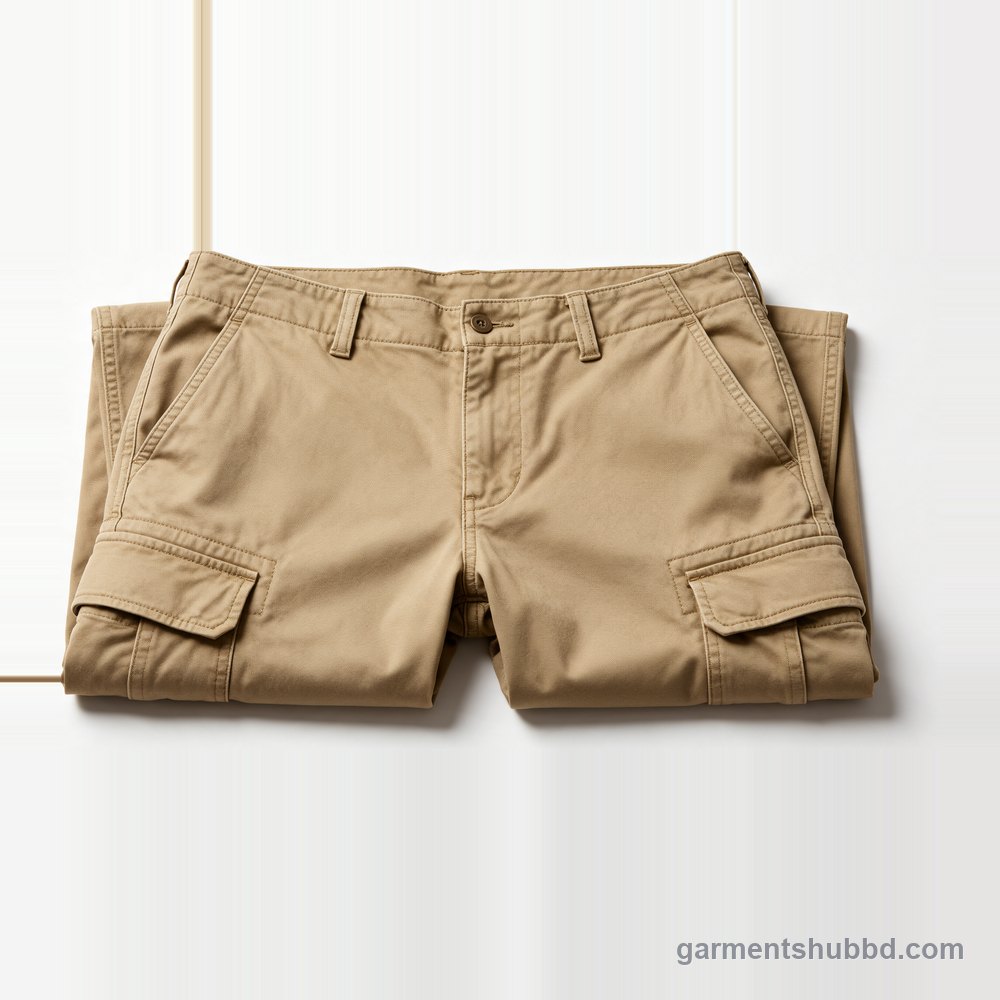
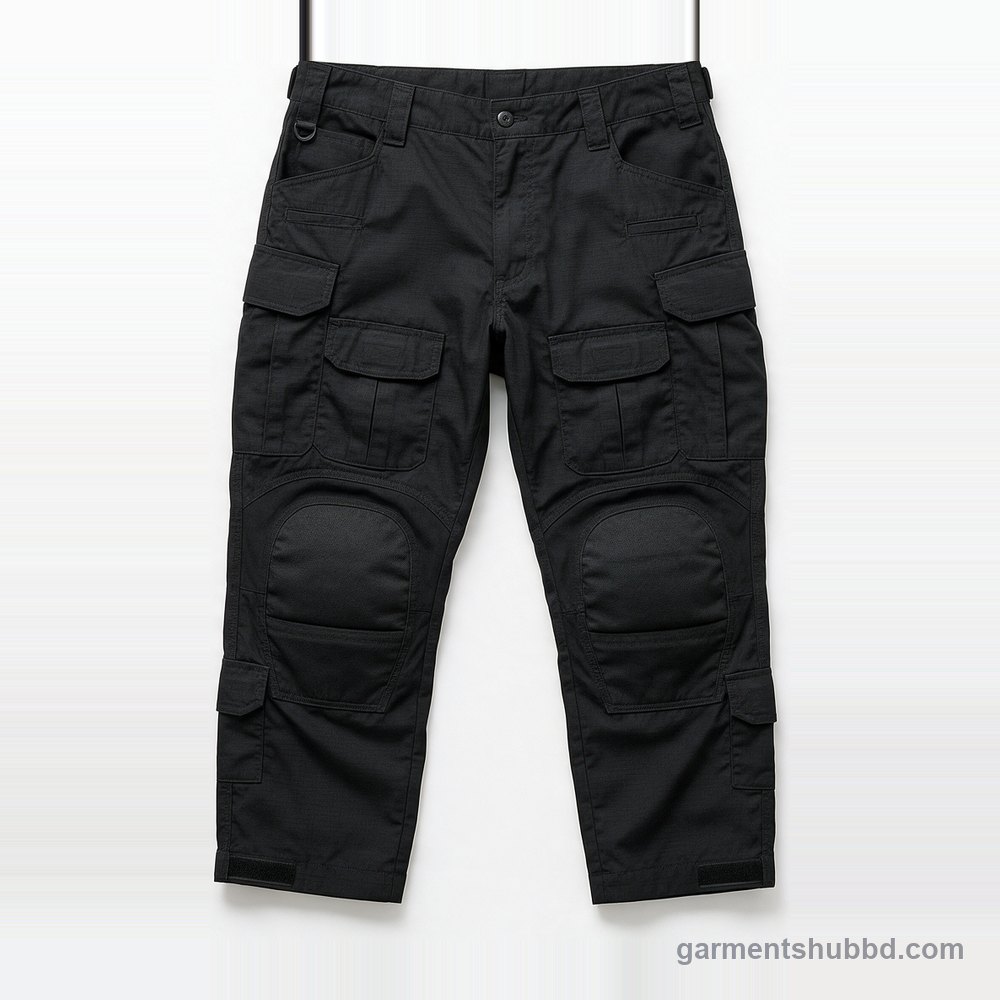
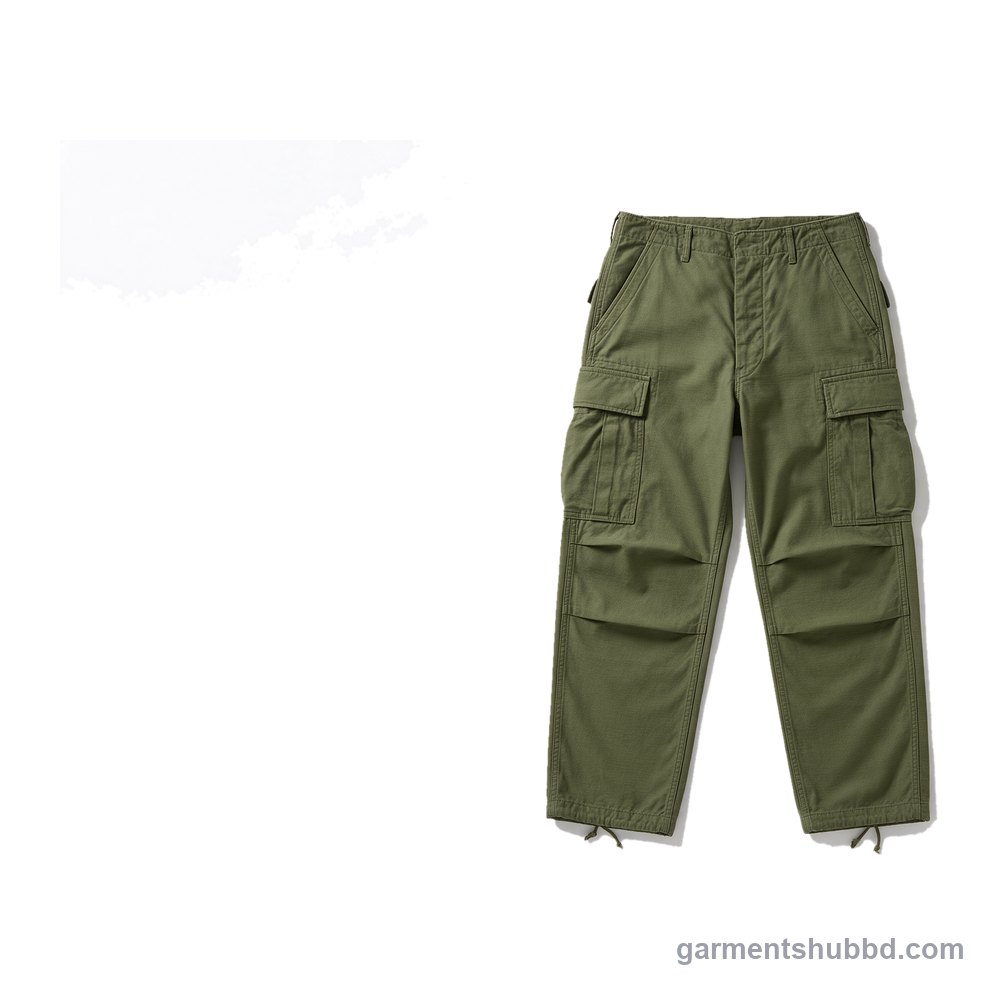
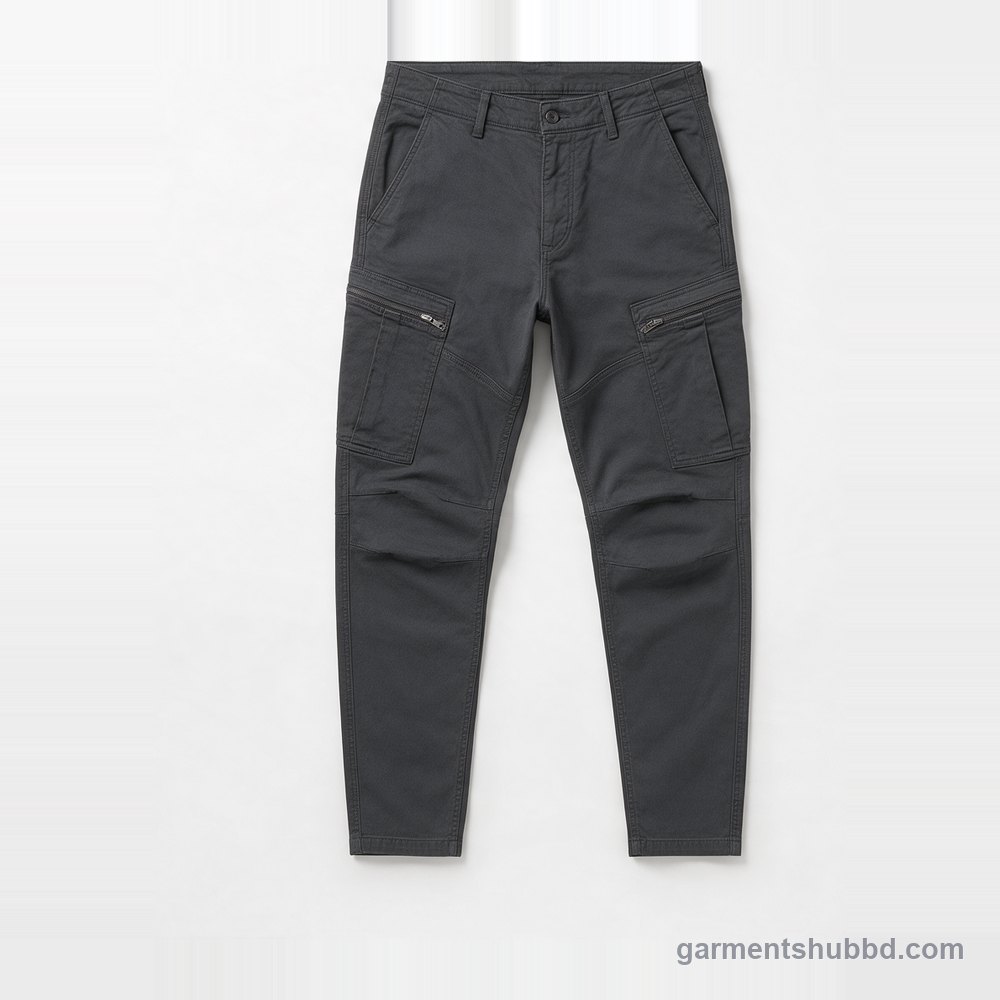
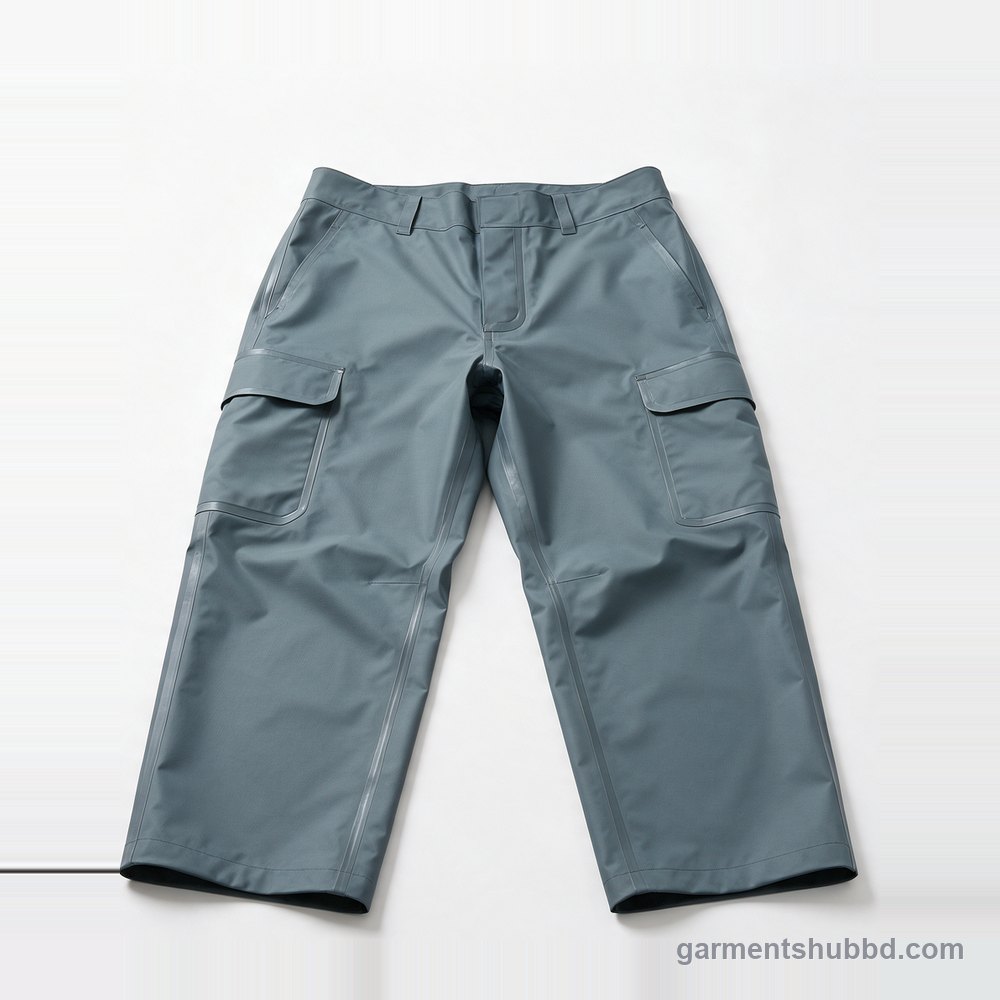
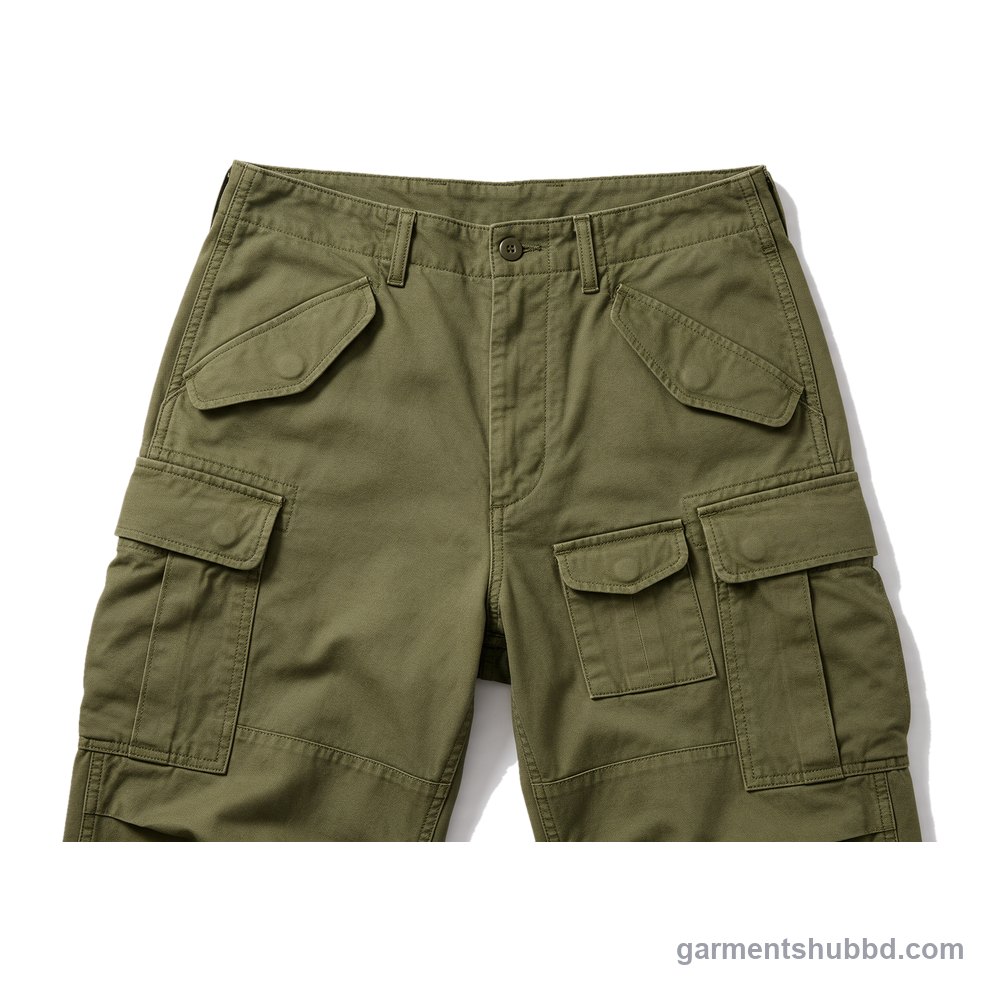
Heavy duty cargo pants are cargos cut from trade weight cloth for builders, landscapers, mechanics and the shops that sell to them. Their selling point is that they last: thick canvas, seams sewn three times over, reinforced knees and hardware that does not bend. For a heavy duty cargo pants manufacturer in Bangladesh the skill is sewing that weight cleanly. The programme work trouser has its own page; this is the cargo cut in heavy cloth.
Both factories quote on the same cloth weight, seam types and hardware list, so a lower price cannot hide a lighter canvas or a seat sewn twice instead of three times. Ask for a fabric weight report on the quote form and it goes into the timeline, and inline inspection catches the triple needle seams on the first bundles.
Kinds of heavy duty cargo pants
Cotton duck cargos
A tight plain weave of heavy cotton, usually 340 to 400 GSM, stiff when new and softening with wear. The classic trade look in tan, brown and black.
Poly cotton canvas cargos
A polyester cotton canvas that holds its colour, shrinks less and dries faster than pure cotton. For trades that wash their pants often or hot.
Double knee cargos
A second layer of canvas from mid thigh to below the knee, bar tacked at the corners. It doubles the cloth where a kneeling worker wears through first.
Nylon reinforced cargos
A canvas body with high tenacity nylon on the knees, hem backs and pocket edges, where canvas alone scuffs through fastest. Suits floor layers and site work.
How to brief a heavy duty cargo pants manufacturer in Bangladesh
- Cloth weight
- Give the weight in GSM or ounces with a tolerance. 300 to 400 GSM is roughly 9 to 12 oz, and a weight stated without a tolerance is hard to hold a mill to.
- Seam types
- Specify triple needle felled seams on the inseam and seat, and lap seams on the outseam. Felled seams lock the raw edges inside and spread the load.
- Thread
- Name a core spun polyester thread, usually tex 40 to 60 for main seams and heavier for topstitching. Cotton thread is weaker and wears through first on trade pants.
- Bar tacks and rivets
- Mark a bar tack at every pocket corner, the fly base and belt loops, and say where rivets are wanted instead.
- Hardware
- A metal fly zip, usually size 5, and shank buttons. Name the metal and finish so they do not corrode in site conditions.
- Reinforcement
- Mark the knee, seat, hem back and back pocket reinforcements, and the cloth chosen for each.
Strength tests for heavy duty cargo pants
- ISO 13937
- Tear strength. Canvas that tears easily at a snag fails on site, so ask for warp and weft results and a minimum in newtons.
- ISO 12947
- Martindale abrasion. On trade canvas, set a high cycle count and test the knee cloth and any nylon reinforcement as separate specimens.
- ISO 13934-1
- Tensile strength of woven fabric, a check that the canvas brings the strength its weight promises.
- ISO 3801
- Mass per unit area of woven fabric. It confirms the GSM of the bulk roll, so a lighter canvas cannot pass unnoticed.
What moves the price of heavy duty cargo pants
- Cloth weight: 400 GSM duck uses more cotton per pair than 300 GSM canvas.
- Triple needle seams, which run slower and need heavier machines than single needle work.
- Reinforcement layers at knee, seat and hem, each an extra cut piece.
- Bar tacks and rivets at every pocket corner, counted per pair.
- Metal hardware and heavier thread in place of plastic trims and standard thread.
Lead time for heavy duty cargo pants
Samples usually take 7 to 14 days, though duck in a custom colour may need the mill first. Bulk usually runs 30 to 60 days after PP approval, and heavy cloth sews more slowly, so a large order with double knees and triple seams sits at the long end. A break in wash to soften stiff duck adds days. The quote confirms the dates.
What we check on heavy duty cargo pants before shipment
- Canvas weightA cut and weigh sample from the bulk roll compared with the specified GSM before cutting starts.
- Triple needle seamsInseam and seat checked for even stitches per inch, no skipped stitches and no needle cuts where layers cross.
- Every pocket cornerEach pocket and flap corner checked for its bar tack or rivet, as marked on the tech pack.
- Fly zip and buttonsZip run up and down through the heavy cloth, and shank buttons pulled to confirm they are set firm.
Questions buyers ask about heavy duty cargo pants
What is the difference between canvas and duck?
Both are tight plain weaves of heavy cotton. Duck is usually the heavier and more tightly woven of the two, but trade sellers often use the names loosely. Specify by weight and construction rather than by name, and the cloth is checked against those numbers.
Will 400 GSM pants be too stiff to sell?
New duck is stiff. A rinse or enzyme break in wash softens it without much loss of strength, and many trade brands sell it washed. Approve the wash on the fit sample, since it also shrinks the cloth and moves the measurements.
How are these different from work trousers?
Work trousers on the workwear page are programme garments built to a uniform spec. Heavy duty cargos are the retail cargo cut in heavy cloth, sold to trades and outdoor customers through shops and online, with the look and the weight doing the selling.
Can rivets replace some of the bar tacks?
Yes, at pocket mouths and corners where a rivet suits the look. Rivets hold well against pulling but can scratch finished surfaces, so trades such as joiners and floor layers sometimes ask for bar tacks only. Mark each point on the tech pack.
Get a quote for heavy duty cargo pants
Tech pack or sketch with quantities per colour. A compared quote in 48 hours.