Oxford shoes, your specification
Made to your tech pack, fabric and colours by a factory matched to the order.
Private label
Your main label, care label, hangtag and polybag. Nominated trims accepted.
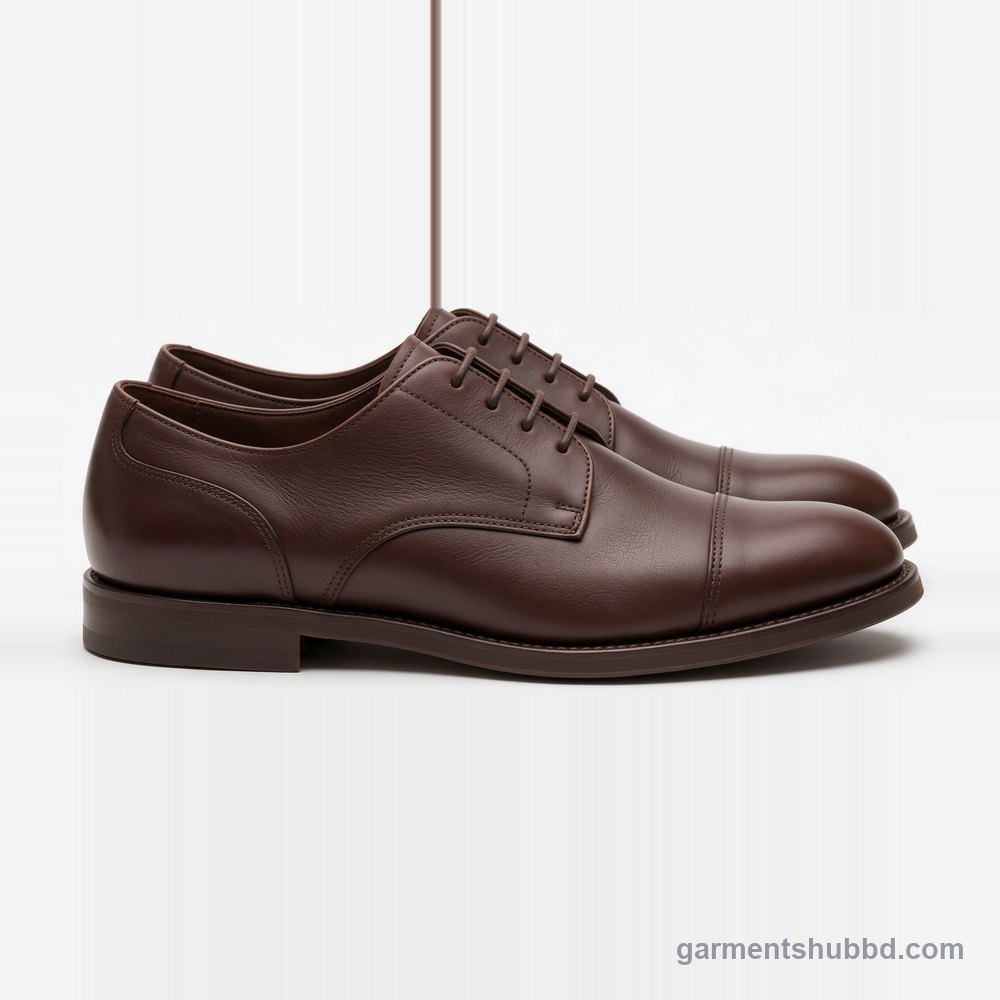
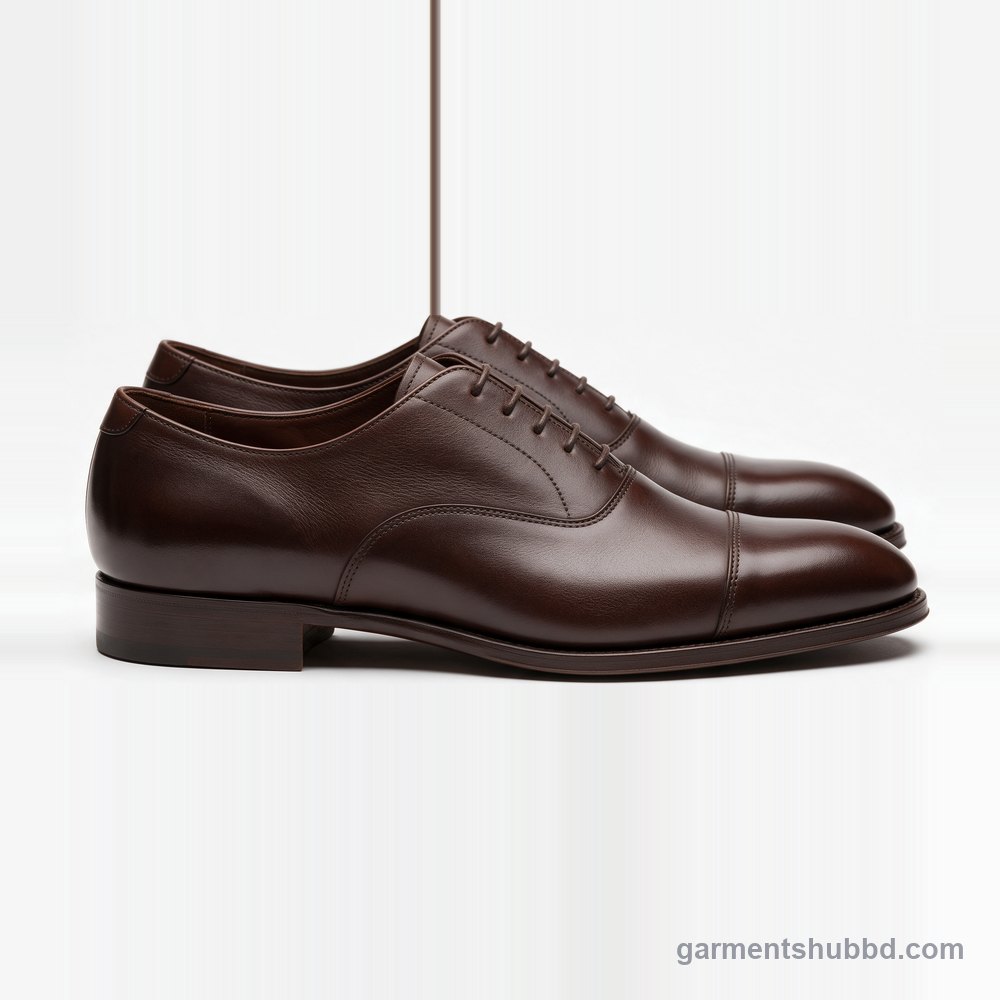
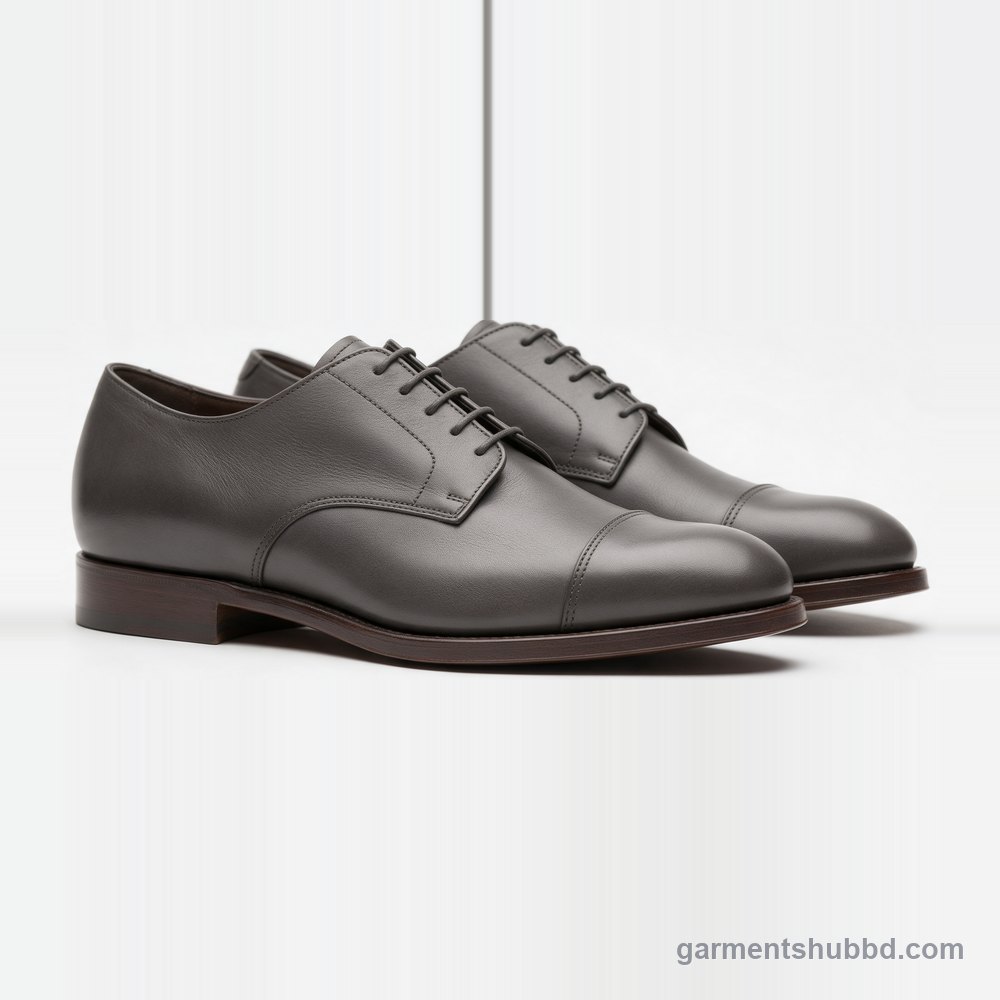
On an oxford the quarters are stitched under the vamp, so the facings close almost edge to edge and the lacing sits flat. The look is cleaner than a derby and the hold over the instep is firmer, which is why oxfords carry suits, uniforms and occasion wear. An oxford shoe manufacturer in Bangladesh has to cut, close and last accurately, because the pattern leaves nowhere to hide a weak join.
No footwear unit is vetted for Garments Hub BD yet, so an oxford enquiry starts with a search. The desk looks for closing rooms that stitch a clean throat and lasters who pull a closed upper without wrinkles, visits the unit that passes, and returns a real quote or a straight no within 5 working days.
Kinds of oxford shoe
Cap toe oxford
A separate toe cap stitched straight across the vamp. It is the standard business and uniform shoe, and the cap seam is where an inspector looks first for straight, even closing.
Plain toe oxford
No cap and no decoration, so the vamp is one clean panel. It needs a flawless area of hide and accurate lasting, since nothing on the toe draws the eye away from a crease or scar.
Wholecut oxford
The upper is cut from a single piece of leather with one seam at the back. It uses far more hide, rejects any grain flaw and needs a skilled laster, so it costs more than any other oxford to make.
Brogue oxford
Full or semi brogue, with punched holes along the seams and a medallion on the toe. It sits between formal and smart casual, and the punching must line up across both shoes of a pair.
Patent evening oxford
A plain toe in patent leather for evening and ceremonial wear. Patent shows every crease and scuff, so it needs careful handling through lasting, finishing and packing.
How to specify an oxford shoe
- Pattern
- Cap toe, plain toe, wholecut or brogue, with a drawing or a pair to copy. Mark the throat shape and the eyelet count, usually five pairs on a formal oxford.
- Last and toe shape
- Round, almond or chisel toe, the instep height, and whether you sell half sizes. An oxford has little give over the instep, so a last that is wrong shows at once in the facings.
- Upper leather
- Box calf, an aniline calf for hand antiquing, or patent. Name the grade you will accept on the vamp, where a closed formal shoe shows every grain flaw.
- Construction
- Blake for a close cut sole edge, Goodyear welted for a heavier formal shoe that can be resoled, or cemented for uniform and price led orders.
- Sole and heel
- Leather sole with a closed channel, rubber, or leather with rubber inserts. A stacked leather heel is nailed on and finished with a top piece.
- Finish
- Polished, burnished at the toe or hand antiqued. Hand finishes vary pair to pair, so agree a reference pair to judge the bulk against.
Tests an oxford shoe manufacturer in Bangladesh should run
- Heel attachment test
- Measures the force needed to tear the heel away from the shoe. It matters on a stacked leather heel nailed through a thin heel seat.
- Outsole flex test
- Bends the sole repeatedly at the tread line and looks for cracks. A leather sole that is too thin or too dry fails it early.
- Colour rub on the finish
- The upper is rubbed dry and wet with a white cloth and the staining graded. Burnished and antiqued finishes can mark socks and trousers if the top coat is weak.
- REACH Annex XVII, entry 43
- Black and dark brown oxford calf is often dyed heavily, and for the EU the leather must not release listed amines from azo dyes above 30 mg/kg. Ask the tannery for a result per colour.
- LWG
- The Leather Working Group audits the tannery, not the shoe, and rates it gold, silver, bronze or audited. Ask which tannery supplies the oxford calf and check its rating if your buyer needs one.
What moves the price of an oxford shoe
- Pattern: a wholecut uses far more hide per pair than a cap toe.
- The leather grade on the vamp, since a closed formal shoe shows every flaw.
- Goodyear welting or Blake stitching in place of a cemented sole.
- A closed channel leather sole and a stacked leather heel.
- Hand antiquing, burnishing or mirror polishing at the toe and heel.
- Half sizes, which double the lasts and split the pairs per size.
Lead time for oxford shoes
Plan on 21 to 30 days for an oxford sample and 60 to 90 days for bulk after the pre-production pair is signed off. A wholecut or a hand antiqued finish slows the closing and finishing rooms, and an order in half sizes needs a full set of lasts before cutting starts. Goodyear welting adds days over Blake or cemented work. Figures are confirmed in the quote.
What we check on oxford shoes before shipment
- ThroatThe quarters meet the vamp at a clean throat with no puckering, and the reinforcement stitch at its base is neat.
- Toe cap lineThe cap seam runs straight and sits at the same height on the left and right shoe.
- Clean vampNo grain flaws, scratches or loose grain on the vamp, the panel a formal buyer sees first.
- Heel and sole edgeHeel seated square, top piece flush, and the sole edge evenly trimmed, inked and polished.
Questions buyers ask about oxford shoes
Why does an oxford cost more to make than a derby?
The closed pattern has to be cut and stitched exactly, the throat is a stress point that needs neat reinforcement, and lasting a closed upper without wrinkles takes more skill. Small errors show, so units reject more pairs and price that in.
Can an oxford be made in a wide fitting?
Only on a last made for it. The facings close flat, so the lacing cannot take up a fuller foot the way a derby's can. If you sell wide fittings, plan the oxford on its own wide last rather than relying on the laces to cope.
Is a wholecut a good first style?
Usually not. It needs large clean areas of hide and a skilled laster, and it exposes any unit's weaknesses at once. A cap toe proves the same unit at lower cost and with less leather at risk; add the wholecut once the cap toe passes.
Do uniform orders use the same oxford as a fashion range?
Usually a different build: cemented, a corrected grain leather that takes a quick shine, and a rubber sole for hard wear. State the use at the enquiry, because it changes the unit and the price far more than the pattern does.
Get a quote for oxford shoes
Tech pack or sketch with quantities per colour. A vetted unit and a real quote, or a straight no, within 5 working days.