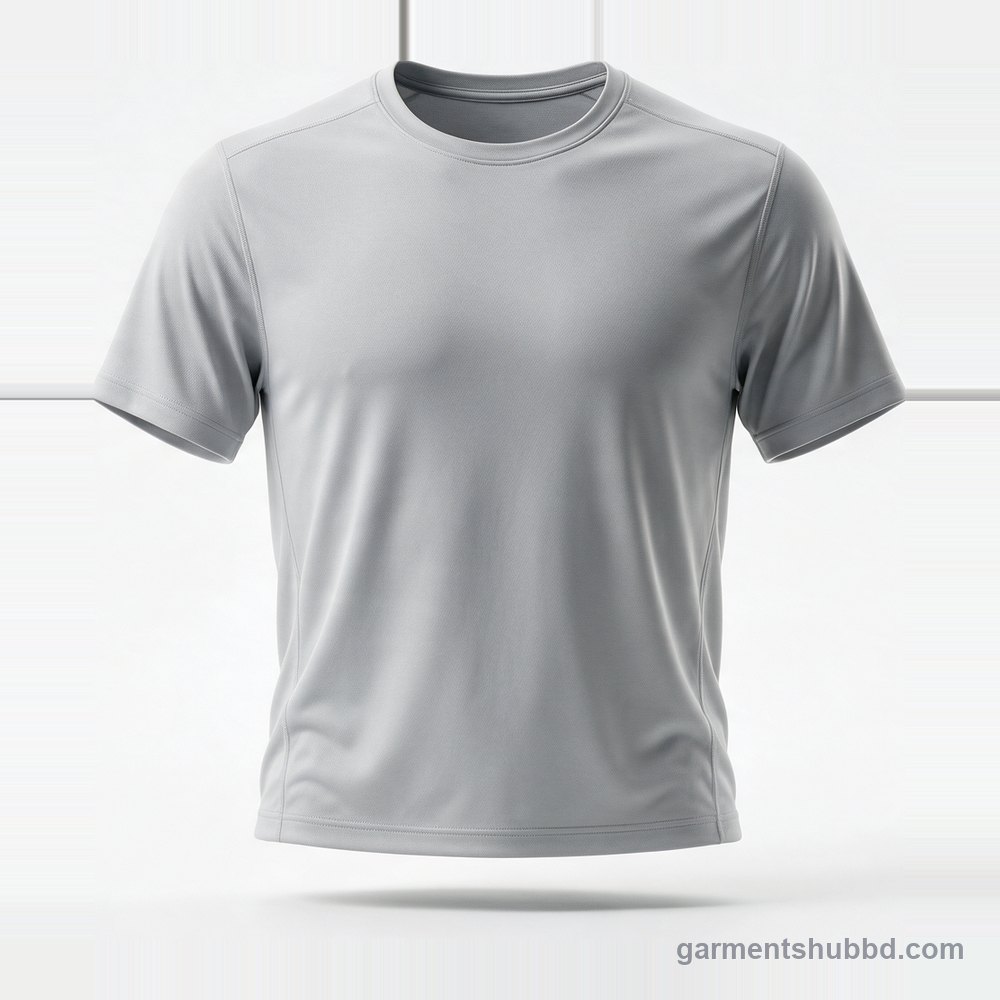
Polyester T-shirts, your specification
Made to your tech pack, fabric and colours by a factory matched to the order.
Private label
Your main label, care label, hangtag and polybag. Nominated trims accepted.
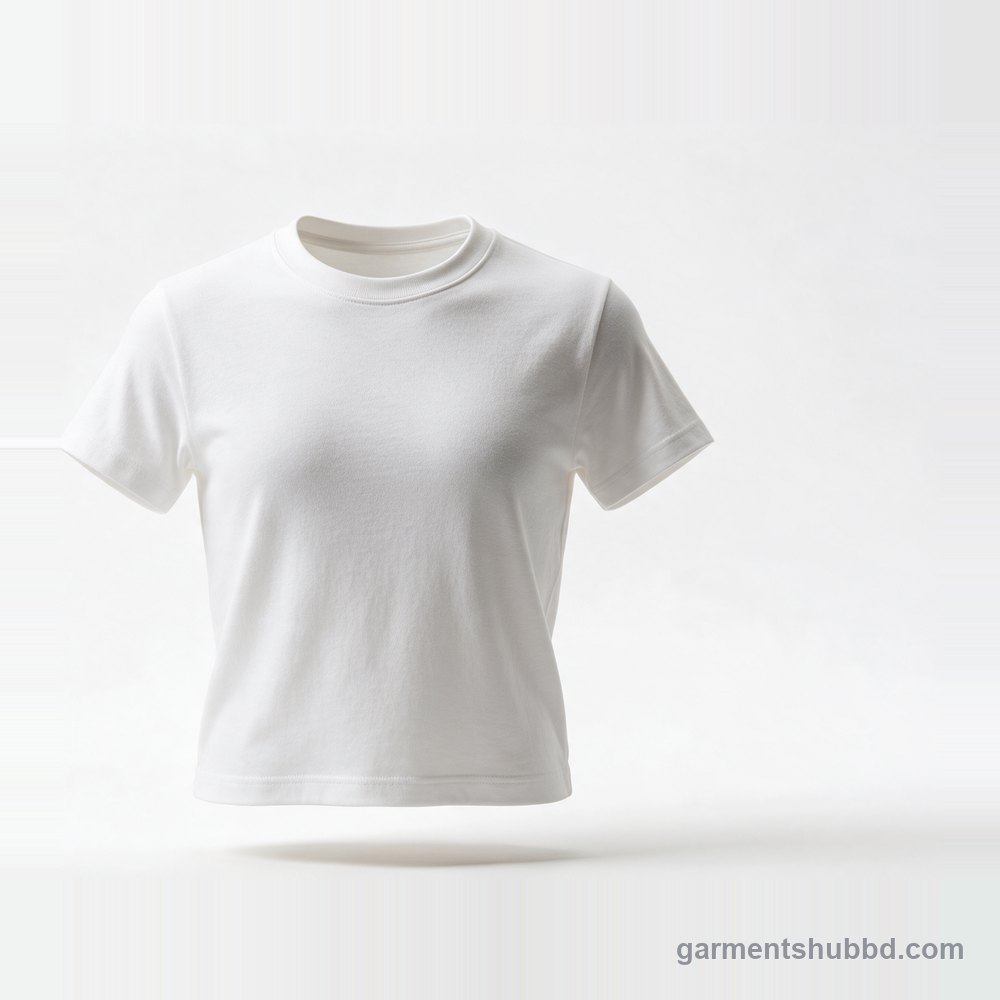
Polyester T-shirts are bought for what the fibre does: it dries fast, keeps its shape and colour, and is the base that sublimation print needs. Event organisers buy white polyester blanks to print all over, charities and clubs buy wicking tees, and basics brands buy poly cotton for a tee that creases less than cotton. A polyester T-shirt manufacturer in Bangladesh will first ask which of these you need.
Garments Hub BD gets both quotes on the same yarn type, denier or count and blend ratio, because two polyester jerseys of equal weight can feel nothing alike. Where you need recycled content, the factories are matched to the certificate you name. Photographs of the fabric rolls and the finished blanks reach you from each stage.
Kinds of polyester T-shirt
Filament polyester jersey
Knitted from continuous filament, usually 50 to 150 denier, often microfibre with filaments finer than one denier each. Smooth and cool with a slight sheen, it dries quickly and is the usual base for event and team blanks.
Spun polyester jersey
Spun from cut staple fibre, so the face is matt and the hand closer to cotton. It looks less synthetic than filament but pills sooner, as loose fibre ends work out of the yarn.
White polyester for sublimation
A bright white jersey with no cotton in it, because sublimation dye bonds with polyester and not with cotton. The whiter and more even the base, the cleaner the printed colours.
Poly cotton, CVC and PC
CVC is cotton rich, usually 60 cotton to 40 polyester; PC turns it round at about 65 polyester to 35 cotton. Both crease and shrink less than cotton and are dyed once for each fibre.
Tri blend
Polyester, cotton and rayon, often 50, 25 and 25 percent. The fibres take dye differently, which gives the soft heathered look, and the rayon adds drape.
How to specify a polyester T-shirt
- Yarn type and size
- For filament give denier and filament count, for example 75 denier in 72 filaments; for spun or blended yarn give the count. Equal weights differ most here.
- Blend ratio
- State the fibre percentages and the tolerance you accept, since the fibre content rules of your market decide how the label reads.
- Weight and opacity
- Polyester tees usually run 120 to 180 GSM. Light filament jersey is cool but can show through in white, so judge opacity on the sample.
- Wicking route
- Say whether wicking comes from a hydrophilic finish applied after dyeing or from a shaped fibre cross section. Finishes usually fade with washing; fibre based wicking stays.
- Static and pilling
- Polyester builds static in dry air. Ask for an anti-static finish if needed and a target pilling grade, set tighter on spun and blended jersey.
- Dye route
- Polyester takes disperse dyes at high temperature, about 130 degrees Celsius. Blends need a second dye for the cotton or rayon, so state which fibre must hit the standard.
Tests and certificates for polyester T-shirts
- ISO 12945-1
- Pilling box test. Polyester pills cling because the fibre is too strong to let them break away, so set a grade before bulk, mainly on spun and blended jersey.
- ISO 105-E04
- Perspiration fastness on the grey scale. Polyester tees worn for sport or summer take sweat at the underarm and back, where a weak dye fades or stains first.
- AATCC 195
- Moisture management: how the jersey takes up, spreads and dries sweat. If the tee is sold as wicking, ask for results after washing, not only on new fabric.
- RCS or GRS
- Recycled polyester claims: RCS from 5 percent recycled content, GRS from 20 percent with social, environmental and chemical criteria. Both move to the Materials Matter Standard, with audits to it from 31 December 2026.
What moves the price at a polyester T-shirt manufacturer in Bangladesh
- Microfibre and shaped cross section yarns cost more than standard filament or spun polyester.
- Recycled polyester with RCS or GRS paperwork costs more than virgin yarn and needs certified units.
- Blends cost more to dye than pure polyester, because each fibre takes its own dye.
- A durable wicking or anti-static finish adds a process; wicking yarn adds yarn cost instead.
- Sublimation adds paper, ink and press time per piece but no screens, so colour count barely matters.
Lead time for polyester T-shirts
Plain polyester jersey in white or a mill's stock colours is often knitted and dyed quickly, so plain blanks tend to sit at the short end of the bulk range. Blends add a second dye stage. Recycled yarn bought from a certified spinner adds days, and a sublimation run adds printing and pressing of the panels before sewing. Each of these appears as a dated step on the quote.
What we check on polyester T-shirts before shipment
- Snags and pulled loopsFilament jersey snags on rough surfaces and damaged needles, so the face is checked under raking light on rolls and finished blanks.
- Press shinePolyester pressed too hot keeps shiny marks that do not wash out; seams and hems are checked for glazing.
- Absorbency drop testA drop of water on a wicking tee should spread and vanish within seconds; a bead that sits means the finish is missing.
- Shade under two lightsBlends are compared in daylight and shop light, because the two fibres can match in one light and part in another.
Questions buyers ask about polyester T-shirts
Spun or filament polyester for a blank T-shirt?
Filament if the tee will be sublimated or sold for sport: it is smooth, quick drying and holds colour. Spun polyester looks and feels more like cotton, so it suits a casual blank, but it pills sooner. Ask both factories to quote one yarn type, or the cheaper line may simply be the other one.
Can I sublimate a poly cotton T-shirt?
You can, but the dye takes only on the polyester, so the print looks faded in proportion to the cotton share. Some brands want that worn look. For full, bright colour use white jersey that is all polyester, and run a strike off on the bulk fabric before cutting.
Will a wicking finish wash out?
A finish applied after dyeing usually weakens over repeated washes; how fast depends on the chemistry and the wash. Ask for moisture management results after a stated number of washes. If wicking is the selling point, a yarn with a shaped fibre cross section keeps working, because the effect sits in the fibre.
How do I stop a polyester T-shirt from pilling?
Choose filament over spun yarn, a tighter knit, and a longer staple if you need spun. Set a pilling grade before bulk, test to ISO 12945-1, and ask whether an anti-pill finish is applied. Polyester pills do not drop off the way cotton ones do, so prevention matters more.
Get a quote for polyester T-shirts
Tech pack or sketch with quantities per colour. A compared quote in 48 hours.