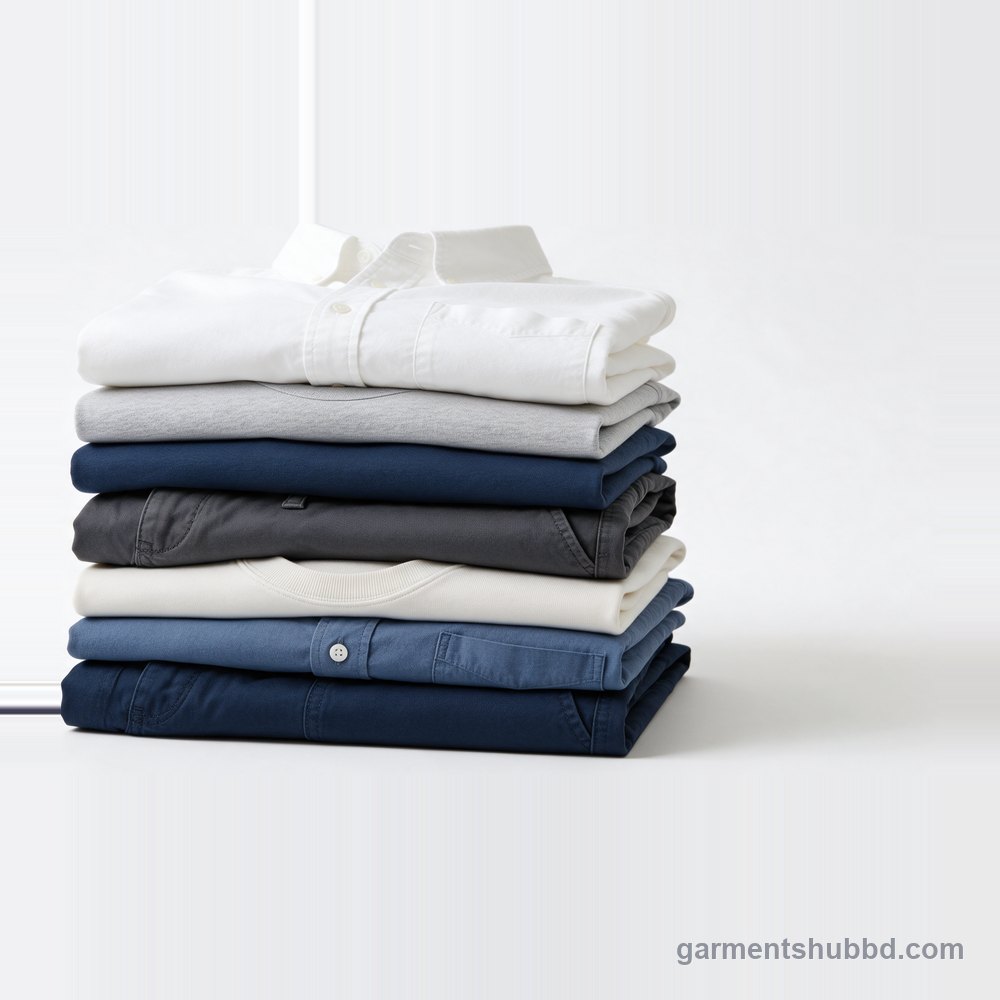
Seasonal stock lots, your specification
Made to your tech pack, fabric and colours by a factory matched to the order.
Private label
Your main label, care label, hangtag and polybag. Nominated trims accepted.
A seasonal stock lot is clothing made for a season that has passed or is closing: jackets, knitwear and fleece offered in spring, or shorts and light tops offered in autumn. It may be goods a brand never collected, an order that missed its season, or stock held through it. A seasonal stock lot supplier in Bangladesh sells it to buyers who can hold it for the next season or ship it where that season is starting.
Garments Hub BD does not hold stock. For a seasonal lot it asks factories on its bench when the goods were made and how they have been stored, has cartons opened for mould, odour and yellowing, and photographs what is found for you. A third party inspector of your choice can check the lot as well.
Kinds of seasonal stock lot
Winter outerwear lots
Jackets, puffers, parkas and coats offered after the northern winter. They are bulky and costly to store, so holders price them to move, but padding and down need checks for clumping and odour.
Knitwear and fleece lots
Sweaters, hoodies and fleece left after the cold months. They keep well when dry, but wool knits attract moths and all knits take on smells in a damp warehouse.
Summer lots offered in autumn
Shorts, tees, light dresses and swimwear left at the end of a northern summer. Lighter and cheaper to hold, and often sold on into a southern hemisphere spring.
Event dated lots
Holiday prints, team colours or a dated graphic that sells only around one date. Value drops sharply once the date passes, so these lots suit buyers able to hold stock for a year.
How to brief a seasonal stock lot supplier in Bangladesh
- Season and window
- Say which season the goods are for and the date they must land for you to sell them in time.
- Production date
- Ask when the lot was made and packed; its age tells you about storage risk and how dated the styling looks.
- Storage conditions
- Ask where and how the cartons were stored, on pallets or on the floor, and through how many monsoon months.
- Assortment
- Give the size and colour mix you can sell, since end of season lots are often heavy in the sizes and colours that did not sell.
- Fill and fibre
- For padded or knitted goods, ask for the fill type, down share or wool content, and any test reports from production.
- Target market
- Name where you will sell, so the lot is matched to a market whose season is starting and whose labelling it meets.
Tests and labels for seasonal stock lots
- IDFB testing regulations
- Used to test fill power and the down to feather ratio. A down jacket lot sold with a fill claim should be retested on samples, since long storage can reduce loft.
- EN 12934
- The EU standard for labelling down and feather composition. Check that the labels on a down lot match the test result before reselling in the EU.
- Wool Products Labeling Act
- US labelling for wool content. Wool sweaters in a seasonal lot need correct wool percentages on the label before they are sold in the US.
What moves the price of a seasonal stock lot
- Timing: the nearer the season's end, the lower the price a holder will accept.
- Storage cost, which pushes holders of bulky outerwear to sell sooner.
- Condition after storage, since mould, odour or yellowing cut value sharply.
- Assortment: lots holding core sizes and colours fetch more than leftovers.
- Dated styling or prints, which shorten the selling window.
- Fill and fibre: tested down and wool hold value better than unlabelled synthetic fill.
Lead time for seasonal stock lots
A seasonal lot is already made, so its timing is inspection, preparation and freight. Opening cartons, checking for storage damage and photographing normally take no longer than the 7 to 14 day sample window shown on this page. Re-packing, airing or cleaning, labels and documents usually fit inside the 30 to 60 day bulk window. Work back from the date your selling season opens; the quote confirms the ship date.
What we check on seasonal stock lots before shipment
- Mould and odourCartons from the bottom of stacks and against walls are opened first, where damp collects, and checked for spots and a musty smell.
- YellowingWhites and pale colours are checked at folds and near polybags for yellow marks that appear in long storage.
- Trims after storageZips, snaps and metal trims are checked for rust and stiffness, and padded pieces squeezed for clumping.
- Assortment against offerSizes and colours are counted in opened cartons to confirm the mix matches what was offered.
Questions buyers ask about seasonal stock lots
When are winter stock lots offered?
Usually from late winter into spring, once northern hemisphere brands have closed their season and factories hold what was not shipped. Prices tend to fall as summer approaches. Buying early gives more choice; buying late gives lower prices and thinner assortments.
How do I spot storage damage in a seasonal lot?
Open cartons from the bottom and the walls of the stack, not only the top. Look for spots, a musty smell, yellowing at folds and rust on metal trims, and squeeze padded items for clumps. Photographs of the opened cartons should come with the offer.
Can a seasonal lot be sold where the season is just starting?
Yes, and that is the main reason to buy one. Winter stock left in the northern spring can reach southern hemisphere markets such as Australia, South Africa or Chile for their winter. Check that sizes, fits and labels suit that market, and allow for sea freight time.
Do down jackets in a stock lot need retesting?
If you resell with a fill claim, yes. Test samples for fill power and down to feather ratio under IDFB testing regulations, and check labels against EN 12934 for the EU. Long storage can reduce loft, so the original report may no longer hold.
Get a quote for seasonal stock lots
Tech pack or sketch with quantities per colour. A compared quote in 48 hours.