Winter gloves, your specification
Made to your tech pack, fabric and colours by a factory matched to the order.
Private label
Your main label, care label, hangtag and polybag. Nominated trims accepted.
Winter gloves are the cold weather volume line in a glove range: a leather or textile shell with fleece, pile or synthetic wadding inside, sold each autumn by outdoor shops, fashion labels and supermarkets. Warmth comes from the lining and from how well the cuff seals. A winter glove manufacturer in Bangladesh needs a lining supplier that can deliver the exact weight you name, because the lining sets both the warmth and the fit.
There is no glove unit on Garments Hub BD's books yet. For a winter glove enquiry the desk sources a unit that can fit the lining and insert you specify, visits it, and comes back within 5 working days with a real price from that unit or a clear no.
Kinds of winter glove
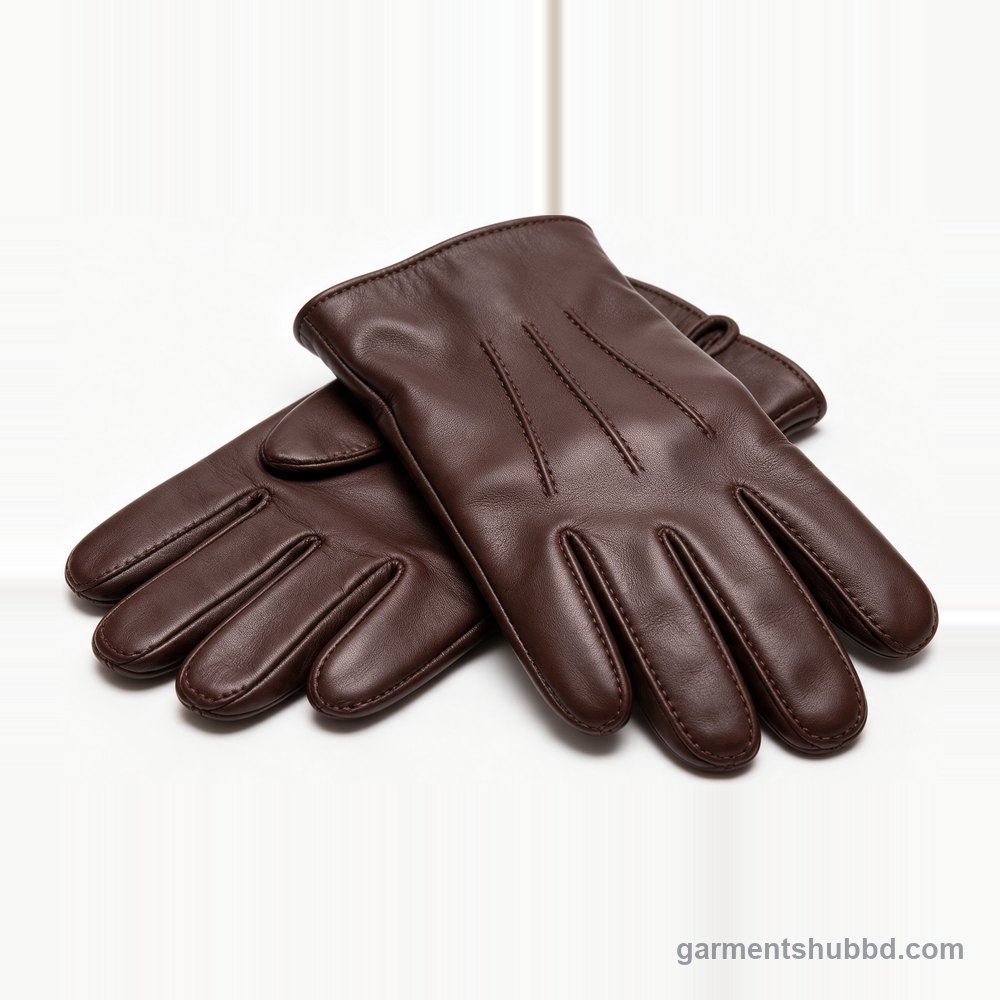
Fleece lined leather gloves
Cow nappa or sheep leather over a brushed polyester fleece. Warm enough for a city winter and the steady seller in gift ranges. Fleece runs from thin to thick, so the lining weight has to be written down.
Pile lined gloves
A deep knitted pile lining, sometimes turned out at the cuff as a visible trim. Very warm and bulky, so the leather is cut larger to make room and the fit sample is judged with the pile in place.
Insulated ski gloves
A polyamide shell with synthetic wadding, a waterproof insert and a long gauntlet cuff with a drawcord. Built for snow and wet days, usually with a leather or synthetic leather palm for grip on poles.
Softshell gloves
A stretch woven shell with a brushed inner face and a light lining or none. For running, cycling and commuting, where moving the fingers freely counts for more than warmth.
Knitted cuff leather gloves
A leather hand with a rib knitted cuff that closes round the wrist. A casual and outdoor work style; the cuff yarn and rib structure decide whether it still grips after a season of wear.
How to specify a winter glove
- Lining by name and weight
- Write the fibre, the construction and the weight: a brushed polyester fleece of typically 200 to 300 GSM, or synthetic wadding of usually 40 to 150 grams per square metre.
- Lining attachment
- Bonded, tacked at the fingertips or loose. A loose lining comes out with a damp hand, so ski gloves usually tack or bond it.
- Waterproof insert
- A waterproof breathable membrane shaped as a glove and sewn between shell and lining. Say insert or laminate, and ask for the insert seams to be sealed.
- Cuff
- Rib knit, elasticated, a gauntlet with drawcord, or a plain wrist. A gauntlet goes over a jacket sleeve; a knitted cuff tucks under it.
- Shell and palm
- Name the shell fabric and the palm material separately. Ski gloves wear through at the palm first, so a leather or reinforced palm is worth paying for.
- Warmth wording
- Write the exact words the pack will carry. A temperature figure on a label is a claim that needs a lab result on the finished glove, not a guess from the lining weight.
Tests to ask a winter glove manufacturer in Bangladesh for
- ISO 811
- Measures the water column, in millimetres, that the insert or shell fabric holds before leaking. A waterproof claim on the hangtag needs this number on the membrane as used.
- ISO 4920
- A spray test of how well the shell fabric sheds water. A textile ski glove whose shell wets out turns heavy and cold, even with a membrane behind it.
- ISO 11092
- Gives the water vapour resistance, Ret, of shell, insert and lining. A lower figure lets sweat out, and a dry hand stays warmer on a long day outside.
- OEKO-TEX STANDARD 100
- Checks the textile parts for harmful substances. Worth asking for when the gloves go into a children's range or to a retailer that requires it on every textile.
What moves the price of a winter glove
- Lining: wadding plus fleece costs more than fleece alone, and deep pile more than both.
- A waterproof insert adds a component, a sewing step and seam sealing.
- Gauntlet cuffs with drawcord and toggle add fabric, trims and labour over a plain wrist.
- A leather palm on a textile glove adds a second material and a skilled cutting step.
- Pre-curved ski gloves have more pieces than a flat leather glove, and each piece adds sewing.
Lead time for winter gloves
A winter glove sample typically needs 10 to 18 days, more if the lining or insert must be ordered in a new colour or weight. Lined and insulated bulk usually runs 40 to 65 days after the pre-production pair is approved. A lab test behind a waterproof or warmth claim adds days before shipment. Winter gloves ship for an autumn shelf, so plan the order in spring; the quote confirms each date.
What we check on winter gloves before shipment
- Lining stays inThe hand is pulled out of each sampled glove and the lining checked at every fingertip, since a lining that turns out ruins the glove.
- Insert leak checkWhere an insert is claimed, sampled gloves are checked for leaks at the insert seams and where the insert meets the cuff.
- Cuff recoveryKnitted cuffs are stretched and released to see they return to size, and drawcord toggles are checked for secure cord ends.
- Finger length with liningFinger length is measured on the finished, lined glove, because thick insulation shortens the usable finger and makes gloves feel small.
Questions buyers ask about winter gloves
What lining weight suits a city winter glove?
Usually a brushed fleece of about 200 to 300 GSM, or a thin wadding near 40 to 60 grams, is enough for walking in a city winter. Heavier wadding suits ski and outdoor work but costs dexterity. Ask for samples in two weights and wear them outdoors.
Can I call my winter gloves waterproof?
Only if the construction is tested. A membrane insert with sealed seams can earn the word; a water repellent shell on its own cannot. Ask for an ISO 811 result on the insert and settle the wording once the sample has passed a leak check.
Can I print a temperature rating on the pack?
Only with a lab measurement on the finished glove. A rating worked out from the lining weight is a guess, and a customer who returns a cold glove will quote it back. Many brands leave the number off and describe the lining instead.
Leather or textile shell for a winter glove?
Leather is warmer for its thickness, blocks wind and lasts, but stiffens after a soaking. A textile shell with a membrane handles snow and rain better and costs less per pair at volume. Some ranges combine a textile back with a leather palm.
Get a quote for winter gloves
Tech pack or sketch with quantities per colour. A vetted unit and a real quote, or a straight no, within 5 working days.