Denim aprons, your specification
Made to your tech pack, fabric and colours by a factory matched to the order.
Private label
Your main label, care label, hangtag and polybag. Nominated trims accepted.
Denim aprons are workwear for the counter and the workbench: baristas, bartenders, barbers, florists, woodworkers and craft studios wear them. The buyer is often a hospitality group or a uniform supplier who reorders the same style as staff change. A denim apron manufacturer in Bangladesh makes a flat item with few sizes, so the work lies in the strap hardware, the pocket layout and how well the apron survives repeated laundering.
Through Garments Hub BD, an apron drawing goes to two plants from the denim bench, and their quotes come back compared on one sheet within 48 hours. The desk keeps the approved sample, trim card and shade on record, so a reorder next season can be matched to the first delivery.
Kinds of denim apron
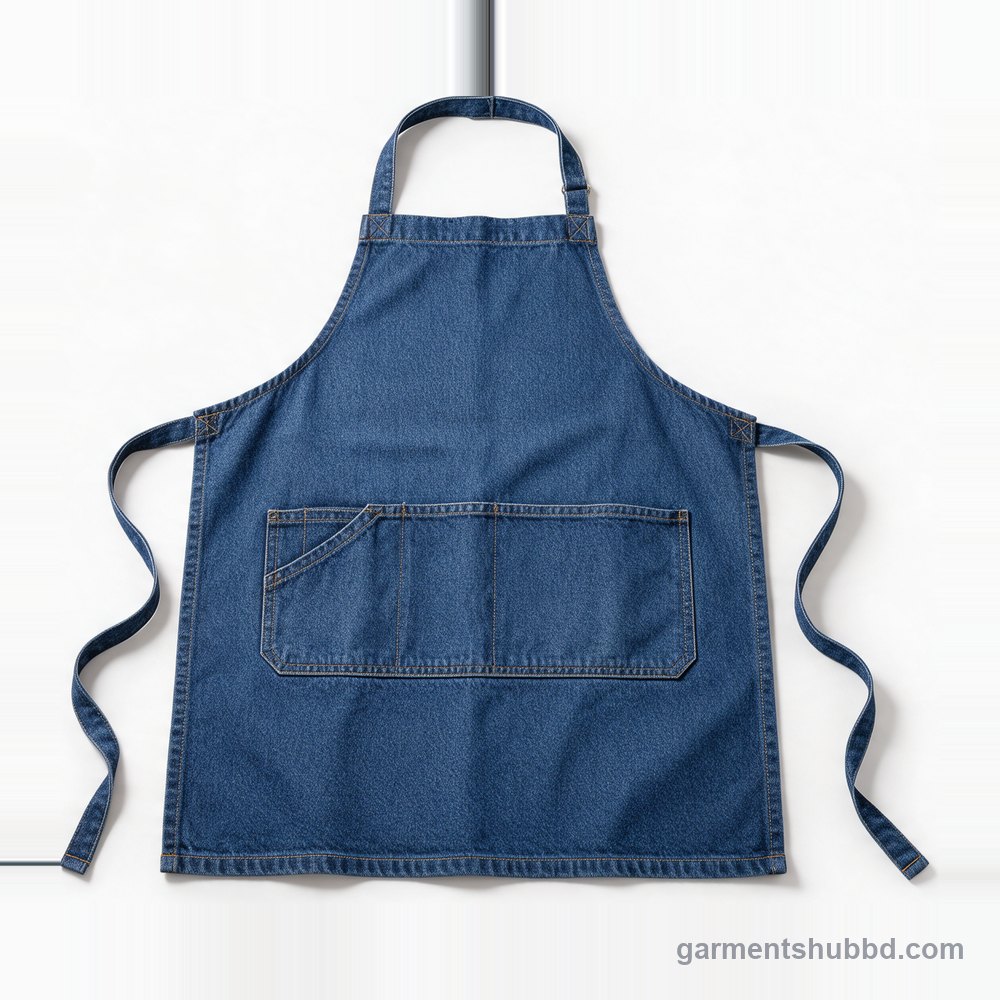
Bib apron with adjustable neck
Covers chest to knee, with a neck strap through a slider or D-rings and long waist ties. The cafe staple; an adjustable neck lets one size fit most of a team.
Cross back apron
Two straps cross between the shoulder blades and fasten at the waist, taking the weight off the neck. Chosen for long shifts and by barbers, potters and bakers.
Waist apron
A half apron from the waist to mid thigh or knee with a row of pockets. Bartenders and floor staff use it to carry pads, pens, cards and a phone.
Tool apron
Heavier denim with bar tacked or riveted pockets, pen slots and a hammer loop. For workshops, garden centres and hardware counters where pockets carry real weight.
Split leg apron
A centre slit up the lower front so the wearer can sit astride a stool or kneel. Used by potters, gardeners and barbers who work low down.
How to specify a denim apron
- Body size
- Body length and width in millimetres, and the bib width for bib aprons. Most aprons are one size, so the strap adjustment is what fits different staff.
- Neck and back fastening
- Adjustable neck strap with slider or D-rings, cross back straps, or ties. Give strap width, length and the hardware finish.
- Pockets
- Number, size and position, plus pen slots and a phone pocket. Bar tack every pocket corner, because aprons are pulled by the pocket.
- Denim weight
- Usually 8 to 12 oz: lighter for cafe aprons worn all day, heavier for workshop aprons that carry tools and take knocks.
- Hardware
- Brass, antique brass or black rivets, D-rings and buckles. Ask for hardware that will not rust or mark the denim in a commercial wash.
- Branding
- Embroidery or a woven label on the bib, or a leather look patch. Embroidery tends to outlast prints in hot, repeated laundering.
Laundering tests to ask a denim apron manufacturer in Bangladesh for
- ISO 15797
- Industrial washing and finishing procedures for workwear. If the aprons go to a commercial laundry, test colour and size after these cycles rather than after a home wash.
- ISO 105-C06
- Colour fastness to washing, with staining on an adjacent fabric graded as well as shade change. Indigo bleeding onto chef whites and shirts is the complaint to avoid.
- ISO 5077
- Dimensional change in washing. An apron cut from unwashed denim shrinks in length, and its straps shrink with it, so test before the pattern is finalised.
- REACH Annex XVII, entry 72
- Limits listed CMR substances in clothing and textiles touching the skin, formaldehyde at 75 mg/kg among them. An apron is worn as clothing, so EU sales fall under it.
What moves the price of a denim apron
- Fastening: cross back straps with slider hardware cost more than plain ties.
- Pockets: each pocket, pen slot and bar tack adds sewing time.
- Hardware: rivets, D-rings and buckles in a nominated finish add cost per apron.
- Branding: embroidery is priced by stitch count and its position on the bib.
- Pre-washing the denim before cutting adds a step but stops shrinkage in the first laundry.
Lead time for denim aprons
Apron samples usually take 7 to 14 days. Apron bulk typically runs 30 to 60 days after the pre-production sample is approved; embroidery, a pre-wash or hardware in a nominated finish adds days. A repeat of an approved style skips the full sampling round and needs only a shade and trim check, which shortens the start. The quote sets the dates.
What we check on denim aprons before shipment
- Strap adjustment rangeNeck and back straps are run through their full adjustment to confirm the slider holds and the apron fits short and tall staff.
- Pocket bar tacksEvery pocket corner is checked for a bar tack, since a torn pocket corner is the first failure on a working apron.
- Hardware fixingRivets and D-rings are pulled and checked for sharp edges that could catch hands, hair or clothing.
- Length after washingA washed sample is measured against the drawing, since an apron that shrinks above the knee protects less.
Questions buyers ask about denim aprons
Can one apron size fit all my staff?
Usually yes, with an adjustable neck strap or cross back straps. Give the heights of your shortest and tallest staff and the plant sets the strap range to cover them. For a large team, a second, longer body length is worth adding.
Will denim aprons stain white uniforms?
New indigo can stain. A rinse or garment wash before shipping removes loose dye, and a washing fastness test shows how much still transfers to white cotton. Telling staff to wash new aprons separately for the first few washes also helps.
Cross back or neck strap for a cafe?
Cross back straps spread the load across the shoulders and suit long shifts; a neck strap is cheaper and quicker to put on. Some cafes order cross back for baristas and waist aprons for floor staff, from the same denim.
Can I reorder the same apron next year?
Yes. Keep the approved sample and the trim card, and the order repeats with a shade and trim check instead of a full sampling round. Denim shade drifts between mill lots, so agree a shade band for repeats at the first order.
Get a quote for denim aprons
Tech pack or sketch with quantities per colour. A compared quote in 48 hours.