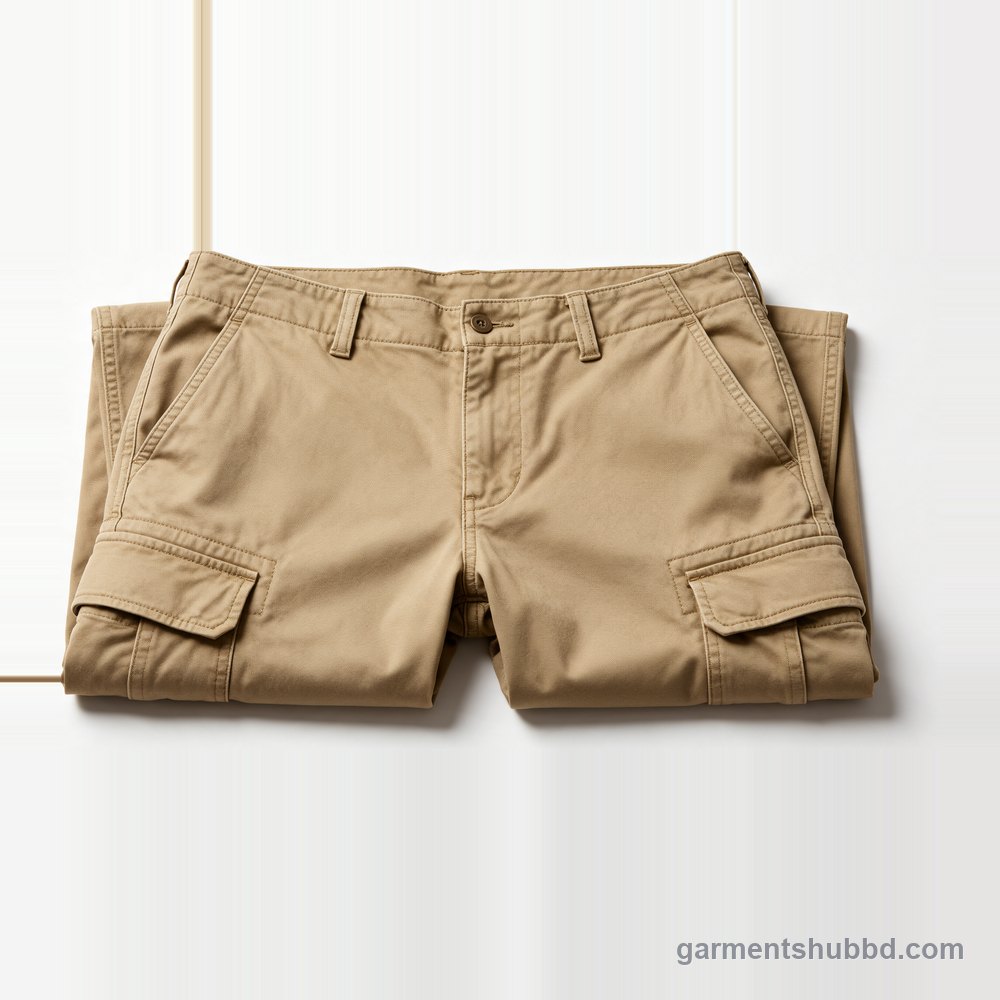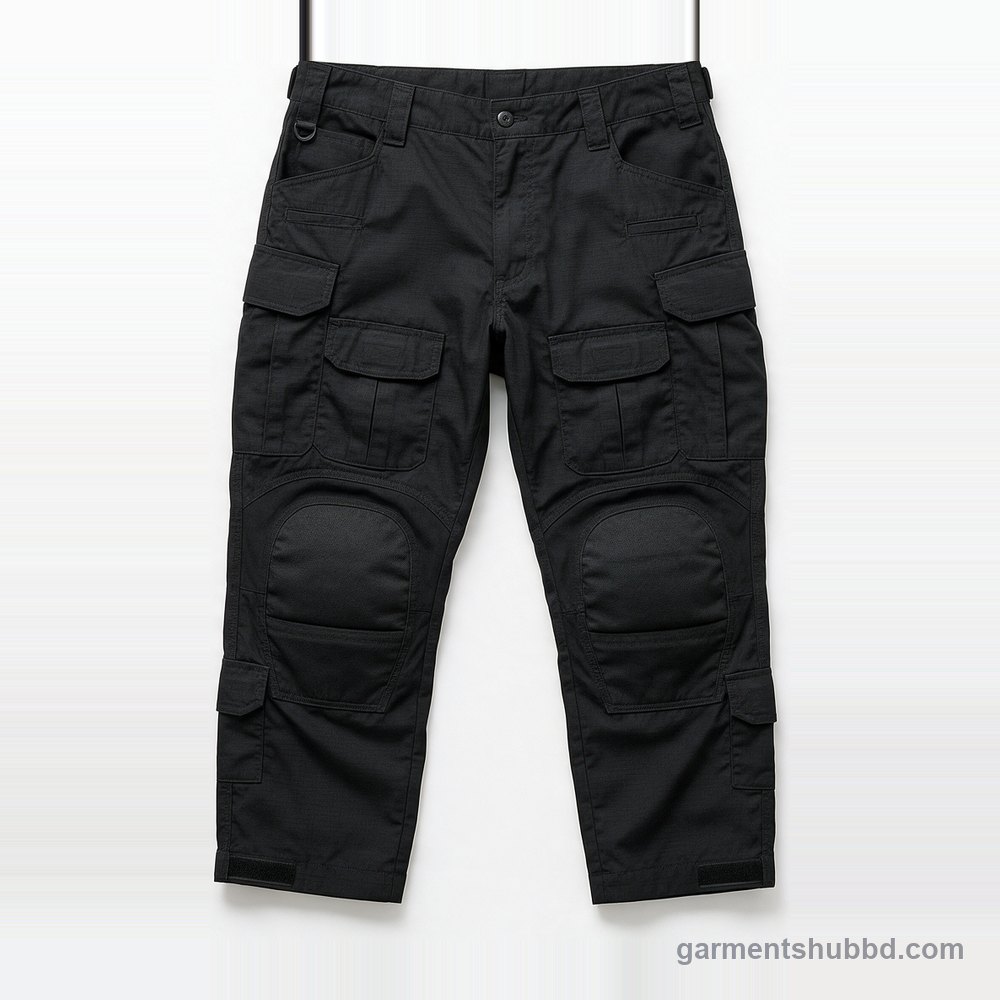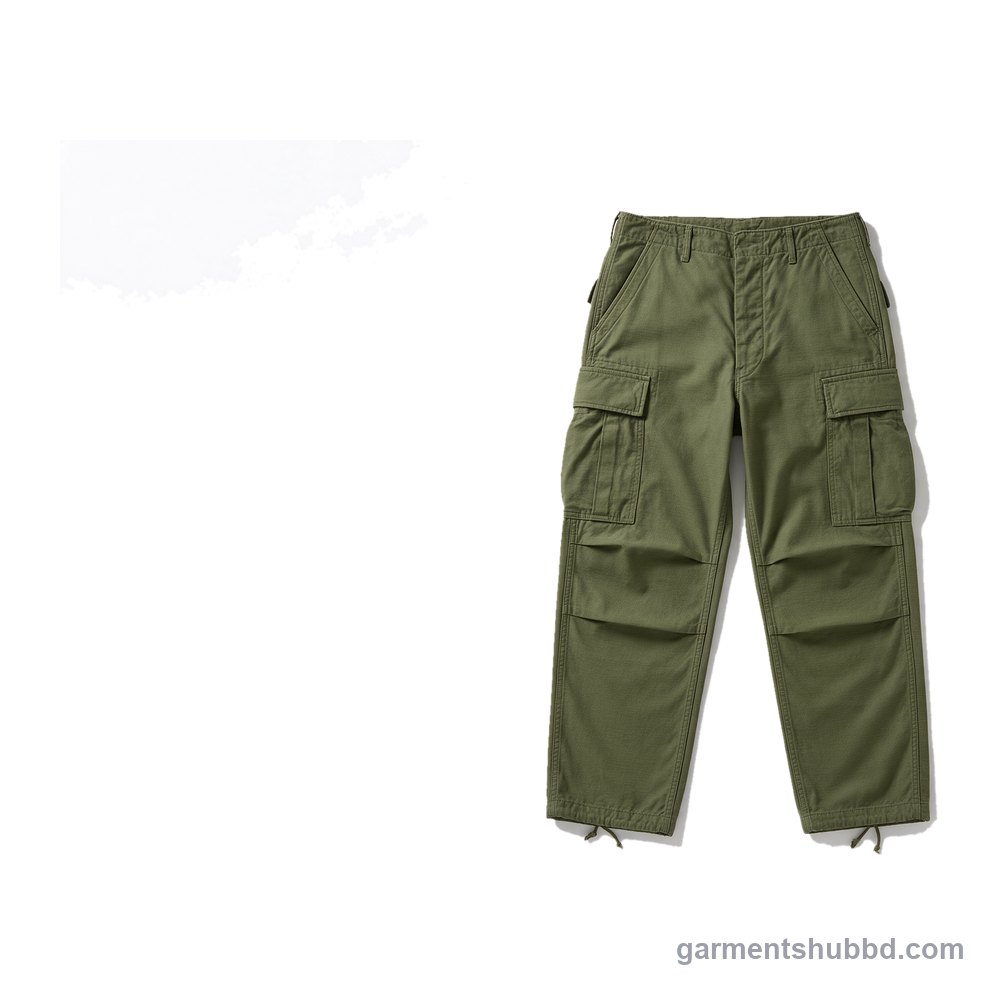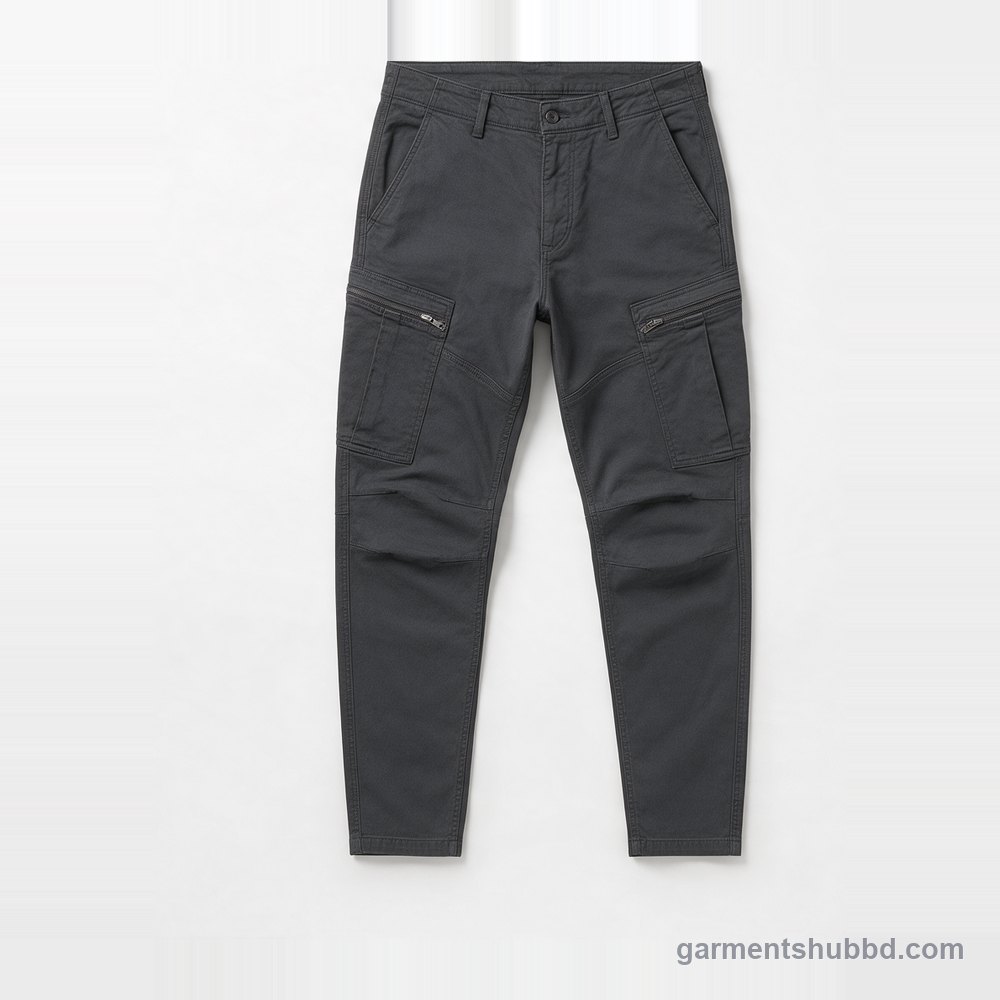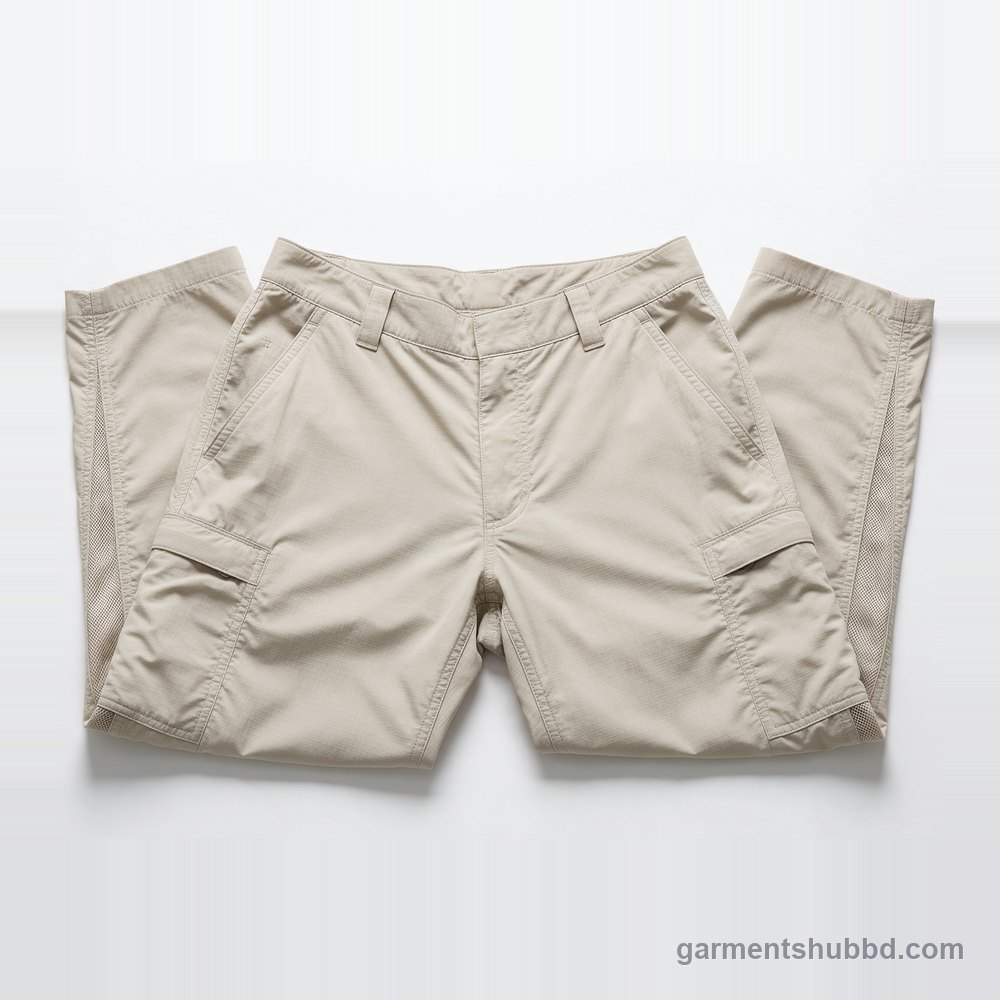
Lightweight cargo pants, your specification
Made to your tech pack, fabric and colours by a factory matched to the order.
Private label
Your main label, care label, hangtag and polybag. Nominated trims accepted.
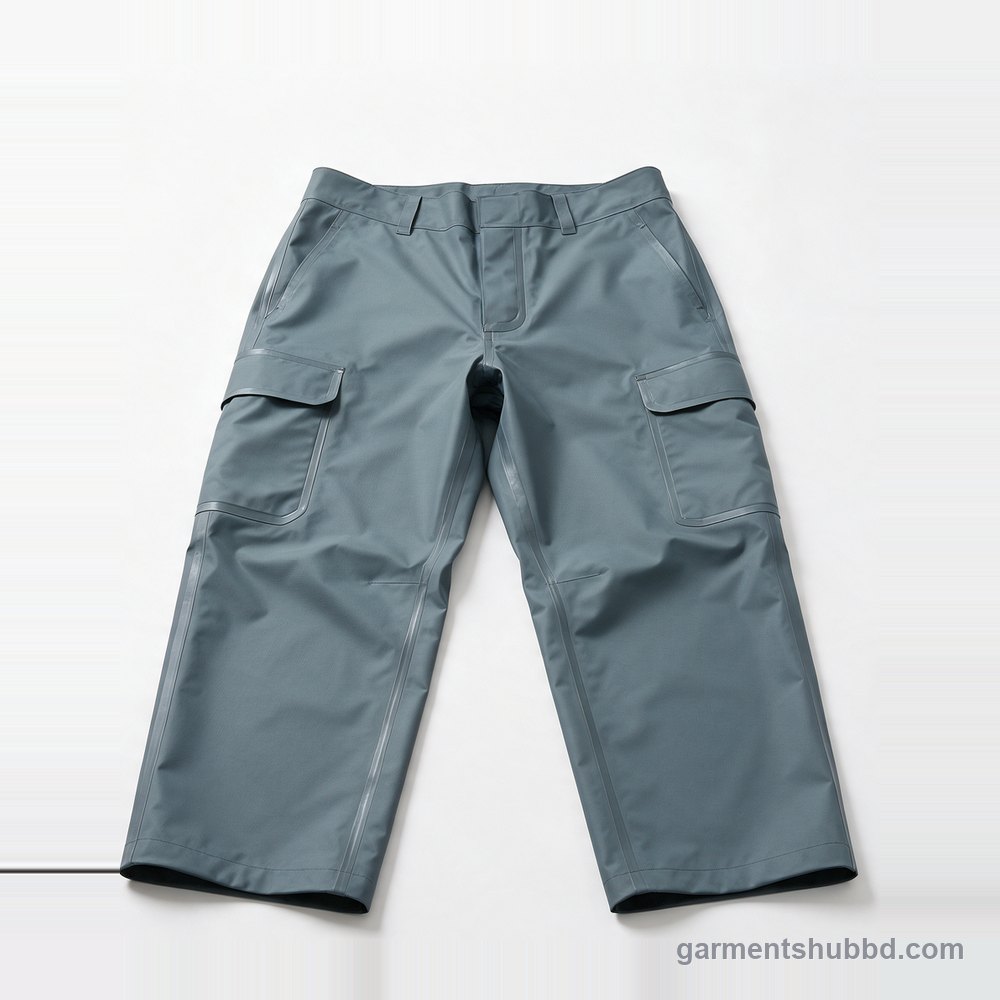
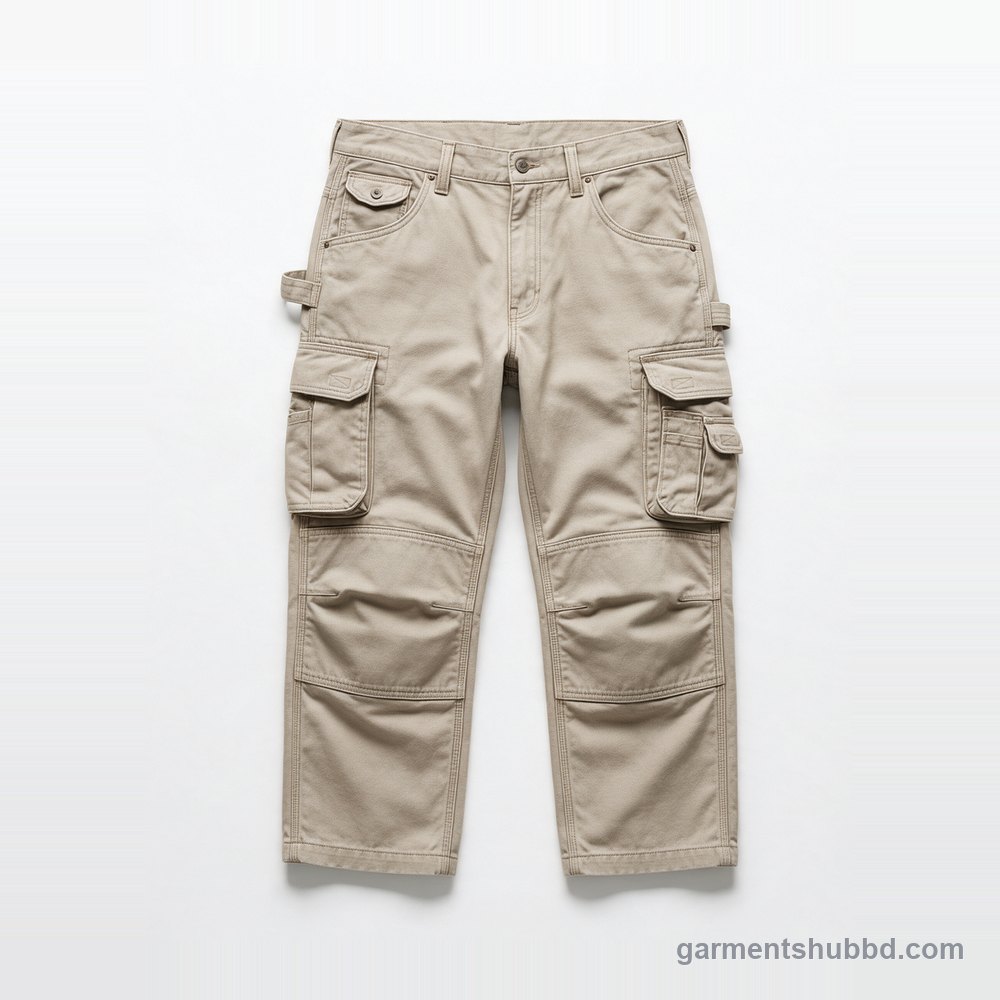
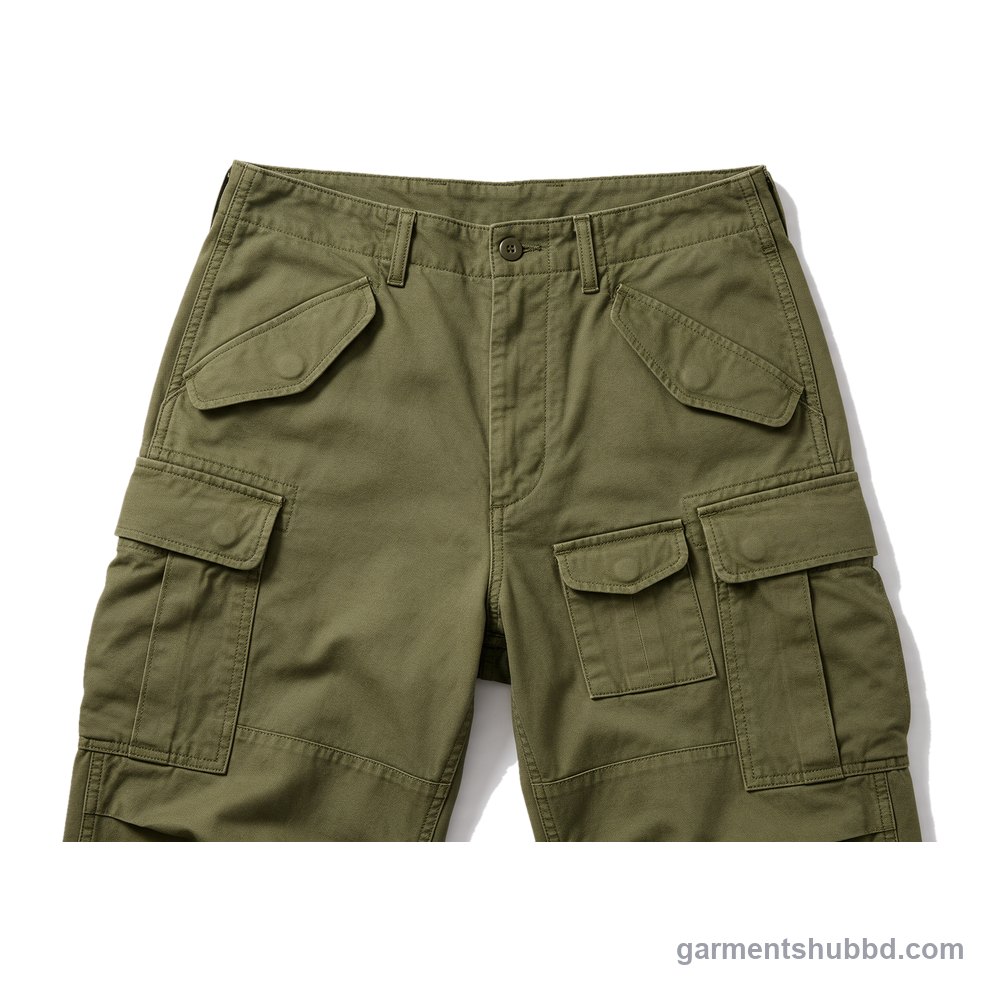
Lightweight cargo pants are cargos for heat: summer collections, travel ranges and hot climate markets where a twill cargo is too warm. The cloth is thin, the pockets are light and the pants are expected to dry fast and pack small. A lightweight cargo pants manufacturer in Bangladesh has to handle cloth that shows pocket bags through it and pulls apart at the seams under strain, problems heavier cargos rarely meet.
Both quotes are priced on the same weight and blend, with your opacity and seam slippage targets written into the spec, so a thinner cloth cannot slip into one of them. On pale light cloth, lab dips and fit samples are judged with the pocket bags behind them, as the customer will see them.
Kinds of lightweight cargo pants
Light ripstop cargos
Cotton or cotton nylon ripstop of about 150 to 180 GSM. The grid stops a thin cloth tearing across, and the look stays close to a classic cargo.
Cotton linen cargos
A linen and cotton blend with a dry, cool hand and a slub texture. Creases are part of the look; a fit for resort and summer fashion.
Quick dry travel cargos
Nylon or polyester, often with elastane, that dries quickly after a sink wash and resists creasing in a bag. Suits travel, trekking and hiking ranges.
Zip off convertible cargos
The legs zip off above the knee to make shorts. Each leg needs a zip matched left to right and marked so the legs go back on the correct side.
How to brief a lightweight cargo pants manufacturer in Bangladesh
- Weight and blend
- State the weight, usually 150 to 200 GSM, the fibre blend and the weave: ripstop, poplin or a linen blend.
- Airflow and drying
- If the range sells on coolness or quick drying, name the property and the lab test behind it. A claim nobody measured has no place on the swing tag.
- Pocket bags
- Choose mesh or light poplin for pocket bags. Mesh vents and dries fast but needs its edges bound so it does not fray.
- Opacity
- For white, sand and pale shades, ask for an opacity check on a worn fit sample with the pocket bags in. Pale light cloth shows them through.
- Seam build
- Ask for a seam allowance and stitch density suited to thin cloth, and a seam type that resists slippage at the seat and side seams.
- Sun protection
- If the tag will show a UPF, name the test and the market. In the EU the UV mark needs UPF 40 or more.
Tests for lightweight cargo pants
- ISO 13936
- Seam slippage. Light woven cloth pulls open beside the seat seam, so test the seat and side seams. A common limit is an opening of 6 mm under a set load.
- AATCC 195
- Moisture management of the cargo cloth: how sweat passes through it and spreads. Use it to back a quick dry or wicking claim on a travel range.
- AATCC 197
- Vertical wicking, read as the height water climbs a strip of the cloth over time. A simpler check than AATCC 195 for blends sold on comfort.
- AS/NZS 4399, EN 13758-1 and EN 13758-2
- UPF testing and classification. AS/NZS 4399 serves Australia and New Zealand; the EU UV mark is reserved for cargos that test at UPF 40 or higher.
What moves the price of lightweight cargo pants
- Blend: linen and technical nylon cost more per metre than cotton poplin.
- Zip off legs, which add two zips and a seam to each pair.
- Mesh pocket bags with bound edges in place of plain poplin bags.
- Quick dry, wicking or UV finishes on the cloth, and the lab tests behind them.
- Pale shades that need a tighter weave or a second pocket bag layer to stay opaque.
Lead time for lightweight cargo pants
Samples usually take 7 to 14 days. Bulk usually runs 30 to 60 days after PP approval, and summer ranges have fixed launch dates, so the cloth is booked early. Linen blends and technical nylon are often woven to order, which moves the fabric date, and UPF or wicking tests add days before fabric approval. The quote confirms the dates.
What we check on lightweight cargo pants before shipment
- Seam slippage at the seatSeat and side seams pulled by hand on bulk pants to catch yarns sliding open beside the stitching.
- Show throughPale pants held against light to look for visible pocket bags, facings and labels before packing.
- Zip off legsLower legs swapped and refitted to confirm the zips match, align and close on the correct side.
- Mesh edgesMesh pocket bag seams checked for binding, fraying and holes after the pants are turned.
Questions buyers ask about lightweight cargo pants
How light can cargo pants go without looking see through?
Around 150 GSM in mid and dark shades. Pale colours at that weight often show the pocket bags, so move to a tighter weave, a slightly heavier cloth or a pocket bag in a skin tone. Judge it on a worn fit sample, not on the table.
Which cloth dries fastest?
Nylon and polyester blends dry quickest, then cotton nylon ripstop, then cotton and linen. A wicking finish helps cotton but fades over washes. If the swing tag will say quick dry, back it with AATCC 195 or AATCC 197 results.
Can the pants carry a UPF rating?
Yes, if the cloth is tested. Tightly woven dark nylon usually rates well; thin pale cotton often rates low. The fabric is tested to AS/NZS 4399 or EN 13758-1, and the EU UV mark needs UPF 40 or more. Test each colour you will label.
Do mesh pocket bags last?
They do when the mesh is a firm knit and its edges are bound or overlocked. Soft open mesh snags on keys. Ask for the pocket bag mesh to be approved alongside the shell cloth, so a softer mesh is not swapped in at bulk.
Get a quote for lightweight cargo pants
Tech pack or sketch with quantities per colour. A compared quote in 48 hours.