Short trench coats, your specification
Made to your tech pack, fabric and colours by a factory matched to the order.
Private label
Your main label, care label, hangtag and polybag. Nominated trims accepted.
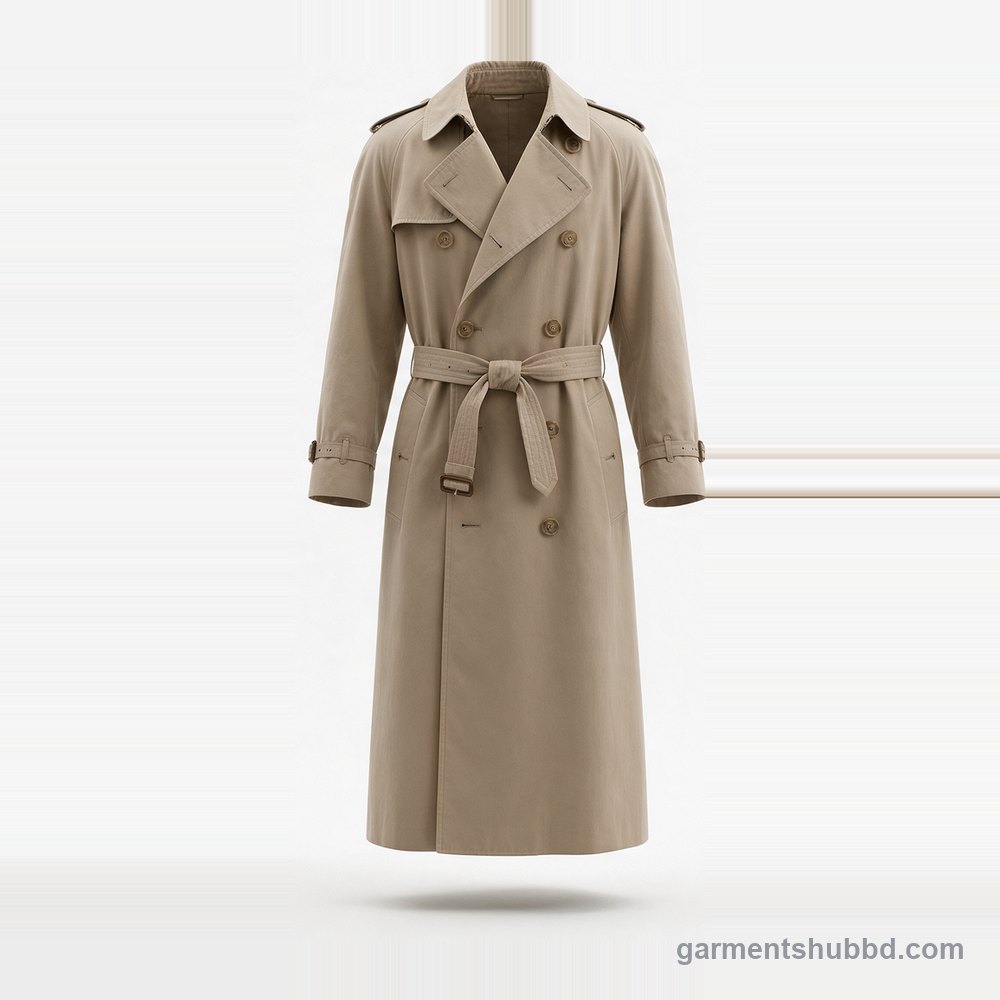
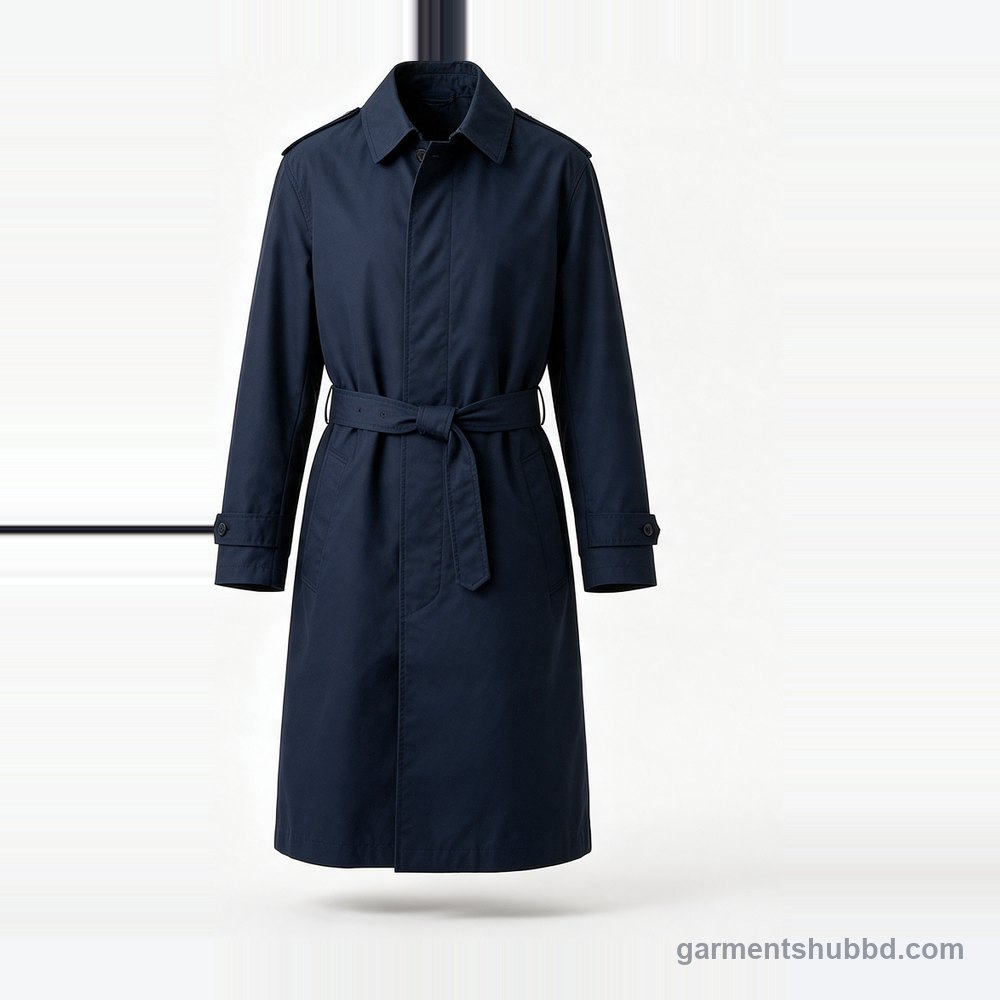
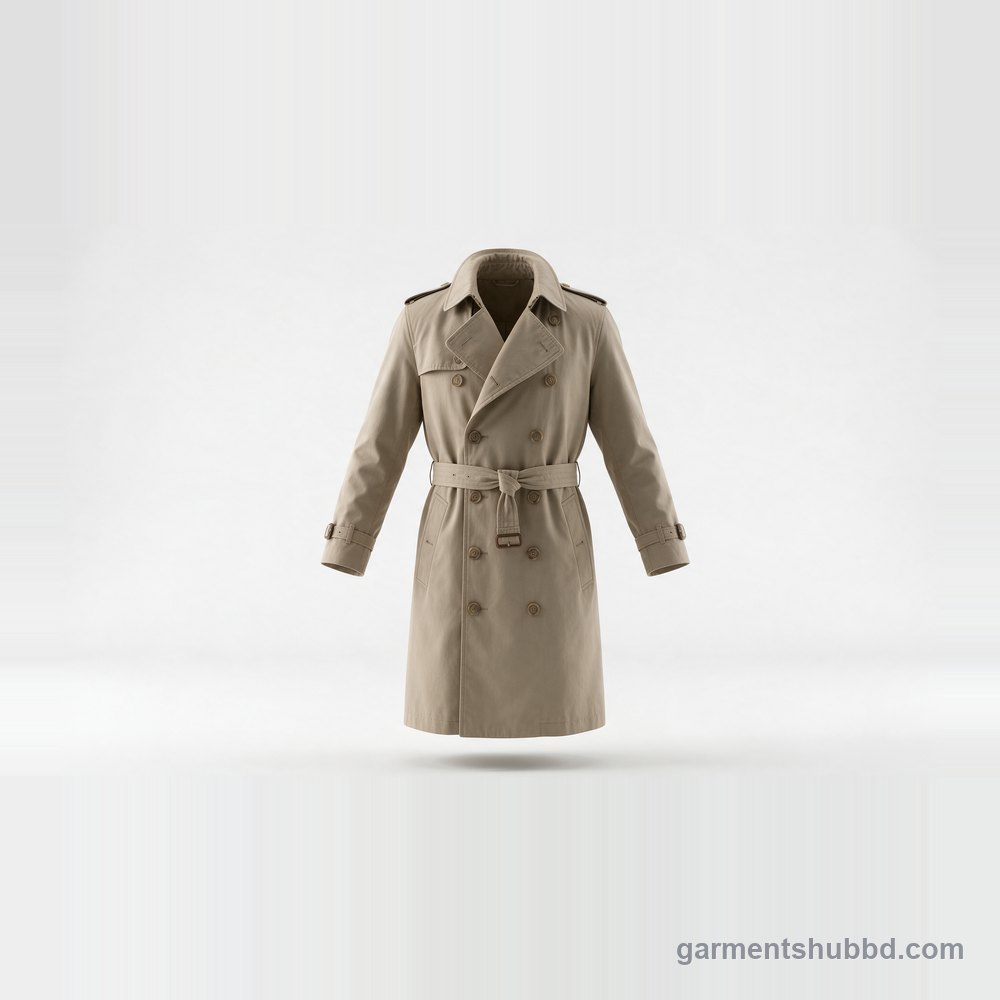
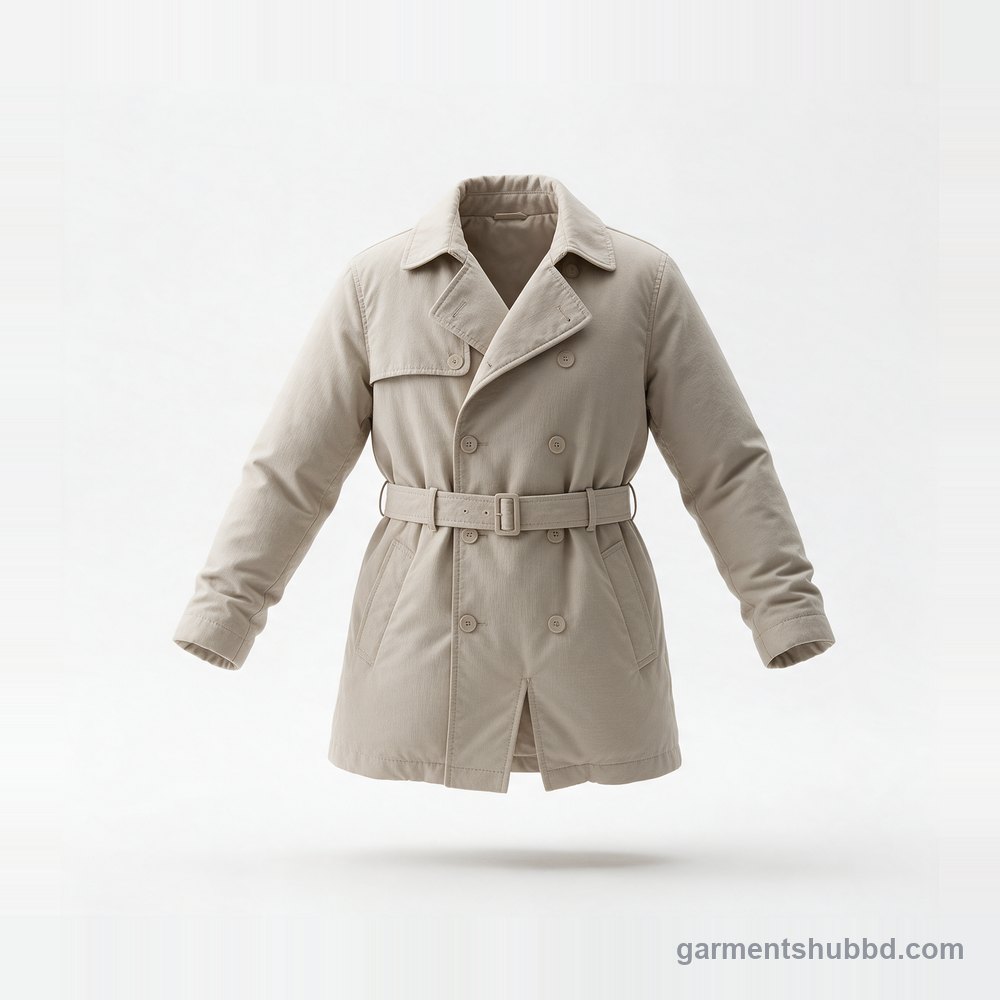
A short trench coat keeps the trench details, the collar, belt, epaulettes and often a gun flap, but stops between the hip and mid thigh. It is worn over jeans as a spring and autumn jacket and sells in mild markets where a long coat is too much. A short trench coat manufacturer in Bangladesh treats it as the full trench in miniature, so every detail is redrawn in proportion, not just the hem moved up.
For a brand new to trench coats, the short version is a lower risk first order: less cloth per piece, the same pattern logic, and a real test of whether the block sells. Ask for the same block quoted short and long, and the two factories' figures show what the shorter length saves.
Kinds of short trench coat
Hip length belted trench jacket
Ends at the hip with a belt and the full collar. Reads as a jacket and suits younger ranges and spring drops.
Mid thigh trench
The middle ground: long enough to keep a back vent and a proper belt line, short enough to wear with trousers or a short dress.
Short double breasted trench
Keeps the crossed front, usually with eight buttons rather than ten, and a scaled down gun flap. The short version with the full detail.
Unlined short trench
No lining, with bound or flat felled seams inside. Light enough for warm spring days, but the inside finish has to look clean when the coat is open.
What a short trench coat manufacturer in Bangladesh needs to see
- Length and proportion
- Back length, typically 65 to 85 cm on a medium, and the belt height, pocket height and flap depth redrawn to suit it.
- Detail scale
- Gun flap, epaulettes and collar reduced in proportion. A full size gun flap on a hip length coat looks heavy and spends the cloth the short body saved.
- Vent
- A mid thigh trench can keep a short centre vent; a hip length one usually has none, or side slits instead.
- Belt
- Usually a little narrower than on a long trench, around 3.5 to 4 cm, with the length set for the largest size.
- Cloth
- A lighter twill or gabardine, usually 180 to 240 GSM, keeps the short coat from looking stiff; a heavy long coat cloth makes it box out at the hip.
- Inside finish
- Lined, half lined or unlined. An unlined short trench needs bound or flat felled seams written into the tech pack.
Tests for a short trench coat
- ISO 105-X12
- Rubbing fastness, dry and wet. A short trench is worn with a bag strap across the body, so a dark coat must not mark a pale top or strap, and the grade shows it.
- ISO 105-B02
- Light fastness on the blue wool scale of 1 to 8. Short trenches sell in spring in stone, pale and pastel shades that fade along the shoulders in a window display.
What moves the price of a short trench coat
- Length: the shorter body cuts cloth use, the main saving against a full length trench.
- Detail count, which barely changes with length: each flap, strap and epaulette costs the same sewing time.
- Inside finish: unlined with bound seams can cost as much in labour as a simple lining.
- Cloth weight and fibre, with lighter twills usually cheaper per metre than heavy gabardine.
- Front: a double breasted short trench adds buttons, buttonholes and overlap cloth.
Lead time for short trench coats
A short trench usually samples a little faster than a long one, because the pattern is smaller and the fit easier to judge. Redrawing the details in proportion can take an extra fit round, though, and a spring delivery date leaves little room for a late cloth. Book the cloth early. The quote shows the steps, and order confirmation to shipment is usually 60 to 90 days.
What we check on short trench coats before shipment
- Detail proportionGun flap, epaulettes and pockets match the approved short sample in size, not the long block they came from.
- Belt heightThe belt sits at the natural waist on every size checked, not low on the hip where a short body can push it.
- Hem and slitsThe hem is level, and any vent or side slit closes flat without the lining showing.
- Inside seamsOn unlined coats, every bound or felled seam is even, with no raw edge in sight when the coat is open.
Questions buyers ask about short trench coats
Is a short trench a good way to test a trench block?
Yes. It carries the same pattern logic and details as a long trench in less cloth, so the cost per piece is lower and a weak seller costs less. If it sells, the long version can follow on the same block with length, vent and belt redrawn. Approve the short sample's details with that next step in mind.
How short can a trench coat be and still look like one?
Hip length is about the limit; shorter than that it reads as a jacket even with the belt and collar. The belt, a collar that turns up and the epaulettes do most of the work. A gun flap is optional on a short coat and is often dropped to keep it light.
Does a short trench need a lining?
Not always. An unlined short trench is lighter and suits spring, but the inside seams then need binding or felling and careful pressing. A half lining across the shoulders is a middle option that helps the coat slide over a knit. Ask for each build priced, since unlined is not always the cheaper one.
What cloth weight suits a short trench?
Usually 180 to 240 GSM cotton twill or gabardine. The short body does not need a long coat's weight to hang, and a heavy cloth makes it stand away from the hips. For a structured look, choose a firmer weave rather than a heavier cloth.
Get a quote for short trench coats
Tech pack or sketch with quantities per colour. A compared quote in 48 hours.