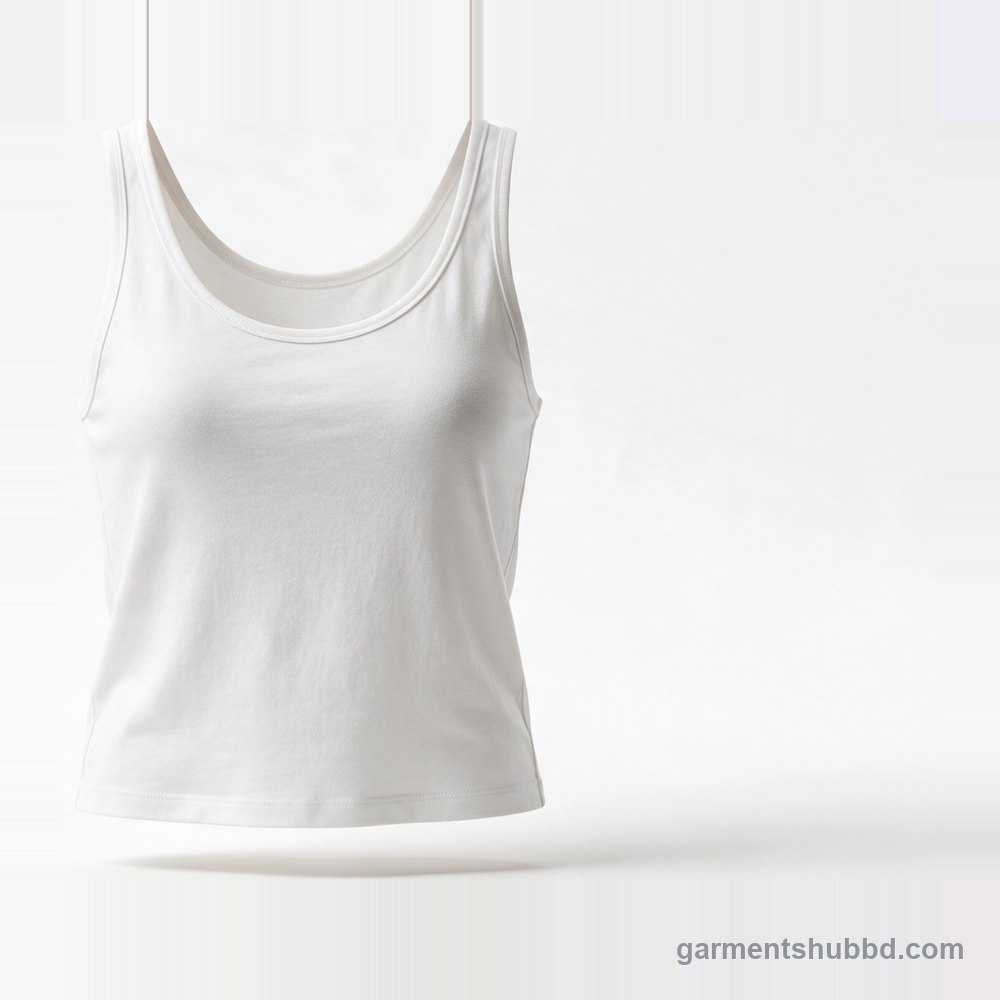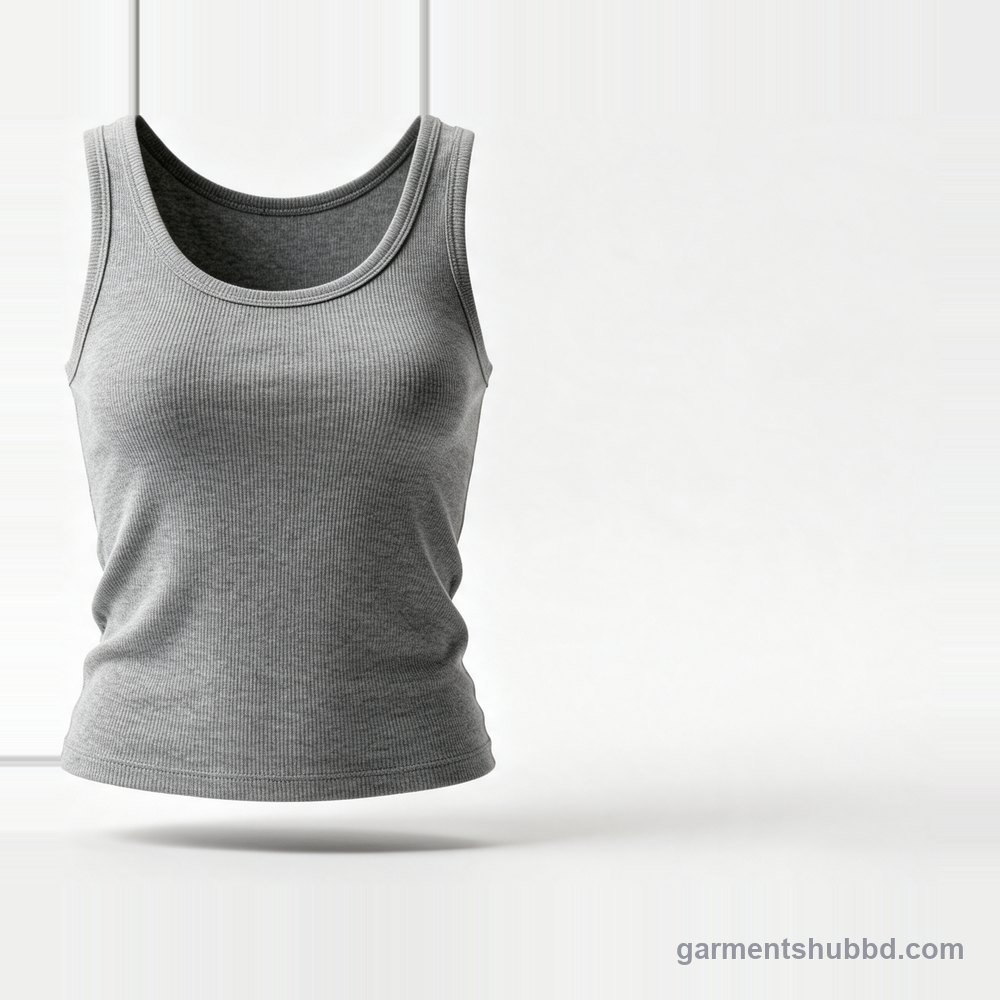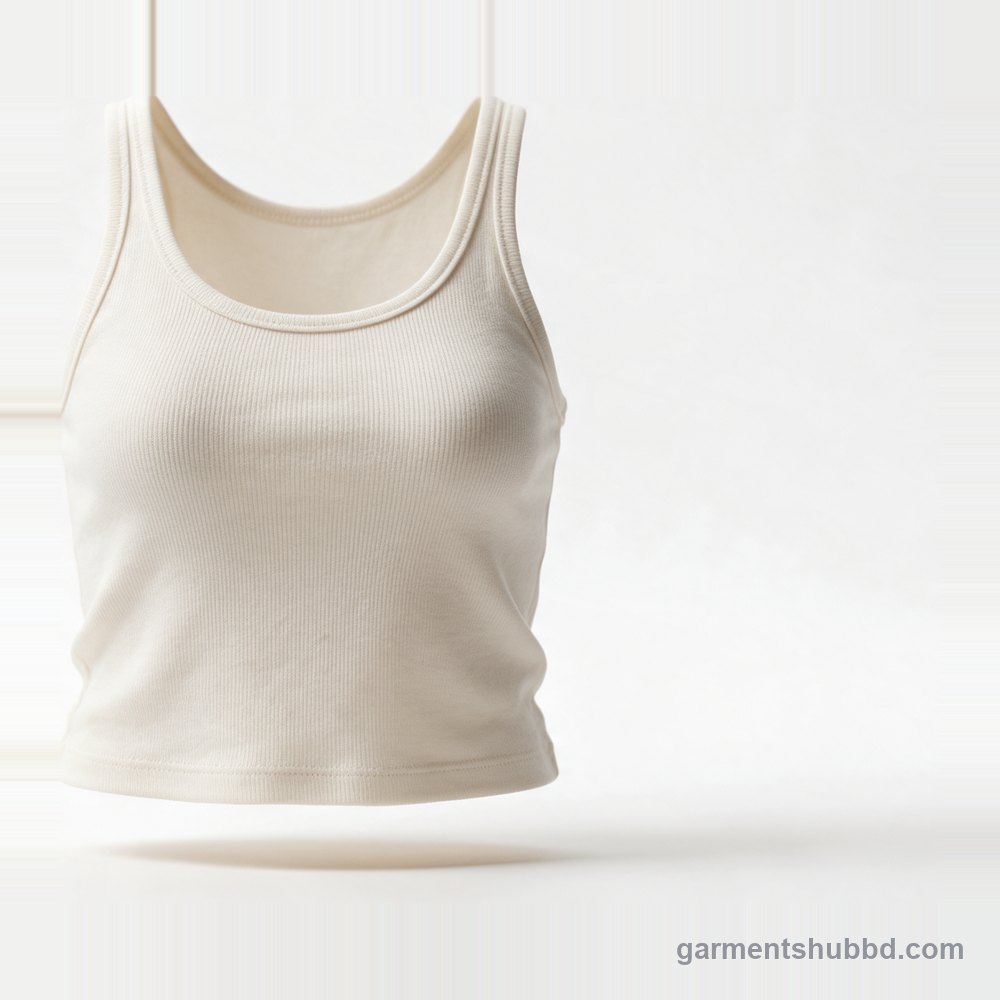
Sports tank tops, your specification
Made to your tech pack, fabric and colours by a factory matched to the order.
Private label
Your main label, care label, hangtag and polybag. Nominated trims accepted.
A training vest has to move sweat, lie flat against the skin and clear the shoulder through a full range of movement. A sports tank top manufacturer in Bangladesh usually builds it from polyester or poly elastane interlock at 150 to 190 GSM, joined with flatlock seams that do not chafe. Gym labels, team kit buyers and fitness studios order it in core colours and reorder by season.
Garments Hub BD puts the wicking test on the comparison sheet when you name it on the quote form, so both factories quote the fabric and its test together; a finish that washes out after a few cycles looks the same on a swatch. The sheet sets polyester grade, elastane share and seam type side by side, so a cheaper overlocked vest is not mistaken for a flatlocked one.
Kinds of sports tank top
Polyester interlock gym vest
Plain polyester interlock, smooth on both faces, cut with a relaxed body. Choose it for core training ranges and team kit where the colour has to hold and the vest dries quickly between sessions.
Poly elastane fitted training vest
Interlock with elastane, usually 5 to 10 percent, cut closer to the torso. Choose it for lifting and studio ranges where the vest should move with the body rather than flap.
Mesh back panel vest
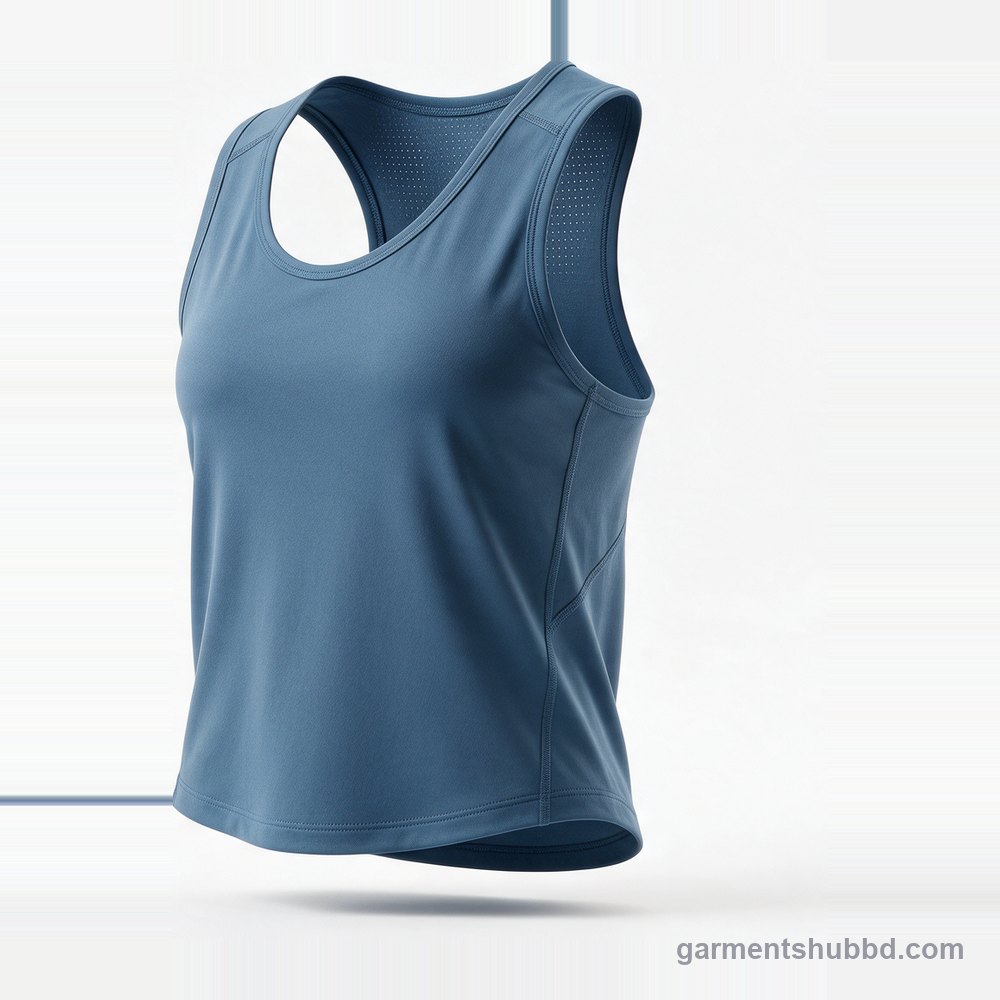
An interlock front with an open mesh panel across the upper back, where heat builds first. Choose it for running and high sweat classes; the mesh is the weakest fabric in the vest and needs its own check.
Recycled polyester vest
Interlock knitted from recycled polyester yarn, for a range that carries a recycled content claim. The claim rests on a current certificate held along the chain, and the factories are matched on it.
How to specify a sports tank top
- Fibre blend
- 100 percent polyester, or polyester with elastane and the share stated. Elastane adds stretch and recovery but makes the fabric more sensitive to heat in dyeing and printing.
- Weight and structure
- Interlock at usually 150 to 190 GSM. Lighter knits dry faster; heavier ones hide the body and suit relaxed cuts. Send a swatch if you have one.
- Seams
- Flatlock on side and shoulder seams, usually four needle and six thread on training wear, or overlock where cost matters more. Flatlock lies flat against the skin under movement.
- Armhole depth
- In centimetres from the shoulder point, per size. Training vests are usually cut deeper than a casual vest, so the arm swings without the binding catching the underarm.
- Mesh panel
- Its position, size and hole size, plus a shade match to the body. Two different knits dyed in separate lots rarely match without a check.
- Moisture finish
- Whether wicking comes from a modified yarn or a chemical finish, and how many washes it must survive. A finish that washes out leaves a vest that holds sweat.
- Logos
- Heat transfer, screen print or embroidery, with bleed resistant ink on dark or red polyester, where dye from the fabric can migrate into a white print during curing.
Wicking and other tests from a sports tank top manufacturer in Bangladesh
- AATCC 197
- Vertical wicking: how far water climbs the fabric in a set time. Ask for results before and after washing, which shows whether a wicking finish lasts.
- AATCC 195
- Moisture management: how sweat spreads and dries through both faces of the knit. Useful when two interlocks on the quote sheet both claim to wick.
- ISO 105-E04
- Fastness to perspiration, graded 1 to 5 on the grey scale, where 5 means no change. Matters on dark training vests that stay wet against the skin for a whole session.
- ISO 13938
- Bursting strength of knit. Worth asking for on the mesh panel, which takes strain across the shoulder blades as the arms reach forward.
What moves the price of a sports tank top
- Elastane share, which raises yarn cost and needs gentler, slower dyeing and setting.
- Flatlock seams, which run slower than overlock and need dedicated machines on the line.
- Mesh panels: a second fabric to source, dye, shade match, cut and join.
- A durable wicking finish or modified yarn, against plain untreated polyester.
- Recycled polyester yarn and the certificate that stands behind the claim.
- Heat transfer logos and bleed resistant inks, which cost more than a plain screen print.
Lead time for sports tank tops
For a sports vest, sampling usually runs 7 to 14 days and bulk 30 to 60 days after the PP sample is approved in writing. Polyester is dyed at high temperature with disperse dyes, and a body and mesh pair needs both shades matched, which can stretch the lab dip stage. A wicking test before and after washing at a laboratory adds days too. The quote confirms the dates.
What we check on sports tank tops before shipment
- Flatlock coverageSeams checked for full cover stitching on the face and no raised ridge that would rub under movement.
- Mesh joinMesh to interlock seams checked for puckering and for holes where the needle has caught open mesh.
- Logo after stretchHeat transfer logos stretched by hand to check they do not crack or lift on an elastane body.
- Shade between panelsMesh and body compared under one light; a mismatch between dye lots shows on a team order.
Questions buyers ask about sports tank tops
Polyester or poly elastane for a training vest?
Plain polyester for relaxed vests that should hang off the body and dry fast. Poly elastane for fitted vests that must follow the torso and recover after stretching. Elastane adds cost and needs gentler heat in dyeing and printing, so confirm your logo method works on it before the PP sample.
How do I know the fabric actually wicks?
Ask for AATCC 197 vertical wicking results, ideally before and after a set number of washes, and AATCC 195 if you want the full moisture picture. A wicking claim backed only by a mill description is not evidence. Name the tests on the quote form and the lab time is planned into the schedule.
Will a white logo turn pink on a red polyester vest?
It can. Disperse dye in polyester migrates into the print during curing and stains white and light inks. Ask for a bleed resistant ink, a low cure temperature or a blocker layer, and look at the strike off again a day or two later, because migration can show slowly.
Can I call the vests recycled?
Base the claim on a certificate that is current today. GRS and RCS are being replaced by Textile Exchange's Materials Matter Standard: audits to the new standard from 31 December 2026 and no GRS audits after 31 December 2027. Ask which certificate the yarn and the factory hold today, and match the label claim to it.
Get a quote for sports tank tops
Tech pack or sketch with quantities per colour. A compared quote in 48 hours.