Thong panties, your specification
Made to your tech pack, fabric and colours by a factory matched to the order.
Private label
Your main label, care label, hangtag and polybag. Nominated trims accepted.
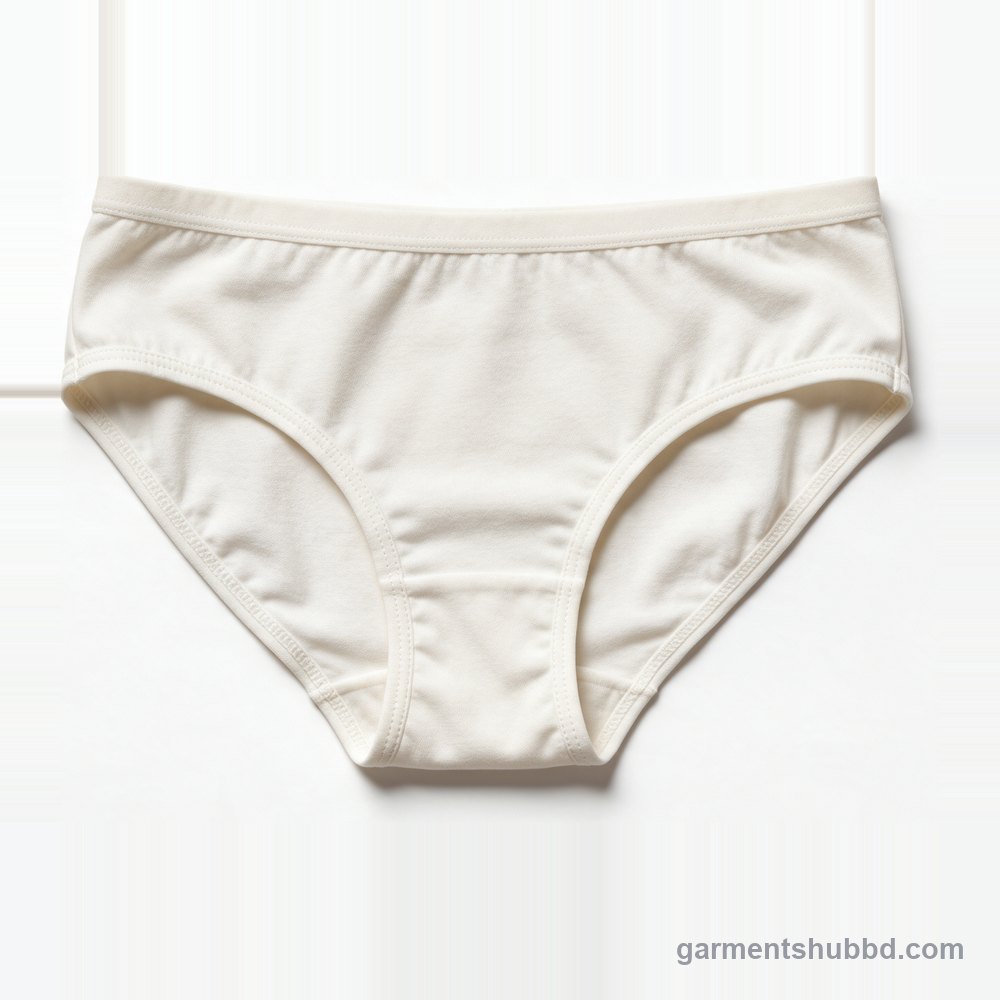
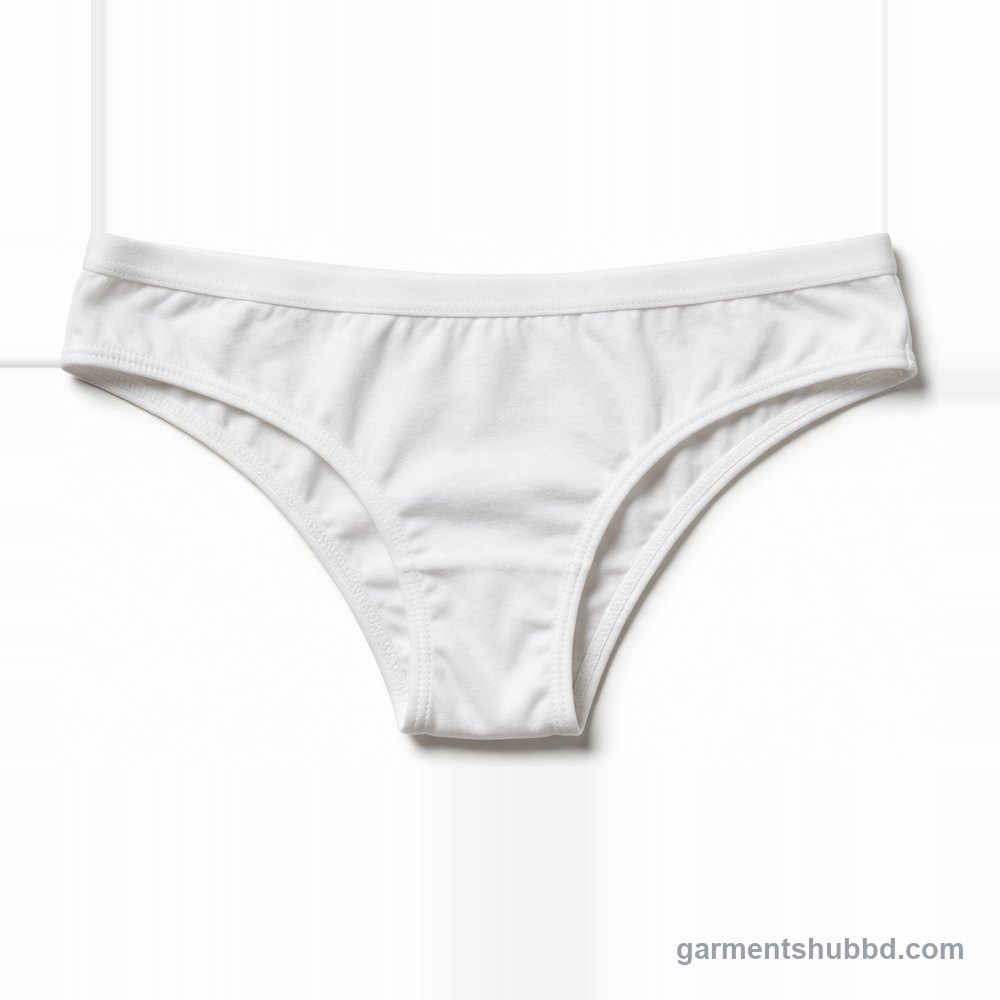
A thong panty has a narrow rear panel, from a string to a wider back, with bound, bonded or elastic edges. It sells in microfibre for smooth wear under fitted clothes and in lace for fashion and gift ranges. A thong panty manufacturer in Bangladesh cuts it from very little fabric, so the cost sits in the edge finish, the elastic and the labour at the back junction.
On a thong the edges are the garment, so Garments Hub BD writes the edge method, the binding width and the reinforcement at the back junction into the brief, and asks for close photographs of each at PP stage. At inspection, edges and junctions are pulled by hand on pieces drawn from every lot.
Kinds of thong panty
String thong
Thin elastic or bound strings at the sides and back, often 5 to 10 mm wide. The least fabric of any panty, and the point where the strings meet takes the most strain.
Wide back thong
A rear panel a few centimetres wide at the top, tapering to the gusset. Easier to sew evenly than a string and the usual choice for everyday packs.
Microfibre thong
Smooth nylon elastane with bonded or laser cut edges, sold for wear under fitted clothes where no line should show.
Lace thong
Stretch lace front and back, or a lace front on a microfibre back, with a cotton gusset. The scalloped lace edge can serve as the finish.
How to brief a thong panty manufacturer in Bangladesh
- Back width
- Width at the top of the back and at its narrowest point, with a tolerance. A few millimetres decide whether it reads as a string or a wide back.
- Edge finish
- Binding in self fabric, fold over elastic, bonded edge or lace edge, with the finished width. Binding needs a folder attachment set to your width.
- Back junction
- How the back meets the waistband: bartack, a small triangle or a ring. Specify the reinforcement, since this point takes the pull.
- Gusset
- Cotton gusset length and how far it runs up the back panel, single or double layer.
- Waist elastic
- Width and type, from a narrow string elastic to a wider band, plush or picot.
- Trims
- Metal or plastic rings, bows and hardware, with material and finish. Metal against skin brings an EU nickel rule.
Tests and rules for thong panties
- REACH Annex XVII, entry 27
- Metal rings or sliders at the hip of a string thong may release no more than 0.5 micrograms of nickel per square centimetre per week in the EU. Plastic rings take the question away.
- ISO 105-X12
- Rubbing fastness, dry and wet, graded 1 to 5. A black lace or dark microfibre thong can mark light trousers worn over it.
- OEKO-TEX STANDARD 100
- On a thong, the gusset, elastic and binding make up much of the garment, so the certificate should name each of them, not only the body fabric.
What moves the price of a thong panty
- Edge finish labour, which outweighs the small fabric saving on a thong.
- Binding or fold over elastic, priced per metre and per colour.
- Lace, where used, which costs more than the microfibre it replaces.
- Rings, bows and metal hardware, each needing a test if worn against skin.
- Bonding equipment and film on bonded edge versions.
Lead time for thong panties
Thongs sample in 7 to 14 days, and bulk typically runs 30 to 60 days after PP approval. Fold over elastic or binding dyed to match each colour adds days, and so does lace bought in from a lace mill. Metal trims that need a nickel test add the lab's turnaround when the report must come before shipping. Dates are confirmed in the quote.
What we check on thong panties before shipment
- Binding widthBinding or edge measured along leg and back for an even width, with no twisted or doubled binding.
- Back junctionThe junction at the waist pulled by hand on sampled pieces, with bartacks intact and no cracked stitches.
- Edge stretchEdges stretched to full extension without cracking stitches or lifting bonded film.
- HardwareRings and bows sewn securely, smooth to the touch and in the approved material.
Questions buyers ask about thong panties
Bound or bonded edges on a thong?
Bound edges suit cotton and printed thongs and cost less to set up. Bonded edges suit microfibre and lie flatter under fitted clothes, but need a plant with bonding equipment and add steps. Choose before the proto, because the pattern changes with the edge.
Is a thong cheaper because it uses less fabric?
Not by as much as the fabric suggests. The edge finish, the elastic and the junction take about as much labour as a bikini, and lace or bonding add cost on top. Fabric is a small part of a thong's price.
What back width should we specify for a thong?
Give two measurements: the width where the back meets the waistband and at its narrowest point, with a tolerance of a few millimetres. String backs usually finish at 5 to 10 mm; wide backs are cut wider and taper. Sample both if you are unsure which will sell.
Can lace and microfibre thongs share one pattern?
Often, with changes. Lace stretches differently from microfibre and its edge may replace the binding, so the lace version usually needs a pattern adjustment and its own fit check. The gusset can usually be shared.
Get a quote for thong panties
Tech pack or sketch with quantities per colour. A compared quote in 48 hours.