Work gloves, your specification
Made to your tech pack, fabric and colours by a factory matched to the order.
Private label
Your main label, care label, hangtag and polybag. Nominated trims accepted.
Work gloves protect hands on building sites, in warehouses, on farms and in maintenance work. Safety distributors, hardware chains and contractors buy them, usually as repeat volumes of one or two styles. A safety buyer reads the marking on the glove, then asks for the test report behind it. A work glove manufacturer in Bangladesh therefore has to deliver a glove that matches its printed levels, in every carton, not only on the sample.
Garments Hub BD has no glove unit vetted for its books yet. On a work glove enquiry the desk finds units already making your construction, checks that their test reports cover the finished glove model, visits the line, and replies within 5 working days with a real quote or a straight no.
Kinds of work glove
Split leather rigger gloves
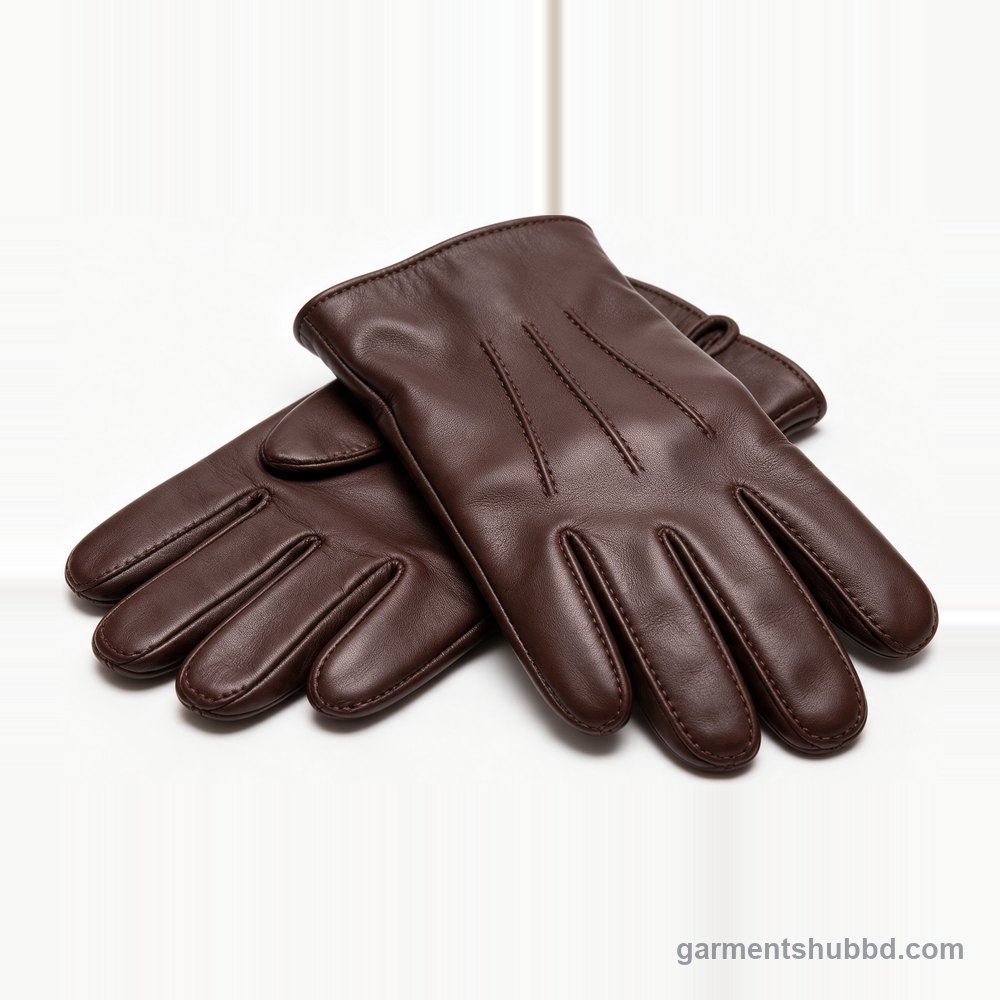
A split cowhide palm and fingers, a cotton canvas back, a knuckle strap and a stiff safety cuff. Cheap and tough for general site handling, though split leather soaks up water and stiffens as it dries.
Grain leather fitter gloves
Full grain cow or goat over the whole hand, often with an elasticated back. More dexterity and better wet performance than split, chosen for fitters, plant operators and tool work.
Nitrile coated knit gloves
A seamless knitted nylon or polyester liner with a foam or smooth nitrile palm. Grips oily parts and keeps the fingers nimble, which suits assembly lines and warehouse picking.
PU palm dipped gloves
A fine gauge liner with a thin polyurethane palm coat. Clean and sensitive to touch, for electronics and light assembly, but the coat wears through quickly on rough timber or blocks.
Latex crinkle gloves
A heavier knitted liner with a crinkle finish natural latex coat for grip on bricks, blocks and glass. Natural latex can cause allergy in some users, and some sites do not allow it.
What a work glove manufacturer in Bangladesh needs from you
- Standard and levels
- Name the standard your customer cites and the level wanted for each result, for example the four numbered EN 388 results. The levels choose the leather or coating.
- Palm material
- Split or grain leather with its thickness, typically 1.0 to 1.4 mm for a split rigger, or the coating type, the coverage (palm, three quarter or full) and the finish.
- Thumb crotch reinforcement
- A patch or second layer where the thumb meets the palm. That seam takes the load when gripping and is usually the first to open.
- Liner gauge
- For coated gloves, the knitting gauge, usually 13 to 15 for dexterity or 7 to 10 for warmth and bulk, and the liner yarn.
- Cuff and back
- Safety cuff, knitted wrist or elasticated wrist, and the back fabric. A safety cuff lets the glove be pulled off fast if it is caught.
- Sizing and marking
- Sizes by number, tied to hand circumference and length as in EN ISO 21420, plus where the size, pictogram and levels are printed and the leaflet language.
Standards for work gloves
- EN 388
- Covers mechanical risks: abrasion, blade cut, tear and puncture, with an optional straight blade letter and impact mark. The report must cover this finished model, from an accredited lab, and the glove is certified before any level is printed.
- EN ISO 21420
- Sets the general rules for any protective glove: harmless materials, sizing, dexterity, marking and the information supplied to the user. A glove sold to EN 388 has to meet it too.
- REACH Annex XVII, entry 47
- No more than 3 mg/kg of chromium VI is allowed in EU leather that touches the skin. Chrome tanned split and grain work gloves fall straight into it.
What moves the price of a work glove
- Performance level: a higher abrasion or tear result means thicker leather or a heavier coating.
- Leather: grain costs more than split, and a double palm adds a second layer of leather.
- Testing: a new model needs its own EN 388 report, and the lab fee lands on the first order.
- Coating: foam nitrile costs more than smooth, and a full dip more than a palm coat.
- Cuff: a safety cuff adds a stiffened part and a binding over a knitted wrist.
Lead time for work gloves
Sampling usually takes 10 to 18 days. If the model needs a new EN 388 report, the lab tests the approved sample before bulk can be marked, which adds days; ask the lab for its current turnaround. Work glove bulk is typically 40 to 65 days after the pre-production sample is signed. Your quote confirms both, with the test plan written in.
What we check on work gloves before shipment
- Marking against the reportThe pictogram and levels printed on the glove or pack are compared line by line with the test report for that model.
- Thumb crotch seamThe seam where thumb meets palm is checked for its reinforcement, stitch density and any open stitches.
- Split surfacePalm leather is gauged and checked for a flaking or weak flesh side, which wears through within days on site.
- Size by measurementGlove length and palm width are measured per size against the size table, since a wrong size label is a safety and returns problem.
Questions buyers ask about work gloves
Can a factory print EN 388 levels without a lab test?
No. The levels must come from a test on the finished glove at an accredited laboratory, and the glove must be certified before they are printed; a unit's own figure is self-certification. A unit may hold a report for a similar model, but a change of leather, coating or liner needs a new report. The desk asks to see the report before quoting.
Split leather or grain leather for a work glove?
Split is cheaper and resists abrasion well when dry, but it soaks up water and stiffens. Grain leather keeps its feel when wet and gives more dexterity, at a higher price. Distributors serving mixed site work often stock both in the same size run.
How many sizes does a work glove range need?
Most work ranges run from size 7 to 11, with most of the volume in the middle sizes. Smaller hands are often poorly served, and a size 6 or 7 line can win a contract on its own. Send the size curve with quantities per size.
Is a latex coated glove a problem for some customers?
It can be. Natural rubber latex causes allergy in some users, and some sites ban it. Nitrile and PU coatings avoid the latex protein. Tell the desk at the start if your buyer excludes latex, so no latex style is quoted.
Get a quote for work gloves
Tech pack or sketch with quantities per colour. A vetted unit and a real quote, or a straight no, within 5 working days.