Chukka boots, your specification
Made to your tech pack, fabric and colours by a factory matched to the order.
Private label
Your main label, care label, hangtag and polybag. Nominated trims accepted.
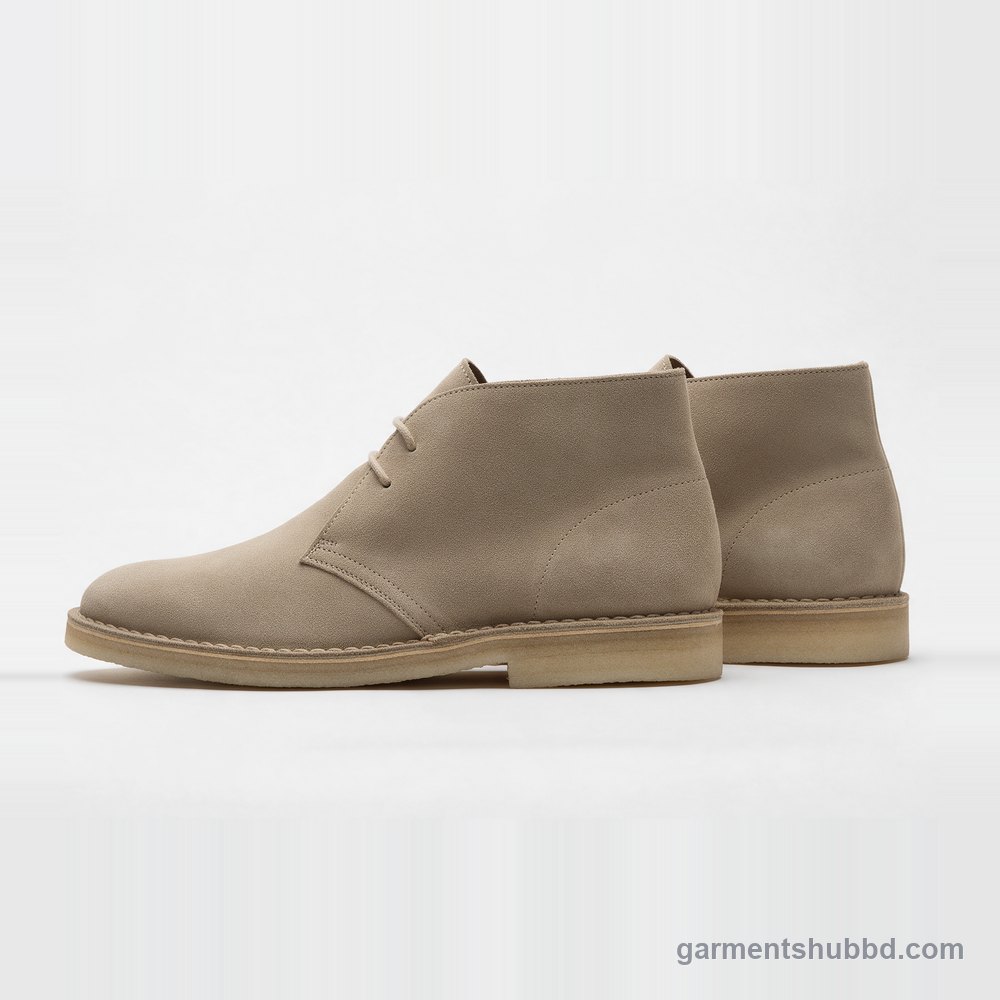
A chukka is an ankle boot with two or three pairs of eyelets, open lacing and few pattern pieces: a vamp and two quarters. It is often unlined or half lined and cut in suede, which keeps it light and soft. For a brand adding its first boot, a chukka boot manufacturer in Bangladesh is a sensible starting point, because the closing is simple and the fit forgiving.
Footwear has no vetted unit with Garments Hub BD yet. On a chukka enquiry the desk shortlists units already making suede boots, turns their unlined pairs inside out to see the seams, visits one, and gives you a real quote or a straight no within 5 working days, with a view on whether your order suits a first run.
Kinds of chukka boot
Crepe soled suede chukka
Unlined suede on a natural crepe rubber sole, often stitch-down. Soft and light, it is the casual classic; crepe marks and picks up grit, so some buyers swap it for a rubber sole with a crepe look.
Half lined calf chukka
Smooth calf with a lining in the quarters and the vamp left part unlined. Neater inside and better at holding its shape, on a leather or rubber sole for a smarter range.
Dress chukka
Calf or fine suede on a leather sole, Blake stitched, with a slimmer last. It sits with chinos and tailoring, so it needs cleaner closing than the casual version.
Lined winter chukka
Fully lined in leather or a warm textile, on a cleated rubber sole for wet weather. It costs and weighs more than the unlined pair and holds its shape for longer.
Briefing a chukka boot manufacturer in Bangladesh
- Eyelets and laces
- Two or three pairs, metal or punched, and the lace: waxed cotton, leather or flat. The eyelet count changes the shaft height and the look.
- Lining
- Unlined, half lined or fully lined. An unlined chukka needs a suede with a clean, even back and every seam finished so nothing rubs the foot.
- Suede or calf
- Nap length and shade, or the calf finish, usually 1.4 to 1.8 mm. Ask for one dye lot per colour to avoid shade breaks across the order.
- Sole
- Natural crepe, rubber or leather, stitch-down or cemented, with thickness and edge colour. Crepe and rubber look very different at the edge.
- Last and fit
- A round toe and a roomy instep are typical. Send your last or a pair to copy, with your size system and run.
- Counter and toe
- Whether you want a heel counter and toe puff at all. Many unlined chukkas use a soft toe and a light counter: easy to wear, quicker to lose shape.
Tests and certificates for chukka boots
- Dry and wet rub on suede
- A cloth is rubbed on the nap dry and then wet, and the staining is graded. Dark suede that fails it marks socks and light trousers.
- Crepe bond and stitch-down seam
- A peel test on the crepe or rubber sole, plus a check that the stitch-down seam holds the upper flange tight to the midsole.
- REACH Annex XVII, entry 47
- On an unlined chukka the back of the suede is the lining, so for the EU test the upper leather itself, which must not exceed 3 mg/kg of chromium VI.
What moves the price of a chukka boot
- Lining level: unlined is the cheaper build, half lined adds a lining cut, fully lined adds more again.
- Suede grade and nap, and whether one skin can supply both boots of a pair in one shade.
- Natural crepe usually costs more than a rubber sole of the same thickness.
- Stitch-down construction, which adds a stitching pass, against a cemented sole.
- Waxed laces, metal eyelets and a branded heel tab or pull loop.
Lead time for chukka boots
For chukkas, a sample usually takes 21 to 30 days and bulk 60 to 90 days once the pre-production pair is approved. A suede in a custom shade is dyed at the tannery and adds days, and natural crepe soles are cut from sheet, so their supply matters. Because the boot is simple, a second sample is rarely needed when the brief is clear. The quote confirms the dates.
What we check on chukka boots before shipment
- Suede shade within a pairBoth boots are compared side by side in daylight for nap direction and shade, since suede changes colour with the way it is brushed.
- Inside finishOn unlined pairs the seams are skived flat and the edges finished, so no raw ridge presses on the foot.
- Crepe edgeThe crepe sole edge is cut clean, bonded all round and free of glue smears on the suede.
- Eyelet lineEyelets are evenly spaced and at matching height on both boots, with the facing reinforced behind them.
Questions buyers ask about chukka boots
Is a chukka a good first boot order?
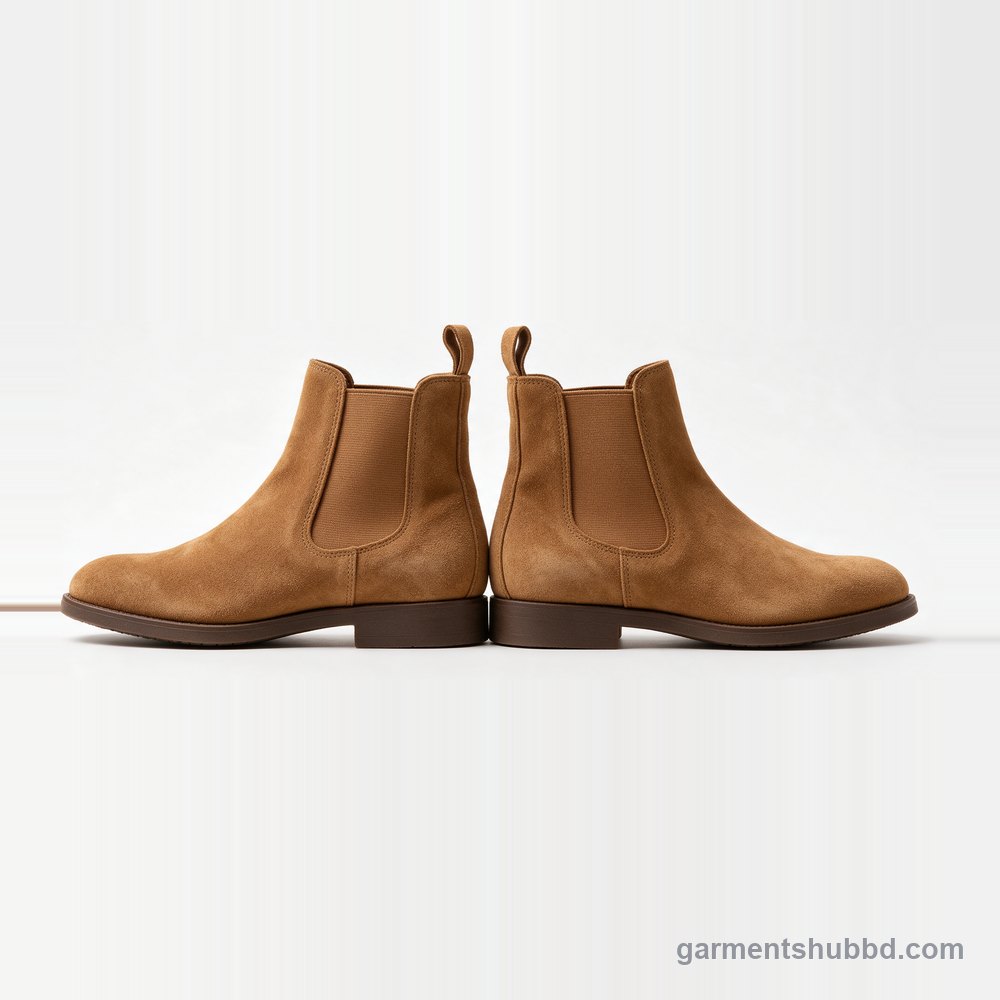
Usually, yes. It has few pattern pieces, open lacing that forgives the fit, and often no lining. That keeps the sample simple and the unit's work easy to judge. Once the chukka passes, a Chelsea or a fully lined boot is a smaller step for the same unit.
Should a chukka be unlined or half lined?
Unlined is lighter, softer and cheaper, and suits a casual summer boot. Half lined holds its shape longer and is kinder to a bare heel. Choose by season and price point, and remember that unlined suede needs a cleaner back because the foot touches it.
Does a crepe sole suit every market?
No. Natural crepe is soft and grips well on dry ground, but it marks, collects grit and turns soft and tacky in heat. For wet climates or city wear, a rubber sole moulded to look like crepe is the usual swap, and it costs less.
Can suede chukkas be made water resistant?
A water repellent treatment helps suede shed light rain and stains. It does not make the boot waterproof, because stitch holes and an unlined upper let water through. Approve the colour after treatment, since it can darken the suede slightly.
Get a quote for chukka boots
Tech pack or sketch with quantities per colour. A vetted unit and a real quote, or a straight no, within 5 working days.