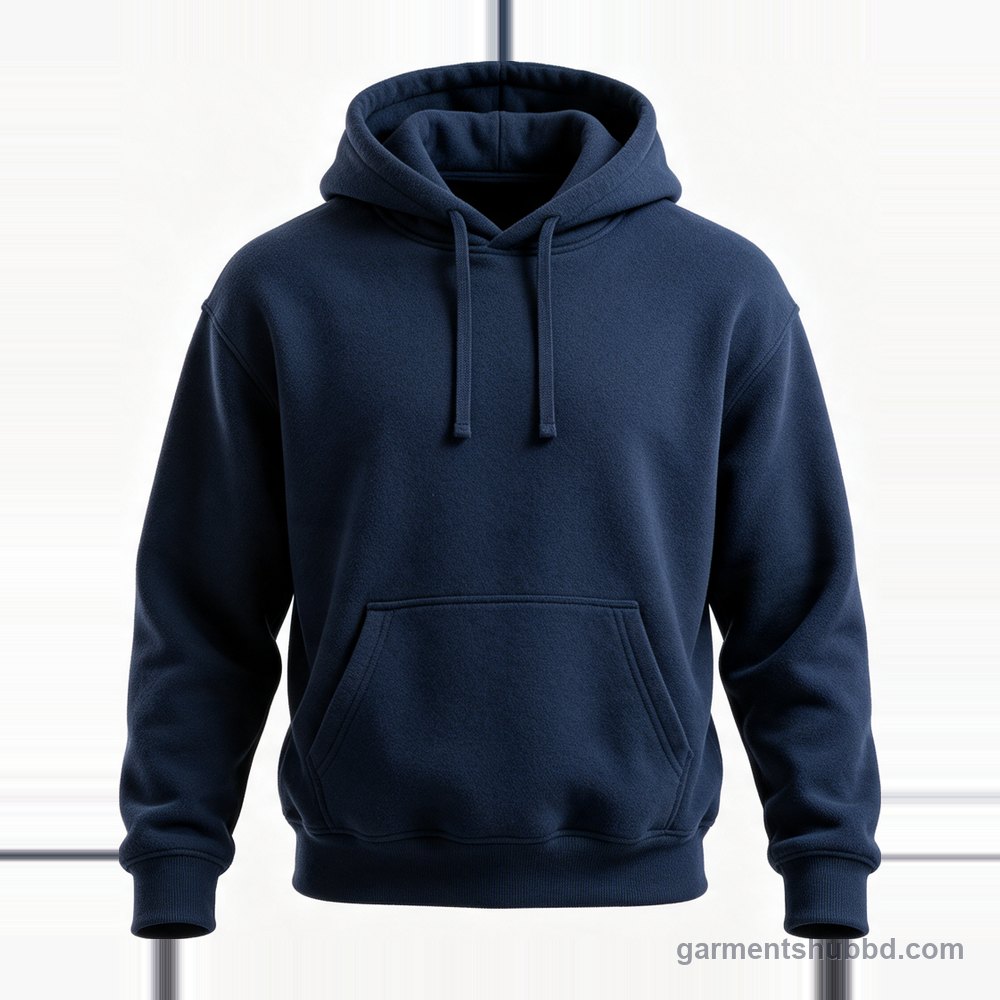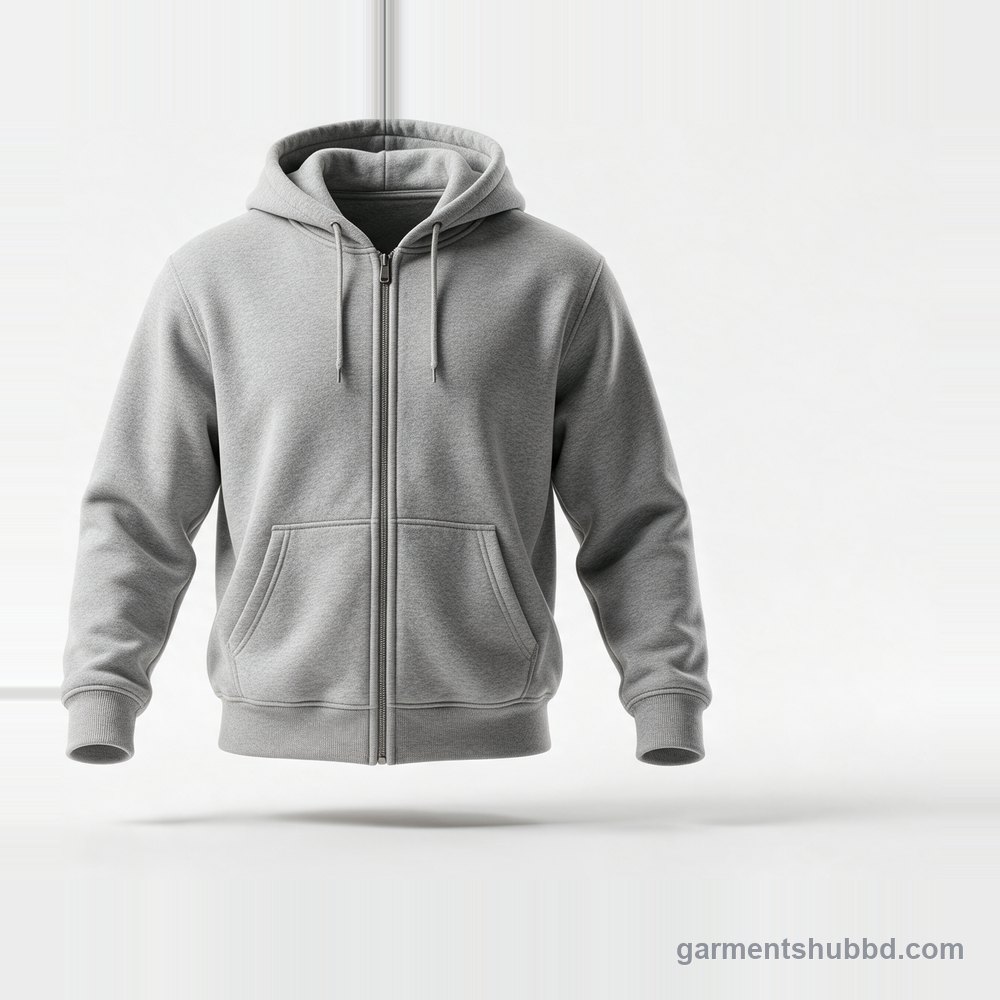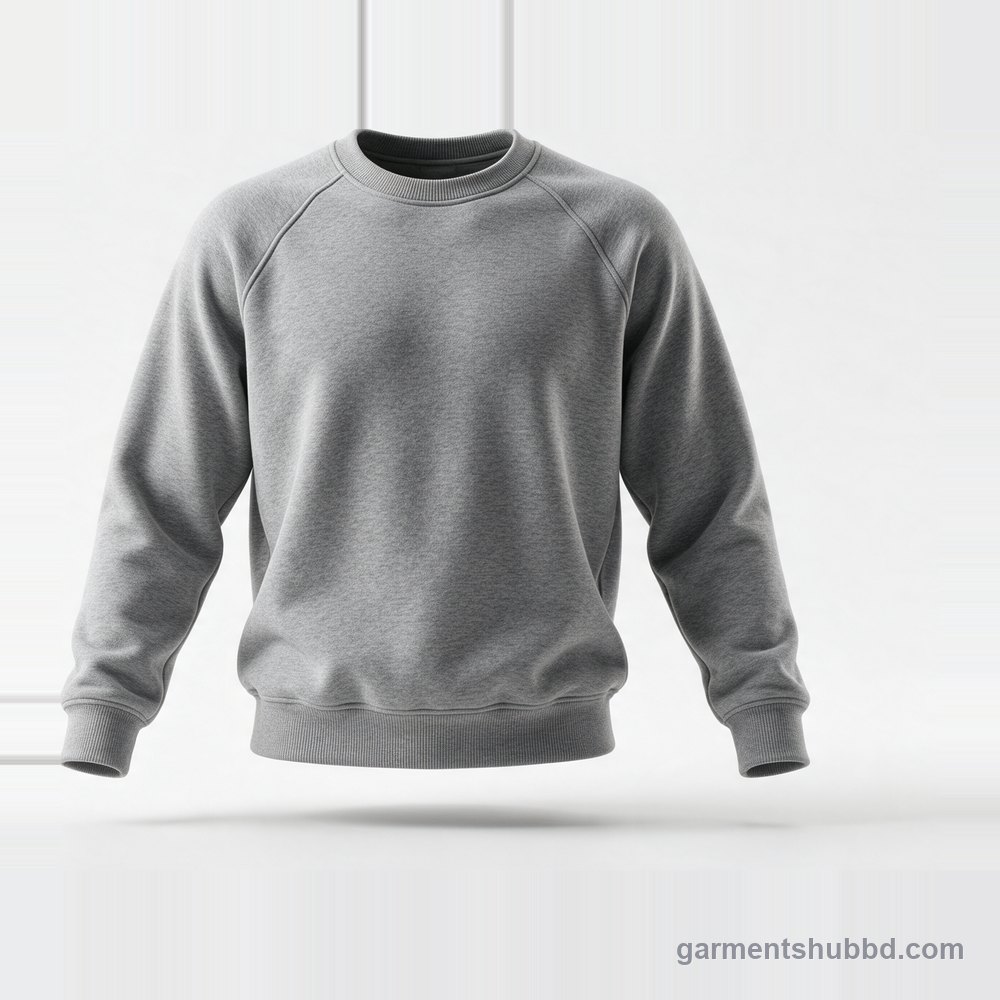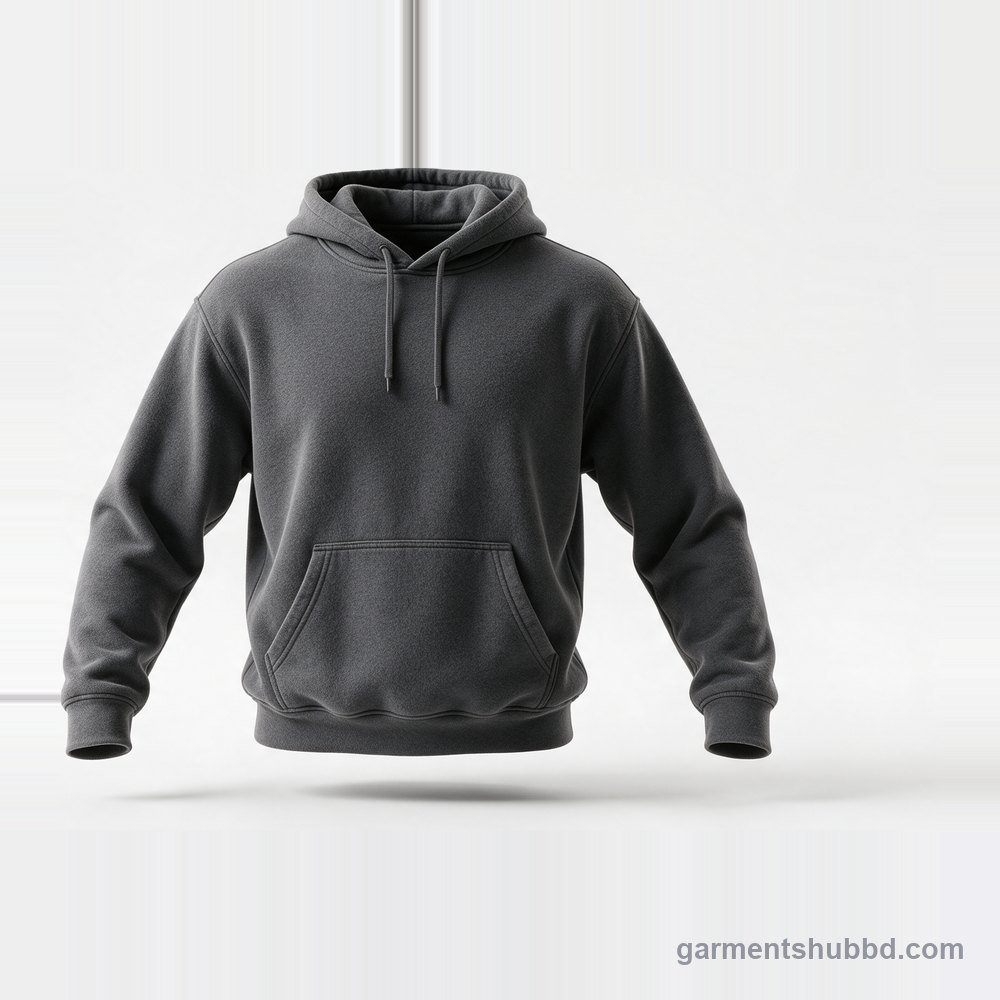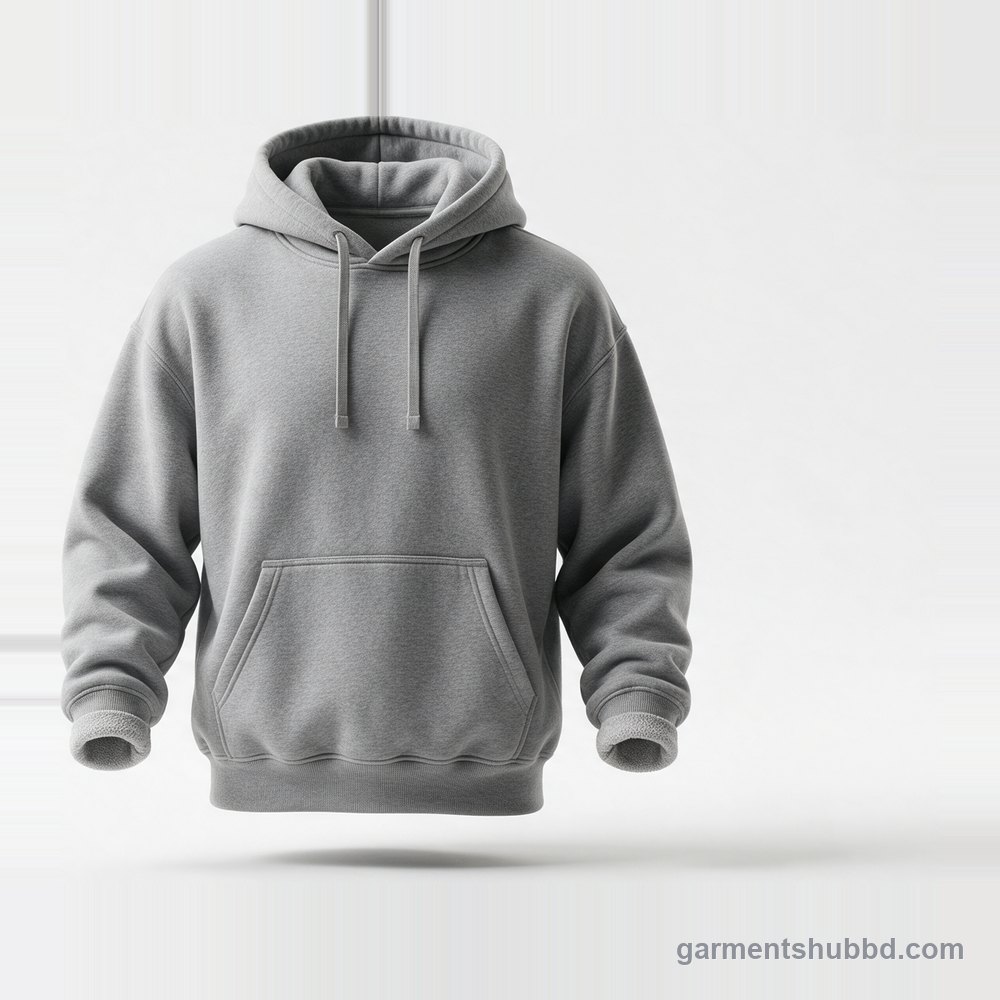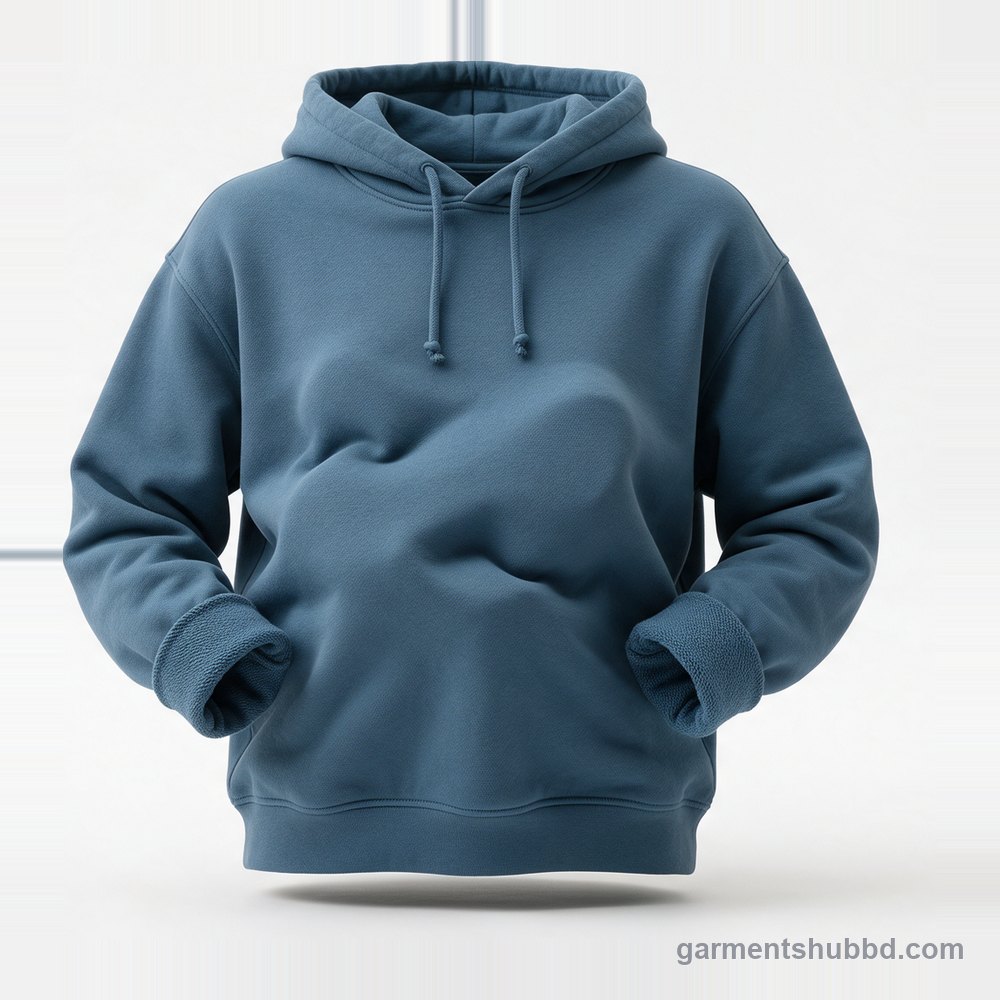
French terry hoodies, your specification
Made to your tech pack, fabric and colours by a factory matched to the order.
Private label
Your main label, care label, hangtag and polybag. Nominated trims accepted.
French terry is knitted with a smooth face and small loops on the back that are left unbrushed, so it is lighter, cooler and quicker to dry than fleece. A hoodie in it suits spring ranges, warm markets and layering, and its flat, tight face takes print well. Casual, athleisure and resort labels buy it. A French terry hoodie manufacturer in Bangladesh is judged on the loops: their density decides how the fabric wears and how much it shrinks.
Garments Hub BD matches French terry orders to factories holding the certificates you need, GOTS for organic cotton terry or OEKO-TEX for a harmful substance test. In the sampling order the lab dip follows the fit sample, and for garment dyed terry the shade is approved on a dyed garment rather than a fabric swatch.
Kinds of French terry hoodie
Classic loopback hoodie
Cotton or cotton rich French terry, usually 260 to 300 GSM, as a pullover or a zip. Choose it for spring and autumn ranges and warm climate markets where fleece is too hot.
Lightweight terry hoodie
Terry around 240 GSM, often with a little elastane, for summer layering and athleisure. Choose it when the hoodie is worn over a tee rather than as a jumper.
Slub French terry hoodie
Knitted with slub yarn on the face, which gives an irregular, textured surface. Choose it for casual and fashion ranges; the slub pattern varies from piece to piece by nature.
Garment dyed French terry hoodie
Sewn in undyed terry, then dyed as a finished garment for a soft hand and a lived in shade. Choose it for vintage looks; shrinkage and shade vary more than in piece dyed terry.
Organic cotton terry hoodie
GOTS certified organic cotton French terry. Choose it for sustainable ranges; the certificate chain has to run from the fibre to the factory sewing the hoodie.
How to specify a French terry hoodie
- Weight and loop
- Weight, usually 240 to 300 GSM, and the loop size or density. Ask for a swatch, because tighter loops wear better and shrink less.
- Fibre and yarn
- Cotton, cotton rich blend or organic cotton, the yarn count, and slub on the face if you want texture.
- Elastane
- A little elastane for recovery in lighter terry, or none for a dry, classic hand.
- Dye route
- Piece dyed fabric or garment dyed after sewing. Garment dyeing needs cotton sewing thread, or the seams stay pale while the body takes the colour.
- Shrinkage allowance
- Terry shrinks in length and width; give the tolerance, and for garment dyed styles expect the pattern to be cut larger.
- Print or embroidery
- Mark each artwork position and method; the smooth terry face takes screen print and water based inks cleanly.
Tests to ask a French terry hoodie manufacturer in Bangladesh for
- ISO 16322
- Terry is knitted on a single jersey base and can twist after washing, pulling side seams towards the front; ask for the spirality result on bulk terry.
- ISO 13938
- Lighter terry carries less yarn than fleece, so ask for a bursting strength result on knits at the low end of the weight range.
- GOTS
- For organic terry: the organic grade needs at least 95 percent certified organic fibre, made with organic at least 70 percent, with chain of custody through the factory.
What moves the price of a French terry hoodie
- Weight and loop density: tighter, heavier terry uses more yarn per metre.
- Yarn: slub, combed and organic cotton yarns cost more than standard carded cotton.
- Garment dyeing: an extra process with a higher rejection risk and its own shrinkage control.
- Elastane: a small share adds yarn cost and needs heat setting at the dye house.
- Certification: GOTS chain of custody adds certified inputs and paperwork.
Lead time for french terry hoodies
A French terry hoodie in a stocked terry samples in 7 to 14 days. Slub or organic terry may be knitted to order, and garment dyeing adds a dye, wash and dry step, each adding days. Terry bulk takes 30 to 60 days once the PP sample is signed. For a spring launch, settle the dye route before fixing the date; the quote confirms it.
What we check on french terry hoodies before shipment
- Loop pullsThe back is checked for pulled or snagged loops, especially around pockets and seams where needles can catch them.
- Seam twistWashed samples are laid flat to see the side seams have not spiralled towards the front.
- Garment dyed shadeGarment dyed hoodies are compared for shade within the lot, and stitching is checked for matching the body colour.
- Slub spreadSlub pieces are checked for an even spread of texture with no heavy bands or holes from thick yarn.
Questions buyers ask about french terry hoodies
Is French terry warm enough for winter?
For mild winters and layering, yes. In cold climates brushed fleece holds more warmth, because the brushed loops trap air. French terry is the choice for spring, autumn and warm markets, and terry near 300 GSM layers well under a jacket in cool weather.
Can French terry hoodies be garment dyed?
Yes, and it is a popular finish. The hoodie is sewn in undyed terry with cotton thread, then dyed whole. Expect more shrinkage and some shade variation from piece to piece, which suits a vintage look. Approve the shade on a dyed garment.
What is slub French terry?
Terry knitted with slub yarn, which has thick and thin sections, on its face. It gives a textured, irregular look that varies by nature, so approve the slub on a physical swatch, not a photograph. Slub also takes print less evenly than a plain face.
Does French terry shrink more than fleece?
It can, especially loose, light terry and garment dyed styles. Tight loops and a compacted fabric reduce shrinkage. Ask for shrinkage results on the bulk terry and have the pattern cut to them. Garment dyed hoodies need a larger allowance than piece dyed ones.
Get a quote for french terry hoodies
Tech pack or sketch with quantities per colour. A compared quote in 48 hours.