Wool blend topcoats, your specification
Made to your tech pack, fabric and colours by a factory matched to the order.
Private label
Your main label, care label, hangtag and polybag. Nominated trims accepted.
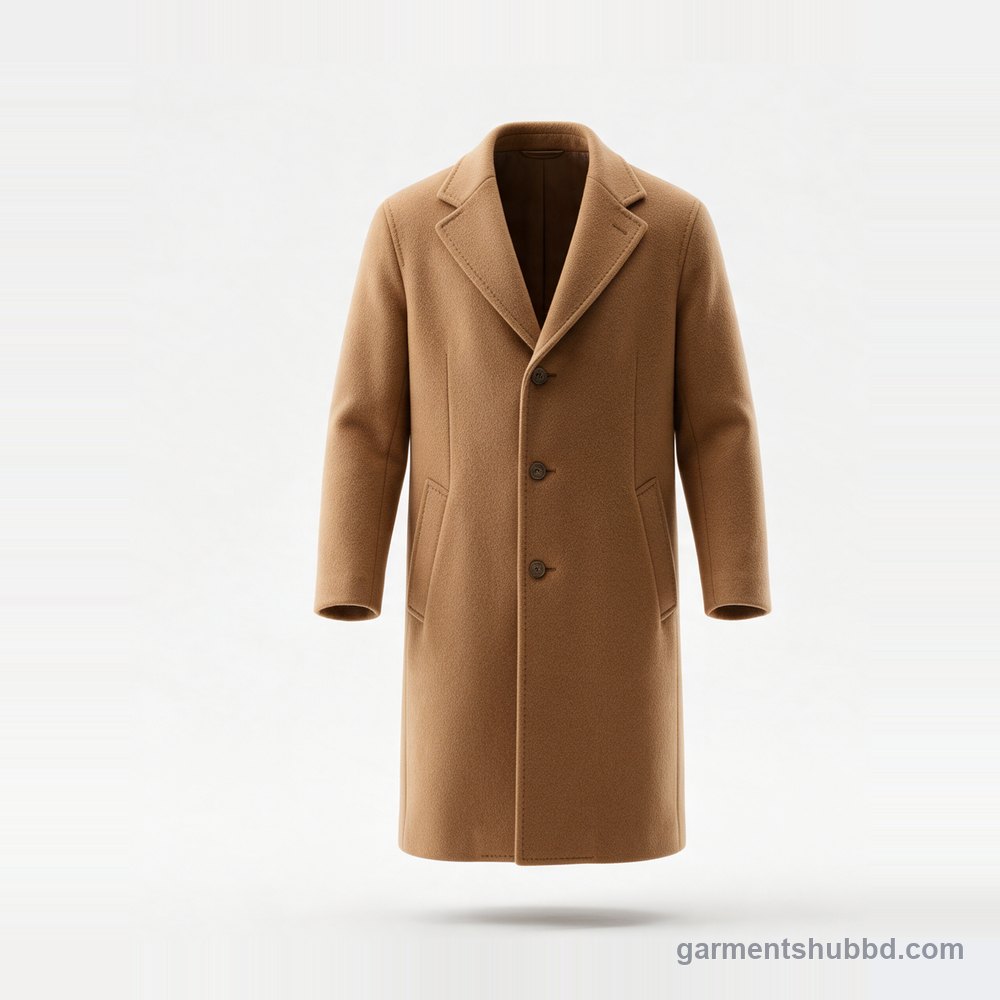
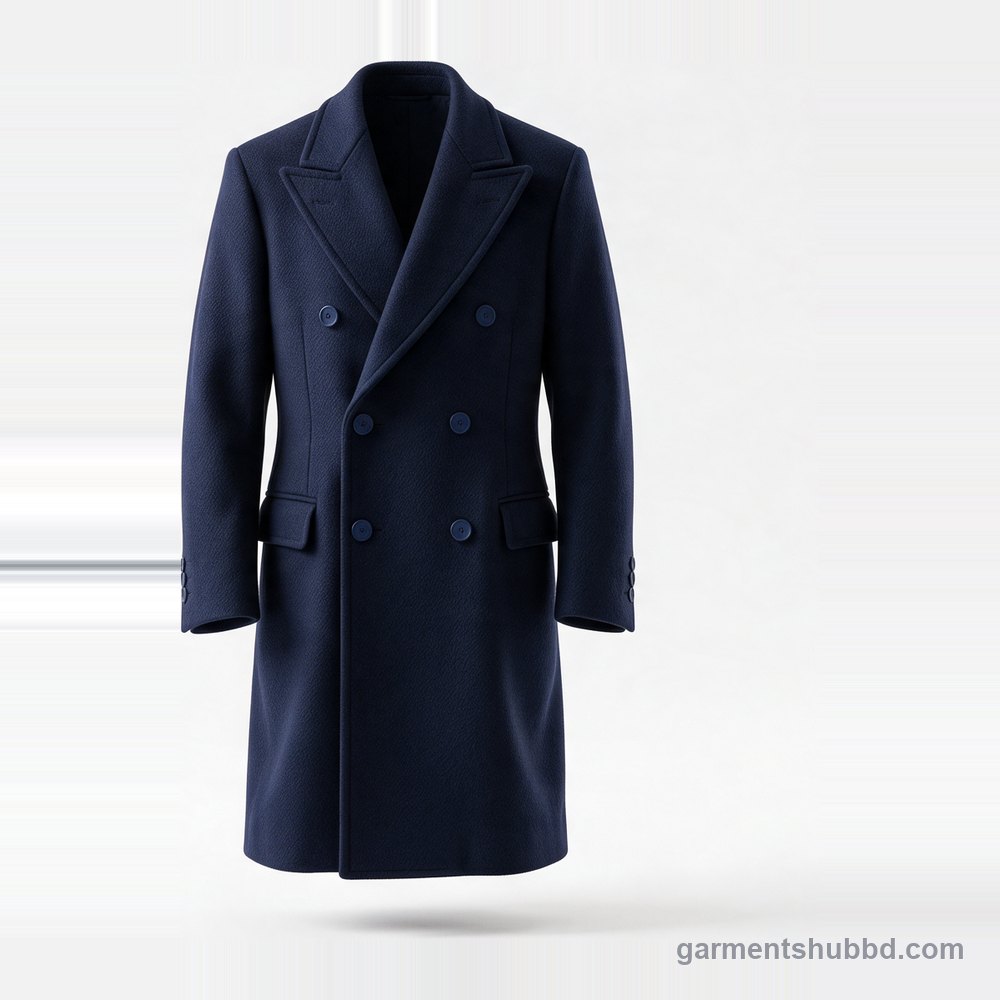
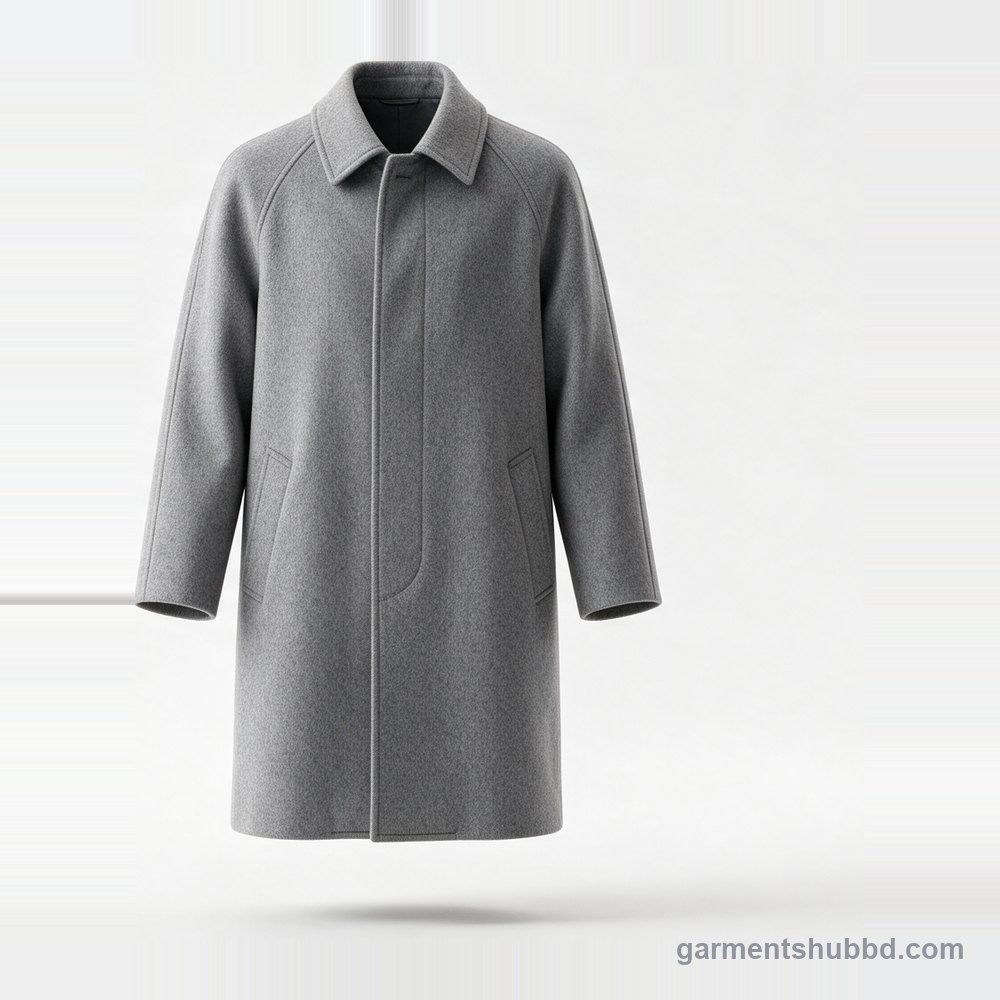
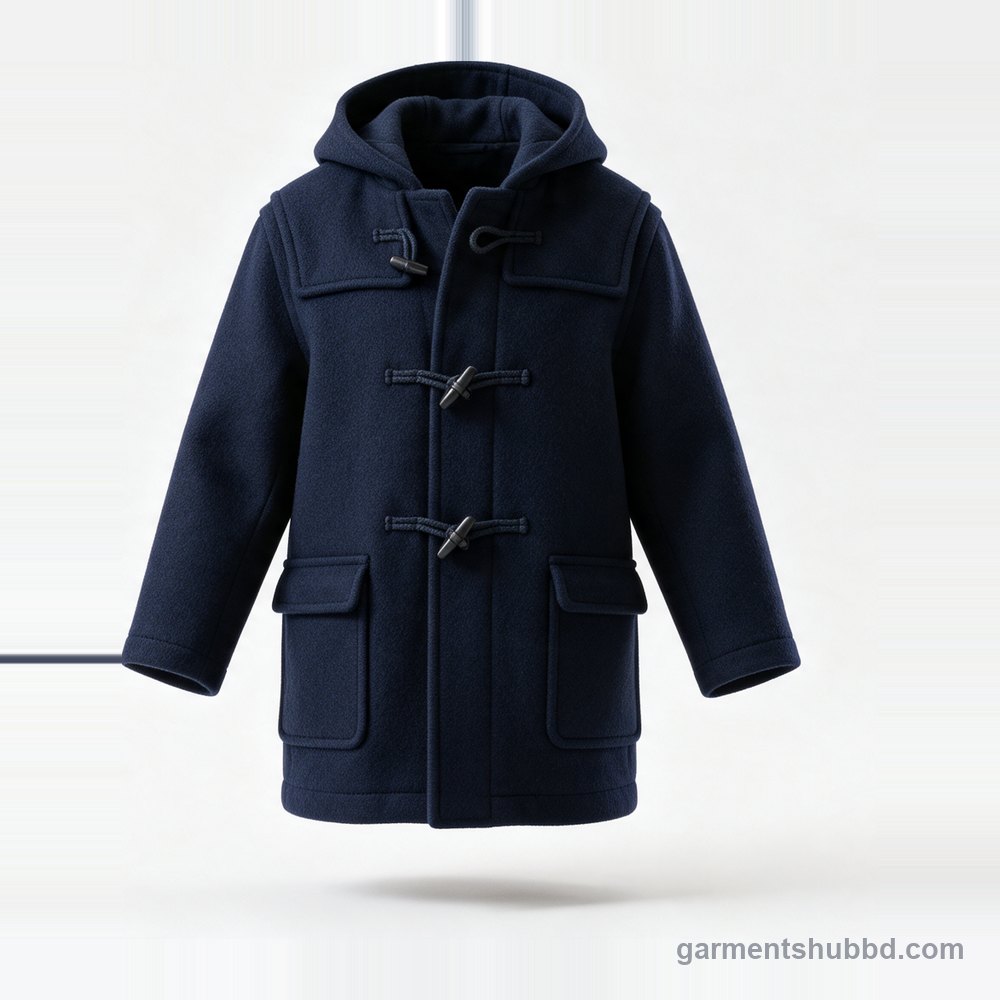
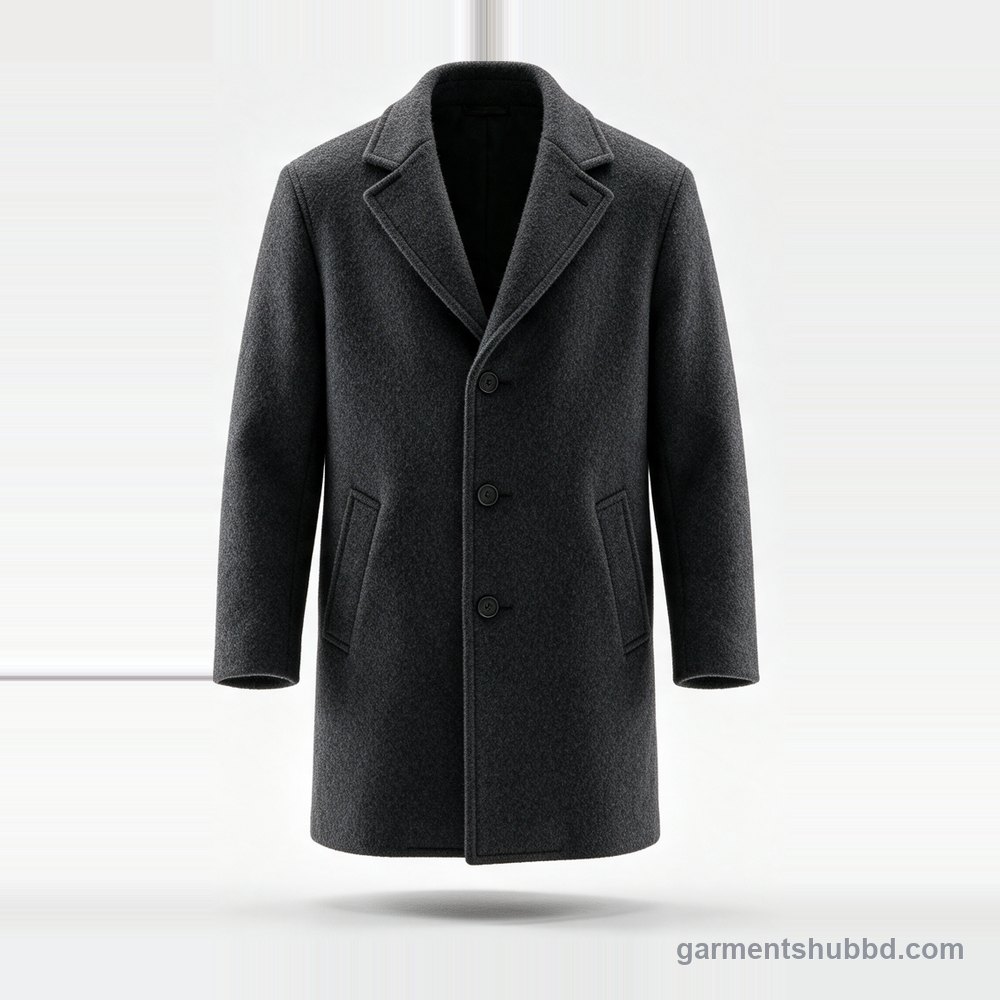
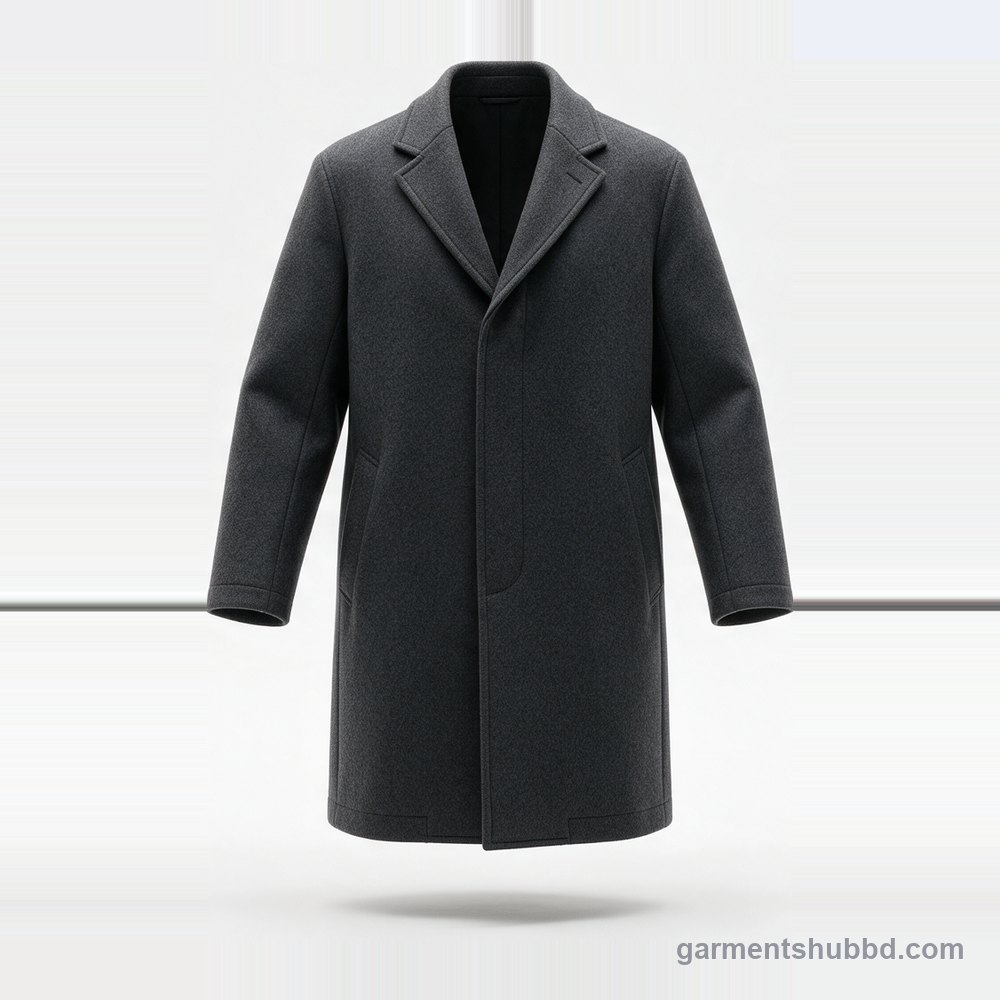
A wool blend topcoat is a lighter overcoat, usually at or just above the knee, cut from a cloth that mixes wool with polyester, viscose or a little polyamide. It is the coat a high street or department store range sells in volume, at a price a pure wool coat cannot reach. Working with a wool blend topcoat manufacturer in Bangladesh starts with the blend ratio, because it decides the hand, the crease recovery and the fibre label.
State the lowest wool share you will accept and any fibres you will not, and both factories quote cloth that meets it. A fibre composition test can be built into the timeline when you ask for it on the quote form, so the percentage on the label is checked on bulk cloth before shipment.
Kinds of wool blend topcoat
Wool and polyester topcoat
Polyester adds strength and crease recovery and lowers the price. Around 70 percent wool keeps a wool hand; at 50 percent or below the cloth feels firmer and can glaze under a hot press.
Wool and viscose topcoat
Viscose gives a softer, heavier drape and a slight lustre, but creases more and loses strength when wet. It suits a fluid women's topcoat more than a structured men's one.
Wool, polyester and polyamide topcoat
Polyamide, usually 5 to 10 percent, adds abrasion and tear strength to a lighter cloth. Common on volume coats where pockets and cuffs see hard wear.
Recycled wool blend topcoat
Cloth spun partly from recycled wool, usually blended with polyester for strength. The hand is coarser than new wool, and any recycled claim needs chain of custody behind it.
How to specify a wool blend topcoat
- Blend ratio
- The minimum wool share and every other fibre by percentage, for example 70 wool, 25 polyester, 5 polyamide. Agree the figure that goes on the label before it is printed.
- Weight
- Usually 350 to 500 GSM for a topcoat. A lighter blend drapes less and can look thin on a knee length coat, so judge a full hanger, not a swatch.
- Hand and finish
- Melton, brushed, a twill face or a plain face. Two blends at different wool shares can look identical in a photograph and feel nothing alike.
- Crease recovery
- Polyester helps the coat shed sitting creases. If it is sold for commuting, say so and ask the mill for a crease recovery result on the cloth.
- Front and lining
- Volume topcoats are usually fully fused with a polyester lining. A canvassed chest or viscose lining moves the coat up a price band, so state it.
- Fibre label wording
- Fibre names and percentages in descending order for each market. EU and US rules differ on fibre names and on how recycled wool is shown.
Tests and labelling rules for a wool blend topcoat
- Regulation (EU) No 1007/2011
- The EU fibre naming rule a blend label has to follow. Its annexes give the lab methods for blends, and a 3 percent manufacturing tolerance applies between label and result.
- Wool Products Labeling Act (US)
- A topcoat label for the US shows wool, recycled wool and each other fibre by percentage of weight, so a coat sold as a wool blend must be able to prove its share.
- 16 CFR 1610
- US flammability of clothing textiles. Fabrics made only of wool, polyester, polyamide and a few other fibres are exempt from testing; a brushed wool and viscose cloth is not.
- ISO 12945-2
- Pilling by the modified Martindale method. Polyester anchors pills to the surface instead of letting them shed, so ask for the grade on the bulk blend.
What moves the price of a wool blend topcoat
- Wool share: the cloth price rises with each step up in wool percentage.
- The second fibre: polyester is usually the cheapest partner; viscose and polyamide cost a little more.
- Cloth finish: a brushed or melton finish takes more mill time than a plain twill face.
- Front construction: a fused front keeps the volume price, a canvas chest moves it up.
- Testing: a composition test and, for a raised surface cloth sold in the US, flammability.
Lead time for wool blend topcoats
Mills often hold blend cloths in standard colours, which shortens the wait before cutting when the shade exists. A blend woven to a new ratio or dyed to a new shade adds mill time, and a fibre composition test adds days at the lab before shipment. The quote shows which applies, with order confirmation to shipment usually 60 to 90 days.
What we check on wool blend topcoats before shipment
- Composition labelThe fibre label matches the cloth certificate or lab report, in descending order, with each market's fibre names.
- Press shineFronts, lapels and pocket flaps show no glazing from the iron, a risk on polyester rich blends pressed too hot.
- Packing creasesA coat taken from the carton is hung and checked for fold marks that do not drop out, which shows how the blend recovers.
- Fusing bondFused fronts show no bubbles or loose panels after final pressing, since a volume coat has no canvas to hide them.
Questions buyers ask about wool blend topcoats
Polyester or viscose as the second fibre in a wool blend topcoat?
Polyester for a structured men's or unisex topcoat: it adds strength, helps the coat shed creases and keeps the price down. Viscose for a softer women's coat with more drape and a slight sheen, accepting that it creases more and is weaker when wet. Some cloths use both, with a little polyamide for wear.
How do I know the bulk cloth has the wool share I paid for?
Ask for a fibre composition test on the bulk cloth at a lab, not only the mill's declaration. Under the EU rule a 3 percent manufacturing tolerance applies between the label and the result. Put the test on the quote form so it sits inside the timeline, and keep the report with the shipping records.
Does a wool blend topcoat pill more than a pure wool one?
It often looks worse, because polyester fibres hold the pills on the surface instead of letting them break away. Yarn twist and finish matter as much as the wool share. Ask for the pilling grade on the actual bulk cloth before approving it, not on a similar quality from the mill's range.
Do I need a flammability test for a blend topcoat sold in the US?
It depends on the fibres and the surface. 16 CFR 1610 exempts from testing fabrics made only of fibres such as wool, polyester and polyamide, and plain surface fabrics of 2.6 ounces per square yard or more. A brushed wool and viscose cloth falls outside both, so it needs the test.
Get a quote for wool blend topcoats
Tech pack or sketch with quantities per colour. A compared quote in 48 hours.