Linen shirts, your specification
Made to your tech pack, fabric and colours by a factory matched to the order.
Private label
Your main label, care label, hangtag and polybag. Nominated trims accepted.
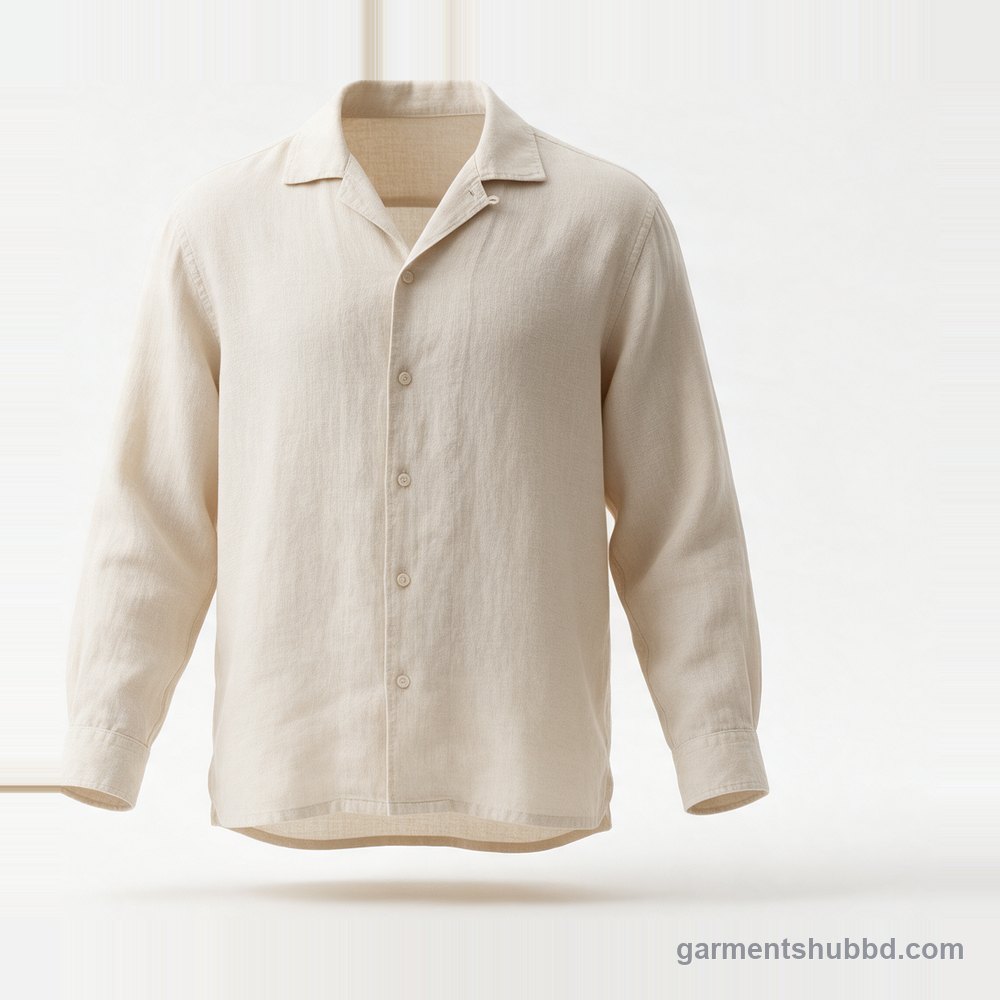
A linen shirt is woven from flax, alone or blended with cotton, and is bought for summer, holiday and resort ranges because it feels cool and dries quickly. Flax has little give, so the cloth creases, and its yarn carries natural slubs. Both are the character of the product. A linen shirt manufacturer in Bangladesh has to be told so in writing, or an inspector applying a cotton shirt standard will reject shirts that are correct.
Garments Hub BD puts your crease and slub acceptance into the enquiry that two factories on its bench quote against, so neither prices in a reject rate the other ignores. The fit sample is washed and measured before the pattern is signed off. Inspection works to your agreed slub reference, and test reports for the markets you name on the quote form are built into the timeline.
Kinds of linen shirt
Pure linen shirt
All flax, crisp when new and softer with every wash. It creases the most and breathes the most, and it is the holiday staple customers expect to look lived in.
Linen cotton blend
Often 55 percent linen and 45 percent cotton, cheaper than pure linen and slower to crease. Keeps the linen look for buyers who want an easier care label.
Washed linen
Cloth or garment washed for a soft, rumpled hand. The wash takes most of the shrinkage out before the customer's first laundry, and the crease becomes part of the look.
Linen viscose blend
A smoother, drapier cloth at a lower price than pure linen. Viscose weakens when wet, so seams need more care, wider allowances and a slippage test on the bulk cloth.
Yarn dyed linen stripe
Stripes woven into linen or linen cotton for resort ranges. Slub variation shows more against a stripe, so approve a full width length of cloth.
What to send a linen shirt manufacturer in Bangladesh
- Fibre content
- Give the linen percentage and the partner fibre. The fibre and care label must match it, and the blend changes crease, shrinkage and price.
- Crease acceptance
- Write in the quality standard that creasing from wear, folding and packing is not a defect, and say how shirts are folded and whether tissue goes between folds.
- Slub standard
- Approve a reference length of cloth showing accepted slubs, and list what is a defect instead: knots, holes, thick places over an agreed length, slubs on a collar or cuff.
- Shrinkage route
- Say whether the cloth is washed before cutting or the garment after sewing, and give the size chart as finished after washing.
- Seams
- Ask for flat felled or French seams at sides and armholes. Both enclose the raw edge, so a loose weave does not fray or pull apart.
- Weight
- About 120 GSM for a light, slightly sheer summer shirt; up to about 170 GSM for a shirt that hangs heavier. Pale colours in light weights can be see through.
Tests for linen shirts
- ISO 13936
- Seam slippage in woven fabric. On loose linen weaves the yarns slide away from a stitched seam under strain, opening a gap at armholes and side seams. Ask for a result on bulk cloth.
- ISO 5077 with ISO 6330
- Dimensional change after washing. Run it on unwashed linen to set the allowance and again on the washed garment, so the size chart holds after the first wash at home.
- ISO 105-B02
- Fastness of dyed linen to light, read against blue wool references on a scale of 1 to 8. Resort colours sit in shop windows and sun, so agree a grade for bright and dark shades.
What moves the price of a linen shirt
- Linen content: pure linen costs more per metre than linen cotton or linen viscose.
- Yarn dyed stripes and checks, which cost more to weave than piece dyed solids.
- Cloth or garment washing, which adds a process and changes the cutting allowance.
- Flat felled or French seams, which take longer than overlocked seams.
- A strict slub standard, which means more cloth set aside at cutting.
Lead time for linen shirts
Samples usually take 7 to 14 days, and the first fit sample is washed before its measurements are signed off. Bulk linen shirts usually take 30 to 60 days after written PP approval. Linen woven or dyed to order adds days at the mill, and a garment wash adds days at the end of the line. Each stage is confirmed in the quote.
What we check on linen shirts before shipment
- Slubs on show panelsCollars, cuffs, plackets and pockets are checked against the slub reference, because faults on these show far more than on a back panel.
- Seam openingArmholes and side seams are pulled by hand to look for yarn sliding away from the stitching.
- Washed measurementsA washed shirt from bulk is measured against the finished size chart, not the unwashed one.
- SheernessWhite and pale shirts are held to the light for see through, and pocket bags and facings are checked for shadowing on the front.
Questions buyers ask about linen shirts
Will linen shirts fail inspection because they arrive creased?
Not if your quality standard says creasing is accepted. Write it in before the order, with how shirts are folded and packed. An inspector working to a cotton shirt standard without that line would be right to fail them, so it has to be stated.
How much does a linen shirt shrink?
Unwashed linen usually shrinks more than cotton shirting, so the safer routes are washed cloth or a garment wash. The factory washes a fit sample, measures it and sets the pattern allowance. Ask for an ISO 5077 result on the PP sample.
Are slubs in linen a defect?
Slubs are natural thick places in flax yarn and part of the look. They become a defect when oversized, when they land on a collar or cuff, or when they come with knots or holes. Agree a reference cloth that shows the accepted level.
Pure linen or linen cotton for a resort range?
Pure linen for a holiday shirt where the crease is part of the appeal. Linen cotton for a lower price, fewer creases and a softer hand from the first wear. Many ranges carry both, with pure linen in solids and linen cotton in prints or stripes.
Get a quote for linen shirts
Tech pack or sketch with quantities per colour. A compared quote in 48 hours.