Moccasins, your specification
Made to your tech pack, fabric and colours by a factory matched to the order.
Private label
Your main label, care label, hangtag and polybag. Nominated trims accepted.
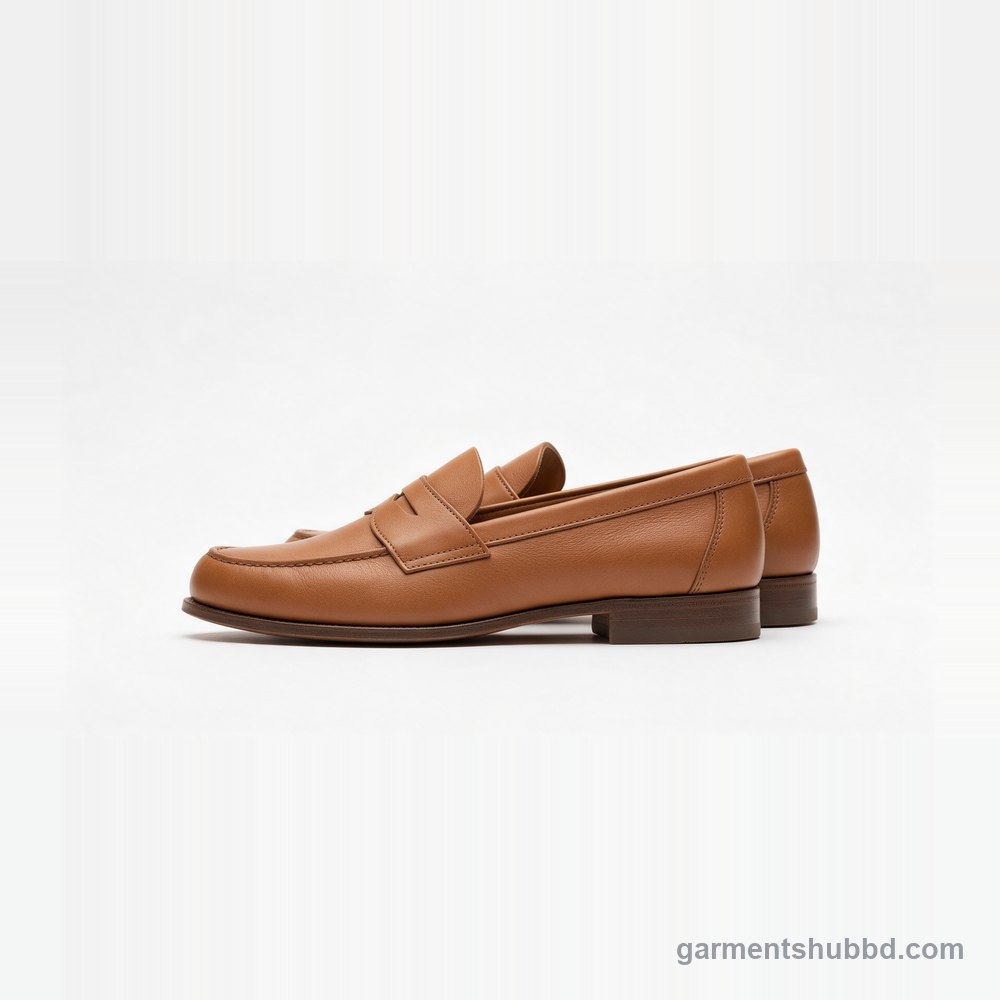
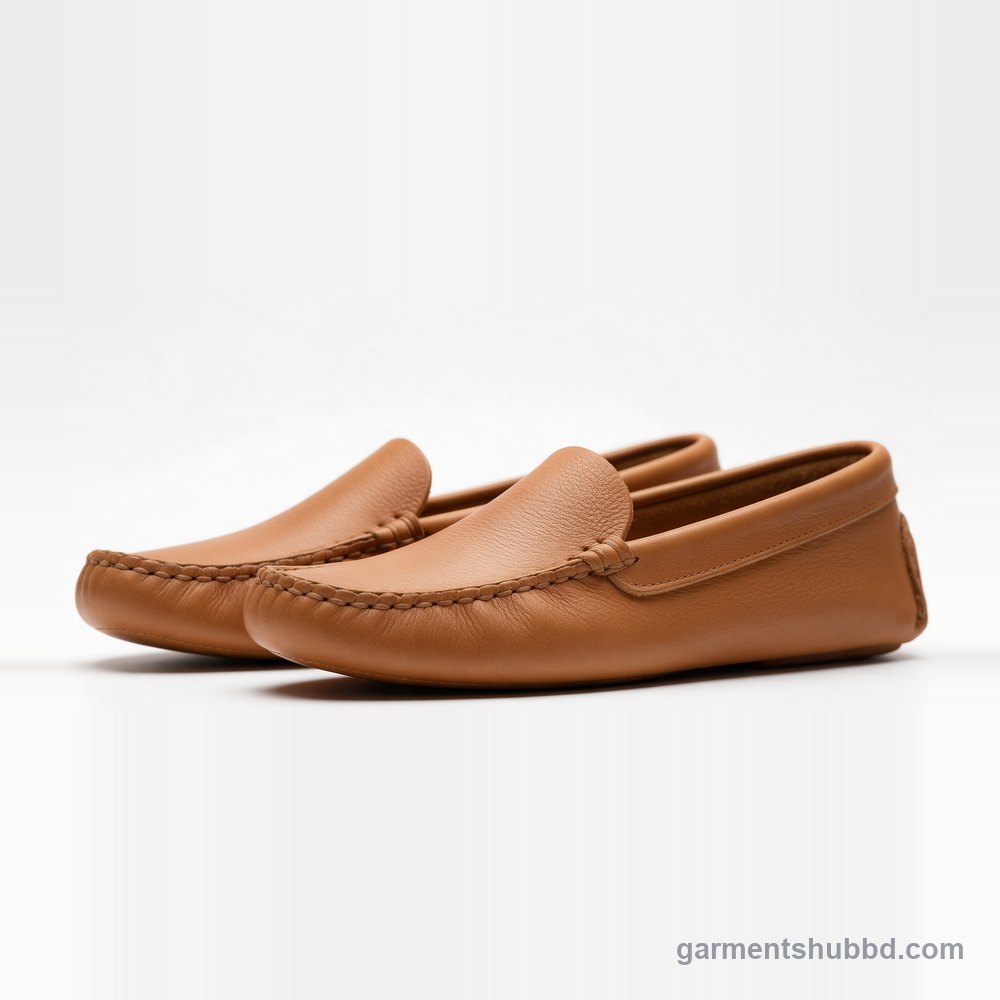
In a true moccasin the bottom leather comes up round the sides of the foot like a cup, and a separate plug or apron is hand sewn to it on top. There is no stiff insole board, so the shoe is soft and flexes from the first wear; a rubber sole or pebbles are then stitched or bonded underneath. A moccasin manufacturer in Bangladesh needs hand sewing skill more than heavy machinery, which makes this a specialist make.
Garments Hub BD has no vetted moccasin unit yet, and wrapped construction is made by fewer units than cemented shoes. The desk searches for sewing rooms that already make it, checks the toe stitching and sole fixing on finished pairs, visits the one that suits your volume, and replies within 5 working days with a real quote or a straight no.
Kinds of moccasin
Driving moccasin
A slip on with rubber pebbles or pads on the sole that run up the back of the heel. Light and flexible for driving and summer wear; the pebbles wear down quickly if it is used as an everyday street shoe.
Boat shoe
A lace up moccasin with a leather lace threaded round the collar and a siped rubber sole for grip on wet decks. It needs an oiled leather that tolerates water and salt.
House moccasin
A soft soled moccasin, often lined with textile or shearling, for indoor wear. Very little structure, with a suede or thin rubber sole and a cushioned sock.
Camp moccasin
A two eyelet lace up with a hand sewn toe on a cemented or stitched rubber sole. It sits between a boat shoe and a casual derby in look and weight.
Moccasin ankle boot
The wrapped construction carried up into a short shaft, laced or fringed. It takes more leather and a longer hand sewn seam than a low moccasin.
Specifying for a moccasin manufacturer in Bangladesh
- Wrap and plug pattern
- Where the bottom leather rises round the foot and the shape of the plug or apron. Send a pair to copy, because patterns differ between makers.
- Toe seam
- Raised or flat seam, thread colour and thickness, and the stitch spacing you expect, usually in a waxed thread that grips the leather.
- Leather
- Soft nappa or suede, usually 1.0 to 1.4 mm for driving shoes, heavier oiled leather for boat shoes. The leather has to mould to the foot without a lining.
- Sole fixing
- Pebbles moulded on, a rubber sole stitched through, or a sole cemented to the wrap. State whether the sole should run up the heel.
- Lacing
- A leather lace round the collar for boat shoes and camp mocs, its width, and whether it is functional or decorative.
- Lining and heel pad
- Unlined, part lined or lined, plus a thin padded sock in the heel. A small pad changes the comfort a lot on an unstructured shoe.
Tests and certificates for moccasins
- Seam strength at the toe
- Pulls across the hand sewn plug seam to see whether the thread or the leather gives first. Weak thread or too few stitches split here before anywhere else on the shoe.
- Pebble and sole adhesion
- Checks that rubber pebbles or the sole stay attached under flexing and peel. On driving moccasins ask for it after repeated flexing, not only on new pairs.
- REACH Annex XVII, entry 43
- Driving moccasins come in bright colours and are worn sockless, so for the EU each shade should be shown not to release listed amines from azo dyes above 30 mg/kg.
What moves the price of a moccasin
- Hand sewing time at the toe, the main labour cost in the shoe.
- Leather softness and grade, since an unlined upper cannot hide a weak skin.
- Sole type: moulded pebbles, a stitched rubber sole or a simple suede sole.
- A working leather lace threaded right round the collar on boat shoes.
- A heel pad, a lining or shearling for house styles.
Lead time for moccasins
A moccasin sample typically needs 21 to 30 days, and bulk 60 to 90 days from pre-production approval. Hand sewing sets the pace: each stitcher finishes a limited number of pairs a day, so a larger order needs more time or more stitchers, which the unit has to confirm. Pebble soles moulded in a new colour add days. Every date is confirmed in the quote.
What we check on moccasins before shipment
- Toe stitchingStitches round the plug are even in length and spacing, pulled tight, with no skipped holes or loose ends showing.
- Pebble wrapPebbles or rubber pads sit straight, are fully bonded and run evenly up the heel on both shoes.
- Softness and shapeThe shoe flexes easily by hand and keeps a symmetrical shape, free of creases from a forced last.
- Collar laceOn laced styles the leather lace runs freely through its slots and the knot ends are neatly finished.
Questions buyers ask about moccasins
What is the difference between a moccasin and a loafer?
A true moccasin is built by wrapping leather under the foot and sewing a plug on top, with no stiff insole. Many loafers only look like moccasins: they are cemented to a sole with a decorative apron. The true moccasin is softer and takes more hand work.
Are driving moccasins suitable for everyday wear?
Not for heavy walking. The rubber pebbles grip pedals and give a light, flexible feel, but they wear down quickly on pavements. For everyday wear, ask for a thin full rubber sole stitched on instead, which keeps the soft upper and lasts far longer.
Can moccasins be made in larger quantities?
Yes, but hand sewing limits how many pairs a unit finishes each day. Split the order across deliveries, or ask the unit how many stitchers it can put on it, and agree the dates in writing before bulk cutting starts.
Which leather suits a boat shoe?
An oiled or waxed full grain leather, tanned to tolerate water and salt, with a leather lace cut from a matching hide. Thin nappa suits driving shoes, not boat shoes. Ask the tannery how the leather behaves after wetting and drying.
Get a quote for moccasins
Tech pack or sketch with quantities per colour. A vetted unit and a real quote, or a straight no, within 5 working days.