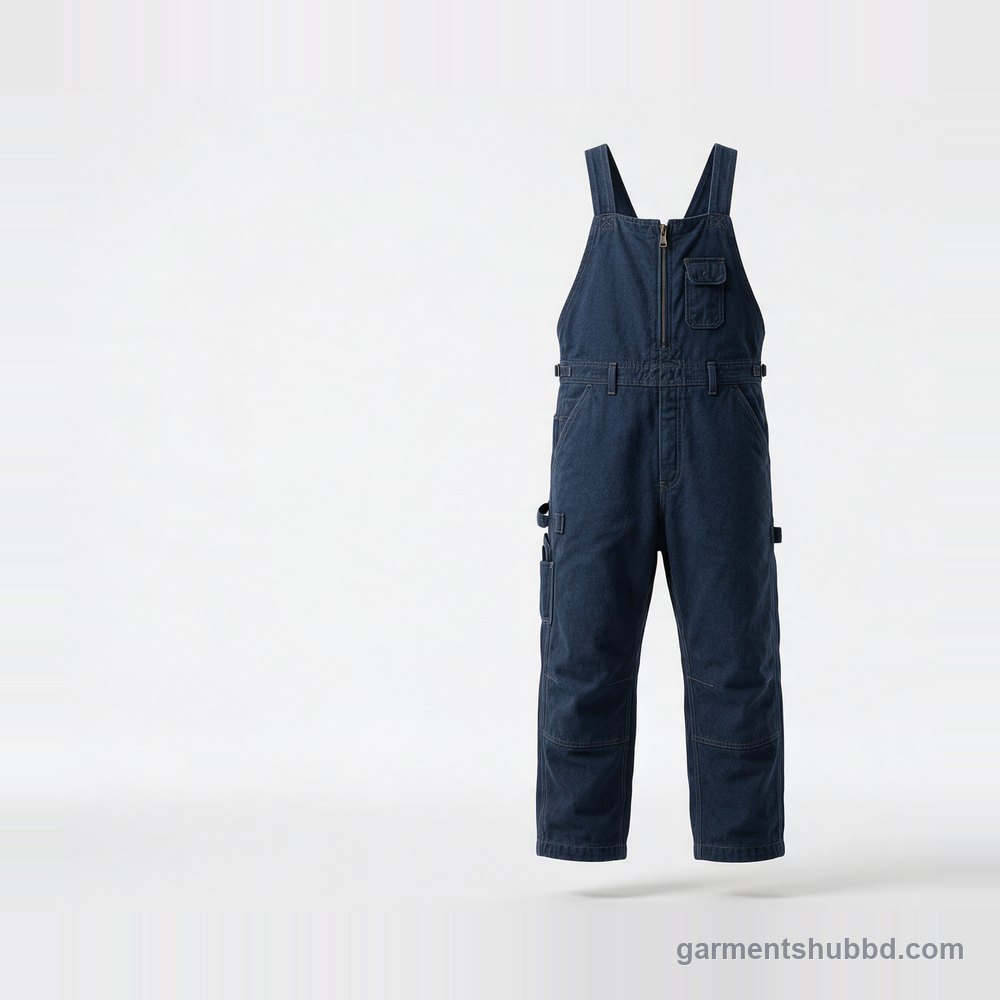
Workwear overalls, your specification
Made to your tech pack, fabric and colours by a factory matched to the order.
Private label
Your main label, care label, hangtag and polybag. Nominated trims accepted.
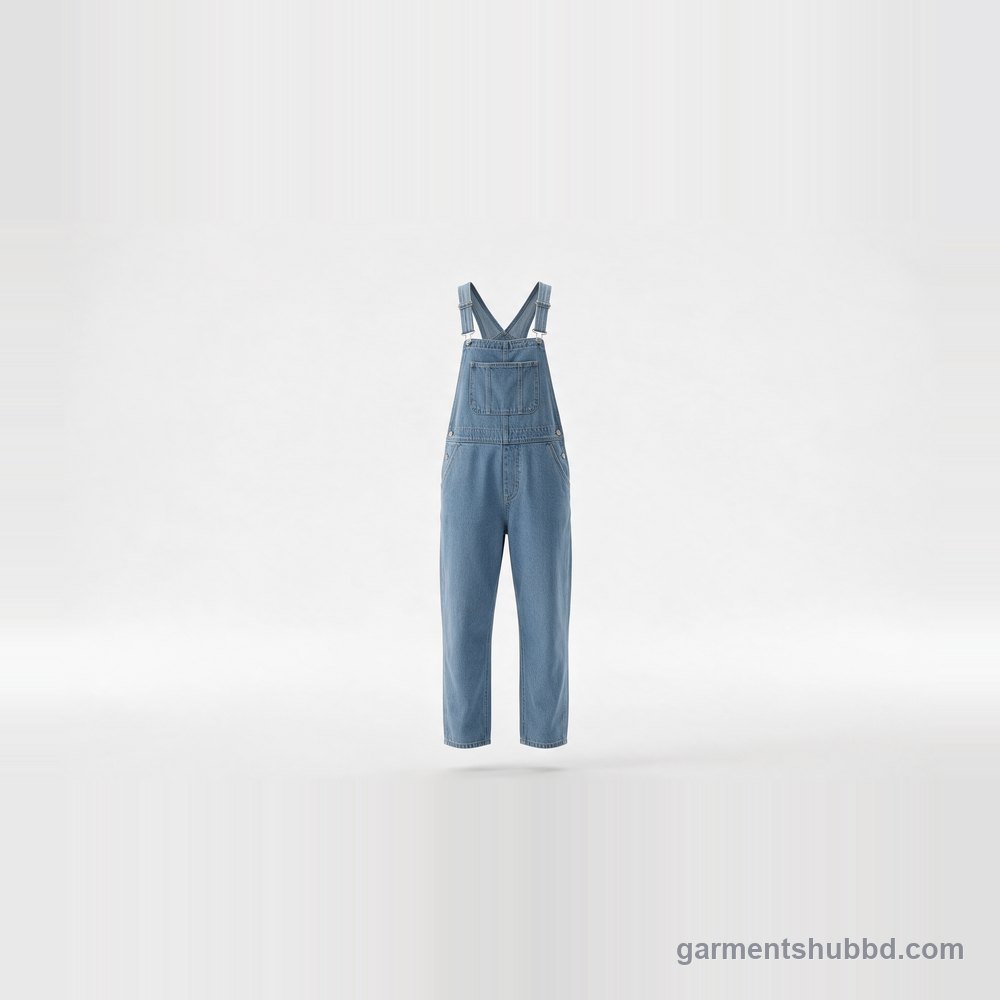
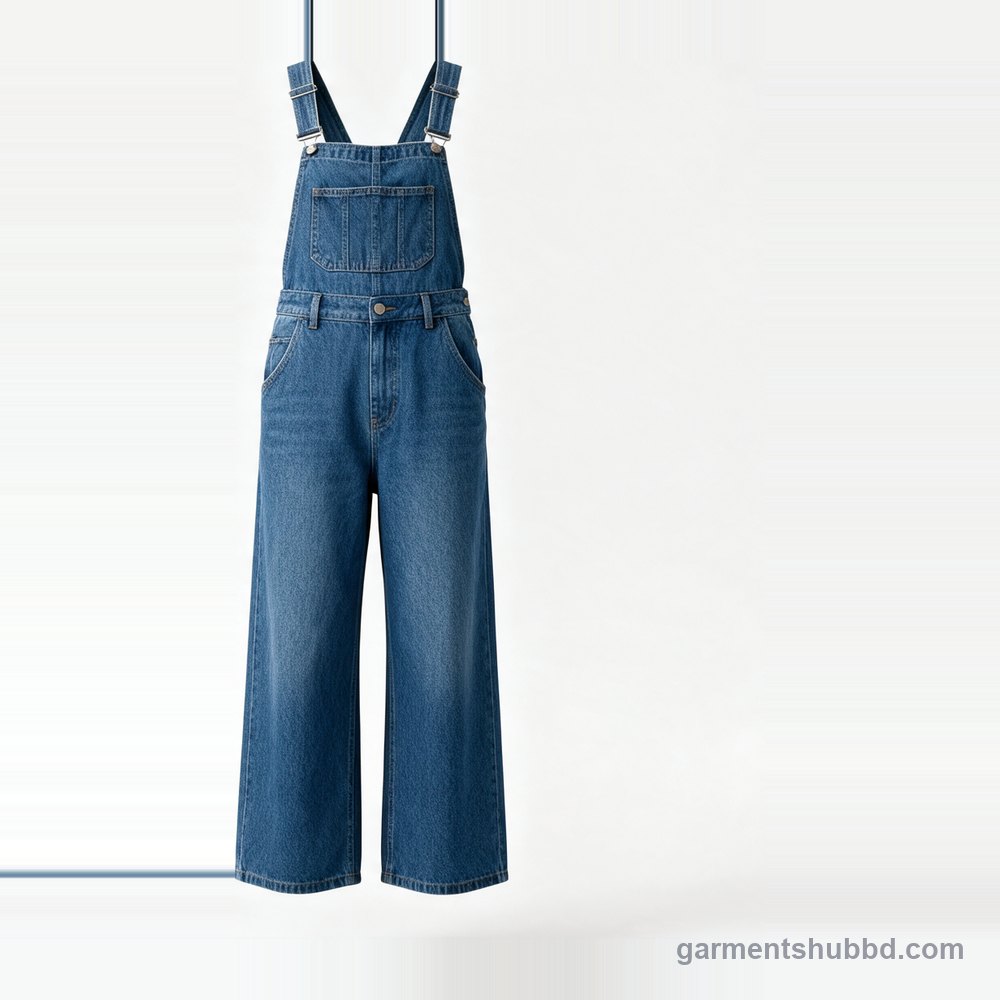
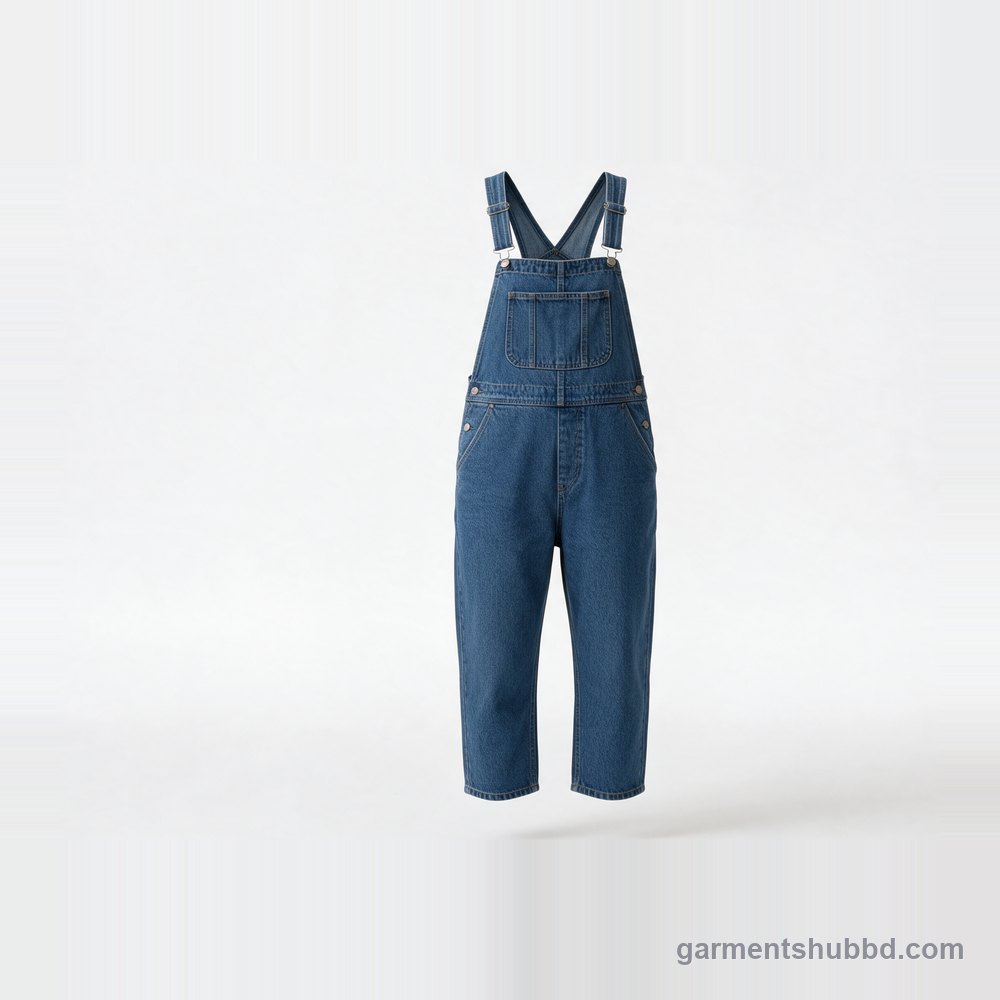
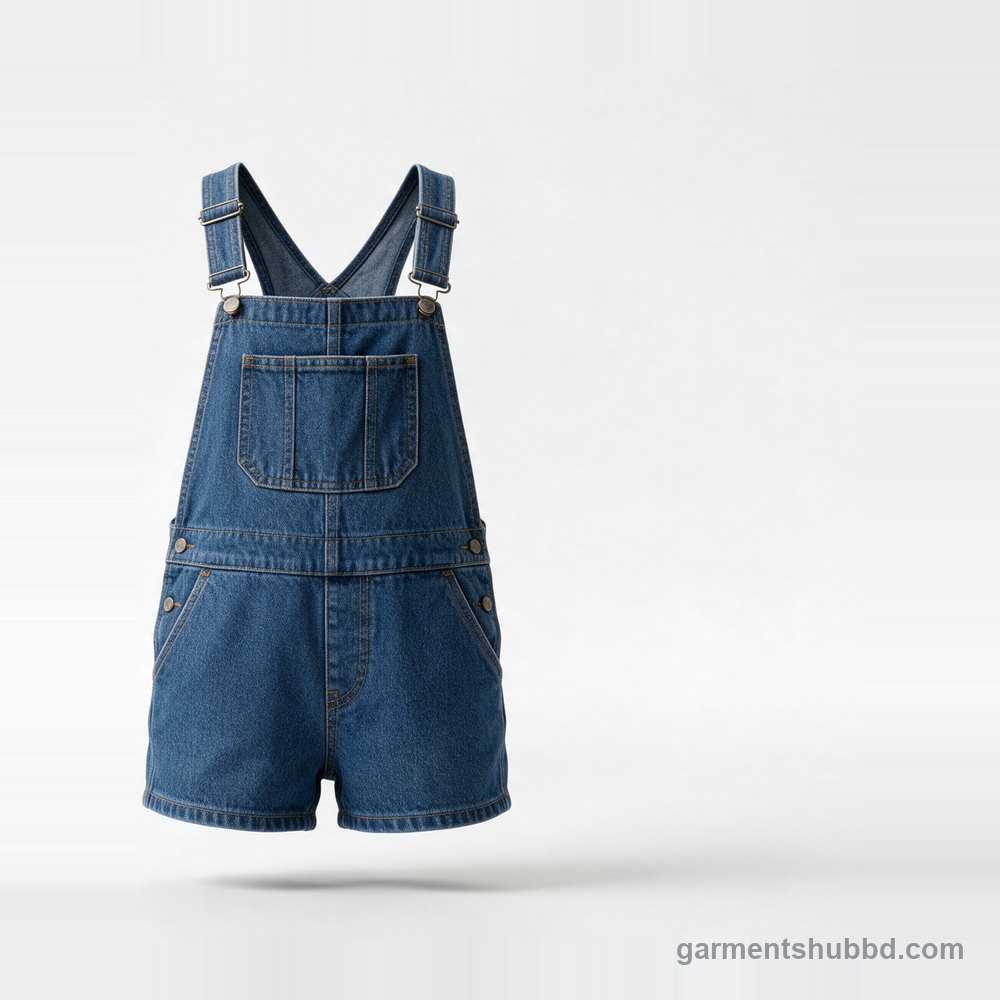
Workwear overalls are bib overalls built for a working day: heavy denim, seams sewn with three rows of stitching, bar tacks at every stress point, a reinforced knee and pockets for tools. Trade, farm and workshop buyers order them, as do brands selling workwear styling that has to hold up in use. A workwear overalls manufacturer in Bangladesh prices them above fashion overalls because of the extra sewing. One piece coveralls in twill sit on the workwear page.
The desk sends your pack to two factories on the bench and has the construction written into each quote: stitch rows, bar tack count, knee build and thread weight. A lower price that drops the third row of stitching or the knee panel shows there. If the overalls will go through industrial laundering, ask for that test on the quote form and it is built into the timeline.
Kinds of workwear overalls
Double knee bib overalls
A second layer of denim over the knee, open at the top or bottom to take a knee pad. Made for kneeling trades; the panel is bar tacked at its corners.
Carpenter workwear overalls
Rule pocket, hammer loop, pliers pocket and a bib with pen and phone slots. Each tool point is bar tacked to carry the weight it will hold.
Zip leg overalls
Side zips from hem to knee or hip, so the overalls go on and off over boots. Heavy duty zips sit under a storm flap to keep dirt out of the teeth.
Lined winter overalls
Heavy denim with a quilted or brushed lining in the bib and legs, for cold sites. The lining adds weight and changes the size chart, so it is graded on its own.
How to brief a workwear overalls manufacturer in Bangladesh
- Denim weight
- Usually 12 to 14 oz rigid 3 by 1 twill, preshrunk at the mill. Heavier denim resists abrasion but is slower to sew and to wash.
- Seams and stitching
- Triple needle felled seams on inseam, seat and side seams; stitches per inch, usually 8 to 10; and thread type and weight in Tex.
- Bar tacks
- Every position listed: pocket corners, hammer loop, strap anchors, fly base and crotch. Bar tacks of 28 to 42 stitches are usual.
- Knee build
- Double knee panel size, and whether it opens for a knee pad, with the pad dimensions so the pocket fits it.
- Tool pockets
- Rule, pliers and phone pockets with sizes, positions and the hand they suit, plus the hammer loop width.
- Hardware and laundering
- Heavy clasps, solid rivets and a metal zip fly; and whether the overalls go to an industrial laundry or are washed at home.
Tests for workwear overalls
- ISO 15797
- The industrial laundering procedure for overalls sent to a laundry service. Ask for shrinkage and appearance after the agreed number of cycles.
- ISO 12947
- Martindale abrasion on the knee and seat denim: how many rubs it survives before wearing through, the property a trade buyer is paying for.
- ISO 13937
- Tear strength of the denim, relevant where overalls catch on nails, sheet edges and machinery.
- EN ISO 13688
- General requirements for protective clothing. Applies only if the overalls are marketed as protective clothing with a stated protection; plain trade overalls are not.
What moves the price of workwear overalls
- Heavy denim at 12 to 14 oz, costlier per metre and slower through the machines.
- Triple stitched seams, adding sewing time over the double stitching of fashion overalls.
- Bar tack count: every tool point and stress point adds a machine cycle.
- Double knee panels and knee pad openings, with extra fabric and operations.
- Tool pocket count and heavy duty hardware such as leg zips and solid rivets.
- Industrial laundering tests run over several cycles, and a quilted lining for winter styles.
Lead time for workwear overalls
Samples usually take 7 to 14 days and bulk 30 to 60 days once the PP sample is approved. Heavy denim in a specific weight may need booking with the mill, and an ISO 15797 laundering test over several cycles adds days before bulk. A lined winter style needs its own sample. The quote fixes the dates.
What we check on workwear overalls before shipment
- Triple stitchingThree even rows on every felled seam, stitches per inch to spec, and no skipped stitches at the crotch junction.
- Bar tacksEvery listed stress point tacked, tacks complete and centred, none missed at the hammer loop or strap anchors.
- Knee panelsPanels at the same height on both legs, pad openings working, and the corners bar tacked.
- Tool pointsHammer loop and tool pockets pulled firmly by hand, with no seam opening and no tack pulling through.
Questions buyers ask about workwear overalls
Are denim workwear overalls protective clothing?
Not by default. They are hard wearing workwear. If you market them as protective, against heat or for high visibility for example, the relevant standards and certification apply and the fabric usually changes. For ordinary trade wear, ask for abrasion, tear and laundering tests instead.
Will the overalls survive industrial laundering?
Heavy denim preshrunk at the mill, with felled seams, usually does. Test to ISO 15797 for the number of cycles your laundry runs, then check shrinkage, seam appearance and hardware afterwards. Indigo fades faster in industrial washes, which many buyers accept as character.
How heavy should denim be for trade overalls?
Usually 12 to 14 oz. Below 12 oz the knee and seat wear through sooner; above 14 oz the overall turns stiff, hot and slow to sew. Ask for the Martindale abrasion result on the denim you choose before approving it.
Overalls or coveralls for a workforce?
Bib overalls leave the arms free and pair with any jacket, which suits warm sites and trades that kneel. Coveralls cover the whole body and are usually made in twill or polycotton rather than denim, and they are covered on the workwear page.
Get a quote for workwear overalls
Tech pack or sketch with quantities per colour. A compared quote in 48 hours.