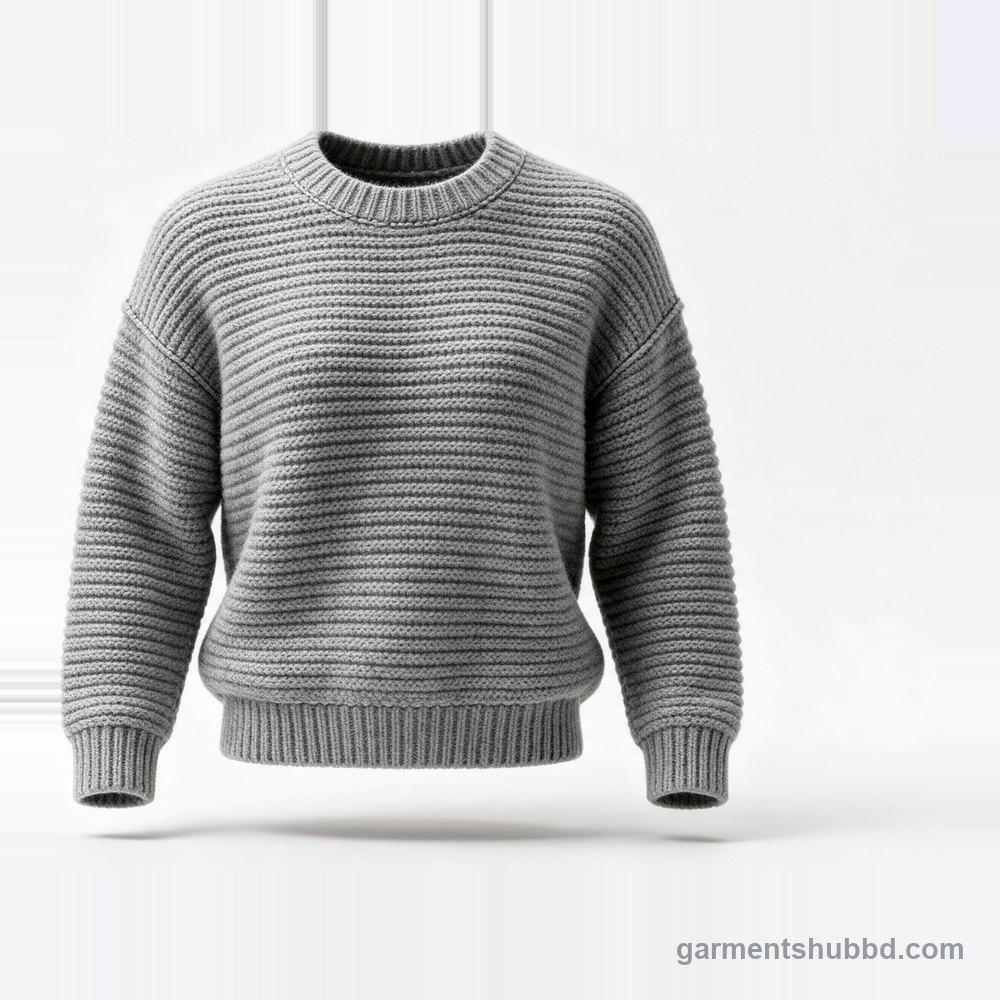
Cable knit sweaters, your specification
Made to your tech pack, fabric and colours by a factory matched to the order.
Private label
Your main label, care label, hangtag and polybag. Nominated trims accepted.
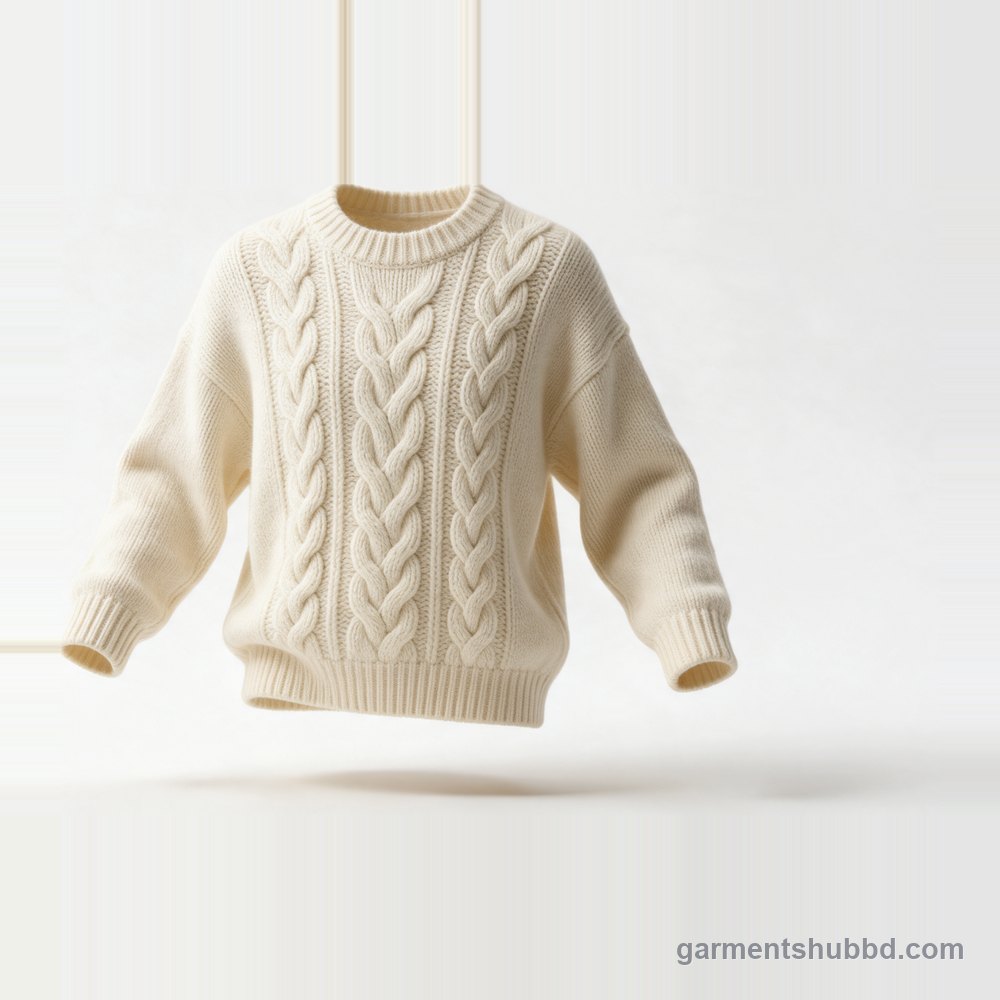
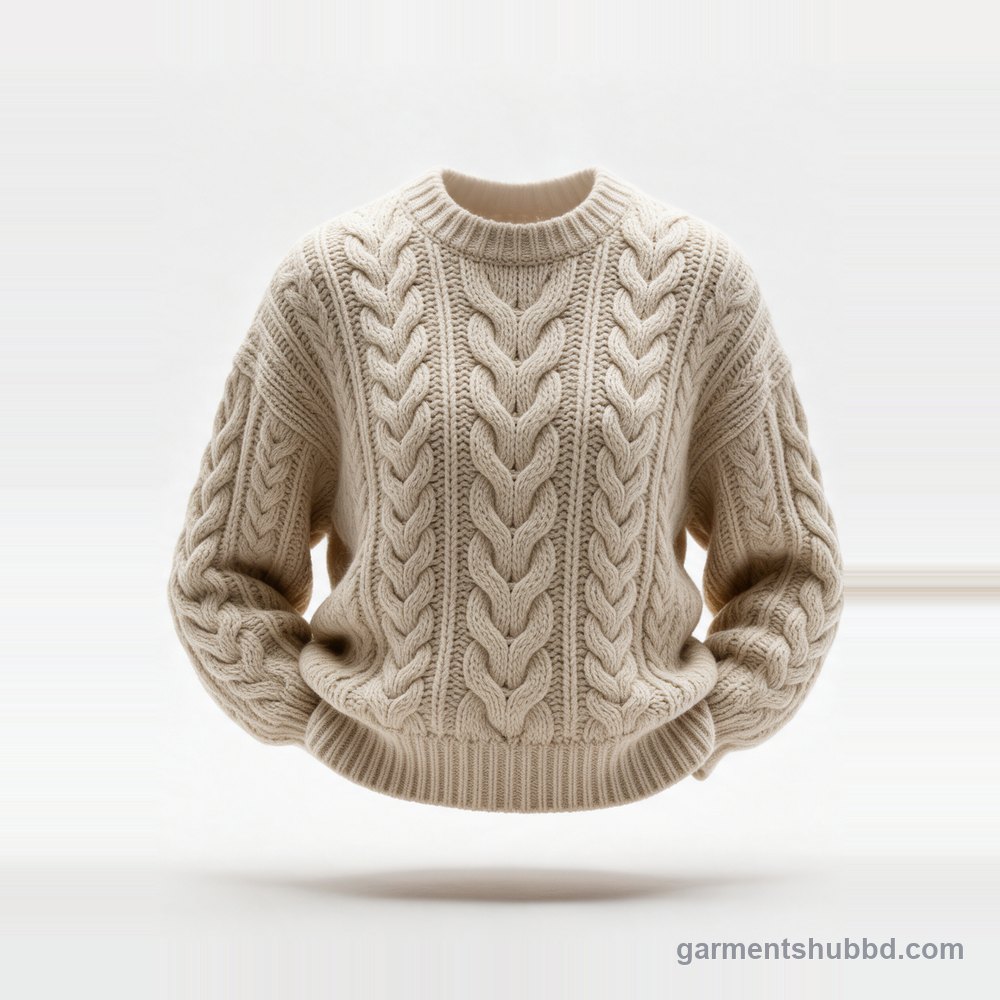
Cable knit sweaters carry twisted rope patterns down the body and sleeves, from a single cable panel to an allover aran. Heritage, outdoor and fashion brands buy them for winter ranges, often in wool blends in a natural or cream shade. A cable knit sweater manufacturer in Bangladesh needs a stitch chart, a gauge that can carry the cable and a plan for how the pattern sits on every size.
Garments Hub BD sends your stitch chart or reference garment to both factories, so the quotes price the same cables at the same gauge rather than a simplified version. The proto sample confirms the pattern, the fit sample confirms placement across sizes, and inline inspection looks for cables crossed the wrong way, which are easy to miss and hard to repair after linking.
Kinds of cable knit sweater
Rope cable panels
One or more simple cables running down a plain body, often at centre front and on the sleeves. Straightforward to knit and grade, and cheaper than allover patterns.
Aran
An allover mix of cables, honeycomb, diamonds and moss stitch in panels across front, back and sleeves. Usually cream wool or a wool blend at 3 to 5 gauge, with heavy yarn use.
Fisherman style
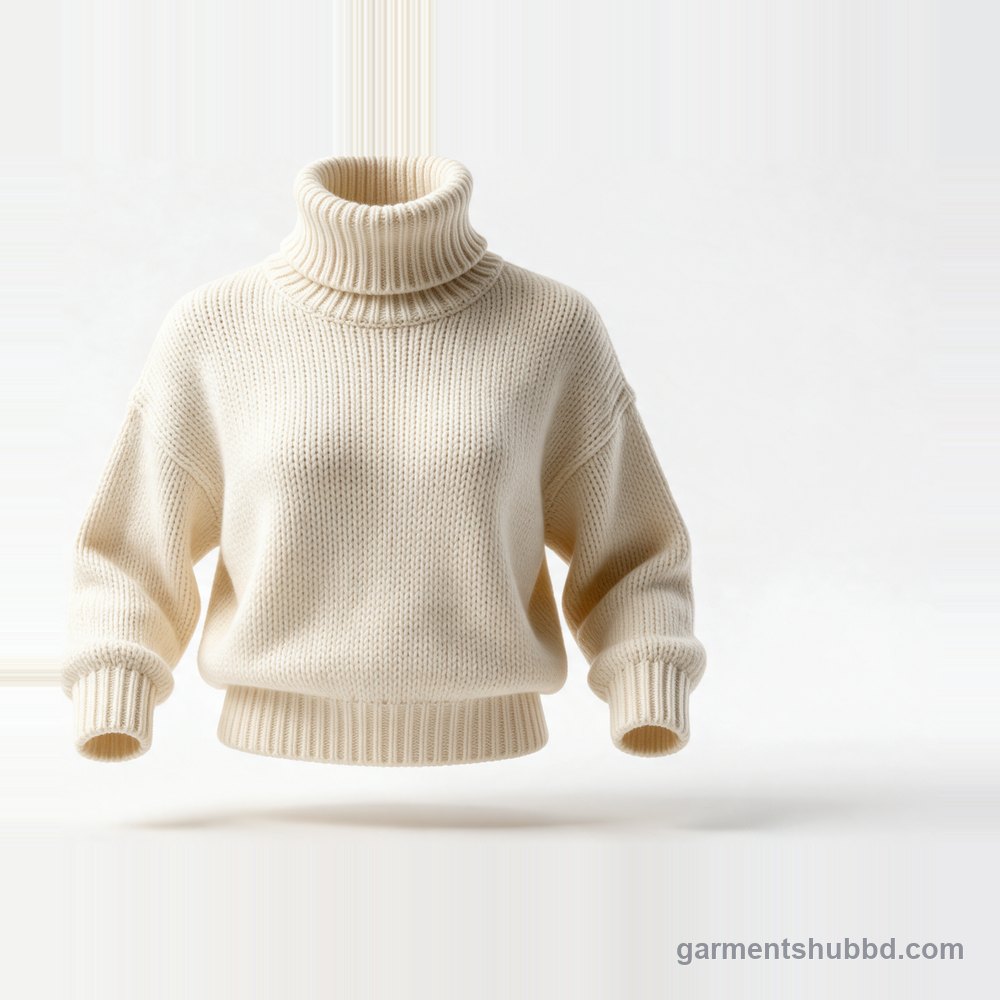
Chunky, textured knits with simple cables or ribs on a plain ground, often with a crew or roll neck. Simpler than an aran, warm and hard wearing.
Fine gauge cable
Smaller, flatter cables at 7 gauge, sometimes 12, on lighter jumpers and cardigans. At fine gauges the pattern reads as texture rather than relief.
What a cable knit sweater manufacturer in Bangladesh needs from you
- Stitch chart
- A chart showing each cable, the stitches crossed, the direction of each crossing and the rows between crossings, or a reference garment to copy.
- Gauge
- Most cable ranges knit at 3 to 7 gauge. Finer gauges carry only small cables, because each crossing can move only a few needles' worth of stitches.
- Yarn
- Wool and wool blends show cables crisply; acrylic is cheaper and lighter; cotton cables are flatter and heavier. Give fibre, count and colour.
- Placement across sizes
- Keep the cable panels the same width on every size and grade the plain or moss stitch between them, so the cables stay centred.
- Weight per piece
- Give a target weight per size. Cables add yarn, so a quote based on a plain sweater's weight understates the order.
- Relaxed width
- Cables draw the knit in. Give measurements after relaxation, since a cable panel can come up narrow once it settles.
Tests for cable knit sweaters
- ISO 5077 with ISO 6330
- Dimensional change in washing. Cable panels pull in across the width, so measure chest width and length on a finished sweater after the wash.
- ISO 12945-1
- Pilling box test. The raised ridges of a cable take more rubbing than flat knit, so test the cable face, above all on acrylic and soft wool.
- RWS
- For cable wool sold with an animal welfare claim: mulesing not allowed. Textile Exchange is folding it into the Materials Matter Standard, so check the certificate is current before booking yarn.
What moves the price of a cable knit sweater
- Yarn consumption: cables draw the fabric in, so the same width needs more stitches and more yarn.
- Machine time: every crossing slows knitting, and an allover aran runs far longer than one panel.
- Gauge and yarn weight: chunky 3 and 5 gauge cables use heavy yarn per piece.
- Setting up the stitch chart on the machine is a one off cost that small orders feel more.
- Cables crossed the wrong way are hard to repair, so a reject allowance is priced in.
Lead time for cable knit sweaters
Cable sweaters spend longer per piece on the knitting machine, and the chart has to be set up and proven on the proto sample, which can take more than one round. Wool and cream yarns are often booked to order. Allover arans in chunky gauges tie up machines for long runs, so large orders are spread across more machines. The quote dates the knitting against your delivery.
What we check on cable knit sweaters before shipment
- Cable crossingsEvery crossing is checked against the chart for direction; a cable crossed the wrong way breaks the pattern and fails the piece.
- Pattern centredThe centre cable must sit on the centre front, and sleeve cables run straight down the sleeve, on every size.
- Width after relaxingChest width is measured after steaming and resting, since cable panels draw in and can come out narrow.
- Weight by sizeEach size is weighed against the target; a light piece can mean a simplified pattern or a thinner yarn.
Questions buyers ask about cable knit sweaters
Why does a cable sweater cost more than a plain one in the same yarn?
Cables draw the knit in, so it needs more stitches and more yarn for the same width. Each crossing also slows the machine, and an allover aran adds more of both than a single cable panel. Ask for quotes on a stated weight per piece so the yarn is priced honestly.
Which gauge can carry a cable?
Most cable sweaters are knitted at 3 to 7 gauge, where the cables stand out in relief. At 12 gauge cables are possible but small and flat. Chunky gauges suit bold aran patterns; 7 gauge suits a lighter cable jumper for milder weather.
How do cables sit on a small and a large size?
The cable panels usually stay the same width on every size, and the plain or moss stitch between them grows or shrinks. That keeps the pattern looking the same, with the centre cable on the centre front. Check the end sizes of the range for balance on the size set.
Can cables be knitted in cotton or acrylic?
Yes. Acrylic cables are light, cheap and washable, and common in volume ranges. Cotton cables are heavier and flatter and can grow in length, so keep them shorter or blended. Wool shows the relief more crisply than either.
Get a quote for cable knit sweaters
Tech pack or sketch with quantities per colour. A compared quote in 48 hours.