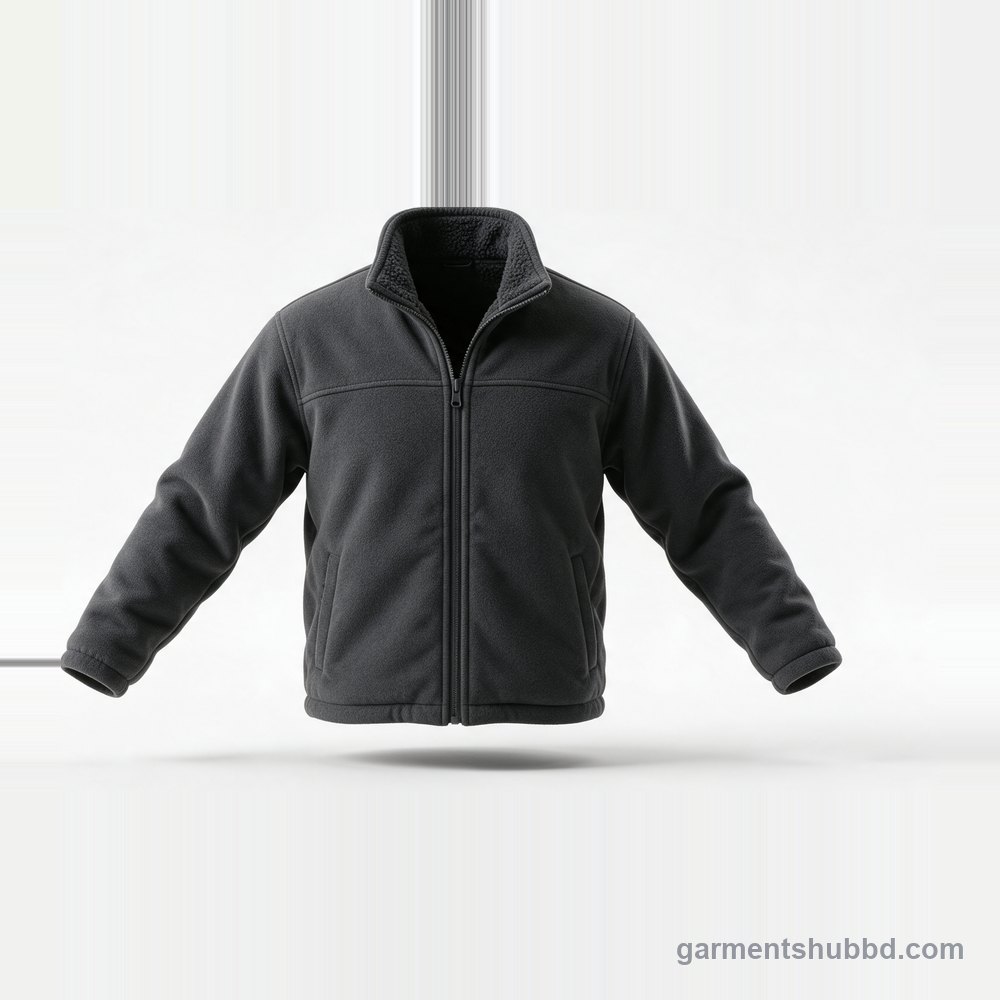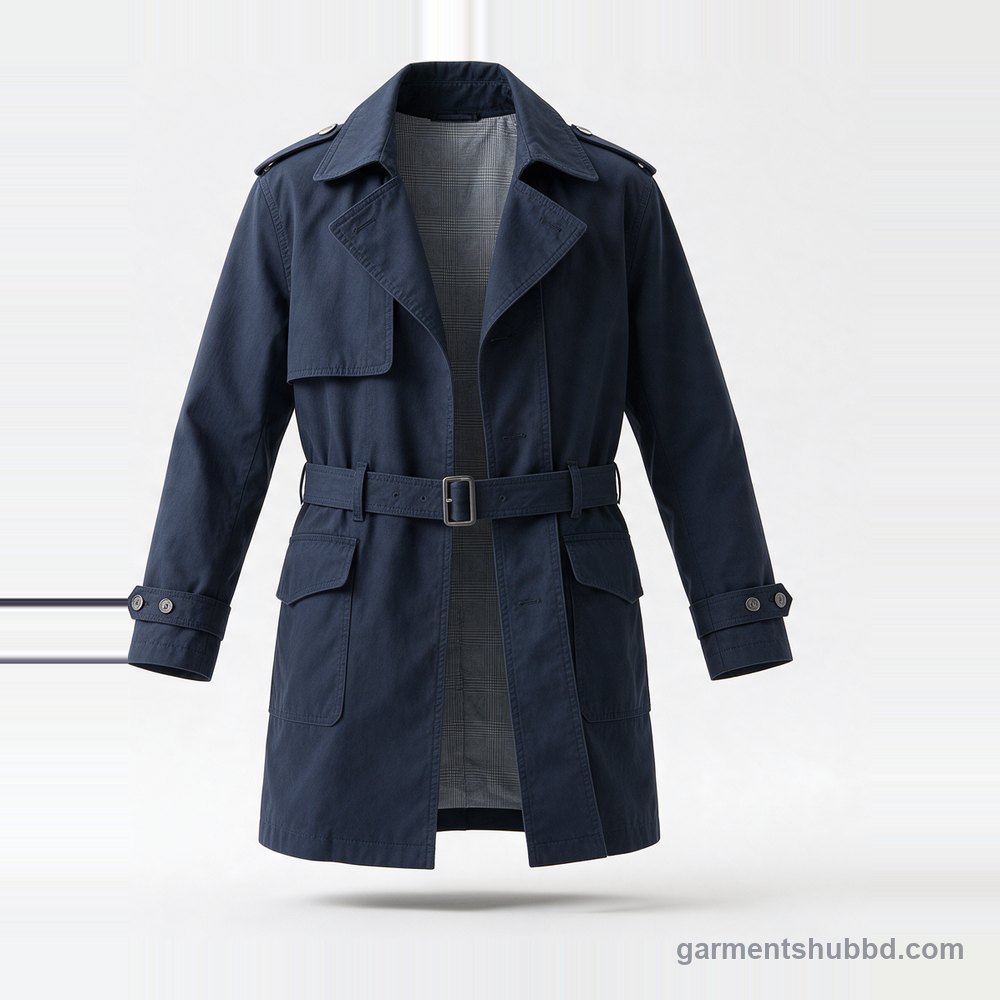
Lined trench coats, your specification
Made to your tech pack, fabric and colours by a factory matched to the order.
Private label
Your main label, care label, hangtag and polybag. Nominated trims accepted.
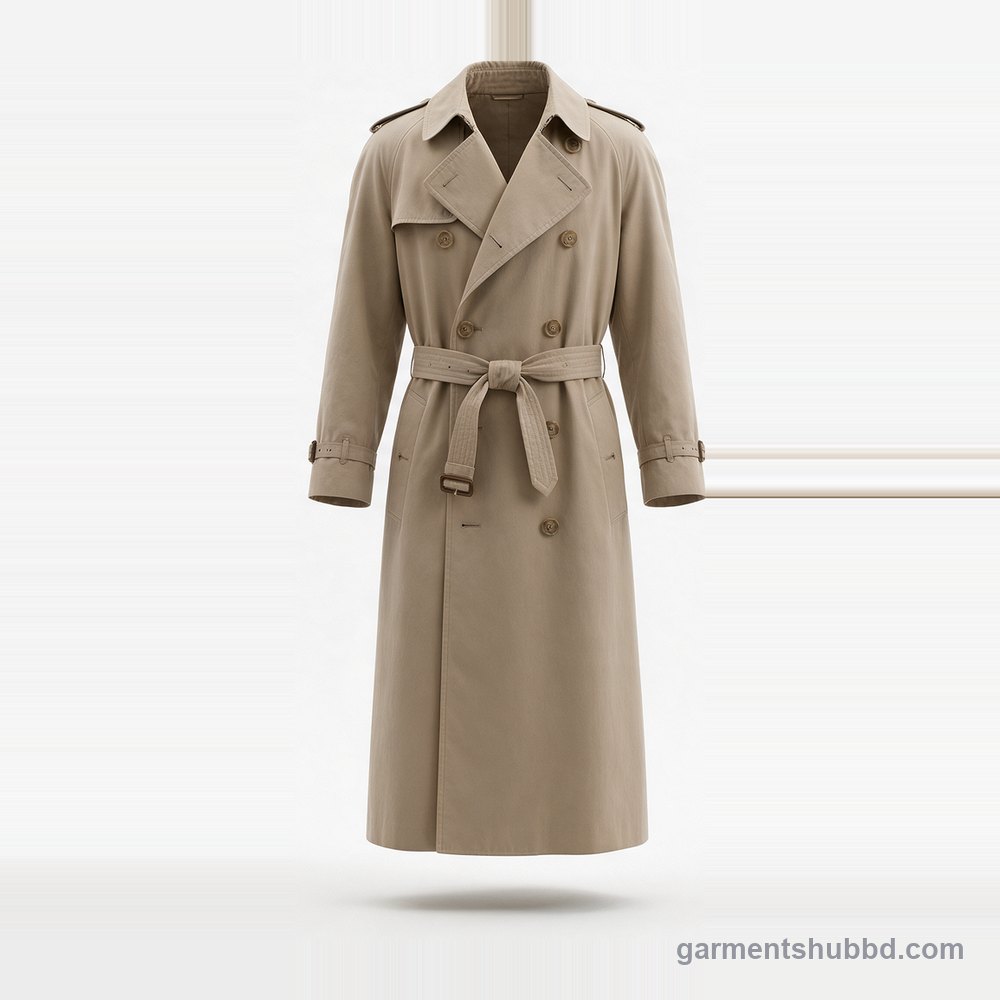
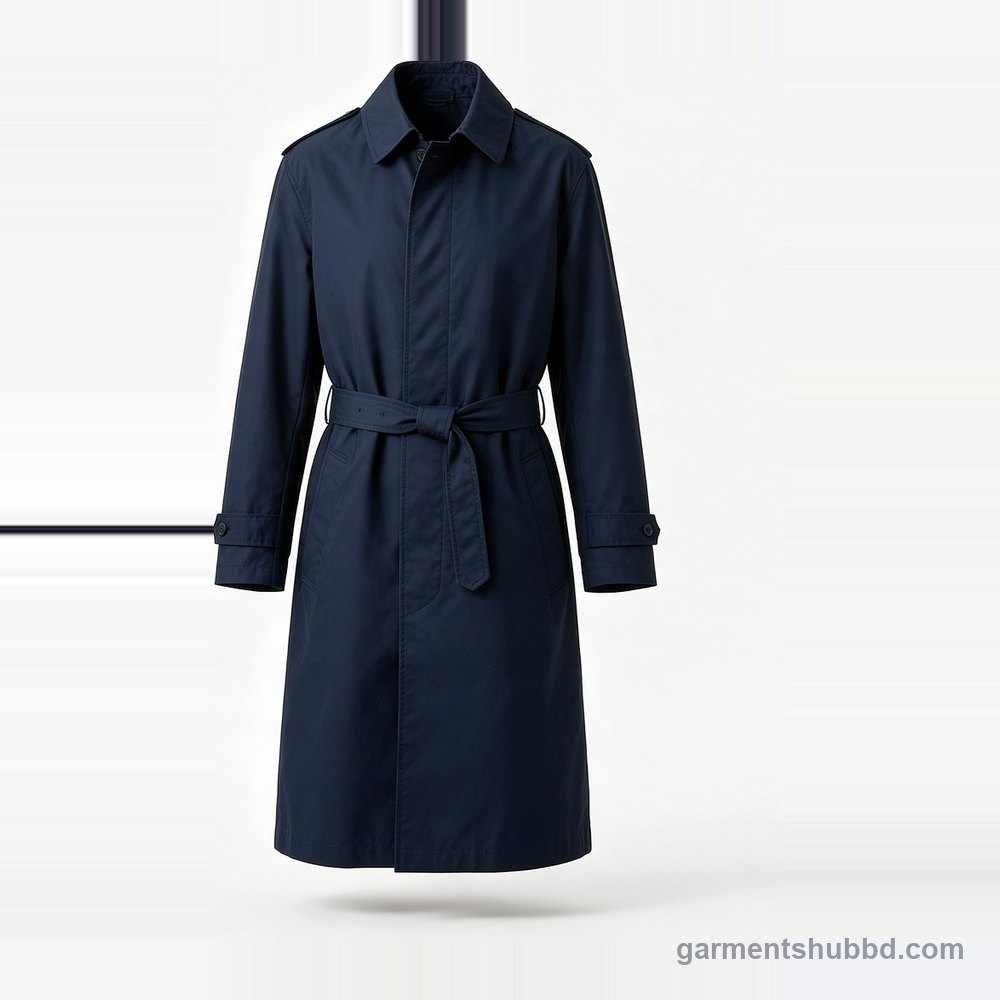
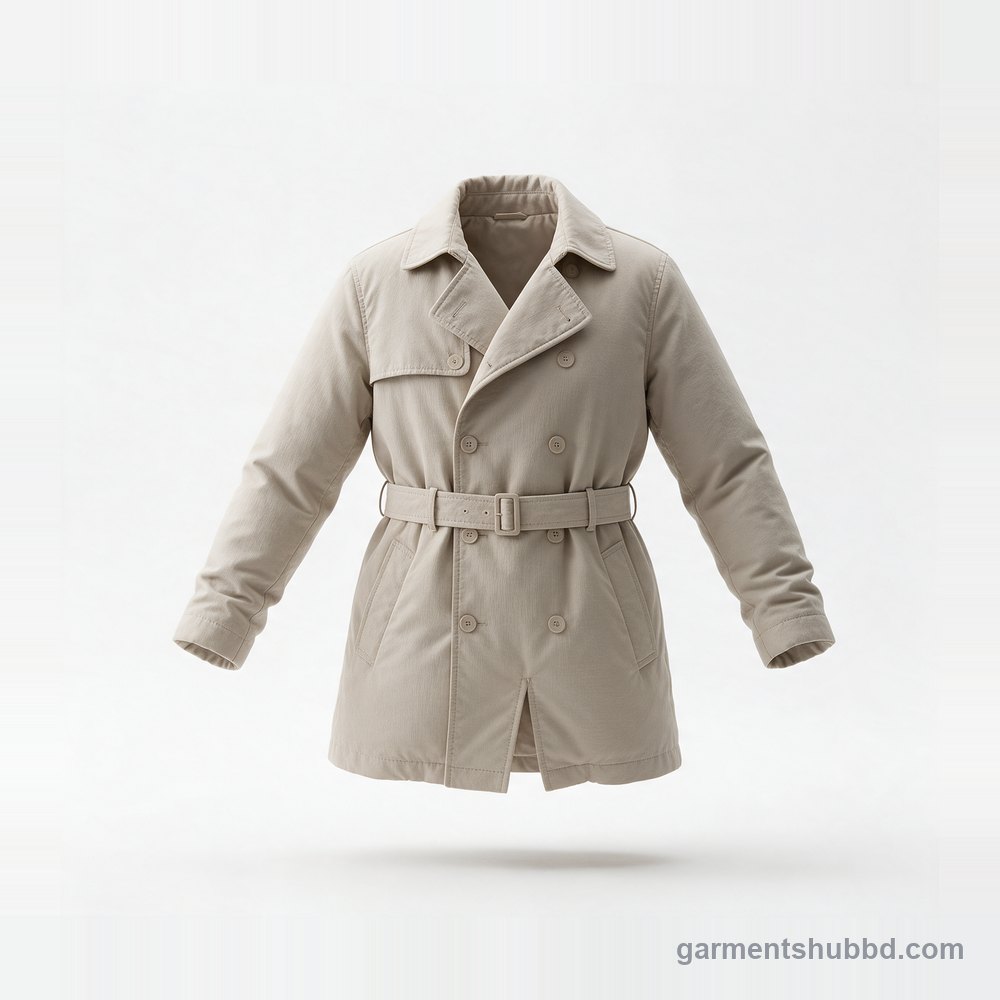
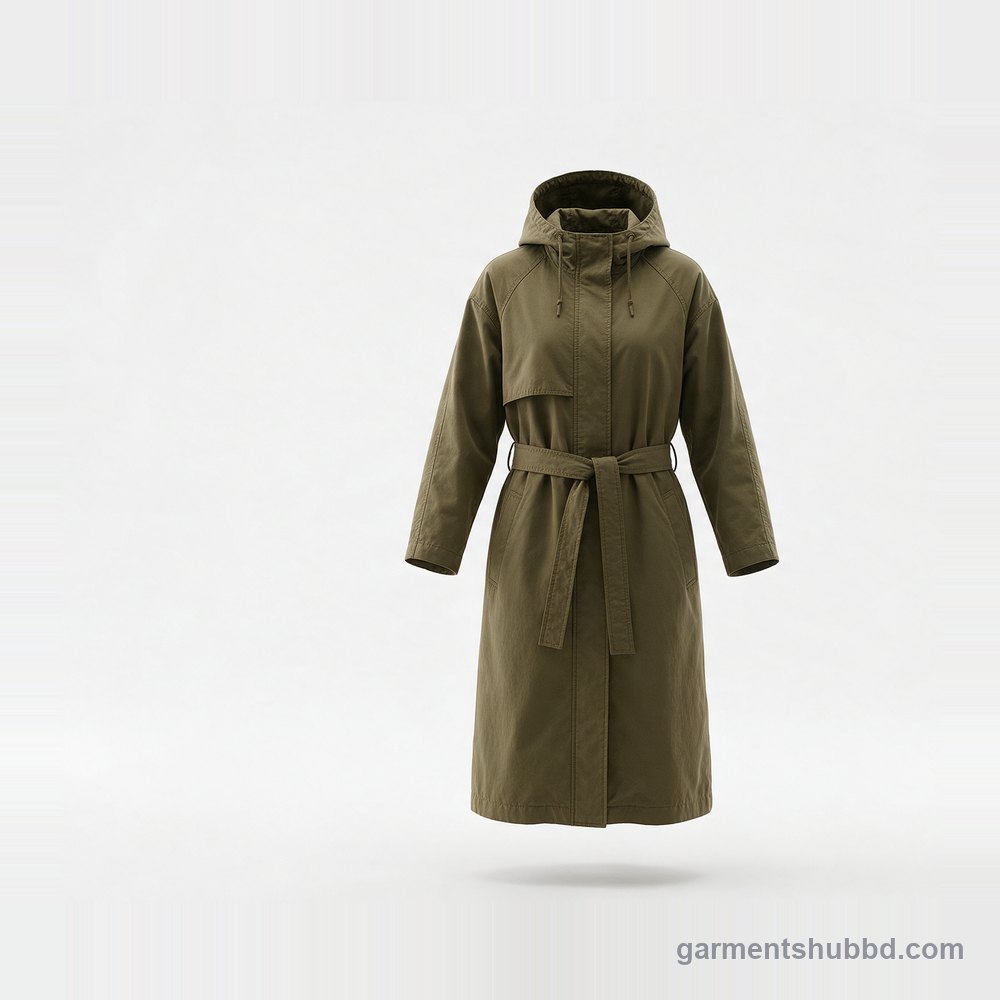
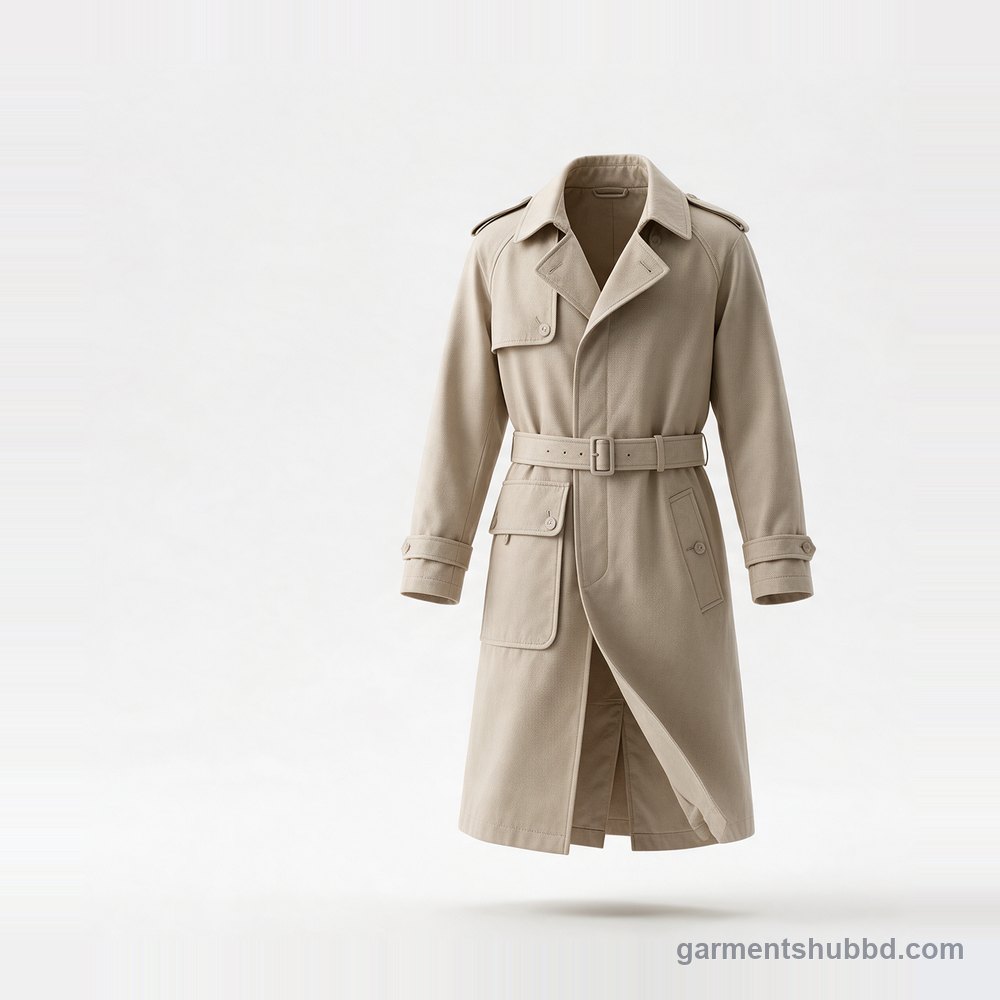
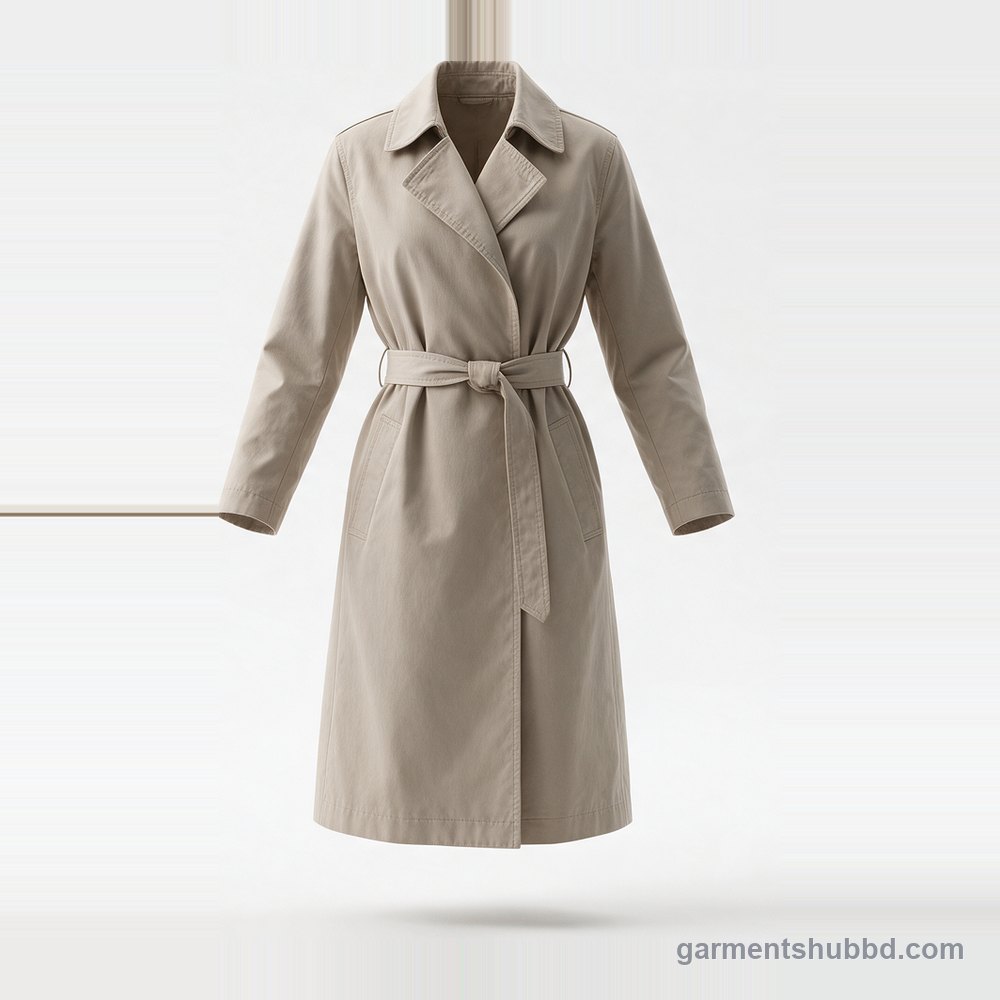
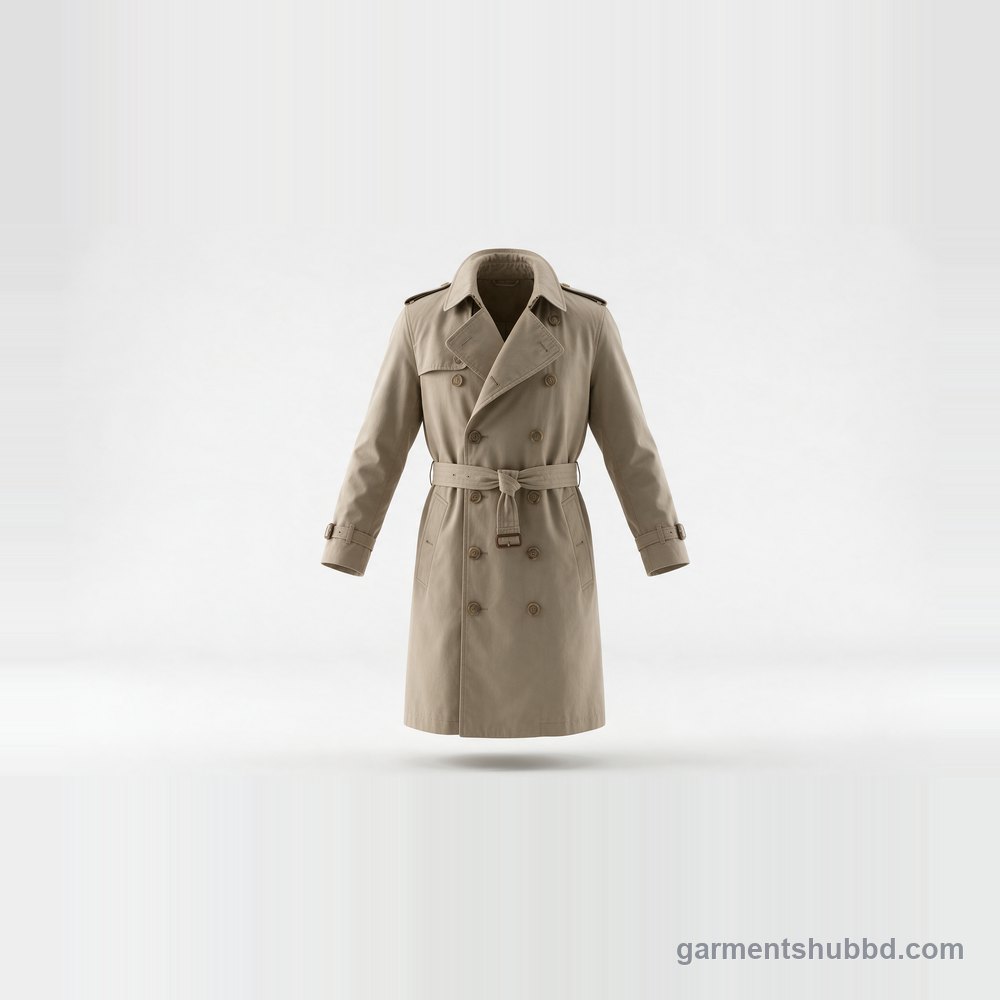
A lined trench coat carries a removable warm liner inside a standard trench shell, buttoned or zipped in, sometimes with sleeve liners and a separate collar. One coat then covers autumn, winter and spring, which suits an all season range or a market with long, changeable winters. A lined trench coat manufacturer in Bangladesh is making two garments in one, so the liner needs its own pattern, cloth and fitting.
Ask for the coat quoted with and without the liner, so the liner appears as a separate line and the range can sell it either way. Both factories then price the same shell and the same liner, and the inspection photographs record the liner's attachment points, where alignment faults show.
Kinds of lined trench coat
Button in quilted liner
A quilted polyester liner buttoned to the facing and the sleeve linings. Light, warm and quick to remove, with the buttons and loops hidden inside the facing.
Zip in quilted liner
The liner zips into a tape sewn along the facing. Faster and neater to attach than buttons, at the cost of a long zip and exact matching of both tapes.
Wool blend liner
A brushed wool blend liner, unquilted, buttoned or zipped in. Warmer in feel and smarter when the coat is worn open, but heavier and dearer than quilted polyester.
Sleeveless liner
A body only liner without sleeves, cheaper and easy to put in, leaving the sleeves cool. Common on lighter all season coats.
Telling a lined trench coat manufacturer in Bangladesh about the liner
- Liner fabric
- Quilted polyester over wadding, usually 60 to 100 GSM, or a wool blend flannel. Give the face fabric, the wadding weight and the quilt pattern.
- Attachment
- Buttons, a zip, or both. Give the button count and spacing along the facing, or the zip length and type, and the anchor points at hem and sleeves.
- Fit inside the shell
- The liner is drafted inside the shell lining, slightly smaller, with ease at the armhole. Give it its own measurements so it does not bunch or drag the shell.
- Shell lining
- The shell keeps a fixed lining for the liner to attach to and slide against. A smooth polyester or viscose twill helps the liner go in.
- Packing
- Whether the liner ships inside the coat, packed separately or sold as an add on. It changes the labels, the polybag and the carton count.
- Liner labels
- A removable liner usually needs its own fibre and care label, since it is often washed apart from the shell.
Tests for a lined trench coat
- ISO 5077 with ISO 6330
- Dimensional change in washing, run on the liner alone. A liner that shrinks more than the shell no longer meets its buttons or zip after the first wash.
- ISO 12945-2
- Pilling, modified Martindale. A wool blend liner rubs against the shell lining every time it goes in and out; ask for the grade on the liner cloth.
- EN 12127
- Weighs small samples of the quilted liner's wadding to confirm the approved GSM, since a lighter wadding cuts warmth without changing the look.
What moves the price of a lined trench coat
- The liner itself, priced as a separate line so the coat can be sold with or without it.
- Liner fabric: quilted polyester costs less than a wool blend flannel.
- Attachment: a zip system costs more than buttons and loops but goes in faster.
- Sleeve liners and a detachable collar, each a separate piece with its own fastenings.
- Packing: a liner packed separately adds a bag, a label and handling.
Lead time for lined trench coats
A lined trench adds a second garment to sample. The liner is fitted inside the shell after the shell fit is approved, so allow for an extra fit round, and a zip system adds a trim lead time. Quilted liner fabric is often made to order at a set wadding weight. The quote shows the liner steps alongside the shell, within the usual 60 to 90 days from order confirmation to shipment.
What we check on lined trench coats before shipment
- Liner alignmentEvery button or zip point on the liner meets its partner on the facing without twisting the liner or the shell.
- Liner hangWith the liner in, it sits fully inside the coat and does not show below the hem or at the cuffs.
- Quilting densityQuilting lines are evenly spaced as approved, and the wadding is spread evenly with no thin corners.
- Liner removalThe liner comes out and goes back in without force, and the shell looks finished without it.
Questions buyers ask about lined trench coats
Should I sell the trench with the liner or without?
Both, if the range allows. Quoting with and without shows exactly what the liner costs, and some brands sell the shell as a spring coat and the lined version in autumn. The liner can also be sold separately to customers who already own the shell.
Button in or zip in liner?
Buttons are cheaper and easy to repair, but slow to attach and can leave gaps. A zip is faster and neater and keeps the liner flat, at a higher cost in trims and precision. Many lined trenches use a zip along the front and buttons at the sleeves and hem.
Quilted polyester or wool blend liner?
Quilted polyester is lighter, warmer for its weight, cheaper and easy to wash. A wool blend liner looks smarter when the coat is worn open and feels drier, but it is heavier and costs more. For mild winters quilted polyester is usually enough; for colder markets, consider wool blend or a heavier wadding.
Can the liner be washed separately?
Usually yes, and it often has to be, because the shell may be dry clean only. Give the liner its own care label and test its dimensional change, since a liner that shrinks by more than a centimetre or two no longer meets its buttons or zip on the shell.
Get a quote for lined trench coats
Tech pack or sketch with quantities per colour. A compared quote in 48 hours.